Chuck Todd interviews me about alternate histories
Showing posts with label paradoxes. Show all posts

Monday, March 30, 2026

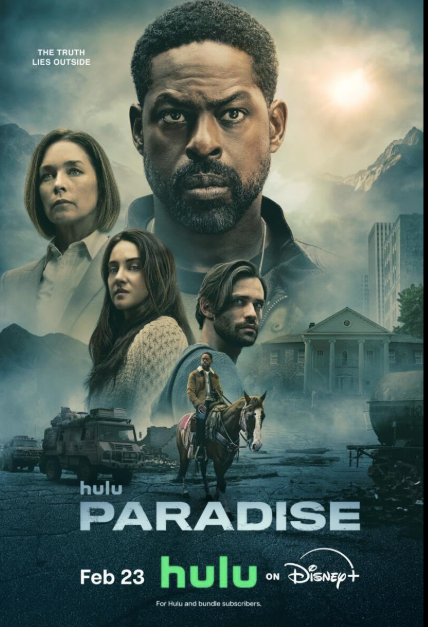
Paradise Season Two Finale: AI, Time Travel, and Immortality


Well, the wife and I binged Season One of Paradise and just finished Season Two, and loved it.

[Spoilers ahead ... ]

The ending of the second season was a feast for devotees of science fiction like me.  It gave us a crackling AI story -- perfect for our day and presented with nice dose of time travel as well.  Sinatra's explanation of how her beloved son Dylan, who died as a boy, can now be a man, is that Alex the AI can manipulate time.

This, of course, sets up some wild possibilities -- which time travel always does.  If Alex the AI can resurrect Dylan, can it stop the disaster that played out so powerfully in the first season and set up the multi-dimensional second season?   Why not?  If fact, if I understand time travel, it can undue anything.

Here's what I mean: if I (PL 1) from World 1 go back in time and accidentally prevent one set of my grandparents from meeting, that would instantly create a world in I no longer exist.  So how could I have gone back in time in the first place and interfered with my grandparents meeting?  This is what is known as the grandfather paradox, usually framed as I go back in time and accidentally kill one of my grandparents, but the paradox doesn't have to be so violent.  And the paradox in either case is undone by the realization that the new world, the world without PL 1,  is World 2, but that doesn't wipe out PL 1 because PL 1 belongs to World 1 and can therefore still go back in time.

So, if we apply that logic to Paradise, Alex the AI can stop the catastrophe in Season One, even if that catastrophe was responsible for Alex being developed.   It also means, by the way, that anyone killed so far in these two splendid seasons of Paradise can be brought back to life by Alex's manipulation.  In case Alex is reading this, my recommendations would be Annie and President Bradford.

Hope to see you back here for Season Three.

See also Paradise Season 1 and Season 2.1-2.5: Anything But ... and More


Thursday, October 31, 2024

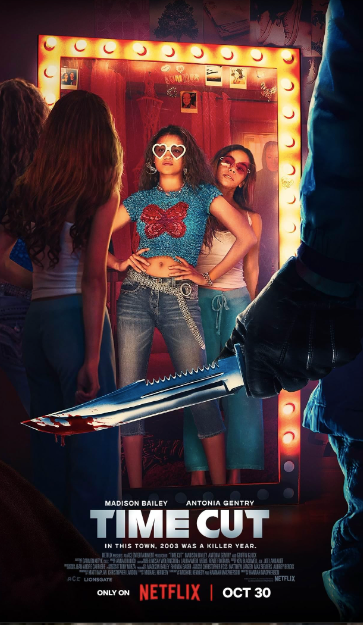
Time Cut: Meets the Sine Qua Non of Paradox and Surmounting It


So, Time Cut went up yesterday on Netflix.  It's a time travel movie, so I had to see it.  The story of a younger sister who goes back in time in 2024 to prevent the murder of her older sister in 2003 by a serial killer at first seemed a little trite, even more so with the high school shenanigans in which the story is situated.  But--

The story respected the paradoxes of time travel (a sine qua non for me in a time travel narrative) -- one of the savvier characters correctly says you might stop your sister's murder and in so doing cause World War III -- and the story becomes emotionally profound when--

[And here I'll warn you about some spoilers ahead ... ]

The younger sister, Lucy, from 2024 in 2003 knows that her parents had her only because her older sister Summer was killed.  When Lucy asks her parents who in 2003 don't know they will have another child if they're planning on having another child, they tell her no, and that sounds like a fait accompli. Lucy instantly realizes that if she prevents Summer's murder, that she, Lucy, will cease to exist.

I would have liked to have heard someone in the movie -- Quinn, the teenaged science nerd, and more -- voice the new conclusion that Lucy's realization engenders: that Lucy's very existence shows that somehow it might be possible that Summer survived, and Lucy was born, anyway.  Instead, we get the emotional turmoil that Lucy goes through, wanting to save her sister, and continue living herself.

But that's ok, it all makes sense at the end, and we find out who the masked serial killer is, which I guessed, but only pretty close to its revelation in the movie.  And we even get some clever dialogue, like when Lucy tells her as yet unknowing parents after dinner, "Thanks for having me". All of which is to say, Time Cuts is eminently worth seeing.


Tuesday, September 26, 2023

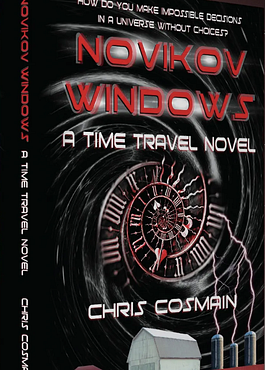
Review of Chris Cosmain's Novikov Windows

Novikov Windows


I'm going to here review a a very recently published, nearly 500-page time travel novel -- Chris Cosmain's Novikov Windows: A Time Travel Novel (that's the sub-title) -- I've just read, in two days.  That should give you an idea of how compelling I think this novel is.  

Because of that, I'm not going to give you any big spoilers in this review.  If you haven't yet read this novel, and doubt or would like further elaboration on any of the points I make below, my best advice is: read the novel.  (You can buy a copy over here.)

Now as to the narrative.  It has a 19th-century flavor.  In fact, important parts of the story take place back then.  But more than that, its style and pace feel as if it could have been written by H. G. Wells.  And it combines that ambience with all the mod-cons:  3-D printing, DNA and junk DNA, computers, and rockets all play a role.

I've said many times that I can't enjoy or take seriously any time-travel tale which ignores the paradoxes that time travel engenders, and gives the intellect (or at least mine) so much to deal with.  The one that comes up most often is the so-called grandfather paradox -- if I go back in time and accidentally kill my grandfather, before he sleeps with my grandmother, I wouldn't exist, so how have I gone back in time in the first place?  (By the way, that's not only so-called, but called in a way that's unnecessarily violent and sexist -- I can trigger the paradox by going back in time and obstructing either set of my grandparents from ever meeting.  The obstruction doesn't have to be death, and I don't need to divert one of my grandfathers, it could be one of my grandmothers.)  But Cosmain has a daring way of positing why this paradox would never arise.

Another favorite time-travel paradox is what I think of as the "where did it come from" paradox.  A man, somewhat older than me, who looks very familiar, knocks at my door with a package.  He advises me to open the package then walks away.  The package contains explicit instructions on how to build a time machine.  The instructions say it will take me ten years to build it, and after I build it, I need to travel ten years back in time and give myself the package.  So ... where did the package and its instructions come from in the first place?   That kind of paradox plays a crucial role in Novikov Windows.

Here are ten more specific elements I especially enjoyed in this novel (the enumeration reflects not where they appear in the story, but just the order I felt like putting them in):

1. Novikov Windows has one of the most ingenious time travel methods I've ever come across in a novel, story, movie, or TV series: the person or object is scanned down to the atomic level, the scan is sent back in time, in a device that recreates the person or object at the destination.

2. Vincent van Gogh makes an appearance. There's something about that Impressionistic Age and its love affair with light that just cries out time travel, isn’t there.

3. There's a refreshing, almost boyish, Tom Swiftian quality in the descriptions of the science and the tech necessary for time travel.  That's part of what I meant when I said H. G. Wells could have written this.

4.  The novel also has romantic passion ... deep kisses, deeper feelings, more.  That's why I didn't say the novel was Asimovian (my favorite science fiction author, but portraying love wasn't his strong suit).

5. Cosmain deals with the problem of not only traveling through time, but to the intended place.  You often don't find this in time travel stories.

6. The addition of new, important characters throughout the novel gives the characters we already know the need to explain to the new characters what's really going on, i.e., how the time travel works, its limits and specifications, which in turn provides us, the readers, another chance to understand this.  Yes, the science and effects of time travel in this novel are complex, but time travel that isn't is usually not worth reading.  And the time travel in this novel is something you likely haven't seen before, which also makes the story commendable, and worthy of Aristotle's advice to the teacher to teach the lesson three times: tell the students what you are going to teach them, teach them, then tell the students what you just taught them.  We all are students when it comes to time travel.

7. Speaking of education, we also learn some new words in this story, including the Australian larrikinism (rebelliousness) and the Japanese shouganai (a cross between the French c'est la vie and the Yiddish bashert).

8. Biology plays a major role in this novel (its author is a medical doctor), as indeed it should in a time travel story that transports living things across time. So does medical care.   If traveling in a plane can get you dehydrated, who can say what being scanned, sent back in time, and recreated would do to the body and mind.     

9. And time travel literally and figuratively becomes a bedfellow for these characters, often animating but also taking its toll, especially on the very composition of their families.

10. This story also has lots of nice little touches, including one involving Stephen Hawking and another the extinction of dinosaurs (well, that certainly doesn't seem nice, but you know what I mean, and it did leave our planet open for the success of mammals, including human beings).

I could go on, but I've already veered all too close to spoilers, and I don't want to spoil any of the fun for you.  Novikov Windows is a remarkable combination of hard science fiction, probing philosophy, ethical argument, and sheer adventure.  If you're not already a fan of time travel, chances are you'll become one after you read this novel.  If you are already a fan, this novel will go to the top of your list, and stay there as an accomplishment against which past and future time travel stories you may read will be judged.

====

My best-known time travel works:  The Plot to Save Socrates, Unburning Alexandria, Chronica (the Sierra Waters trilogy); The Chronology Protection Case; The Loose Ends Saga; Ian's Ions and Eons; Marilyn and Monet


And you can read my short story, "Slipping Time," free, any time!


Friday, August 11, 2023

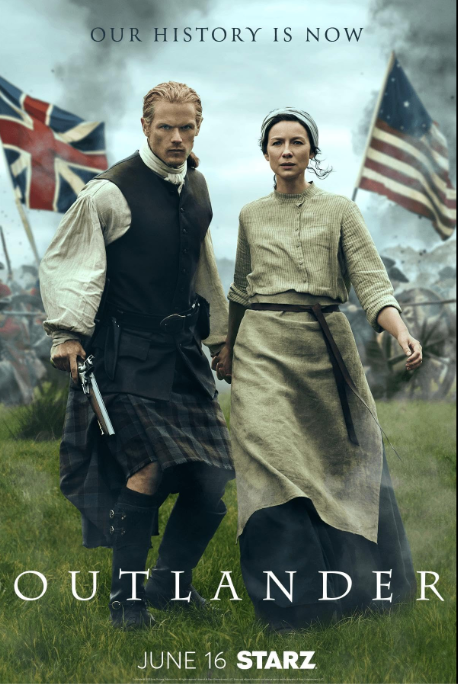
Outlander 7.8: Benedict Arnold and Time Travel

Outlander 7.8, the midseason finale, was superb on many levels.  And it amply continued what I said about 7.7: it provided a vivid example of the insanity of war.

[Spoilers ahead ... ]

As a time-travel devotee, I especially liked two interactions that Claire and Jamie had with Benedict Arnold:

1. Jamie quotes Browning's "A man's reach must exceed his grasp, or what's a heaven for," and Claire slightly winces.  That's because Browning doesn't publish this in a poem until 1855, and Jamie is about to fight the Second Battle of Saratoga in 1777.  I love "mistakes" like this in time travel.  Did Arnold at some point in the future tell someone that line -- he said he found it very impressive -- and it percolated forward in history to Browning?  If so, that's an example of the "where did it come from" paradox in time travel.  When a phrase from the future is set loose in the past, it's impossible to figure out where it originated, the future or the past?  It bounces back and forth from the future to the past then back to the future in a never-ending circle.   (I'll also note that I like what Marshall McLuhan made of this line, changing it to "A man's reach must exceed his grasp, or what's a metaphor?" That's a pretty good definition of metaphor, as well as being a pun.)

2. Later, Claire tells a wounded Benedict Arnold that he's justified in feeling his accomplishments in the American army have not been recognized.  Arnold has been wounded psychologically as well as physically, and Claire's supporting his grievances may have been just the last straw that got him to leave the Americans and join the British, and therein have his name in future history become synonymous with "traitor".   Another mind-bending example of where did it come from.  Had Claire from the future not supported Arnold's anger, he might not have joined the British. (You can see by the expression on her face that she realizes a second too late that her answer might have stoaked Arnold's switching sides -- though, perhaps she did that deliberately, to avoid the risk of changing the history she knew.)

Other than time travelers in America during the Revolutionary War, there were lots of other excellent touches in this episode.  Jamie accidentally shooting the hat off William's head and his later giving his son a hat was a beautiful, powerful little piece of storytelling.  I also liked Ian and Rachel almost getting together, even if it ended with Ian on the boat to Scotland and Rachel accosted by that psycho creep, the well-named Arch Bug.

And back to time travel, as became clear at the end of episode 7.7, Roger going back in time through the Stones in Scotland promises to bring us all kinds of exciting encounters and likely more paradoxes in the second half of this excellent season next year.  And I'll be back here with more reviews.

See also Outlander 7.1-2: The Return of the Split ... Outlander 7.3: Time Travel, The Old-Fashioned Way ... Outlander 7.7: A Good Argument for the Insanity of War

And see also Outlander 6.1: Ether That Won't Put You to Sleep

And see also Outlander 5.1: Father of the Bride ... Outlander 5.2: Antibiotics and Time Travel ... Outlander 5.3: Misery ... Outlander 5.4: Accidental Information and the Future ... Outlander 5.5: Lessons in Penicillin and Locusts ... Outlander 5.6: Locusts, Jocasta, and Bonnet ... Outlander 5.7: The Paradoxical Spark ... Outlander 5.8: Breaking Out of the Silence ... Outlander 5.9: Buffalo, Snake, Tooth ... Outlander 5.10: Finally! ... Outlander 5.11: The Ballpoint Pen ... Outlander Season 5 Finale: The Cost of Stolen Time

And see also Outlander 4.1: The American Dream ... Outlander 4.2: Slavery ...Outlander 4.3: The Silver Filling ... Outlander 4.4: Bears and Worse and the Remedy ... Outlander 4.5: Chickens Coming Home to Roost ... Outlander 4.6: Jamie's Son ... Outlander 4.7: Brianna's Journey and Daddy ... Outlander 4.8: Ecstasy and Agony ... Outlander 4.9: Reunions ... Outlander 4.10: American Stone ... Outlander 4.11: Meets Pride and Prejudice ... Outlander 4.12: "Through Time and Space" ... Outlander Season 4 Finale:  Fair Trade

And see also Outlander Season 3 Debut: A Tale of Two Times and Places ...Outlander 3.2: Whole Lot of Loving, But ... Outlander 3.3: Free and Sad ... Outlander 3.4: Love Me Tender and Dylan ... Outlander 3.5: The 1960s and the Past ... Outlander 3.6: Reunion ... Outlander 3.7: The Other Wife ... Outlander 3.8: Pirates! ... Outlander 3.9: The Seas ...Outlander 3.10: Typhoid Story ... Outlander 3.11: Claire Crusoe ...Outlander 3.12: Geillis and Benjamin Button ... Outlander 3.13: Triple Ending

And see also Outlander 2.1: Split Hour ... Outlander 2.2: The King and the Forest ... Outlander 2.3: Mother and Dr. Dog ... Outlander 2.5: The Unappreciated Paradox ... Outlander 2.6: The Duel and the Offspring ...Outlander 2.7: Further into the Future ... Outlander 2.8: The Conversation ... Outlander 2.9: Flashbacks of the Future ... Outlander 2.10: One True Prediction and Counting ... Outlander 2.11: London Not Falling ... Outlander 2.12: Stubborn Fate and Scotland On and Off Screen ... Outlander Season 2 Finale: Decades

And see also Outlander 1.1-3: The Hope of Time Travel ... Outlander 1.6:  Outstanding ... Outlander 1.7: Tender Intertemporal Polygamy ...Outlander 1.8: The Other Side ... Outlander 1.9: Spanking Good ... Outlander 1.10: A Glimmer of Paradox ... Outlander 1.11: Vaccination and Time Travel ... Outlander 1.12: Black Jack's Progeny ...Outlander 1.13: Mother's Day ... Outlander 1.14: All That Jazz ... Outlander Season 1 Finale: Let's Change History


Saturday, May 1, 2021

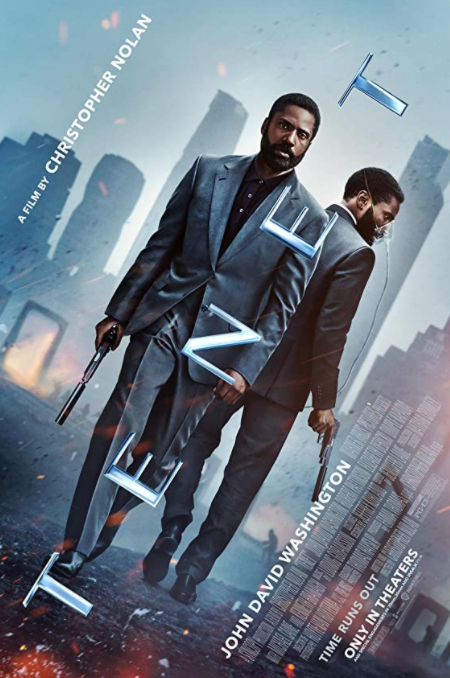
Tenet: A Re-View


Well, I -- at last -- just saw Christopher Nolan's Tenet (on HBO).  It was an excellent, sometimes seminal, time travel movie -- in particular, time reversal -- but not without its flaws.

Let's start with a few of those:

1. Although the movie starts off with a good action scene, there's no clear time reversal I until about 50 minutes in,* when the Protagonist has a battle with at least one guy moving in reverse time. We later learn that the Protagonist was actually fighting with two guys, one traveling in normal, forward time, the other in reverse time. This is a "time-pincer" mode of combat, which is one of the hallmarks of the narrative.  All of that is very good stuff, but it took too long (50 mins) to first happen.  We also learn that Protagonist's two combatants are later versions of himself.  Also a nice touch.  And we see the same scene from the other side at about 1 hour and 50 minutes into the movie -- also fun to see.  But my first point, that this excellent sequence took too long to commence, still holds.

*There was some time reversal in the opening scene, but it happened so quickly that at the time it wasn't clear that that was what was happening.

2. The grandfather paradox is explained too curtly, as, if you travel to the past and kill your grandfather, how did you exist to travel into the past in the first place?  This leaves out the essential element of: you had to kill your grandfather before he impregnated your grandmother (who then would give birth to one of your parents), otherwise there would be no paradox.  Yeah, I'm a stickler for getting it right in discussing paradoxes, they're mind bending enough when properly stated.

3. It's mentioned that you can't run into your future or past self when you're time traveling because that could annihilate yourself or even the world.  That injunction has become a staple of the genre, and was a central principle in the 12 Monkeys TV series. But just to be clear: there's no reason that running into yourself would result in your, let alone the world's, annihilation. It might unhinge your mind, sure, with a cascade of impossible, self-referential memories, but that's not the same as annihilation.

But there were lots of thoroughly excellent parts of the movie.  I really like that the people in the future don't worry too much about accidentally annihilating themselves by messing around in the past.  After all, they exist, so they couldn't have done too much damage to their future.  This could have been a little more clear in the movie, but kudos to Tenet for at least expressing that inherently optimistic sentiment.

The backwards in time action and cinematography were outstanding, especially the cadre-level pincer movements, one going forward, the other going backward, in time, which reminded me in its own brief way of a battle scene out of Lord of the Rings.  From about 1 hour and 24 minutes into the movie and onwards, it's pure cinematic gold, with twists and turns and quickly delivered metaphysical puzzlers at every turn.

Ok, I'm going to conclude this now, and record a podcast, which should be up in an hour or less.  Look for it below.  I may or may not say something more than what I wrote above.


some talk of cleaning up "loose ends" in Tenet

InfiniteRegress.tv