Chuck Todd interviews me about alternate histories
Showing posts with label politics. Show all posts

Thursday, January 7, 2021

The View Looks Better from Here

I wrote here the morning after the election in November that there were grounds for optimism -- Biden was gaining in Wisconsin, Michigan, and Arizona, which provided enough votes to win in the Electoral College. The last stage of that anachronistic, indirectly democratic process, but the only process we have right now, was completed last night.

I don't like Vice President Pence in the least.  He's enabled and promoted four years of Trump's fascist regime.  But, in the end, he did his job in Congress certifying the electoral vote yesterday.  It's a measure of how far we've gone away from decency and integrity in the Trump regime that a Vice President deserves praise for doing his job, but there you have it.

Yesterday also brought the news that the Democrats will control the Senate, and therefore both houses of Congress.  Warnock's and Ossoff's victories in George are profound game changers, which will open the way for Biden with Harris's help to enact all the major components of his rebuilding a better America. (In addition what needs to be done in making health care universal, countering racism, gun control, protecting the environment -- I've also long yearned, on a relatively minor, personal level, for a rail system in the United States as high-speed and effective as the ones in Europe and Japan, and I think that will now finally happen.)

There's still an enormous amount of danger to be dealt with, ranging from every minute Trump is still in the White House to the tap root of fascism Trump called forth* to the still-raging pandemic.  But we've finally reached the light at the end of one of the long, deep tunnels we've been struggling the navigate, and the view looks better from here.

*The storming of the U.S. Capitol, which happened a few hours after this blog post, is a tragic and infuriating example of what this fascism can do.  See my comments in the NY1 video below:


Wednesday, August 12, 2020

Blog Post: Kamala Harris: The First Step Back from the Precipice


I wrote a few days ago (and also posted a podcast) about why I strongly disagreed with Wade Davis's conclusion, in "The Unraveling of America" in Rolling Stone, that America was so far gone, in ways that the abysmal treatment of the COVID-19 pandemic epitomizes but didn't initiate, that nothing could reverse that decline.  Nothing, including and especially, the upcoming Presidential election.  I explained why I thought such a conclusion was not only dangerous but wrong, and cited FDR's election in 1932 as a ringing example of how a Presidential election can indeed make a difference, in that case, lifting us out of Great Depression, and enabling us to the lead the free world to defeat the Nazis.

I offered that argument two days before Joe Biden selected Kamala Harris to be his VP running mate.  I see that selection as America, via Joe Biden's wise decision, taking the first step back from the precipice.  In an ideal world, a person's ethnicity and gender wouldn't matter.  All that would count in anyone's being a candidate for any job, would be the candidate's talent and capacity to do the job as effectively and as excellently as the job could be done.  But we don't yet live in such an ideal world, and, in order to get there, we need people in public positions who come from ethnicities and genders (i.e., women) who have been shut out from such public positions, because of the racism and sexism from which our free society emerged, and which is still very much with us.  In such a world - which is this, our world, our country - Kamala Harris breaks an wide array of barriers, an array amazing for one person.  She is an African-American woman, with an Indian (Asian Indian) heritage.

But Kamala Harris would be an impressive candidate even if she were a white man.  She is articulate, sharp as whip, reflective, passionate, and strategic in her thinking.  She is an ideal balance for the more deliberative Biden, and will make an ideal governing partner when they both get into office.   (Note added: If you want an idea of how Harris stands up to the current Vice President, compare her heartwarming speech of a fighter, just delivered in Wilmington, Delaware after Joe Biden introduced her, to the unctuous pap that daily comes out of Pence's mouth.)

So, to return to Davis, elections do make a difference.  A Democrat in the White House, with a black woman as his Vice President, and a Senate and House of Representatives in Democratic control, can and will turn this country around.   But to make that happen, we have to get out and vote.


Sunday, August 9, 2020

Blog Post: Why I Disagree about "The Unraveling of America"

Canadian anthropologist Wade Davis posted a savvy article in Rolling Stone, entitled The Unraveling of America.*  Its thesis that America's generally atrocious handling of the COVID-19 pandemic, under our "buffoon of a president," laid bare a decay and decline that already was well underway, in racism and income inequality, is well-evidenced and well-argued, and undeniable.   But I disagree with Davis on two important points, one historical, the other up and coming.

1.  Davis says Americans elected Trump.  That's not quite the case.  Hillary Clinton won the popular vote by three million votes over Trump, which means Americans elected her not Trump president.  It was the antiquated, anti-democratic Electoral College - our inane way of electing a President - that put Trump in office.

2.  Davis concludes by observing that "even should Trump be resoundingly defeated [in November], it’s not at all clear that such a profoundly polarized nation will be able to find a way forward. For better or for worse, America has had its time."  I agree that the future is always opaque, or not at all clear. But it follows that I don't see it as a certainty that "America has had its time".  If the Democrats take back the White House and the Senate, the United States could have a progressive government akin to what FDR had in the 1930s.

That government, back then, got us out of the Great Depression, and then went on to crush the Nazis.  It did that, even though America still suffered from racism, sexism, and extreme income inequality, in just all about ways worse than ours.  It did that with a far less effective community-building media system than we have now -- i.e., no television and no Internet.  I think there's every reason to think that the election of Joe Biden to the Presidency, and a Democratic majority to the Senate, could indeed reverse most of the damage that Trump has done, and result in America being a better leader of the world than it ever was. 

But all of that depends on Americans getting out and voting or mailing out their ballots in November.

*Thanks John Fraim for bringing this essay to my attention.


Friday, January 31, 2020

Captain Phil interviews Paul Levinson about his New Album 'Welcome Up', and Trump


Welcome to Light On Light Through, Episode 123, in which the inimitable Captain Phil (on WUSB Radio) again interviews me about my new music, latest science fiction, and Donald Trump. But this time, there's my brand new album of science fiction related songs, Welcome Up: Songs of Space and Time (now releasing by Old Bear Records), to talk about.  And we're right in the middle of the impeachment trial of Donald Trump (author Bill McNulty joins us for the first part of this discussion).  Phil also plays, at the start and end of the episode, two songs from Welcome Up.
Helpful links:

Check out this episode!

Tuesday, January 14, 2020

Fifth 2020 Democratic Presidential Debate: Winners

The six-person Democratic presidential debate just concluded on CNN was easily the best debate so far - best in clarity, power of ideas, and even charm - so far.  Whether this was because of the fact that six candidates had more time than ten and more to express their views, or because these six candidates had better views to express ... well, it's probably a combination of both.

But I thought Klobuchar and Steyer especially stood out in their answers to just about all of the questions, and their concluding comments, and I expect that will help both of them in Iowa and beyond.   But Biden, still not the most articulate person on stage, was clear enough.  And Warren, Bernie, and Buttigieg were articulate and passionate, too.

My favorite exchange, in terms of both truth and humor, was between Biden and Bernie:
  • Biden: Kim Jong-un said: "Joe Biden is a rabid dog who should be beaten with a stick" 
  • Bernie: "Other than that, you like him." 
  • Biden" "0ther than that I like him.  And then he sent a love letter to Donald Trump"
Next, I thought Warren got the better of Bernie in the "can a woman be elected President" controversy.  Although Bernie denied saying that, and offered his view that of course a woman could be elected President, given that Hillary Clinton won the popular vote in 2016, Warren just seemed more believable in both her unspoken denial and her commitment to women in politics, with her example of woman being more electable than men.

On health care, I still remain unconvinced by Bernie and Warren about the way to get to universal health care in America.  It's a laudable, essential goal, but Klobuchar, Biden, Steyer, and Buttigieg made more sense in building towards on what we already have, via the Affordable Care Act.

Warren was also excellent on politics not being the most important thing - in this case, returning to Washington and sitting as a senator in the trial of Donald Trump takes precedence.   All the candidates agreed that, one way or another, Trump has to be removed from office.  Seeing him voted out of office by the Senate would be satisfying, but I'll take any of the candidates on stage tonight beating him in the election this coming November.

See also  First 2020 Democratic Presidential Debate, Part 1 of 2: Winners and Losers ... First Democratic Presidential Debate, Part 2 of 2: Winners and Losers ...  Second 2020 Democratic Presidential Debate, Part 1 of 2: Winners and Losers ... Second 2020 Democratic Presidential, Part 2 of 2: Winners and Losers  ... [missed third debate, I was in Canada] ... Fourth 2020 Democratic Presidential Debate: Winners and Losers

Wednesday, December 18, 2019

A Media Theorist Looks at Today's Impeachment: Tape Recorder, Telephone, and Television

"It started with a phone call," Brian Williams just aptly said on his MSNBC show, The 11th Hour, about what ignited today's impeachment of Donald Trump by the House of Representatives.  That phone call, as everyone knows, was the one in which Trump tried to extort Volodymyr Zelensky, President of the Ukraine, to announce an investigation into Joe Biden and his son - "arms for dirt," as Former Federal Prosecutor Glenn Kirschner characterizes the price (dirt on the Bidens) that Trump was attempting to exact from Zelensky for release of crucial U. S. weaponry to the Ukrainians.

Fortunately, for those who value decency, the phone call was leaky.  It was overheard, and then became known to the world via a whistleblower's good work.   The Nixon tapes in 1974, which resulted in Nixon's resignation in order to avoid impeachment, became the phone call in 2019 which made Trump's impeachment unavoidable unless he too had resigned, which he never would.

And in the aftermath of that phone call, television took front and center stage, including through the historical vote for impeachment tonight.   Traditional media, telephone and television, bringing a President to the edge of removal, just as the tapes had done to Nixon.

I think it's significant that, with all the attention Twitter and social media correctly receive as vehicles and conduits of politics today, it was two traditional media, which arose much earlier than social media, that carried the ball in Trump's impeachment.  Which is evidence of a point I often make: new media rarely obliterate older media.  Instead, though the newer media get most of the attention, the older media continue to do their job.

Tape recording, telephone, television.  Older media, with venerable values.  Just like democracy itself and its victory today.


Thursday, September 12, 2019

Third 2020 Democratic Presidential Debate: Winners and Losers

The third 2020 Democratic Presidential debate just concluded in Houston on ABC-TV.  It was longer the first four - nearly three hours - and was just one debate, of the ten leading candidates, rather than the two debates of ten each, one day after the other, which is the way the Democratic debates proceeded in June and July.  I thought tonight's debate was also better.

Joe Biden, in his quiet way,  had a very strong and successful night.  He was excellent on a variety of topics, including health care.  Contrary to Castro's calling out Biden for forgetting that Biden just said that Biden's health care plan required people to "opt in," Biden did say that people who couldn't afford any health care would be automatically enrolled.  (More on Castro below, who owes Biden an apology.)  Biden was also strong on both defending Obama's immigration policy and saying, also, that times have changed - I think that's a fair and accurate appraisal.  Biden was also Presidential in the public appreciation he expressed to Beto about his comforting the survivors of the El Paso shooting. And Biden's closing response about the personal tragedies in his life and how those gave him purpose rang deep and true.

Amy Klobuchar also had a good night.   She consistently was a unifying voice, and was 100% on target in her attack on Mitch McConnell.   It's important but easy enough to say Trump is a disgrace to his office.  But McConnell's freezing of the Senate on everything from gun control to immigration is also a crucial piece of why our country is in such difficult straits.  Beto O'Rourke was especially good on gun control and his insistence on taking away the most dangerous guns that are out there in so many hands.  And Kamala Harris had an effective night, with her blend of social sensitivity and prosecutorial zeal directed at Trump.

Elizabeth Warren was ok, and didn't get enough time.   Cory Booker did a little better than in his previous two debates, but loses points for saying "dagnabbit".   Pete Buttigieg were good but didn't really break any new ground.

And then it went seriously downhill.  Bernie seemed haggard and haranguing, and also said nothing new.   Yang was irrelevant.  And, I truly think Castro talked himself out of Presidential contention with his ill-informed and graceless attack on Biden.

I'll see you back here after the next debate.

See also First 2020 Democratic Presidential Debate, Part 1 of 2: Winners and Losers ...   First 2020 Democratic Presidential Debate, Part 2 of 2: Winners and Losers ... Second 2020 Democratic Presidential Debate, Part 1 of 2: Winners and Losers ... Second Democratic Presidential Debate, Part 2 of 2: Winners and Losers

Sunday, August 11, 2019

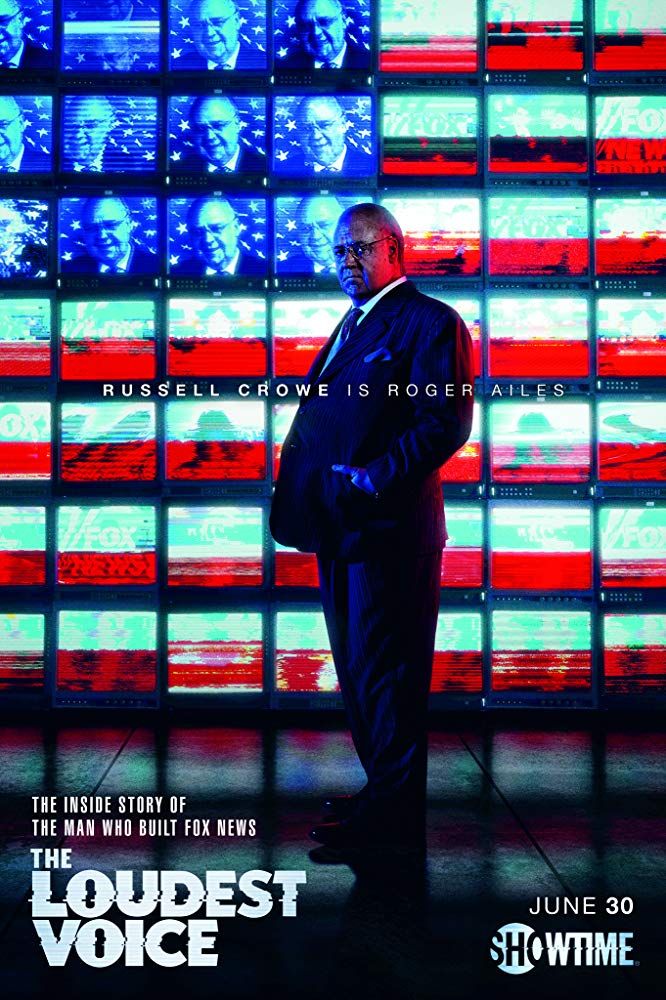
The Loudest Voice Finale: Truth


The Loudest Voice concluded tonight with John Lennon's "Gimme Some Truth," played under postscripts that tell us what happened to major characters after the story portrayed in the series ends.  In many ways, that combo - Lennon's song and the postscripts - were the most compelling part of the series, which was plenty compelling, already.

For example, why does Beth Ailes maintain her husband's innocence after we see her in the series finally disbelieving him, after being told that Gretchen Carlson has tapes of what Roger said to her?  Since there's no public record of what Beth said to Roger privately, let alone her private facial expressions, the most likely conclusion is: Beth's coming to believe the charges against Roger may be artistic license on the part of the The Loudest Voice. As I often say, docu-dramas are not documentaries, and even documentaries, though they don't fabricate scenes, may not tell the whole story.

Along the same lines, why did Ailes's assistant, Judy Laterza, first support Roger in the testimony she gave which she knew Roger was seeing on one of his cameras, and then, after Roger's death, continue to be silent on everything?  How much of the scene in which Roger invited her to join Beth and him for dinner, and Judy was delighted, until Beth nixed it, actually happened?

I raise these points not because I disbelieve Gretchen Carlson and the other women who brought charges against Roger, but because I think we need to keep reminding ourselves that the rendition of this that we saw in The Loudest Voice may be, at the very least, a narrative of truth embellished, in one way or another.  And this, in turn, is important to keep in mind when we consider Trump and the political part of the story, and Roger's view, depicted in The Loudest Voice, that he was more responsible than anyone or anything else for Trump's 2016 victory.   That may or may not be true, even though it's certainly a powerful story.

And there actually are at least two related questions here:  One, did Ailes believe that he was responsible for Trump's becoming President?  And, two, was Ailes indeed responsible for Trump's becoming President?  As I've said before in these reviews, I certainly don't think the answer to the second question is yes.  And I'm just not sure about the first.

But such questions only add to the power of The Loudest Voice, and, indeed, everything about The Loudest Voice was powerful, especially Russell Crowe's performance as Aisles, which abundantly deserves an Emmy.   Kudos to everyone who put together this little series for creating an excruciatingly timely and unnerving masterpiece.

Tuesday, July 30, 2019

Second 2020 Democratic Presidential Debate, Part 1 of 2: Winners and Losers

I thought the first part of the second 2020 Democratic Presidential Debate, just concluded on CNN, was much better than the first part of the first 2020 Democratic Presidential Debate on MSNBC last month.  By "much better," I mean that almost every candidate on the stage expressed her or himself better than what we saw last month.

Among the highlights -

  • Bernie and Elizabeth Warren were clear, passionate, and outstanding on their view that the avarice of private health insurance means that the best path forward is the government provides all of it.  As Bernie said, health care is a human right.  (I would add, the government protects us from human parasites, why not from micro-parasites and lethal cells?)  And as Warren said, private insurers are all devoted to maximizing profits, which means taking in as much money as possible in premiums, and keeping expenditures for health care to a minimum.  Later in the debate, Rep. Delaney's equation of private pensions and private health insurance was wrong: there is no immoral profit motive in companies providing pensions for employees.
  • Amy Klobuchar was outstanding on the need to finally stand up to the NRA as the only way to get sensible gun reform in America, and stop the massacres.
  • Back to Bernie and Elizabeth Warren: Bernie was better than Warren in wanting to cancel all student debt, in contrast to Warren, who wants to cancel 95% of that debt.  But good for Warren for being better than everyone else on that stage on that issue, other than Bernie
  • Good for Pete Buttigieg for insisting that all U. S. military engagements (i.e. wars) get Congressional approval,  and that approval have a three-year sunset clause.  Here's a better idea: how about we follow the Constitution, and insist on a Declaration of War (but also with a sunset clause).
  • Buttigieg also put out an important challenge to all Republicans in Congress: do you want to be remembered as someone who didn't speak up about the racism of Trump?
  • Bernie's denunciation of Trump as a "pathological liar" is always good to hear.
  • Especially powerful closing statements by Buttigieg, Warren, and Bernie.
As to everyone else in the debate, I thought that Rep. John Delaney spoke the best, and offered the best arguments against Bernie and Warren.  But I didn't agree with him.  And as for the rest, well, I look forward to not seeing them on stage in the third debate, in September.
See you here tomorrow night.

Wednesday, July 24, 2019

Reflections on Mueller'sTestimony Before House Intelligence Committee, Wednesday Afternoon

Mueller's testimony before the House Intelligence Committee, just concluded this afternoon, was stronger than his testimony before House Judiciary Committee this morning.

Schiff's opening and closing statements were both powerful, in contrast to Nader's, whose opening statement and questions were excellent, but whose closing statements were not memorable.   In general, Mueller answered more questions, and gave fuller answers.  He has a genuine passion about doing something to stop Russian interference in our electoral process. 

Unlike in previous years, Republicans do not share this, certainly not with the same passion.  This left the field open to the Democrats, who probed Trump's alliance as a candidate with Russians continuously and effectively.  In contrast, Republicans resorted to their typical tactic of yammering about straw-men, this time characters named Joseph Misfit and Kathleen Cadillac (well, that's what they sounded like).

But Russian interference with our last election, and the certainty that they will at least try to do it again, is no laughing matter.   If this afternoon's testimony wakes up more Americans to this problem, Mueller's appearance will have been worthwhile.

Whether this and the morning's testimony will empower the move towards impeachment, and/or the success of Democrats in the 2020 election for President and regaining the Senate, remains to be seen. My guess is it won't do much  for the first, certainly won't in itself lead to impeachment in the House, but may well have strong underlying effect in the next election, leading to Democratic success at the polls.

See also Reflections on Mueller's Testimony Before House Judiciary Committee, This Morning

Sunday, July 14, 2019

The Loudest Voice 1.3: Prelude to Trump


The most chilling part of The Loudest Voice 1.3 tonight on Showtime is Roger Ailes, in his speech in Warren, Ohio after Barack Obama's victory, saying we need to "make America great again".  That, combined with the talk about immigrants ruining America, on the day that our ICE gestapo began rounding up immigrants for deportation, is an eerily prescient voicing of the worst instincts in America in 2008 and shortly after - when Obama won and became President.

Before that, we see Ailes struggling to stop that from happening.  But he's hampered by his boss Rupert Murdock, who genuinely wants Fox News to live up to its "fair and balanced" moniker.  And he's hampered by the sheer dumbness of Sarah Palin.  And by David Axelrod, who stands up to Ailes and his political abuses.

On being dumb, we also get an eerie glance at our present day when Ailes says Biden, the VP candidate, is "dumb as an ash tray".  Again, our modern day fascist in the White House has said much the same about Biden today.  Trump has not originated much.  He's good at borrowing insults from Ailes and the cunning intelligentsia of the new right in America.

We also see more of the ways that Ailes preys on women.  All of this is leading up to what happened with Gretchen Carlson, which we saw the beginnings of in this episode.   We've yet to see what Ailes did to get Trump in office - in addition to giving him phrases - and get the disaffected in the midwest to leave the Democratic Party.  The Loudest Voice continues to be one of the best accountings of how fascism has managed to get such a grip in America.  In laying that bare, it may also show some pathways for rooting it out.

See also:  The Loudest Voice 1.1: Fox Launch ... The Loudest Voice 1.2: September 11 and After

Sunday, June 30, 2019

The Loudest Voice 1.1: Fox Launch


The Loudest Voice just launched on Showtime tonight, with an episode about the launch of Fox News.  Or, more specifically, about how Roger Ailes (stunningly portrayed by Russell Crowe) launched Fox News, and with just about everyone else on the screen (the screen of The Loudest Voice) kicking and screaming.  That includes owner Rupert Murdock, and just about everyone else in Ailes's orbit.

First, a few words from me about Fox News.  Although I've strongly disagreed from the outset with its politics, I've admired their green rooms (I've been a guest on O'Reilly, etc), and, more importantly, the savvy they've shown in how to present a news opinion show.  It wasn't the least bit surprising to me when they jumped to first place in cable news, leaving CNN and MSNBC in the dust.  This state continued until Trump and his awful Presidency drove up viewership of both Fox competitors, especially MSNBC.

But I digress.  I was never on the inside of Fox News.  I knew Fox News just as a viewer and as an occasional guest on one of its prime time shows.  So I have no idea how truthful or not this story of Ailes and the begetting of Fox News is.  But it certainly conforms to what I do know.

Not only did the green rooms have a great assortment of bagels, juices, and teas, but the corridors were buzzing with an energy I never saw when I was a guest on CNN or MSNBC.  You could tell when you got a peek at the control rooms that the people who worked on Fox knew they were part of a revolution in news presentation, and loved it.

Of course, as we'll see in weeks ahead, not everyone at Fox continued to love it or had reason to love it.   But that's a different part of the story, and there's no denying that Fox utterly dominated cable news in the first decades of its existence, in an age right between the hegemony of network television and the rise of social media.   The Loudest Voice offers a crucial and compelling picture of just how this came to be.

====

FYI, here's a list of my television appearances.

And here's an example of me and O'Reilly:


Minor Quibble with Kamala Harris: The Opposite of Science Fact is not Science Fiction

Although it's at most a minor quibble with Kamala Harris's superb performance in this past Thursday's Democratic debate - see my assessment of that over here - I thought, as a past President of the Science Fiction Writers of America (1998-2001), that I ought to weigh in on a concern which has made it all the way to The Washington Post.

The concern arises from Harris's point made during the debate that our response to climate change needs to be based on "science fact not science fiction".   Unfortunately, this contrast, likely the product of one of Harris's writers not what she herself may think, shows a woeful misunderstanding and ignorance of science fiction.  Anyone who has read any of Asimov, Heinlein, and Clarke, not to mention Verne and Wells, would know that science fiction does not deny or belittle science.  To the contrary, the essence of science fiction is to use science as a foundation to explore dramatic situations, including global catastrophes, and predictions of the future.

As a science fiction author myself - of novels and short stories - I have had the majority of my short stories (some 17) published in Analog Magazine, aka Analog Science Fiction and Fact Magazine.  Over the years, newer writers have asked me what I would recommend for enhancing their chances of getting published in Analog.  My answer: get your science right, and make sure it plays a decisive part in your story.

The fundamental connection between science fiction and science fact has been recognized by scientists such as Marvin Minsky, who said Asimov's robot stories inspired Minsky's life-long work in AI, and by Nobel Laureate Paul Krugman, who cited Asimov's Foundation series as inspiration for Krugman's work in economics.

And, to get back to Harris's inapt comparison, it's not that hard to find suitable opposites to science - pseudo-science, fantasy, conspiracy theory, all would have worked well in Harris's formulation.

But, as I said, this is a minor quibble, and now that I've gotten it of my system, I can return to thinking about who is the best candidate to beat Trump.  Harris's performance on Thursday makes her a major contender.


Thursday, June 27, 2019

First 2020 Democratic Presidential Debate, Part 2 of 2: Winners and Losers

I thought the second part of the first 2020 Democratic Presidential debate was better than the first part - on yesterday - in that more of the ten on stage had standout moments.   My assessment follows, in descending order of what I thought were the best performances:

Harris was clearly outstanding and the best tonight.  She was powerful and eloquent on health care and immigration.  She was strong on the need to curb racism, including an attack on Biden for working with Southern racist Senators.  I liked her intention to take executive action on banning assault weapons (though Swalwell was even stronger on this issue), and she had the best closing statement.

Gillibrand did a lot of good for herself on the need to curb gun violence, and on the danger of compromising on women's rights.  I think she'll rise in the polls as a result of tonight's performance.

Among all the crucially important issues that beset us, I put reducing gun violence, aka gun control, at the top of the list.   I therefore agree completely with Swalwell putting gun control at the top of his list.  His plan to buy back assault weapons makes good sense, and he captured the stakes in this issue well with his observation that we need to "love our children more than our guns".

Bennet was correct to speak about Nazi concentration camps in his denunciation of the camps for immigrants at our Southern border, and he was right to stress the need to win back the Senate in the 2020 election (as Booker did last night).

Sanders had a strong closing statement, and he was passionate as always on the need to equalize wealth in America.

Buttigieg was powerful and articulate on the need to end police racism, but Swalwell did him one better by challenging him to fire the Police Chief of South Bend.

Biden took a long time to come alive - too long - and responded pretty well to Harris's attacks (but he should have kept talking).   He was excellent on the evil of putting children in cages, strong on the need to get our troops out of Afghanistan, and right to hold gun manufacturers responsible (but why let the NRA off the hook?).  His closing statement was ok - which is about the best you could say about his overall performance.

The other three either outright crazy (Williamson), too focused on a single issue (Yang), or nothing special (Hickenlooper).  I don't expect any of them to be on stage for the next debate.

But I'll be back here with another review.

See also First 2020 Democratic Presidential Debate, Part 1 of 2: Winners and Losers


Joe Biden does become President in this 2014 novel

Wednesday, June 26, 2019

First 2020 Democratic Presidential Debate, Part 1 of 2: Winners and Losers

I thought the first Democratic debate - the first of two - was excellent and inspiring.  Here are my thoughts on the winners and losers:

There were no outright gaffs by anyone - the closest was Ryan saying the Taliban were responsible for 9/11 (the Taliban did support Al Quaeda) - so I'll share what I thought were the strongest moments.  If I don't mention someone, that means in my opinion she or he did not do very well.   The following is in descending order of what I thought were the best performances:

I thought De Blasio made the greatest number of excellent points, beginning with his opening statement on the soul of the Democratic Party.  He followed with a powerful denunciation of the greed of health-insurance companies, and the need to replace them with Medicare for all.  He later  made the astute point that Americans have lost their jobs not due to immigrants but the actions of big corporations.  He was also eloquent on the need to do more about police victimization of minorities, and on the need for Congressional approval of U.S. military actions.  And I liked his answer on the biggest threat to the U.S.: Russia and its interference with our elections.  (Given the number of times that the 2-hour MSNBC broadcast was interrupted by blank screens, I wonder if the Russians weren't hacking some of MSNBC's computers.)   All in all, I thought De Blasio established himself tonight as a passionate and articulate candidate.  Given his low standing in the polls, his performance was the biggest surprise.  As someone who works in NYC, and lives close by, I'm happy to see this.

Booker was excellent, too.  He was right on about health-care insurers profiteering, and on ICE and their Nazi tactics (my word not his).  I also liked his vision of the Democrats not only winning the Presidency but both Houses of Congress in the next election.  And it was good to hear him talk about the need to protect LGBQT communities.

Warren started out great on the need for healthcare for all, and for Roe vs. Wade to be enacted by Congress into Federal law.  But she wasn't strong enough on gun control, and was silent or didn't say enough on some major issues, including immigration.  Given that she is pretty high up in the polls, her performance was not as good as expected.

Klobuchar, on the other hand, was better than expected.   I liked her brief for a sane foreign policy, and she was excellent on kids leading the charge for better gun control.   I think she came out a lot better than she went in on this debate.

Castro was likable and very effective on ending the criminalization of illegal immigrants (those violations should be civil offenses).  And he was 100% right when he said the tragic drownings of a father and daughter in the Rio Grande today should not only break our hearts but "piss us all off".  I think his performance tonight made him much more of a contender.

And ... that's it.  No one else made much of an impression, including Beto O'Rourke, whose weak performance tonight might be the effective end of his campaign.

See you here tomorrow after Part 2.

See also First 2020 Democratic Presidential Debate, Part 2 of 2: Winners and Losers


Friday, February 1, 2019

Tuesday, November 6, 2018

Democrats Regain Control of the House

Well, it wasn't quite the massive blue wave that many people, including me, were hoping for.  Republicans still control the Senate.  But Democrats took back control of the House of Representatives in today's election.  And I'll certainly take that.

Because it means that all programs - health care, environment, immigration, much more - are safe from Republican despoiling.  It take both branches of Congress - the House and the Senate - to pass a bill to send to President to sign into law.  That's just not going to happen now, not with the destructive, racist, un-American ideas that Trump and all too many Republicans want to see enacted into law in our nation.

America is still in serious danger, with Republicans in control of the Presidency, the Senate, and via that, therefore the U. S. Supreme Court.  But we now have one branch of government where rationality and decency can reign.

That's better than where we've been these past two years, and provides real hope for completing the conversion back to sanity in 2020.  A victory for democracy - this time in small districts of humanity across the United States.  Next time we'll take it all back.


Saturday, July 21, 2018

Trump and Putin = Hitler and Stalin, 1930s

I've been thinking more about my realization earlier this week (I'm sure many others have thought the same) that Trump and Putin are reminiscent of Hitler and Stalin, in the 1930s.   Let's flesh this out.

Putin is not a Communist by name, but he rules his Russia in much the same way as Stalin ruled Russia in the 1930s - by murder and intimidation.   He has the same attitude as did Stalin about Russia being taken advantage of by the world, and the consequent need to stand up to that by any and all means possible.   Part of that was an alliance with Hitler and the Nazis in the late 1930s.   During that alliance, Stalin and Hitler invaded Poland, and Stalin forcibly annexed or attacked the Baltic states, Finland, and Romania.   The similarities to Putin in Crimea and Georgia, unopposed by Trump, are undeniable.

Trump is not (yet) Hitler, but he shows many disturbing tendencies of going in that direction.  He has contempt for the press - he calls it "fake news," just as Hitler labeled the press Lügenpress or "the lying press" - and prefers communicating directly to his people via Twitter, without the intervention of the press, just as Hitler did with radio.   Trump is inhumane to minorities and immigrants, and preaches an American purity similar to Hitler's Aryan superiority.  He has contempt for the democratic process, as did Hitler, and embraces dictators such as Putin, and the autocratic leaders of China, North Korea, and Turkey, just as Hitler did with Mussolini and Tojo.

Obviously, neither Trump nor Putin have committed anything like the mass atrocities and genocides Hitler and Stalin would do in the 1940s.   But by then, the two allies of the 1930s - sometimes suspicious of one another, but more than willing to sign a non-aggression pact in 1939 - had broken and were engaged in a fierce, all-out war.

Trump says he wants peace with Putin and Russia, which is good.   But people who value freedom and democracy and its necessary bulwarks like the press must do all in our power to make sure the two don't eradicate democracy, as Hitler and Stalin did in their countries in the 1930s, and soon tried to do with the rest of the world.

Monday, July 16, 2018

Why Trump Loves Putin

Blackmail has often been cited, sometimes along with gratitude for the help Russia gave him in the 2016 election, as the reason Trump so adheres to Putin, as seen again in the Helsinki press conference today.

That may well be, but I think the deeper reason is that Trump has an affinity to dictators - to people in power who don't need the votes of anyone to continue in office.  Though Trump often trumpets how he won the election of 2016 - including again today - he knows full well that he lost the popular vote and only is in office because of the quirks of the Electoral College.  And that must rankle him.

When he sees our allies in Canada and in Europe, he has contempt for them, because he knows full well that they can be swept out of office in the next election. As can he.

When he sees Putin, or the leaders of China, North Korea, and Turkey, he sees something quite different.   He sees people who have somehow managed to stay in power, in some cases decades already, without needing a single real vote.  He sees people who think of themselves as Plato's philosopher king, though who knows what any of them, especially Trump, actually know of Plato's work.

This means that Trump is neither stupid nor out of control.  And though he may be subject to blackmail, and though he may be grateful to Putin for what Russia provided to him in the 2016 election, I think that Trump's embracing of Putin reflects what he feels and desires in every ounce and the deepest part of his being: to stay in office, to do as he pleases, without the annoyances of the press or the need in his view to pander to voters, for as long as he pleases.

Possibly other politicians and even presidents in American history have felt the same.  But I'd say none as fanatically and irrevocably as our current President, and this is a far more serious threat to democracy than blackmail or gratitude could deliver.


Thursday, June 21, 2018

States' Rights in the Trumpian Era


I've been thinking about states rights these days, as the Feds under Trump's command first separated refugee children from their parents, and, having ended that inhumane practice, are now dragging their heels in the all-important task of getting these families re-united, before even more lasting damage is done to those helpless children.

I say "helpless," because what kind of effective help is there for those people?  Citizens and enlightened groups like RAICES can help, American Airlines and other air carriers have refused to cooperate with the Fed dispersion of the captive kids across the nation, but how can they stand up to the might and force of the Federal government?   Who can insist that a Senator let alone a reporter can walk in and inspect these heartless jails?

I grew up in an era in which the Federal government was the good guy and the states were bad.  In the Civil Rights era, I applauded JFK and others sending in Federal marshals to make sure that states followed the Supreme Court ruling ending segregation in public schools.

But times have changed.   Senator Bill Nelson, turned away from a Federal detention camp in Florida, is the hero.  So is Governor Andrew Cuomo of New York, who is suing the Federal government and its fascist practices.  So other other state governors, including Cuomo, who are refusing to allow their National Guard to be used to support these despicable practices of our Federal government.

I say we need more of that.  I'd like to see Senator Nelson show up next time with a force of Florida State troopers.  That's right.  The essence of our country, as the Founding Fathers saw and created, was a balance between Federal and state sovereignty.   States exercising all forms of their power to stand up to what Trump and his minions are doing has never been more appropriate and necessary.


InfiniteRegress.tv