Chuck Todd interviews me about alternate histories
Showing posts with label John Milton. Show all posts

Wednesday, February 10, 2021

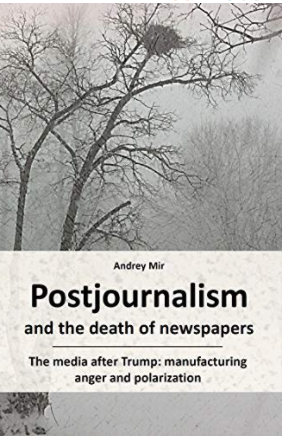
Review of Andrey Mir's Postjournalism and the Death of Newspapers

The full title of Postjournalism and the Death of Newspapers. The Media after Trump: Manufacturing Anger and Polarization by Andrey Mir says it all:  the delivery of news on Twitter and social media to an increasing majority of people has replaced the attempt to disseminate facts and truth on traditional news media, with the new goal of massive engagement via likes, retweets, and shares, with the result that an informed public, however imperfectly constructed, is being shoved aside by a polarized populace seething with anger.  I would add: this is also the best book on media theory and assessment written in forty years.

Mir brings to bear the media insight of Marshall McLuhan, the political savvy of Walter Lippmann, the radical economy of Edward Herman and Noam Chomsky, and much more in his detailed and probing analysis.  The 20th century began with newspapers selling news to readers and concluded with newspapers and radio and TV selling news to advertisers.  Both systems, though flawed, and for different reasons, were committed to making their utmost efforts to report the truth. Readers wouldn't tolerate too many falsities in their newspapers, and advertisers did not want to be associated with them, either.

All of that changed with the advent of social media, cheered at first, by many, including me, as uncorking the voice of the people, and pushing the haughty gatekeepers aka editors out of the way.   It was a case of Dylan's "Don't stand in the doorway, don't block up the hall." Occupy Wall Street and the Arab Spring were seen by me and many others as early triumphs of these unshacklings of information.  I still feel that way about social media and their potentials.  But Mir convincingly tags and explains the darkside of this same liberation of news.

On Twitter, readers pay nothing for the news other than their time.  Viewers pay nothing for broadcast news, either, but the advertisers do.  Ads appear on social media, too, but they're barely distinguishable from the myriad bits of news, which all too often are no longer news, but opinion.  And since the posters of these news opinions seek validation via likes, shares, and retweets, a kind of natural selection winnows out the more moderate opinions.  The more controversial and extreme the fact-opinion, the more likely it is to be retweeted.

This tide of polarization engulfs the traditional media, too.  Mir explains, “Centrist experts can appear in the media, but they are not those who generate buzz, virality, and spin-off in the polarized media environment aimed at frustrating and engaging" (p. 316).   When was the last time you saw a Trumpist or even a moderate on MSNBC or CNN?   Once in a blue moon, at most. As a viewer of these two cable news stations, no more immune than any other human to the polarization and anger of our age, I can attest to being annoyed and even angry when a Trumpist or even a moderate appears unchallenged by aggressive hosts on these stations.  I don't watch much of Fox News, but from what I've seen, the same and worse is true in reverse: progressives unchallenged or not by hosts are virtually nonexistent over there.  Moreover, some hosts on Fox have no problem spouting outright lies like Trump won the 2020 election as fact.

Keep in mind that Mir made all of these observations about the intensification of angers in this, our socially mediated age, prior to Trump's mob storming the U. S. Capitol on January 6 of this year.  I just saw, today, the second day of Trump's second impeachment trial in the U. S. Senate, a video that captured the sick fascistic depravity of that mob, and how close they came to killing the Vice President of the United States, the Speaker of the House, and who knows how many Senators and Representatives -- how close that Hitlerian, Trumpist mob, who pretend to be Americans, came to dealing out mass death, were it not for the bravery and savvy of the Capitol and District of Columbia police who were so vastly outnumbered.  They were outnumbered by the physical manifestation of the online mobs that Mir describes in Postjournalsm -- physical mobs that sought to cancel democracy by cancelling the lives of its elected representatives.

I remain an optimist, and, like John Milton, a believer in human rationality, and its capacity to stand up to illogical and inchoate emotion.  But it failed before, in Nazi Germany, and it almost failed here in the United States at the end of Trump's term in office.

If you'd like to learn more about how this state of the country and world came to be, read Mir's book.  You'll likely learn more from Postjournalism -- as chocked full of extensive research as it with prescient lines like "There were no revolutions before newspapers, and there will be none after; only riots (yet, maybe, coups)"(p. 451) -- than from the past dozen books you've read or will read on the subject.


Saturday, November 7, 2020

Truth Wins in the Marketplace of Ideas


Welcome to Light On Light Through, Episode 155, in which I put Joe Biden's victory in some philosophic context: it offers proof of John Milton's argument, way back in the Areopagitica, that truth can win in the marketplace of ideas, even this age of social media.


Check out this episode!

Wednesday, November 28, 2018

Liberty Loves Reason: Trees, Freedom, and Rationality


The full title of this 45-minute documentary - Liberty Loves Reason: The Evolved Wisdom of Trees versus Identity Politics and Political Correctness - shows exactly what you're getting into if you watch it, which I very much recommend:  a brief on the importance of reason in this, our hyper-partisan age,  and its connection to the biological, evolutionary basis of our and all living knowledge and intellectual faculties, as well exemplified in trees.

Well, maybe this documentary is a little more than that.  It argues, as did John Milton, that truth and falsity must be free to fight it out in the marketplace of ideas.  This means that excluding any patently untrue idea is a dangerous thing to do, on even the slim chance that it may be not be untrue, for that would result in truth not falsity being excluded.

In the realm of trees and all non-human organisms, nothing is ipso facto excluded.  Instead, strategies are tested (unconsciously, for trees).  If they survive, their lack of falsity has been demonstrated, at least to a point.  In trees and other living, non-human things, these "ideas" will continue to be employed in this way, unless and until something in the environment changes and the strategy no longer works.

Karl Popper and his evolutionary epistemology is most and correctly associated with this (though Ray Scott Percival should have mentioned that Donald T. Campbell most developed that term, in a brilliant essay with that very title in The Philosophy of Karl Popper two-volume anthology published in 1974).   Percival might have also mentioned Popper's "paradox of tolerance" (from Popper's 1945 The Open Society and its Enemies), lately used as a justification for censoring hate speech.  I always thought that Popper's argument that allowing speech that preaches the destruction of a free society should be not be allowed, since such speech is designed to destroy the free society, misses the point that the free society is compromised the instant it censors anything, including noxious hate speech.  (See my Government Regulation of Social Media Would Be a Cure Far Worse than the Disease for more.)

But despite these inevitable imperfections, Liberty Loves Reason is a lushly imagined and photographed masterpiece, beautifully scored, of an intellectual argument absolutely crucial to these our dangerous times.  Eminently worth your time.


Saturday, September 29, 2018

Yesterday's Victory for Justice, Democracy, and Reason Depicted on Lawrence O'Donnell's The Last Word

What I saw last night on Lawrence O'Donnell's The Last Word on MSNBC was one of the most inspiring things I've ever seen on television.   Republican Senator Jeff Flake being talked to in the elevator by Maria Gallagher and Ana Maria Archila.  Flake later listening intently as his Democratic colleague Chris Coons made the eminently rational case for an FBI investigation of the Kavanaugh sexual assault charges.  Flake standing up, walking by Coons, and signaling his colleague that he wanted to talk.  All leading to the result:  the FBI, ordered by Trump who had no choice - because Kavanaugh needs Flake's as well as Sen. Sue Collins' or Lisa Murkowski's votes to be confirmed - is now conducting this investigation.

Lawrence aplty called this historic moment in American and U. S. Senatorial history "a victory for decency".  Maria Teresa Kumar said "that's what democracy looks like".   Both true.   And as media historian, I would also add this was a wonderful moment for television.  Lawrence and his producers put the segment together perfectly.  Lawrence's narration was perceptive and sage, like everything else he says.  Only television, only with us in American homes since the late 1940s, could have done this.

And it also is a vindication of John Milton's view that if truth and falsity are allowed to fight it out in the marketplace of ideas, our human rationality will award the victory to truth.  Not for everyone all the time.  But for enough people enough times to make democracy work.  Were Milton able to be a guest on Lawrence's show last night, he would have no doubt said that Jeff Flake's decision was evidence of this power of our rational minds.   It's not easy being reasonable when emotions run high.  But Gallagher and Archila provided the wake-up call, making Flake realize that something had to be done, and Coons the path forward, with his focus on the FBI investigation.  Flake's mind was open enough to hear it all, and rational enough to be persuaded by it.

Democracy has been called, with due cause, the least worst form of government.  Yesterday demonstrated that in a way I've never seen before.  For those like me who view Kavanaugh on the Supreme Courts as an affront to everything we hold in high esteem in our democracy, his fate is still undecided.   But we pulled back from the cliff yesterday, and a way that all champions of justice, democracy, and reason should applaud.

Sunday, December 24, 2017

Jacob's Paradox: Between Genesis and Milton

I figured I would expand the purview of my year-end plunge into time-travel feature movies and TV series on Netflix to time-travel shorts on Amazon Prime (Netflix doesn't have many if any time-travel shorts).  First up is Jacob's Paradox from 2015, a 36-minute narrative, written, directed, and starring Michael Peake (this is a common configuration in shorts - Jay Kensinger wrote, directed, and starred in The Chronology Protection Case, based on my novelette of the same name).

The name Jacob's Paradox is reminiscent of the Biblical Jacob's Ladder.  But when you're dealing with time travel and paradox, you often wind up not climbing up to heaven as the Biblical Jacob did, but falling into hell, as the Jacob in this short does.   And though I've always agreed with Milton's Lucifer that it's better to reign in Hell than serve in Heaven, Jacob doesn't even get to do that in Jacob's Paradox.

This Jacob is a professor who lectures his physics class on the grandfather paradox - if you traveled to the past and killed your grandfather before he sired your mother or father, how would you have been able to travel to the past in the first place, since you wouldn't have existed.  Professor Jacob provides two "solutions" - something will stop you from killing grandpa, or, a new alternate reality will come into being with no you, but since the you who traveled to the past comes from the first reality, the paradox is averted.

So informed, the audience is set for what the thrust of the movie will be: Jacob is going to travel a little bit into the past to save his wife, who was murdered by an intruder in their home when Jacob wasn't there.  Jacob's plan is to travel back to the past and indeed be there, and stop the killer,

I won't spoil the ending for you, except to say it's excellent and O'Henry-esque, with good performances by Peake as Jacob and Mindy Heithaus as as philosophy professor.  Recommended viewing, with room for a sequel.

 
watch The Chronology Protection Case FREE on Amazon Prime


read time travel stories FREE on Amazon Prime

Wednesday, December 6, 2017

Government Regulation of Social Media Would Be A 'Cure' Far Worse Than The Disease

In case you missed this, my article published 28 November 2017 in The Conversation ...

Government regulation of social media would be a 'cure' far worse than the disease


File 20171121 6039 10hgvnh.jpg?ixlib=rb 1.1
                    NextNewMedia
Paul Levinson, Fordham University


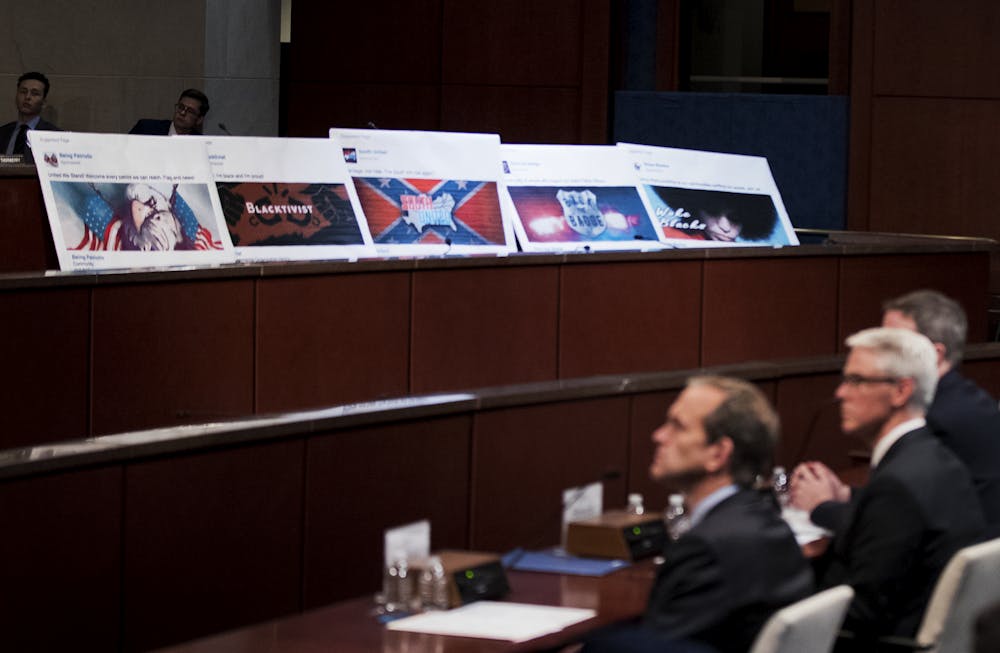
In recent weeks, Congress has grilled Twitter, Facebook and Google about their role in allowing foreign interests to place ads and articles intended to divide the electorate and spread false information during the 2016 election.

Now a number of people in and out of government are calling for federal regulation of social media.
Lay down some rules, the thinking goes, and we would be able to prevent the infestation of bots and fake news from our news feeds and ads. Democracy would be saved – or, at least, foreign interference in our elections kept in check.

However, as someone who has studied and taught the First Amendment for decades, I would argue that if such regulations were enacted, the main victims would be not the purveyors of fake news, but our freedom of expression. In my view, the result would do far more damage to our democracy than any foreign misinformation campaign ever could.

Free speech being attacked from all sides


The First Amendment is under a lot of duress.

Arguably, it’s been that way since the Supreme Court’s “clear and present danger” decision in 1919, which spelled out when limits on free speech could be lawful. It not only held that the government had an obligation to stop someone from “falsely shouting fire in a theater,” but also opened the gates to all manner of government violations of the First Amendment injunction that “Congress shall make no law…abridging the freedom of speech, or of the press.”

These range from the FCC’s “Fairness Doctrine,” which was upheld by the Supreme Court, that required broadcasters to present controversial issues in a balanced way (in the FCC’s view), to the FCC’s warning to radio broadcasters in 1971 not to play songs that glorified drug use, which actually had the effect of limiting the airplay of songs that critiqued drug culture.

Indeed, with the exception of Supreme Court decisions in the Pentagon Papers case in 1971 and the Communications Decency Act in 1997, the American government has systematically increased its control of media.

The situation has gotten much worse over the past year. President Trump has tweeted about withholding the licenses of NBC affiliates and lashed out at other media not to his liking.
Although Trump’s bluster about limiting and punishing media may be easy enough to deride, the fact that he is in the White House – and has the ability to appoint FCC commissioners – means his threats must be taken seriously.

Meanwhile, a theory of philosopher Karl Popper – the “paradox of tolerance” – is being widely cited as a justification for outlawing hate speech, notwithstanding the First Amendment. From his 1945 book “The Open Society and its Enemies,” it says that tolerance defeats itself when it permits intolerant speech.

I studied Popper extensively while researching my first book, an anthology of essays about Popper’s work. There are many aspects of Popper’s philosophy to admire, but I don’t believe the “paradox of tolerance” is among them.

To ban hate speech could turn our tolerant, democratic society into precisely the kind of state that hate speech is calling for: It could open up an opportunity for all sorts of speech to be dubbed “hate speech.”

A slippery slope


When regulating fake news on social media sites, there’s the danger of the same sort of phenomenon taking place. And it’s exactly why the well-meaning hue-and-cry that the government needs to intervene and forbid social media sites from disseminating fake news or allowing accounts that are actually bots is so dangerous.

Fake news is nothing new. Centuries ago, anti-Semitic publications spread rumors that Jews murdered Christian children and drank their blood on holidays.
Over the past two years, social media have increased the amplitude and reach of fake news. But there’s also been the ascension of a political figure – Trump – who has turned the tables by labeling any unwelcome news as “fake.”


Facebook ads linked to a Russian effort to disrupt 
the American political process are displayed as 
representatives from Google, Facebook and Twitter 
testify before the House Intelligence Committee on Nov. 1. 
Manuel Balce Ceneta/AP Photo

The latter should be more than enough reason to reject calls for government censorship of fake news. After all, who’s to say a government that determines what’s “fake” won’t simply follow Trump’s lead, and suppress critical and truthful content under the guise that it’s fake?

Instead, social media networks could develop and implement algorithms for identifying and removing fake news by marshaling the same engines that spread fake news in the first place. These algorithms would not be administered by the government; rather, Facebook and other social media would be responsible.

Twitter has already made considerable progress flagging and removing accounts that spread Islamic State propaganda. There’s no reason to think that the same process can’t be applied to Russian bots seeking to inflame political discord and therein damage America’s political system.

Such self-regulation is in the best interest of these media companies. It would increase the confidence of their users in what they encounter online. It would also have the added benefit of keeping government regulators at bay.

In the end, the ultimate antidote to fake news and bots is the rationality of the human mind.
As John Milton famously urged in his “Areopagitica,” if you let truth and falsity fight it out in the marketplace of ideas, human rationality will most likely choose the truth. Regulating what can enter that marketplace could impair or destroy this process, by inadvertently keeping truth from public awareness.

Rational thinking’s ability to identify fake news is more than a Miltonian ideal: It’s been demonstrated in a carefully conducted 2015 experiment. When given a small financial incentive, the subjects were able to identify fake news as fake, even if the fake news supported the political views of the subjects.

Indeed, rationality is deeply implicit in democracy itself. You can’t have the latter without the former.
The Conversation

The key in combating fake news and kindred attacks on our body politic is to give our rationality maximum access to all information, including the truth. And in my view, this means resisting any attempts by government to limit the information that reaches us.

Paul Levinson, Professor of Communication and Media Studies, Fordham University

This article was originally published on The Conversation. Read the original article.

Saturday, October 22, 2016

Why Brexit and Waldo Won't Play as Trump in the U.S.

A lot of bitter-end Trumpists, clinging to any last hope they can find as their candidate goes under, cite Brexit as what will happen in the United States on Election Day.  If they were more literate, they might also find comfort in Black Mirror's science fiction episode, "The Waldo Moment," in which a cartoon character disrupts the political process in the U.K., and comes in second in a three-way heated campaign.   Indeed, Black Mirror creator and Waldo writer Charlie Booker has gone on record saying that Trump could well win.

Here's why I think not -

First, as far as Brexit is concerned, although the pro-Brexit "leave" vote was trailing the anti-Brexit "stay" vote in the lead-up to the U.K. referendum, the two were closer (just a few points in the polls) than Trump is now to Hillary Clinton in the United States (he's ten or more points behind in many states, including some swing states).

But those numbers aside, the electoral system in the U.K. is very different from what we have in the U.S.  In the U.K., everyone voted once, pro or against, Brexit.  The potential for surprise that goes against the polling is much greater in that kind of system than in the U.S., in which the Presidential election takes place months after the conclusion of a series of primaries.

Why is that important?  Well, not to be too cynical about it, but our U.S. system gives more people more time to come to their senses, and not vote their first impulses.   Indeed, Trump won the primaries because people were indeed voting their first impulses, which they didn't have all that much time to think over, and in the Republican Party were not all that antithetical to Trump in any case. But Americans including Republicans now have had lots of time to find out about Trump's treatment of women, his refusal to say he'll abide by the election results, and lots of other very disturbing factors not many people knew about during the primaries.

Nothing is impossible in elections.  But John Milton and Thomas Jefferson's belief that if truth is in the market place of ideas with all the falsity, sooner or later a majority of rational human beings will recognize it, seems to be at holding sway in the United States, where the truth about Trump has had time to get known.

We all have to vote, but I'm looking forward to watching Waldo where he belongs, not in the White House but on Black Mirror's darkly satirical television.


Wednesday, February 3, 2016

Why Money Doesn't Matter As Much As Some Think in Politics

I've been arguing for years about Citizens United - and its lack of baneful influence on our political system.  Which is to say -  I think that big money has not distorted or disrupted our elections or political process.

The best example, until now, has been the re-election of Barack Obama in 2012.  Big money did everything it could to stop him.  But it couldn't erase Romney's thoughtless comment about the "47%" not mattering, and the video recording of that comment likely helped him lose the election. YouTube beat big money.

This year, Bernie Sanders is doing pretty well - explicitly denouncing the role of money in politics provided by corporate giants.   Clearly, if that money were so unstoppable in its influence, Sanders wouldn't be where he is today.

And a statistic just released today shows another way in which money has had little if any lasting influence in the 2016 Presidential campaign thus far.  As indicated in the chart, shown earlier on MSNBC, Jeb Bush has far and away spent the most per vote received by any GOP candidate - which means he has spent the most amount of money, and received the last in return in voter support. Conversely, Trump has spend the least - and his low expenditures have given him a second place finish in Iowa in a crowed field.


Clearly, then, money is not a decisive factor.  Social media are apparently more decisive.  In Trump's case, his domination of Twitter brought him to second place (and the fact that it was second, not first, shows that social media have their limits, too -  see here for more).

I've always thought that, as John Milton and Thomas Jefferson pointed out, when truth and falsity are given access in the marketplace of ideas, people will recognize the truth and vote their self-interests. This is where social media find their limits, too - human rationality can recognize a lie, or bombast such as Trump's, whether presented in a high-cost ad or in a no-cost Tweet.  But the advent of social media means that, regardless of how much money may be spent to the contrary, someone, somewhere, will be able to express a fact or a view closer to the truth.   And with the mass media picking up more from social media, that fact will sooner or later be broadcast to millions.

Friday, November 14, 2014

The Unheralded Lesson of Mayor Butt's Election for Citizens United

It's always nice, and a fact crucial to the growth of our knowledge, when an event in the real world answers a hotly debated issue.   We got such a fact last week, when Tom Butt was elected Mayor of Richmond, California. He spent about $50,000 on a mostly door-to-door campaign.   In contrast, his opponent was financed to the tune of $3,000,000 by Chevron Oil in a massive media and advertising campaign.    Indeed, Chervon's spending like Goliath in this race had been cited by many progressive pundits as their worst nightmare come true about the Supreme Court's Citizens United decision in 2010, which held that corporations could contribute as much as they wanted in national elections, and the subsequent extension of this decision to local elections.

I'm a progressive, too, but I never had a problem with Citizens United, and in fact supported it as an important affirmation of the First Amendment, and its requirement that "Congress make no law ... abridging freedom of speech or press".   Opponents of Citizens United argue that the First Amendment protects the rights of people not corporations to communicate, and this set off a distracting discussion about whether corporations are people.   But that question misses the reality that communication is intrinsically a two-way street, with a receiver as well as a sender, and the First Amendment protects both parts of that equation from governmental interference or regulation.  What this means in plain English is that Americans have a right to receive information from anyone and everything - be it another person, a corporation, a bird chirping, a robot, or a tree falling in the forest. All of this comes under the public's right to know.

But what about the feared deleterious effect of big corporate spending on our elections, and therefore our democratic process?   I was never too concerned about that, either, because, like John Milton and Thomas Jefferson, I believe that human beings are fundamentally rational, able to separate truth from falsity, and make decisions that best serve their interests, most of the time.   And, indeed, I was glad that Barack Obama was re-elected in 2012 for at least two reasons.   First, as I said, I'm a progressive, and support most of his policies.   But, second, Obama's reelection showed that all the post-Citizens United spending on behalf of Republican candidates, including Romney, failed in its mission to unseat the President.

Still, one could argue that Obama is an anomaly, so charismatic a candidate that it didn't matter how much money his corporate-funded opponent - and already fabulously wealthy on his own - spent against Obama.   That's what makes the election of Mayor Butt so important. Impossibly overspent by Chevron Oil, Butt managed to win.    You could say Chrevon lost, with no ands, ifs, but a least one Butt about it.  (Ok, I had to be permitted at least one pun here.)

Progressives should be celebrating.  But I've seen little of that - at least, not for the right reasons. Rachel Maddow aptly cited Butt's election as a bright spot in the otherwise mostly grim election night last week.   But she failed to follow through on the logical import of Butt's election:  corporate spending need not buy elections.   Progressives can win, if we put up good candidates, who take courageous and clearly defined positions, and speak sense to the people.   Butt's election showed a packet of lies financed by millions of dollars loses to a statement of truth financed by just a sliver of that money.   In politics, money doesn't talk as loud as some thought.


Sunday, April 27, 2014

Chris Hayes on Showtime's Years of Living Dangerously Tonight

No one needs another show to watch on Sunday night these days.  In addition to Mad Men and Game of Thrones, which I watch and regularly review, there's also The Good Wife and Turn, which I watch and sometimes review, and Mr. Selfridge, which I watch and enjoy and usually don't review, because enough is enough.   On the other hand, to paraphrase the Victorian poet Robert Browning, one's reach on TV should exceed one's grasp, or what's a DVR for?   And Years of Living Dangerously, whose third episode is on tonight, is also On Demand.

I'm looking forward to Chris Hayes' contribution to this high-tech broadside on the need to wake up to the dangers of global warming.  Just to be clear, though I think Hayes is one of the brightest and most cogent voices on television, I don't agree with everything he says.  For example, I'm not too worried about the apocalypse to democracy thought to be engendered by Citizens United, seeing as how Obama - whom I voted for twice, and strongly support - handily won reelection in 2012, or two years after that much derided Supreme Court decision.   This confirms to me, once again, that Milton and Jefferson were right that people are inherently rational and vote their best interests - now in the 21st century, regardless of the mega-bucks spent on political advertising.

But Hayes and James Cameron and the all-star cast both in front of and behind the camera in Years of Living Dangerously are completely right that we need to do something about what is going on in the climate around us.   Look, even if all the evidence that the world is slowly heating up is wrong, wouldn't we be better off having some control over our climate and the temperature of the world?  To say, as do some Republicans, that the climate is in God's hands, misses the point that God or natural selection or whatever brought us here left us with minds and the capacity not to just accept the natural world around us but improve it, for us,  and most living denizens of this planet.   Surely, we're better off now than in ancient Rome, with its average lifespan of 20-30 years (45-47 for those who made it to the age of 10) - a result of science and medicine and its invention and application via human mentality.

The Scientific Revolution in the Renaissance was borne on the wings of the printing press (as I detail in The Soft Edge: A Natural History and Future of the Information Revolution).  Television in America, though it's had its moments with Nova and the original Carl Sagan Cosmos series and the reboot now on Fox, has by and large not risen to the task.   It's good to see Years of Living Dangerously and some of the best minds on the planet join the ranks.


Sunday, February 9, 2014

Black Sails 1.3: John Milton and Marcus Aurelius

As I noted last week, Black Sails turns out to be an astonishingly literate series, literally.   Previously, the erudite Captain Flint cited Homer to good effect.   Last night, he brings Miranda - with whom he has a long term stable relationship - a copy of a book by John Milton.  Later, Miranda in turn recommends a tract by the stoic philosopher and Roman emperor Marcus Aurelius.

It's tempting to suppose Flint's gift to Miranda was Paradise Lost, given that all of the action is, after all, taking place in a paradise, which, moreover, is ever on the verge of being lost to libertine violence, personal and social, and which was again in high profile last night.  But given the politically libertarian philosophy of Flint and the better of the pirates, not to mention my own devotion to the First Amendment (to the point of thinking the FCC should be abolished), I'm going to go with the Milton being his Areopagitica, the brilliant polemic in favor of free speech and press which says that truth and falsity should be left to fight it out in the marketplace of ideas, where, given the rationality of human beings, truth will eventually win.  In this sage schema, the worst thing a government or anyone can do is censor, which might be well hobble the expression of truth and prevent it from entering the marketplace of ideas for its contest with falsity.

Indeed, Milton's Areopagitica was read by both Thomas Jefferson and John Madison, and undoubtedly figured in the very construction of our First Amendment.  So what better place to situate Milton's political masterpiece than in the new world, in colonial America, in the stirrings of what would become the U.S.A.

Aurelius's Mediations and his tenure as Roman Empire tells a related story.  A sage philosopher, the epitome of Plato's philosopher king, Aurelius tragically inserted his personal feelings as father into his philosophy about how to best serve, and named his son as Roman Emperor, ending the excellent tradition of picking the best person as successor.  The lesson, that power corrupts, and absolute power corrupts absolutely, is also one which we as well as our pirates would do well to keep in mind.

What makes Black Sails so remarkable is that it mixes this heady and powerful philosophy with lots of good and bad loving and action.  The series so far has mostly resisted the cliches of pirates in fiction, and we see that again in 1.3 with Flint's devoted relationship with Miranda, and Eleanor's strong sense of self and purpose.

After watching Black Sails last night, my wife and I saw Captain Phillips, the movie detailing what actually happened off the coast of Somalia in 2009, when pirates attacked Phillips' ship.  Superb acting by Tom Hanks as Phillips and everyone else in this movie.  But, whew, pirates have fallen a long way down since those halcyon, fictional days of Black Sails.

See also Black Sails: Literate and Raunchy Piracy


#SFWApro

Wednesday, November 7, 2012

Lesson #2 of Obama's Victory: Money Can't Buy Elections

If meta-lesson #1 of Obama's historic victory last night is that statisticians like Nate Silver know what they're doing - see Hats Off to Nate Silver  - then lesson #2 is surely that money doesn't buy elections.

I've been making this point as soon as my progressive colleagues got into an uproar about the Citizens United decision.  So what if corporations could vent their spleens and bank accounts and hundreds of millions of dollars in backing their favorite candidates?  That wouldn't move me, in the slightest, to vote for them if I didn't already support them or their political positions.  Would it move you?

I think not.  Neither did Thomas Jefferson, who thought that as long as there was some truth out there in the playing field, human beings would be able to recognize it.  This came from Milton's Aeropagetica, and was a very profound and accurate view of human nature and mentality.  Applied to politics, it means that people can separate truth from falsity, and vote their self-interests.

Romney had an op-ed in The New York Times that said "Let Detroit Go Bankrupt".  True, he didn't write that headline, but neither did he howl in protest when the Times published his article that way.  And so, when he later denied that that was his intention - when he claimed he actually loved cars and wanted to save the American auto industry - anyone who was not already strongly in support of Romney, and was wearing blinders, saw right through that lie.   Jefferson and Milton called it right.  People, presented with a lie and the truth, saw through the lie.

The fulfillment of Jefferson's vision does not mean that money has no impact on elections.  It obviously can buy ads, and hire campaign workers.  But, in the end, as long as the truth is available in any corner of the country, it will get out.  Whether via a waiter who captures on his smartphone Romney's professed disdain for the 47%, or an op-ed in the New York Times, or Romney's statements all over the map, this way and that, about women's rights, the truth will come out.

So let the corps spend their money.   We don't need or want the government to regulate them or counter  their propaganda.  We can do it ourselves, jus fine, as we did last night.

Tuesday, March 6, 2012

Super Tuesday: Money Isn't Everythng in Politics

Mitt Romney outspent Rick Santorum better than ten to one in GOP primary states voting or caucusing today.   The result:  Santorum won in Tennessee, Oklahoma, and North Dakato;  Romney won in Massachussetts, Virginia, Vermont, and Idaho, and won by a whisker in Ohio.  And Gingrich, who also has spent much less than Romney, won big in Georgia.

Is this an example of money talks, everyone walks your way in voting booths across America?  Hardly.  Rather, these results show that people vote their hearts and minds, whatever media satuaration may say to the contrary.

Which I think is a very good thing, even though I would not vote for any of these candidates in any election.  But a defeat for money is a good thing for democracy in America.  I've been saying, ever since the outrcry against Citizens United, the Supreme Court decision which unleashed big spending and corporate financing of campaigns, that it's no big deal.   Because, as John Milton and Thomas Jefferson saw, as long as there's some truth in the field, no amount of falsity - in today's terms, false advertising - can drown it out.

Of course, people will differ on what they perceive to be truth.   I think the greater truth resides with the policies of Barack Obama as what America most needs.   But what we certainly don't need is a Presidential election determined by money, and  Romney's weak showing decisively says that's unlikely to happen.

Saturday, September 8, 2007

Complete YouTube Video of My Aug 28 Talk about Ron Paul and Mass Media, at the Village Pourhouse in NYC

My complete talk about Ron Paul at the Village Pourhouse on August 28th follows. The venue was the back room of a boisterous drinking house ... it's good to think that our Founding Fathers took part in many a meeting in a similar room, as they hammered out the Constitution and Bill of Rights, which are under attack today, which Ron Paul supports, and which is the subject of much of my talk...


1. Introduction ... unconstitutional wars and attacks on the First Amendment, prior to 2007...


2. Discussion of four instances of ABC's misreporting, distorting, and undermining of Ron Paul's campaign for the Presidency... newspapers did better than broadcasters ... Fox not as bad as ABC...


3. Two remedies for mass media misreporting ... rational public discourse (as per Milton and Jefferson) ... increasing numbers of people speaking the truth ... beginning of q & a ... why did Internet fail for Howard Dean in 2004 ... infancy of social media in 2004 ... mass media suffer from trampling of 1st Amendment...


4. q & a continues ... "fairness doctrine" and attempt to muzzle right-wing radio is unconstitutional ... Hillary Clinton and 1st Amendment ... the lesson of Socrates ... conclusion


Books mentioned in the talk
...


The Soft Edge: A Natural History and Future of the Information Revolution


The Plot to Save Socrates


also ... my other YouTube videos ... complete run of clips of me v. Bill O'Reilly, Jack Thompson, Pat Buchanan, etc...
InfiniteRegress.tv