Chuck Todd interviews me about alternate histories
Showing posts with label Matthew McConaughey. Show all posts

Sunday, February 24, 2019

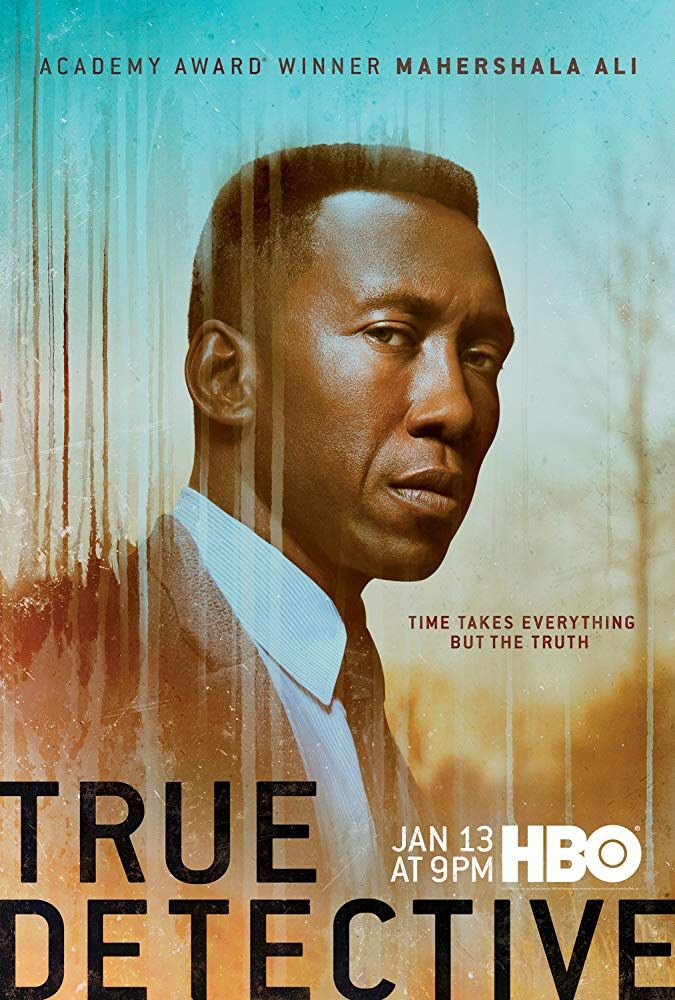
True Detective 3.8: Best Ending


Hats off to True Detective for providing in its season 3 finale something you don't see in a kind of story like this.  Not in any television series or movie I've ever seen, certainly not in the previous two seasons of True Detective, and, come to think of it, not in any novel I've ever read, either.  Imagine Jude the Obscure with a happy ending.  That's what we got in True Detective tonight.

It's not clear if Hays will remember the joy he discovered, the healing of something that was so bad for so long, finally turning out well and beautiful.  Hays comes to realize this, and his vision of his wife Amelia, says this to him, a little after he and West stand at the grave of Mary July - aka Julie Purcell - and West says he doesn't feel any closure.   They then cross paths with a little girl, and her father, a gardener at the convent, and we had to know this encounter was very significant, even though we couldn't know exactly why.  After all, the girl's name was the same as Julie's mother: Lucy.

But Hays realizes the truth, and drives to Julie's place, and even though he forgets why he's there, that's an incredible kind of closure and happy ending for us, the audience.   And it will be for him, too, eventually.  His son has Julie's address, which means that, someday, he'll tell his father what happened and what's going on.  (Yeah, I expect Hays to live that long, and be more or less compos mentis.)

This season of True Detective was a masterpiece of misdirection.   It was great to see Cohle and Hart in that newspaper, as I said last week, but the villain in season 3 was, after all, not some heinous child predation ring.  It was Hoyt's daughter, protected by Hoyt, and the motive was motherly love.  This doesn't negate the horror and pain of the kidnapping - it's a twisted kind of motherly love - but it's a very different kind of emotion than what we saw wild and perverse in the first season.  Indeed, ultimately, the most consistent thing in the first and third seasons was the superlative acting of Matthew McConaughey and Mahershala Ali, and, for that, matter Woody Harrelson and Stephen Dorff, too.  (Ali won an Oscar for best supporting actor tonight - he surely deserves an Emmy for best actor next time those awards are given.)

At least one big loose end:  unless I missed it, I still couldn't tell you what happened to Amelia. Maybe we'll learn more about that in a subsequent season.  Until then, thank you True Detective for a story and an ending like no other.

See also True Detective 3.1-2: Humanistic Disturbances of the Soul ...True Detective 3.3: Unquestioned Witnesses ... True Detective 3.4: All Hat, No Answers ... True Detective 3.5: Tour de Force Scene in the Present ...True Detective 3.6: Great Conversations ... True Detective 3.7: Merge!

And see also Season Two: True Detective: All New ... True Detective 2.2: Pulling a Game of Thrones ... True Detective 2.3: Buckshot and Twitty ...True Detective 2.4: Shoot-out ... True Detective 2.7: Death and the Anti-Hero ... True Detective Season 2 Finale: Good Smoke but No Cigar

And see also Season One: True Detective: Socrates in Louisiana ... True Detective Season One Finale: Light above Darkness

 
 philosophic crime fiction:  The Plot to Save Socrates 

Monday, January 14, 2019

True Detective 3.1-2: Humanistic Disturbances of the Soul


True Detective returned for a third season last night, with a completely new story with new characters, as was the case with the second season.   The first season was masterpiece, justly lionized. The second season was widely panned, but I didn't think it was as bad as the critics made it out to be.  The third season is much more like the first.

Indeed, it has the same narrative template as the first season - a detective and his partner consumed by an unsolved case, shown at the three stages in their career, when they first caught the case, ten years later when the case is being re-opened, and in retirement (in the season 3 story, when someone is making a television special on the case).  There's even some kind of unclear, quasi-religious element.

But there's one big, significant difference.  Detective William Hayes (wonderfully played by Mahershala Ali) falls in love with a teacher in the victims' school - a boy, Will Purcell, 12, kidnapped and murdered, and his sister, Julie, 10, just kidnapped.  That's in 1980, when the crime is committed.  Ten years later,  Hays and the teacher, Amelia, are married with two kids, and her book about the case is about to be published (in 1980, she tells Hays that she always wanted to be a writer).  Unlike Matthew McConaughey's tortured Detective Rust Cohle, who lives alone throughout, and is close to possessed or psychotic - one of the very best performances I've ever seen on television or in the movies, period - Hayes has a relatively normal life, is obsessed by the case but troubled rather than nearly psychotic, and is suffering from just the beginning of Alzheimer’s in 2015, meaning he's much more compos mentis than Cole at this point in the third stage of the story.   Indeed, this obsession is "working" Hayes' "brain" - as he says - helping reverse or postpone his mental decline.

And I think this medical rather almost supernatural context is a big plus.  Because the one part I wasn't especially thrilled with in the first season was the dive - or ascension, depending upon how you look at it - into, I don't know, religious ecstasy, Blakean demons, in that riddled season.  Hayes' soul is deeply unsettled, to be sure.  But it's a less mystical disturbance, and he has someone in addition to his professional partner with whom to share it - Amelia, and later, his family - and that makes for a more humanistic narrative.

Lots to look forward to here - I haven't even talked about who is the likely kidnapper/killer - and I'll be back with reviews every week.

See also Season Two: True Detective: All New ... True Detective 2.2: Pulling a Game of Thrones ... True Detective 2.3: Buckshot and Twitty ...True Detective 2.4: Shoot-out ... True Detective 2.7: Death and the Anti-Hero ... True Detective Season 2 Finale: Good Smoke but No Cigar

And see also Season One: True Detective: Socrates in Louisiana ... True Detective Season One Finale: Light above Darkness

 
 philosophic crime fiction:  The Plot to Save Socrates 

Monday, June 22, 2015

True Detective: All New

True Detective was back for its second season on HBO with last night, with no connection to the first season, except this second season looks like it could be almost as outstanding.

Colin Farrell plays Ray, a detective in the pocket of an LA hood, Vince Vaughn's Frank, for essentially very personal reasons.  The question, as it always is in these circumstances, is how much in the pocket - and what, if anything, will pull Ray out of it.

Rachel McAdams plays Ani, who at this point appears to be a much truer - i.e., non-crooked - detective than does Ray.   It's good to see a woman in this spot, and a welcome departure from season 1, in which the woman were mostly victims, with an unsympathetic wife and a prostitute thrown in.

Taylor Kitsch - a lot older than he looked in his superb Tim Riggins role in the late lamented Friday Night Lights - is the fourth major star, playing Paul of the California Highway Patrol, with his own host of problems, including a dangerous obsession with his motorcycle.

In short, this really is a brand new tableau, with new characters, pace, as well as story.  There is at least a flashback or two showing how Ray became indebted to Frank, but even that seems much less dominating that the relentless but highly effective flashes backwards and forwards and all through time in the first season.

Look, it's hard to imagine anyone in this season putting in as quietly searing a performance as Matthew McConaughey did in the first season - one of the best ever on television and of his distinguished career - but this second season is off to a good start, and I'm looking forward to more.

See also Season One: True Detective: Socrates in Louisiana ... True Detective Season One Finale: Light above Darkness

 
Like philosophic crime fiction?   Try The Plot to Save Socrates ...

#SFWApro

Wednesday, November 12, 2014

Interstellar: 2001 meets Time for the Stars, with a Touch of Frequency

I just saw Interstellar in IMAX in New York City, in what the theater announced to be the second biggest IMAX screen in the world (the largest is in Sydney, Australia). Was the movie up to the theater?  Well, until the last 30 or so minutes I'd say it was - a masterpiece in many ways.   But the ending - or, at least, the science of the ending - just didn't do it for me.

The two best parts of the movie - in addition to the powerful story of an astronaut taking a ship through a black hole near Saturn, to save the human race from ecological disaster - was the computer on the ship, and the way that going in or near a black hole slows down time, so the astronaut and crew age at at a normal rate while the people back on Earth, aging at their normal rate, age much more quickly, where hours in space equal years and decades on Earth.

The computer - TARS by name - was a worthy homage and successor to HAL of 2001, smart-talking, funny, sage, and brave.   It - the computer doesn't want to be referred to as "he" - looks good as a walking rectangle with a pair of wide stilts for legs.   There have been lots of computers on spaceships over the years - including Star Trek - but TARS is far and away the best.

The aging effects were beautifully done, with Matthew McConaughey putting in his best work in this movie and indeed right up there with his riveting performances on television and in the movies in the past few years.  Jessica Chastain is also excellent as his daughter who becomes the same age as her father - at the same time as her father - as the plot progresses.   All of this was reminiscent of Robert Heinlein's classic juvenile science fiction novel, Time for the Stars, except Interstellar situates these personal paradoxes in a much grander story.

So far, so great.  The special effects were also outstanding, and better in many ways than previous state of the art movies in space like the second Star Wars trilogy.   The science, too, was good, and made Interstellar, until this point, a fine hard science fiction movie - one, moreover, with real heart.

But then came the ending, which hinged on father/daughter communication across time.  In this case, I saw this done far better in the father/son communication across time via ham radio in Frequency, a very well controlled, tight little movie.   In the case of Interstellar, the time travel depends upon a murky interpretation of quantum mechanics, which not only verged on the mystical, as quantum mechanics always does, but withdrew the strong mix of hard science and human emotion which worked so well in the rest of the movie.  Instead, we got superb emotion, but situated in an unclear, metaphysical base.

Nonetheless, I'd strongly recommend Interstellar, for the first two-and-a-half hours the movie, which were exceptional science fiction and movie-making indeed.


Sunday, March 9, 2014

True Detective Season One Finale: Light Above Darkness

Well, the ending of the ending of the first season of True Detective on HBO - by which I mean, starting at the moment that Rust and the psycho are in that room, right up to moment that Marty takes Rust towards the car outside the hospital - is about the best, longest extended ending of anything I've seen in a long while if ever on television.

The ending does but a few things, but the things are profound indeed, and the ending does them extraordinarily well.

Rust and Marty's relationship is at last repaired.   In retrospect, it could never have been repaired with their sicko quarry still at large.  Even coming to terms with Rust's sleeping with Marty's wife, which Marty and Rust sort of do earlier in the episode, would't have been enough.  They had to get their monster.  And they did with a crucial assist from Marty in recognizing the house in the photograph.

And their conversation, from the front of the hospital to the world beyond, was a thing of wisdom and beauty.   Rust confessing the attraction of leaving this world for him, to asking Marty to take him away from the hospital where he might have died, was a little masterpiece in itself.   Rust need not die now, because, again, death was not a proper reward for the life he had brought to the world with his putting down of  the monster.

And the conversation about the proportions of darkness and light - in the world and in the sky - was a fine, poetic piece of work as well.  Marty tries to put in a note of optimism, to cheer Rust up, about stars bringing light to the sky.  Rust of course corrects him - the darkness still vastly outweighs the flickering light - but he's energized, anyway, and goes off to whatever the future holds for him.   Rust is too deep to recover easily.  But he's too deep to die, easily, either.  So he'll live.  And allow that there may be more light than dark after all.

And so one of the strangest, indelibly memorable detective stories concludes. True Detective will be back next season, they say, with a totally new story and presumably totally new set of major characters. Which is as it should be.  Rust and Marty - played to perfection by Matthew McConaughey and Woody Harrelson - have done more than enough, and have earned a true place in television history.

See also True Detective: Socrates in Louisiana

 
Like philosophic fiction?   Try The Plot to Save Socrates ...

#SFWApro

Monday, March 3, 2014

True Detective: Socrates in Louisiana

This season of True Detective concludes on HBO next Sunday, so I thought it was time to say a few words about it.   Started a little slow - I guess I was expecting something more along the lines of Criminal Minds and its pacing - but True Detective has become one of my favorite shows in the history of television, with an indelibly philosophic and anguished detective we've never seen the likes of before on TV and likely never will again.

Matthew McConaughey won the Oscar last night for Dallas Buyers Club last night, and he deserves an Emmy and more for his portrayal of Rust Cohle, in 1995 and 2012, and a little in 2002 as well.  Make-up does part of the job, but McConaughey's rendition of an aging character is right up there with the best of them.   The truly searing persona, the detective whose depth of analysis and grasp of human existence would have done Socrates proud, is the Rust of 1995.   The combination of McConaughey's voice - almost mesmerizing - and the literacy of what he says is something I don't recall ever seeing or hearing on television or in the movies.

Woody Harrelson does a fine job as Marty Hart, Rust's partner.  If Rust has the intensity and out-of-world spirituality of a Jesuit, Marty is a man of the world.   Although both are usually able to keep their emotions in check, Marty is the more likely to let his frustrations boil over and out into the world and those around him.   Harrelson, in fact, delivers a characterization of a partner as powerful as McConaughey's of the protagonist detective, and just as memorable in this only slightly secondary position.

The plot ain't bad, either.   Rust is so intense that, in the first part of the season, I was thinking he might well be serial killer he and his partner were hunting in Louisiana.   But once the new detectives investigating the case in 2012 made clear that this was indeed their view, it became pretty clear that Rust is not the killer. There's also a rewarding attention to detail in the story.  Although Marty tells everyone that he's sure Rust is not the killer, Marty packs a gun when he goes to Rust's place in 2012.

Women do not play major roles in this first season of True Detective, though Lili Simmons (Banshee's Rebecca) provides a bit of eye-candy, and Michelle Monaghan puts in a good performance as Marty's wife, who seduces a reluctant Rust after she learns of Marty's indiscretions.   Rust's guilt over this, and his not wanting to look at Marty every day in the aftermath, is likely the real reason he left law enforcement.

But he didn't leave the investigation.   And although his and Marty's reunion for one last time in last night's episode is a fitting conclusion to this story, it will be satisfying to see if the two can finally get their killer next week, and Rust's last words about it, whether they do or don't.

 
Like Socrates?   Try The Plot to Save Socrates ...

#SFWApro
InfiniteRegress.tv