Chuck Todd interviews me about alternate histories
Showing posts with label The Beatles: Get Back. Show all posts

Saturday, November 29, 2025

(Beatles) Anthology 2025: The Highs and the Highs (and the One Low)


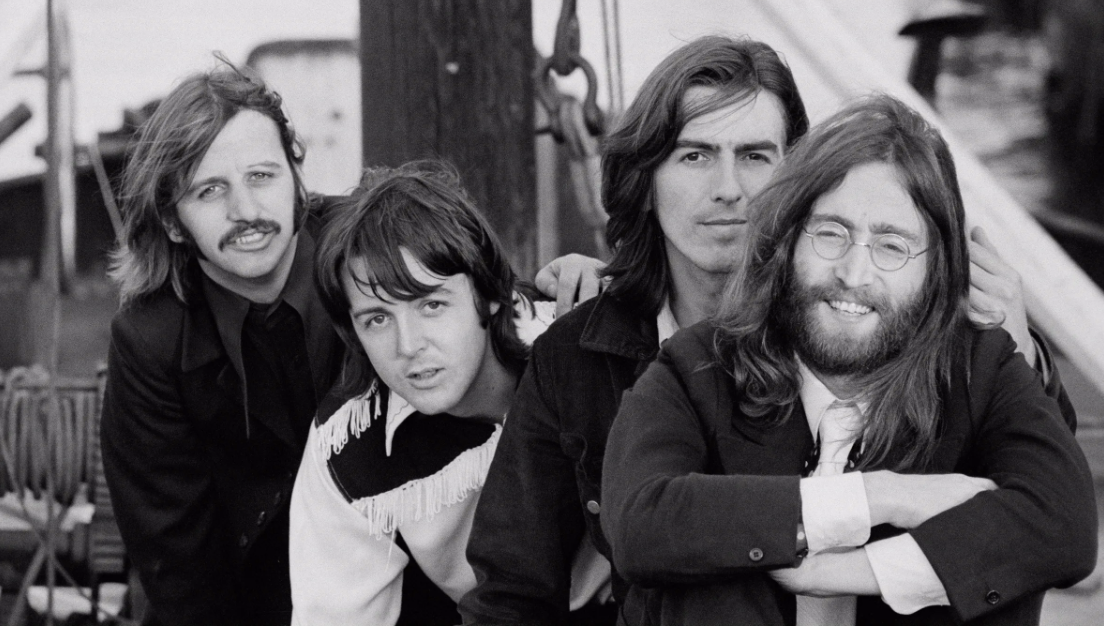
My wife and I watched the renewed and expanded Beatles' Anthology on Disney+ the past three nights. I'd seen and heard bits and pieces of various lengths of the original eight episodes -- on YouTube, The Beatles Channel on Sirius XM, and everything in between -- which originally aired on ABC-TV in 1995, but we somehow had managed not to have seen that original on the unsmart TV in our family room.  It was more than wonderful to see and hear what 2025 director Oliver Murray did with the 1995 eight episodes -- uncovering/discovering new footage as well as calling upon Peter Jackson and his elves to bring to current vibrant life what was done in 1995 (just as Jackson had done so miraculously with The Beatles: Get Back in 2021) -- but the real treat for me (treat is too weak a word) was seeing the new ninth episode.

I'll go over some of highlights of the first eight episodes, and then delve into the wonders of ninth episode, and the one problem I had with it.

About the first eight episodes:

  • It was great to see Murray the K get his due (just as he had in Martin Scorsese's Beatles '64 last year).  I worked with Murray the K when he was at WNBC Radio in New York City in 1970s.  He hired me after he read my article "Murray the K in Nostalgia's Noose" in The Village Voice in 1972 (my second-ever published work -- my first was "A Vote for McCartney" a year earlier, my response to dyspeptic critic Robert Christgau's attack on Paul and his early post-Beatles work).  Murray never got the credit he deserved back then in ushering in The Beatles, and before then on WINS with Alan Freed, and after when he was on WOR-FM helping to invent the FM radio format. I had such a good time working with him on NBC, I even wrote and recorded a song about him -- "Murray the K's Back in Town" -- which he played on the air.  (The late Pete Fornatale -- protagonist of my It's Real Life: An Alternate History of The Beatles -- played that song on his Mixed Bag on WFUV Radio in the early 2010s.)
  • Great shots that I hadn't seen before of The Beatles in their 1964 Washington, DC concert!
  • There was a spectre, a foreshading, of what would happen to John at the end of 1980. George worries throughout about the exposure of The Beatles in a country in which John F. Kennedy had just been assassinated.  (The sick devotion to guns in this country is still claiming lives.)  John himself notes after the DC concert that "some bloody animal cut Ringo's hair".
  • I was reminded again what a uniquely almost  extraterrestrial person Ed Sullivan was.  I mean, no one here on Earth had his accent or his delivery.  Even in Japan, the Beatles are introduced in Japanese (of course), and the host concludes in English with "Ladies and Gentlemen, The Beatles!" -- delivered in a pretty good mimic of Ed.
  • I find it hard to believe that "Pennylane" didn't go to #1 in the UK. Beaten out by Engelbert Humperdinck's "Release Me"? Maybe if it was "Les Bicyclettes de Belsize" ...
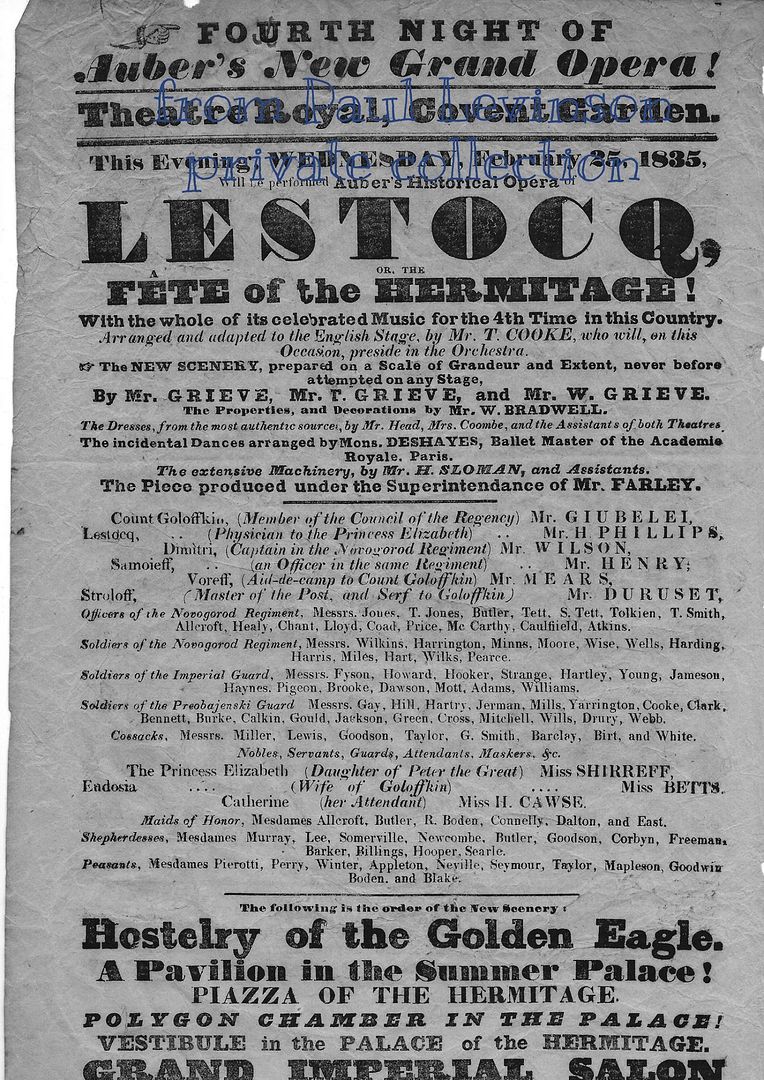
  • John -- after The Beatles had broken up and at odds with Paul -- objects to Sgt Pepper being called a "concept" album, saying "Mr. Kite" and all the songs on the album other than the Peppers could easily have been on any other Beatles' LP.   (George also critiques Sgt Pepper.)  As far as I'm concerned, I think Sgt Pepper is indeed a concept album and what John says is also true.  There's really no contradiction here, both are true.  And I'll also say how happy I was to find the following poster in an antique shop my wife and I were in, must've been, the late 1970s.  It's hanging on a wall outside our bedroom.  Every time I walk by it, I smile.  It reminds me of Sgt Pepper.

Now, about the new ninth episode:

It was not only heartwarming (to see the three surviving Beatles still making such superb music) and heartbreaking (because now George is gone), it was chock full of fascinating and important information.  My favorite example: I had always heard, regarding the genesis of "Free As A Bird", "Real Love", and "Now and Then", that the transformation projects began when Yoko Ono gave Paul a tape with some of John's demo recordings from the 1970s.  But in episode 9 of Anthology, George tells us about a crucial preface: When Roy Orbison died, The Traveling Wilburys were thinking of taking some of Elvis's demos and bringing them to life with the inimitable Wilbury voices.  But they decided not to go in that direction, because (in George's words), it was "too gimmicky".  (George didn't say, but rumor has it that the Wilburys were thinking of inducting Del Shannon into the group, but he took his life in 1990.)

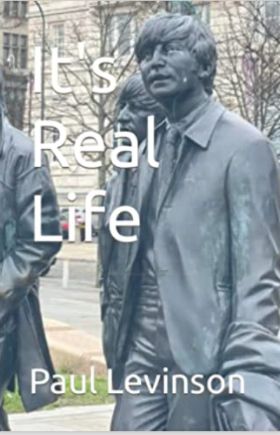
But if I had to pick my favorite moment in the ninth episode, and therefore all nine episodes of this beautifully burnished Anthology, it would be Paul and George completing their incomparable three-part Beatles harmony with John's voice in the chorus of "Real Love".  It's been one of my favorite Beatles songs since I first heard it in the mid-1990s.  The song inspired me to write It's Real Life: An Alternate History of The Beatles (the video of Anne Reburn's cover of the song follows below -- she performed this in the radio play broadcast on Killerwatt Radio, adapted from the first chapter of my novel; "Real Life", by the way, was John's title for the song before he changed it to "Real Love").  Paul and George's voices being in such synch with John's recording, the harmony snapping into place, snapping into life, is a deeply acoustic proof to me that this uniquely satisfying sound will never die.  At that instant, the former Beatles became The Beatles again, and gave evidence that The Beatles will always be with us.


Powers that be often miss the immortality of what is all around them.  After Marshall McLuhan died in December 1980 (same year and month as John: their lives were intertwined: they both hit America big in 1964), I proposed a book about him to an editor at St. Martin's Press.  He laughed and told me no one cared about McLuhan any more. That book became my Digital McLuhan, which Routledge published in 1999.  I still receive royalties checks for sales of that book every year.   In the 1970s, I told my doctoral thesis advisor Neil Postman that I thought The Beatles, like Shakespeare, would be known and enjoyed for as long as there were human beings.  He laughed too.

Which brings me to the one criticism I have about episode 9.  Paul and Ringo are still alive.  Yes,The Beatles music including their harmonies will live forever.  But not the mortals who made it.  Wouldn't it have been wonderful to have another hour, or even just a few minutes, to have Paul and Ringo look back at 1995 from their vantage point right now?  Oliver Murray of course interviewed Paul and Ringo in the short film he made, Now and Then: The Last Beatles Song, that accompanied release of the single in 2023.  I guess that could be considered a coda to Anthology 2025, but wouldn't a few additional or more words from Paul and Ringo looking back at what they accomplished in 1994 (when "Free As A Bird" was made) and 1995 (when "Real Love" was made) have been just the perfect cup of sencha tea after the marvel we just took in?

Chris Willman asks Oliver Murray in an excellent interview in Variety why there are no contemporary 2025 voices in Episode 9.   Murray replies: "I didn’t really like the idea of Ringo [and Paul] in 2025 talking about an interview that he gave in 1995 about something that happened in 1965. It was all too nebulous to do that." I'm not sure I know what "too nebulous" means, in this context. "That is, I think I disagree".
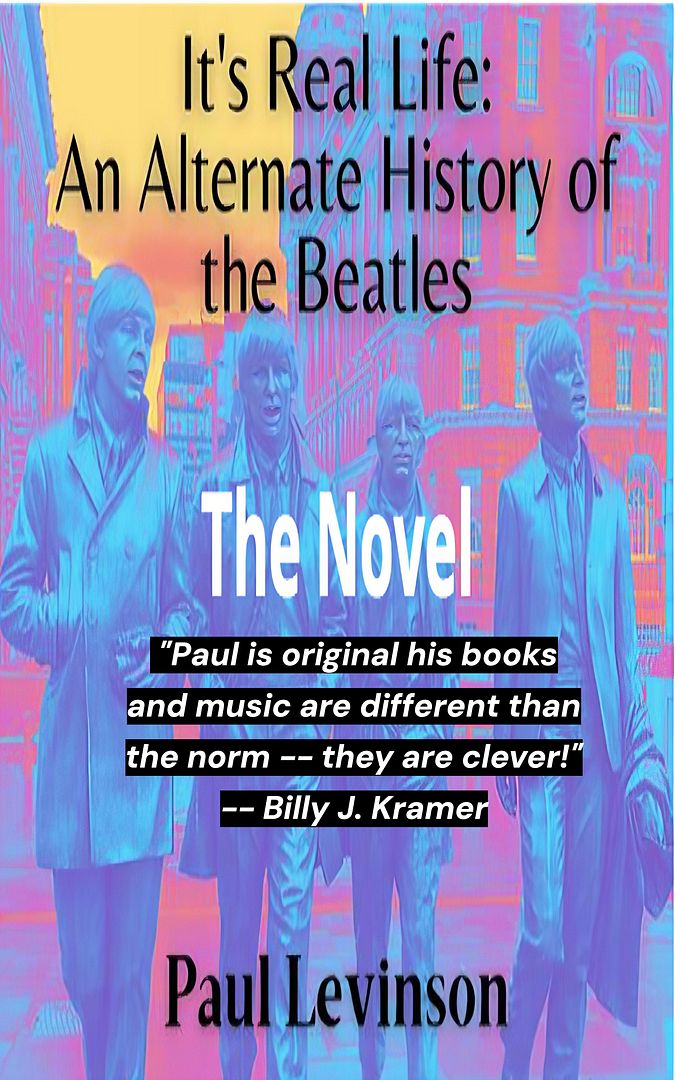


in Kindlepaperback, and hardcover

Added February 10, 2026: Check out this new episode of Rock Talk Studio

Friday, October 27, 2023

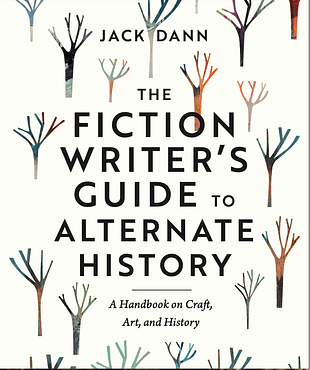
Review of Jack Dann's The Fiction Writer's Guide to Alternate History: A Tour-de-Force Treasure Trove

Fiction Writer's Guide to Alternate History


I've always had a keen love of alternate history science fiction.  Amazon Prime Video's The Man in the High Castle series (2015-2019), a mostly brilliant adaptation of Philip K. Dick's path-breaking 1962 novel, in which the Axis won the Second World War, was pretty much from the moment I started watching it easily the best drama I've ever seen on television, and still is.  (Here's an interview I did with Rufus Sewell in 2021 about the leading character he played in the series, one who wasn't in Dick's novel.)

But as much as I love alternate history, I didn't really start writing it until "It's Real Life," a story in which John Lennon wasn't murdered and The Beatles were still together and making music in 1996.   That story was a finalist for the Sidewise Award, bestowed today for the best "short form" published in 2022.   An ideal time for me to read and review Jack Dann's Fiction Writer's Guide to Alternate History.

The heart of this remarkable book is a colloquium, conducted in the previous decade among the leading writers of alternate history.  I heard of all of them, met some of the them, and have read something between between all and some of their alternate history fiction.  They respond to Jack Dann's prompts, and I don't think they saw each other's responses.  They differ on what the "rules"of alternate history should be, including about whether there should be rules at all, consciously or unconsciously followed.  They of course draw upon their own works as examples, in seeming violation of I. A. Richard's warning against the "intentional fallacy," that is, relying upon what authors say they intended in their work, but this doesn't really matter, because the authors in Dann's book also talk about work by other authors in the book, as well as authors not in the book, and their arguments can be evaluated without reference to their work.  

One of their points that most struck me is Bruce Sterling's (p. 119) that “Commonly they’re [alternate histories] about troubled times in which the author has some kind of solution to offer.”  This is exactly why I wrote "It's Real Life": it always seemed to me that the world in which John Lennon was assassinated was a deformation of the way reality was supposed to be, and I wrote the story to give the world a taste of the way it was meant to be.  Pamela Sargent (p. 121), makes a similar point, writing that “Back in the early 1990s, I gave a talk at one convention in which I said that I had the persistent impression that all of us were living in a weird variant that had branched off from the main continuum," as does Paul Di Filippo (p. 97), who tells us that “I think the best such [alternate history] stories arise from creating a world the author would like to at least explore or even inhabit."

These and numerous other insights and explications in Dann's handbook are invaluable to authors at any stage in their careers.  If they're just starting out, it provides a blueprint -- which as Dann makes clear, they needn't follow if it goes against their grain -- and if you're an old hand, you'll find the comfort of better understanding just why you chose to do this or that in the narrative you just wrote, or maybe just finished, because you started it a long time ago, a crucial way of writing for many a writer, also discussed in Dann's book.

Another point of discussion of special interest to me, because I've written half a dozen books on media history, and that's a lot of what I teach as a professor at Fordham University, is what these authors of alternate histories think of our "real" history.  I put "real" in quotes because, as George Zebrowski (p. 120) notes, and I agree, “Tentative history is all we have, and in science fiction we can rehearse as many as we can imagine.”  Yet to make this issue even more provocative, while Kim Stanley Robinson (p. 90) agrees that "all history is a fiction, and as such, maybe it’s always an ‘alternative history,’” John Kessel (p. 83) insists that “I want the counterfactual to illuminate some element of real history,” and I agree with that, too.  Indeed, I think for a counterfactual or alternate history to work (some of the authors argue these have two different meanings, I do not), the story has to have some number of real signposts, to keep our appreciation of the alternate history on track.

Jack Dann of course also writes tellingly about his own alternate histories.  He talks about how Milton's Paradise Lost and John Martin's illustrations of them a century later were inspirations and building blocks for Dann's own Shadows in the Stone (2019).  All authors need inspirations, they're obviously essential, but you can't create them.  The best you can do is recognize them and then act upon them when you're ready.  In effect, the whole of The Fiction Writer's Guide to Alternate History is a treatise, in part multi-authored, of what inspires the imagining and writing of alternate histories.

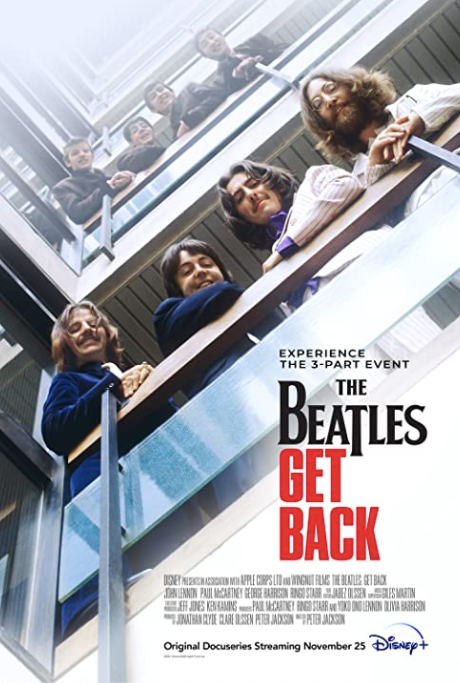
I realized the moment I started writing "It's Real Life" that I was inspired by Peter Jackson and his The Beatles: Get Back documentary.  I saw its three parts the instant they were released on the Thanksgiving weekend in 2021, and wrote "It's Real Life" in January 2022.  In a way, that documentary is both an alternate history and it epitomizes the interplay of alternate and "real" history that is one of the central themes of Dann's book.  What were The Beatles really like as they stood on edge of disbanding in the history we all remember and most of us deeply regret. Jackson has hours of outtakes recorded when The Beatles were making the depressing Let It Be documentary that proves they were far happier than we've been told and we "remember".  Or were they?  After all, they did break up.

I was so energized by Jackson's documentary that I wrote an alternate history in which The Beatles didn't break up.  I've expanded it into a short novel that I haven't yet shown to anyone, except my wife, who read an earlier draft.  I'll no doubt go over it at least a few more times before I decide what to do with it.  Will I be influenced by the exhilarating experience I just had reading Jack Dann's Fiction Writer's Guide to Alternate History?  Will I follow or break some of the rules that Dann and many of the authors in that book say can and maybe should be broken?  I don't know.  But you can find out by reading The Writer's Guide to Alternate History now, and It's Real Life the novel whenever it's published.


Get "It's Real Life" in paperback, or on Kindle, or read for free here.


Saturday, September 9, 2023

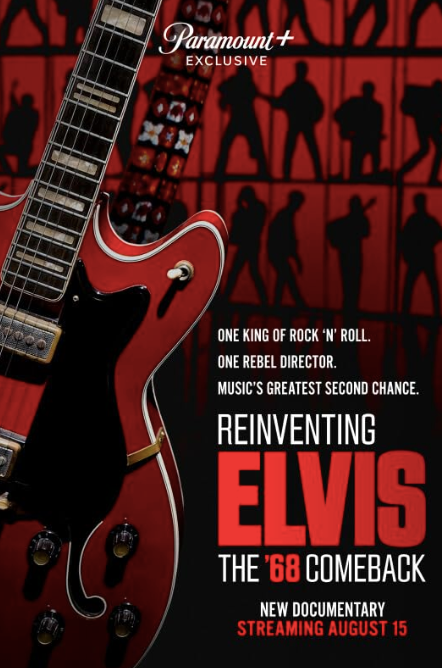
Reinventing Elvis: The ‘68 Comeback: An Appreciation


I just saw Reinventing Elvis: The ‘68 Comeback.  The new documentary, narrated by Steve Binder -- about Elvis Presley's Comeback Special that aired on NBC back on December 3, 1968, directed by Steve Binder -- has been streaming on Paramount Plus since August 15, 2023.  The documentary did for me and my appreciation of Elvis what Peter Jackson's masterpiece The Beatles: Get Back did for me about The Beatles.  Except The Beatles since the first time I heard (and saw) them on The Jack Paar Program in January 1964 have always been much higher in my estimation, more prominent in my life and love of music, at the pinnacle of that, in fact, than was and now is Elvis.  But Peter Jackson's documentary both reaffirmed and lifted my connection to The Beatles, and Steve Binder's documentary did the same for me for Elvis, albeit at very different levels.

I saw The Beatles: Get Back the night the first third of the documentary went up on Disney Plus.  Why did I wait weeks to see Reinventing Elvis?  Well, I guess that's just another indication of the difference between The Beatles and Elvis Presley in my life.  I did see the Comeback Special when it aired on NBC on December 8, 1968.  I was in the recording studio the next day, recording a demo of a song I had written with Ed Fox -- "Sunday Princess" -- with a singer whose name was Joey Ward.  We talked about how superb Elvis was on that special.  Joey said he was so taken with it, he was going to start combing his hair like Elvis.  I remember laughing to myself, and later telling Ed I would never do that.  I was happy with my long straggly hair and moustache.  Another example of the difference between my appreciation of The Beatles and Elvis.

But Elvis was the best he ever was in that special -- better than what I'd seen of him on The Ed Sullivan Show a decade earlier and better than most of his movies (though I think Jailhouse Rock is a great movie and a really great song, and the same for Viva Las Vegas -- well, certainly the song, though Ann-Margret was nonpareil in the movie).  You don't see or hear any mention of that song or the movie in Reinventing Elvis, but the documentary is a nearly continuous explosion of powerful and beautiful performances.

My favorite part of the documentary, other than those performances, is a sequence which Binder tells us the geniuses at NBC cut from the 1968 special, the bordello scene, which was too erotic for NBC's censors, and is hot even by today's standards.  The sexual energy between Elvis and one of the women dancers is palpable and realistic, which is exactly what a documentary should be.

Another scene that caught my eye is seen earlier in the film.  Elvis is walking through a crowd, smiling, but as he turns his expression briefly changes to sheer dislike.  Who was Elvis looking at?  It's tempting to think it was Colonel Tom Parker, Elvis's notorious manager, who we learn in the documentary was not a Colonel and not named Tom Parker, either.  He's literally identified as the villain in the movie, and I do recall how Elvis said it broke his heart when the Colonel refused to let him play the male lead in the 1976 movie A Star Is Born.  Kris Kristofferson got the role, and Elvis died a year later.  Reinventing Elvis barely tells us why Elvis didn't once and for all break free of the ersatz Colonel -- he was a "father figure" to Elvis -- and confined himself to defying the Colonel only when he had a strong person like Binder at his side.

If you ever liked any of Elvis' work, definitely see Reinventing Elvis.  You'll like it and appreciate it and understand it and Elvis even more.


Monday, April 11, 2022

Review of a Review -- But, Hey, It's About The Beatles


I don't usually write reviews of reviews -- in fact, I'm pretty sure I never have -- but Joel McKinnon, whose views on science fiction, music, and the world at large I've found invariably worthy, strongly recommended that I read Ian Leslie's lengthy review of Peter Jackson's lengthy masterpiece The Beatles Get Back ("Knowing how much you loved Get Back I think you'll love this beautiful essay about it," Joel told me), so I did, and he was right.

In fact, from the very first line of Leslie's review -- "A friend of mine, a screenwriter in New York, believes Get Back has a catalytic effect on anyone who does creative work" -- I knew that Joel was right.  Because that's exactly what watching Jackson's eight-hour documentary did for me.  I'm always writing reviews, other nonfiction, science fiction, lyrics and music, whatever, but I've been on one thrill of a creative ride since I saw Get Back at the end of November (including writing an alternate reality story about The Beatles and WFUV Radio -- It's Real Life -- which has in turn sparked my writing all kinds of other linked stories).  And that's because Get Back is a paean to, as far I know, the greatest creative work of the words and music of songs in human history, and Leslie's review gets that, too.

Here are two other other points on which Leslie and I manifestly agree:

  • Leslie likes McCartney's "toothy, boyish, involuntary grin" which, he notes, even showed up after the British bobbies arrived on the roof.  As I noted in my review of Part 3 of The Beatles: Get Back, McCartney's response to the police on the roof was my favorite moment in the entire documentary, and there were a myriad of contenders (see the next point).
  • Leslie cites Ringo's "I would like to go up on the roof" as a pivotal moment in the true narrative that Jackson gives us.  In that same review of  Part 3, I mention that another favorite moment is Ringo making that statement.  I've been thinking on and off about that since the end of November, and I'd say that statement and its result of getting the Beatles up on the roof is sweet proof of the important role that Ringo had in the group, concomitant with his drumming.
Ok, here's a brilliant part of Leslie's review which I don't talk at all about:  Leslie approvingly paraphrases Rick Rubin's observation that "The Beatles are the single best argument for the existence of God".  I really like that -- not surprising, given that I thought Rubin's McCartney: 3,2,1 was a kind of masterpiece, too.

I could go on, but you surely get the picture.  If you love the Beatles, and loved Jackson's documentary, read Leslie's review.   It provides a really attractive fence around the magnificent garden of music that was and is The Beatles, and the astonishingly satisfying lighting that Jackson's movie has shone on it, and that's an insufficient metaphor.

But I'll end this review of a review with offering an answer to one of Leslie's minor questions:  He wonders what John meant when he says to Paul, “We’re altogether, boy".  Leslie also wonders if Paul knew.  I'd say John was referring to Paul's "All Together Now," recorded in 1967 and released in January 1969.  The timing is perfect and of course Paul knew.


Saturday, November 27, 2021

The Beatles: Get Back, Part 3: Up On the Roof


If I had to pick the single best moments in the nearly nine hours of the superb, one-of-a-kind documentary that is Peter Jackson's The Beatles: Get Back, it would be Paul McCartney saying "whew!" smiling, doing a dance, and continuing the concert, after turning and taking note of the robotic cops  (or whatever they call them in London) intruding into the Beatles' rooftop performance.  The same cops on the ground floor had been threatening arrests and claiming they weren't making threats before they demanded to go up to the roof.  Good thing they don't carry guns like the police do here in America.

Widening the focus a bit, the whole rooftop concert was a splendid, high-octane tour-de-force, finally shown in Jackson's movie in its full extent, making the original film of the concert that we've been watching all these years seem two-dimensional in comparison.  That original movie has flashes of the energy of that rooftop performance, which takes full and gorgeous expression in Jackson's documentary. 

It may have been the Beatles' finest moment.  "I've Got a Feeling," which I always really liked, is now in my top handful of all-time favorite Beatle songs -- the energy in McCartney's voice, the oh-yeahs, the nos, Lennon's bit, the instrumentation, is all just extraordinary. 

It certainly was their final moment in a public performance.  Some of the earlier part of Part 3 tells us why:

  • Paul says to George Martin -- with Paul not sure that going on the roof the next day was the best thing, John saying it was, and George Martin saying they had to respect deadlines -- "that's why I'm talking to John not you".
  • A little later, Paul's still not sure about the roof, George Harrison says he'd rather not do it, and Ringo declares they should do the roof concert.  Ringo's opinion carries the day.  But Paul is quietly a little dismayed with Ringo's opinion, or maybe that he has to put up with it.
  • George tells John he wants to do an album of just his own songs, to see "what they all sound like together".  George winds up doing none of his songs on that roof.
But there are many beautiful moments to be treasured in the footage before the concert:

  • George Harrison comes over to Ringo to help him write his song "Octopus's Garden".  It's a wonderful, redeeming moment.
  • And then George Martin gets interested in the song.  Soon we see John on drums on the song.  In previous parts, we saw Paul and George on Ringo's drums.  In an interview conducted much more recently, Ringo lamented that every time he stepped out for a cup of tea, he'd return to find someone else in The Beatles on his drums.  But it's all endearing,
  • Great jamming with Linda's daughter Heather in the studio, and it's great to see how each of The Beatles relate to her.
  • Paul really groovin' and enjoying working on one of George's songs.
  • George Harrison telling John he took John's advice, given some ten years earlier, that when you start writing a song, you should stay up and finish it.
So there was lots of love and good energy between the Beatles, even with all the problems, and the rooftop concert was magnificent.  So why didn't they stay together?  There's clearly even more to the story than Peter Jackson showed us in his documentary.  But watching it changed my perspective on The Beatles forever, largely for the better, and I'll be forever grateful Peter Jackson made it.


And here's "It's Real Life" -- free alternate history short story about The Beatles, made into a radio play and audiobook and winner of The Mary Shelley Award 2023


InfiniteRegress.tv