Chuck Todd interviews me about alternate histories
Showing posts with label Star Trek: TNG. Show all posts

Sunday, September 14, 2025

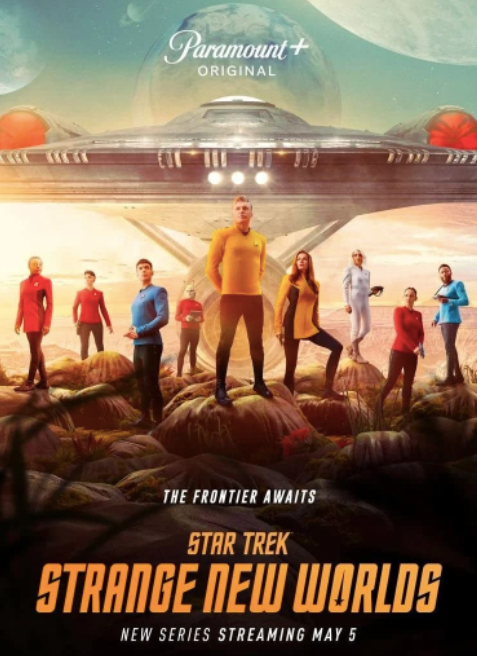
Star Trek: Strange New Worlds Season 3 Finale: The New Story

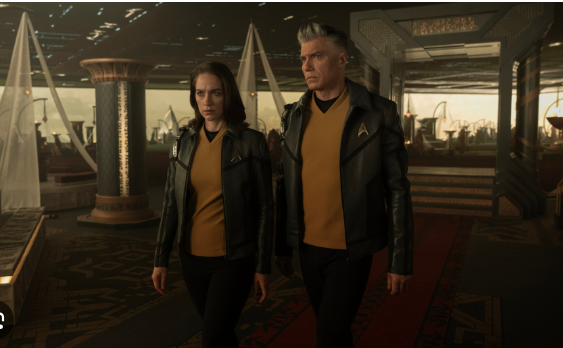
I just watched the Season 3 finale of Star Trek: Strange New Worlds, the series on Paramount Plus, which as you no doubt know if you're reading this, tells the story of Captain Christopher Pike, a character from a two-part episode of the original Star Trek series ("The Menagerie"), along with the story of Spock, James Kirk, Uhura, Chapel, Scotty younger than they were in TOS, as well as characters we didn't meet in TOS.

Now, if by chance you haven't seen the first season of TOS, you might not to want to read any further, because  there will be a huge spoiler ahead ... Although, maybe not.  How's that for a spoiler warning?

But what I'm getting at is we see about ten minutes of among the best Star Trek TV, movies, and streaming  I've ever seen, tender and heartbreaking and beautiful, the story of Pike not getting disfigured which was the basis of "The Menagerie". Instead, we see Pike and Batel happy together for the rest of their long lives (until Batel is on her deathbed), raising a family, with all the good things life has to offer.

The question is (or, my question is): did this really happen, was it a glimpse of a real alternate reality, or was it an illusion in Pike's and Batel's heads?  The rule of parsimony would make it an illusion.  But I'd like to see the makers of Strange New Worlds make it a reality.  The tragic brilliance of "The Menagerie" hinges on Pike being severely injured in a training accident.  But with the super-potent powers in the universe we humans on Star Trek from time to time encounter, might not one of them, seeing what happened to Pike in the accident, prevented him for being in that place at the wrong time? What that would do is make "The Menagerie" a compelling Star Trek story that we know about but ultimately did not happen, but the rest of  Star Trek corpus would remain intact.

In fiction, in general, prequels are always hostage to stories we already know, the stories that came first to our awareness but come from a time later in the overall narrative.  But I would argue that science fiction has a special permit to diverge from this, if need be, because the essence of science fiction is our encounters with different realities, including those in which a future element in a story we know could be changed by something in the prequel, with the result that we have a more satisfying story.

Actually, The Next Generation at least once already sort of did this, in "The Inner Light," in which Picard experiences his entire life on another planet, only to wake up still Captain, same age he always was, on the Enterprise.  What happened to Picard was not a dream, it really happened.

Whatever happens from now on with Captain Pike and Strange New Worlds, "The Menagerie" deserves even more credit than the warranted kudos it's long been receiving.  It generated in the Season 3 finale of Strange New Worlds a signally important episode among the best in the Star Trek series since TOS and TNG.

See also Star Trek: Strange New Worlds 3.1-3.3: Gorn, Spock & Chapel, and The Walking Dead ... 3.4: Lots of Laughs and Serious Business ... 3.5: Endearing Pseudo-Science ... 3.6: Chris and Jim ... 3.7: The Medium and The Message ... 3.8: Pike's Hair and Spock's Smile  ... [Note: I didn’t review 3.9 because, though it had a few good moments, I didn’t have enough worth saying about it.]


Friday, September 5, 2025

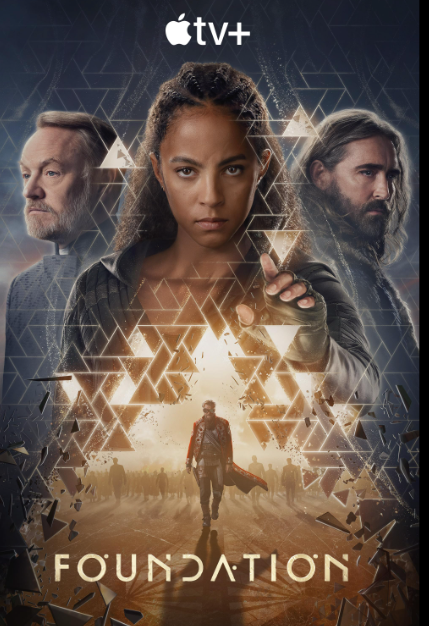
Foundation 3.9: Mann tracht un Gott lacht


Well, there are two things I really liked in Foundation 3.9:

[And there are spoilers ahead ... ]

1. There's a Yiddish saying my grandmother used to tell me:  "Mann tracht un Gott lacht".  The usual English translation is "Man plans and God laughs," though the literal translation is ""Man tries and God laughs".  And we're treated to a rendering of this, when Quent lambasts Dusk for his "math" of destroying planets and billions of people, saying "that's your math, it's not the math I believe in," and Dusk responds, "Your math?  Or do you mean Hari Seldon's Plan, at which God is currently laughing." Now, Dusk might be a horrible human being, but he deserves credit for apparently knowing and riffing on this old Yiddish proverb (or, ok, actually the Foundation show's writers do), as well as having a pretty keen understanding of the peril that The laughing Mule (God) is currently posing to Seldon and humanity.

2. Speaking of which -- Hari and The Mule -- that was quite a conversation Hari and Gaal had about The Mule near the end, in which Hari wound up sounding like Data in Star Trek: The Next Generation, wanting a fully human body.  This Hari -- whom lots of viewers are sure is a hologram, but I think is indeed more like Data, an android (or for that matter, Demerzel/Daneel) -- says to Gaal two very important things: (a) "don't call me that" (i.e., don't call me Hari), and (b) "I want what he has".  So, the first likely means, don't call me Hari, because I'm not Hari (I'm some kind of android), and the second means, I want what The Mule has.  (I thought, maybe the "he" in the "I want what he has" was the original Hari, who did have a flesh-and-blood human body -- but the Hari talking to Gaal says "he mysteriously got a body", and as far as we know, there's nothing mysterious in the way the flesh-and-blood Hari Seldon got a body, right?)

We have some inching progress in comprehending what's going on.  And next week is this season's finale.


Enjoy Yiddish culture?  Check out this short story, just published.


See also
 Foundation 3.1: Now We're Talkin'! ... 3.2: "The Fault, Dear Brutus, Is Not in Our Stars" ... 3.3: Dawn and The Mule ... 3.4: Cleon Knows His PKD ... 3.5: Cleaving Closer to Asimov's Trilogy ... 3.6: Finally! But ... 3.7: The Origin of The Mule ... 3.8: Deconstructing Concepts

And see also Foundation 2.1: Once Again, A Tale of Two Stories ... 2.2: Major Players ... 2.3: Bel Riose and Hari ... 2.5: The Original Cleon and the Robot ... 2.6: Hari and Evita ... 2.7: Is Demerzel Telling the Truth? ... 2.8: Major Revelations ... 2.9: Exceptional Alterations ... Season 2 Finale: Pros and Cons

And see also Foundation 1.1-2: Mathematician, Man of the People, and Cleon's Clones ... Foundation 1.3: Clonal Science Fiction, Hari Seldon as V. I. Lenin ... Foundation 1.4: Slow Hand, Long Half-Life, Flipped Coin ... Foundation 1.5: What We Learned in that Final Scene ... Foundation 1.6: Folded Variations ... Foundation 1.7: Alternate History/Future ... Foundation 1.8: Divergences and Convergences ... Foundation 1.9: Vindication and Questions ... Foundation Season 1 Finale: Right Up There


Wednesday, August 6, 2025

Star Trek: Strange New Worlds 3.4: Lots of Laughs and Serious Business

>

Well, "The Trouble with Tribbles," an episode from the original Star Trek series, written by David Gerrold, is generally aptly recognized as the funniest episode in all of Star Trek's iterations. I'd say that honor now has another contestant in Star Trek: Strange New World's episode 3.4 on Paramount Plus.

[Spoilers ahead ... ]

The serious part of the plot involves a holodeck that could end up killing its inhabitants.  Now, as far as we knew back in the 1960s, the holodeck wasn't around in TOS -- it was introduced in TNG in the 1980s.  And now we know the reason: the holodeck in this Strange New Worlds prequel to TOS can kill if you don't treat it right.  And, before that, it can lock you inside it if you don't solve the mystery you asked it to solve, that is, the reason you wanted to walk into the holodeck in the first place.

So that was one of the three serious parts of episode 3.4.   I'll tell you the second and third, after I go over the funny parts.  These all center around the cancellation of a faux TOS -- The Last Frontier -- after only one season.  The was a send-up of TOS in more ways than one, but fundamentally because TOS was cancelled after three seasons.* But unlike TOS, which was one of the best shows ever on television, and deserved to run at least 20 or more years, TLF was idiotic, and it was literally science fiction that it wasn't cancelled after the first few episodes.

But the clips we were treated to in episode 3.4 of SNW was first-class comedy in all kinds of ways.  Here are some of my favorite:

  • "I'm an actor, not a doctor!" The actor (Ortegas) who plays a doctor on TLF says defensively, a nice nod to McCoy on TOS,
  • "My lines and my skirts have been getting shorter and shorter with every episode," (Chapel) advises.
  • "social commentary with rubber masks and buried mask -- you know, science fiction" (Uhura) skewers science fiction! 
  • And the funniest:  I don't know, but to me, (Pike)'s character Bellows looks Al Franken. Would you agree?  
Now, as to the other serious parts: that would be learning that Spock is a descendant of Arthur Conan Doyle (through Spock's mother, obviously, which explains Spock's super logical mind as not just inherited from his Vulcan father), and the tango that La'an and Spock do at the end, and the kiss that followed.  Maybe it was a very good thing after all that Chapel disappointed Spock so deeply ...

*See my essay “How Star Trek Liberated Television” in Boarding the Enterprise, ed. David Gerrold & Robert J. Sawyer (Dallas, TX: BenBella Books), pp. 185-196, for more.

See also Star Trek: Strange New Worlds 3.1-3.3: Gorn, Spock & Chapel, and The Walking Dead

Tuesday, December 10, 2024

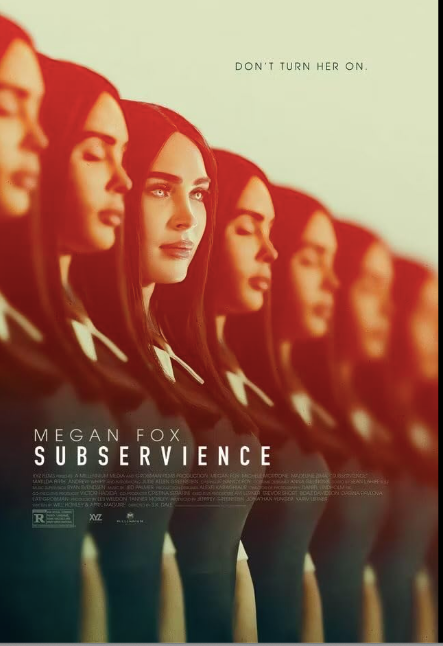
Subservience: Mounting the Paradox


Well, we've all seen movies and TV series like Subservience before, in which a beautiful female android ingratiates herself with a human family, and some kind of terror ensues.  I'm sure there were plot lines like that in Humans and lots of other films and series.  But I have to say, Subservience kept me interested, because I really wasn't sure just how it would end.

What it is has going for it, in addition to a somewhat original plot, was good acting by Madeline Zima as the human wife.  I've seen her before in Californication, Twin Peaks, You, and Bombshell.   Subservience is the biggest role I've seen her in so far, and she's up for the part.

Megan Fox plays the female android.  She's been in lots of movies that I haven't seen, and she does a good job in Subservience, too.  But she runs into a paradox of sorts, or something like a paradox, any time a human being plays an android -- she's very convincing in her mix of robotic stiffness and human emotions because, of course, she the actress is a human being herself.  I first actually noticed this decades ago with Brent Spiner's performance as Data in Star Trek: The Next Generation.  His character is an android who more than anything else yearns to be human, and in that yearning certainly seems human, precisely because Brent Spiner is also a human being himself.  I suppose the only way movie-makers will ever totally surmount this paradox is when we already have androids in our midst and some of them are actors.  The principle here would be: it takes a real android to really convincingly play an android -- and the reason why Brent Spiner and Megan Fox work so well in my estimation as androids is we don't yet have anything approaching real androids outside of science fiction and in our midst.  At least, as far as we know.

Back to Subservience, it's well situated in some Nordic, cold future, whether because of climate change or it's just winter, who knows.  (I guess not climate change because that would make things warmer.)  Little kids in the human family play a good role -- actually, a little girl, and a younger little boy who's a toddler -- and there are some nice touches of human laborers being put out of work and androids being helpful in hospitals.  Both of these we've seen before, too, but they're well done in Subservience.

There may be a sequel.  If so, I'll watch and review it.  In the meantime, it's a movie that also connects, at least now in North America, because it's getting pretty cold outside for real.

***

Hey, here's a little poem I just had poem I just had published: "I Fell in Love with a Robot"

***

Wednesday, May 3, 2023

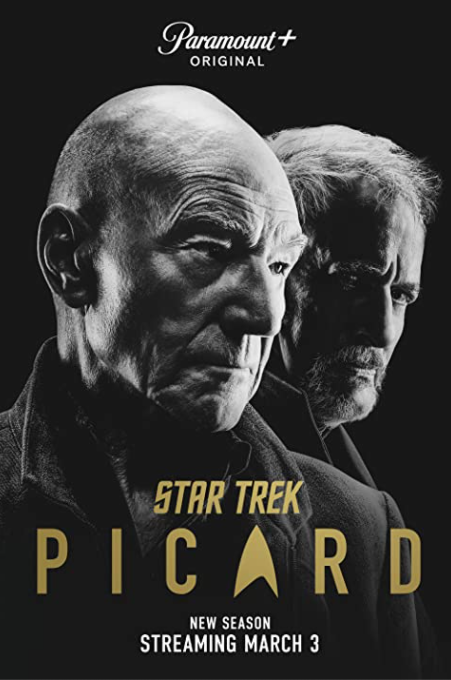
Star Trek: Picard 3.4-3:10: Biological AI


Well, I stopped reviewing Picard Season 3 after the 3rd episode of that season in March.  Why?  A combination of work on the radio play of my alternate history story about The Beatles, "It's Real Life" ... and, truthfully, I wasn't finding this final season all too captivating.  But I've watched the rest of it in the past few days, and I thought the final four episodes were pure gold.

[Spoilers follow... ]

The dominant theme in those final four episodes was the interface between biology and AI, a fortunate coincidence, given all the attention Chat GPT has been getting these days.  In this final season of Picard, we have Picard himself, whose human mentality was infused into what we would today call an android that looked just like Picard.  That happened in an earlier season.  In the final episodes of this third season, we see Data, an android to begin with, finally achieving the full dimension of human intelligence and spirit he has been so desperately seeking, going way to back to the original Next Generation television series.

But the decisive example of the bio-AI in this streaming season on Paramount Plus is the Borg, in particular, their evolution from circuits to DNA as conduits of their totalitarian order, and in particular, the merger of bio and Borg that we learn close to the end of this season is embodied in Jack, Crusher and Picard's son.  This not only makes biological sense, given that Picard once and in some sense still is the Borg Locutus, but Jack as Borg makes for one of the most exciting life-and-death battles in the whole Star Trek universe of series, as the Borg take over almost all of Starfleet, and threaten the Earth itself.

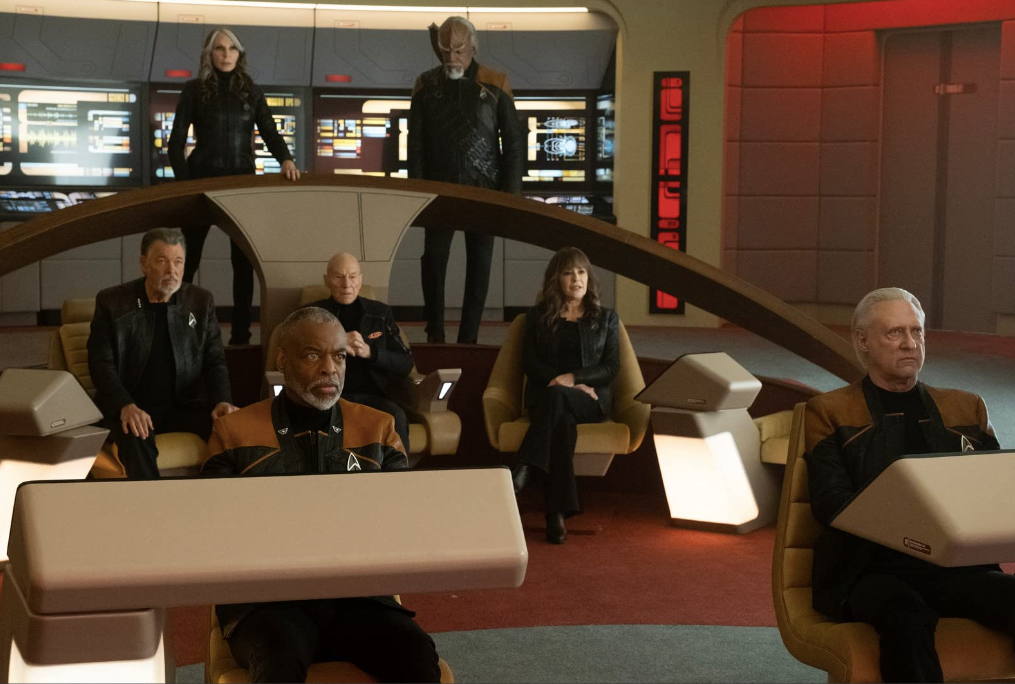
By the time this fearsome battle in multi-facets is played out, we have the entire original major cast of TNG re-assembled, including Riker and Troi, Geordi, Data, Worf, and Beverly Crusher, who along with Riker had been aboard in the story from the first episode of this season.  The battles were not only breathtaking, but sparkling with humor, with Worf falling asleep and snoring after winning some hand-to-hand combat with some of the Borg in their cube.

And there were heartwarming scenes of the original crew around that poker table, and the depth of the retrieval of the original characters was excellent, going so far as Q in a coda (I had thought that Jack's affliction was caused either by Q or the Borg) and a descendant of Chekov from TOS (voiced by Walter Koenig).  I did regret not seeing Whoopi Goldberg again as the older Guinan, and I did miss Alison Pill as the Borg Queen.

But those are minor quibbles indeed, and having seen all three seasons of Picard, I'd now say it is a memorable success, and a jewel on the Starfleet of Star Trek series.


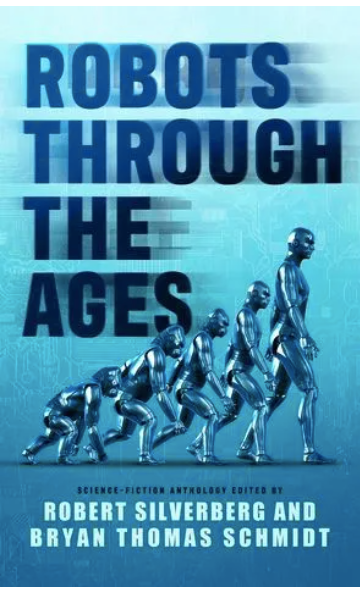
how AI has been written about through history -- Robots Through the Ages

Saturday, February 25, 2023

Star Trek: Picard 3.2: Picard's Son


[Spoilers ahead ... ]

We found out at the end of Picard 3.1 that Beverly Crusher has a son in addition to Wesley.  And we find out at the end of Picard 3.2 that Jack Crusher's father is Picard.  That's a nice, game-changing development, and amply explains why we didn't know of Jack in previous Star Treks.

The other nice touch in 3.2 is seeing Worf.  Unfortunately, we see little more than seeing him.  But that's at least an intro to learning much more about where he's been and what he's been doing over these many years.

Otherwise, I have to say that this second episode was somewhat pro-forma and not exactly bursting with original scenes and stories.  At this point, the most interesting new character is Captain Liam Shaw, well played by Todd Stashwick.  It's fun seeing someone in command so unimpressed by Picard and Riker.  And it's entirely understandable, given that he's not privy to a lot of what we saw in Star Trek: TNG.

But, more seriously, I said last year* that I was enjoying Strange New Worlds much more than Picard, which was surprising, given how much I loved Star Trek: TNG.  And so far, though I very much enjoyed the first episode of Picard Season 3, the second episode alreadys seem to be suffering from the same ennui.  Seeing our favorite characters back in older action is great, for sure.  But I'm still waiting for a story as riveting as Strange New Worlds, and the original Next Generation.

*


See also Picard 3.1: Crusher's Son

And see also Picard Season 2 Finale: Resolves and New Vistas ...  Picard 2.9: Cooperation!  ... Picard 2.8: Borg, Q, Soong, FBI ... Picard 2.7: The Bread Was Tastier than the Meat ...  Picard 2.6: Borg and Soong .. Picard 2.5: Don't Walk Away Renee ... Picard 2.4: 2024 LA ... Picard 2.3: Agnes, Borg, Badge ... Picard 2.2: Q and Borg ...  Star Trek: Picard 2.1: Cameos and Time Travel ...  Star Trek: Picard (Season One): Non-Pareil 

Slipping_Time_story_cover

                                                        a little time travel story -- free


Friday, June 24, 2022

Star Trek: Strange New Worlds 1.8: Ends of the Continuum


I have mixed feelings about Star Trek: Strange New Worlds 1.8, which I saw late last night on Paramount Plus TV.  That's because I thought most of it was ridiculous, easily the worst episode of the season, until close to the ending, which I thought was heartwarming and uplifting.

[Spoilers follow ... ]

The ship and its crew turned into a fairytale was the biggest piece of at first inexplicable idiocy I've ever seen in any Star Trek episode in any series.   The problem was more than the clumsy efforts at humor that SNW has been prone to.  The problem was more than thirty minutes of sheer nonsense bordering on gibberish.

I wouldn't say the ending redeemed this, because that first part was really not needed.  But giving Rukiah a life out of the transporter was a wonderful thing, and the manner in which that happened -- she could live that life in the vistas of her mind, and not be brought down by the illness her body was suffering -- was a nice callback to "The Menagerie,"  in which that same solution worked for the original Captain Pike.

The best scene in the episode was Dr. M'Benga's conversation with his adult daughter.  That scene was not only gratifying but had its own callback to TNG's "The Inner Light".

I still would have rather seen M'Benga come upon a physical cure for what was threatening his daughter's life, but I'd say 1.8 of Strange New Worlds is an episode worth seeing, if you don't pay too much attention to the first two thirds.


See also Star Trek: Strange New Worlds 1.1-1.2: Great Characters, Actors, Stories ... 1.3: "Instead of terraforming planets, we modify ourselves ..." ... 1.4: The Gorn and the Wub ... 1.5 Going to the Chapel ... 1.6: Two Stories ... 1.7: The Kiss


Friday, March 25, 2022

Picard 2.4: 2024 LA


All of Star Trek: Picard 2.4 takes place in 2024 Los Angeles, which made for lots of enjoyable interludes and interactions.

I guess my favorite -- and there were many close contenders -- is Picard and a much younger Guinan.  This conversation, in which Picard eventually tells young Guinan his name, explains some of the comfort and familiarity she has with him in Star Trek: The Next Generation, when he and we were more than thirty years younger.  As you know, I very much like time weaves like that.

On the other side of the profundity/light-hearted spectrum, I thought Seven and Raffi in that car, with Seven driving and Raffi coaching, doing their best to get away from the police, was hilarious.  And you can't beat the way the two made good their escape -- Agnes beaming them out of the car.  (Good thing, the car had to stop for the beaming to work -- had the two been beamed out while Seven was driving, that would left a car going 100-miles-per-hour, with no driver.  Pretty dangerous.)

Speaking of Agnes -- my least favorite part of this episode was Agnes and the Borg Queen.  This is no one's fault.   The Borg creep me out.  And I'd almost rather not see what might happen to Agnes.  Here's to her not being assimilated or whatever nice word the Borg Queen might come up with.

So the season's moving along well.  I'm still annoyed by the commercial breaks -- I mean, to have to subscribe to a service and still get commercials just doesn't seem right.  (Does Hulu do that, too?).  But it's a measure of how good Star Trek: Picard is that I'm putting up with it.  And I'll see you back here next week with my review of the next episode.


See also  Picard 2.3: Agnes, Borg, Badge ... Picard 2.2: Q and Borg ...  Star Trek: Picard 2.1: Cameos and Time Travel ...  Star Trek: Picard (Season One): Non-Pareil 

Slipping_Time_story_cover

                                                        a little time travel story -- free


Friday, March 4, 2022

Star Trek: Picard 2.1: Cameos and Time Travel


The debut episode of the second season of Star Trek: Picard was enjoyable, notwithstanding the annoying commercial breaks which lacerated the narrative on the paying service.  (Yes, I'm too cheap to pay more for Paramount+ with no commercials.)

As was the case with the first season, the most fun in this episode was the return of memorable characters from The Next Generation TV series.   In this case, that would be Guinan and Q.  Let's hope we see more of them. It was also good to Seven of Nine back in action, continuing her role from the first season.

As for the story, it was an interesting melange of Picard's personal turmoils and outright battles in space. Although Picard has loved women in the past, he's now unable to fully express his love to Laris.  Maybe what happened to him at the end of the first season has gotten in the way, not of his physical libido, but the capacity of his soul to fully love another.

We also learn in the first episode that the Borg will be at least one of the primary villains, and time travel will play a major role.  This is confirmed by Picard, who comments at some point that time is a more challenging vista to explore than space.  Give that "Yesterday's Enterprise" was one of the very best episodes of the The Next Generation television series, it makes sense that Picard would feel that way.

It was great to see Patrick Stewart in the title role, and also Alison Pill, back from the first season as the highly intelligent Agnes.  And I thought Santiago Cabrera as Chris, cigar in mouth and hand, in the Captain's chair, was an effectively dashing figure.

So ... I'll suffer through the commercials, watch every episode, and be back here with reviews.  More than enough in this start of the second season to keep me interested.


See also Star Trek: Picard (Season One): Non-Pareil 


Friday, April 3, 2020

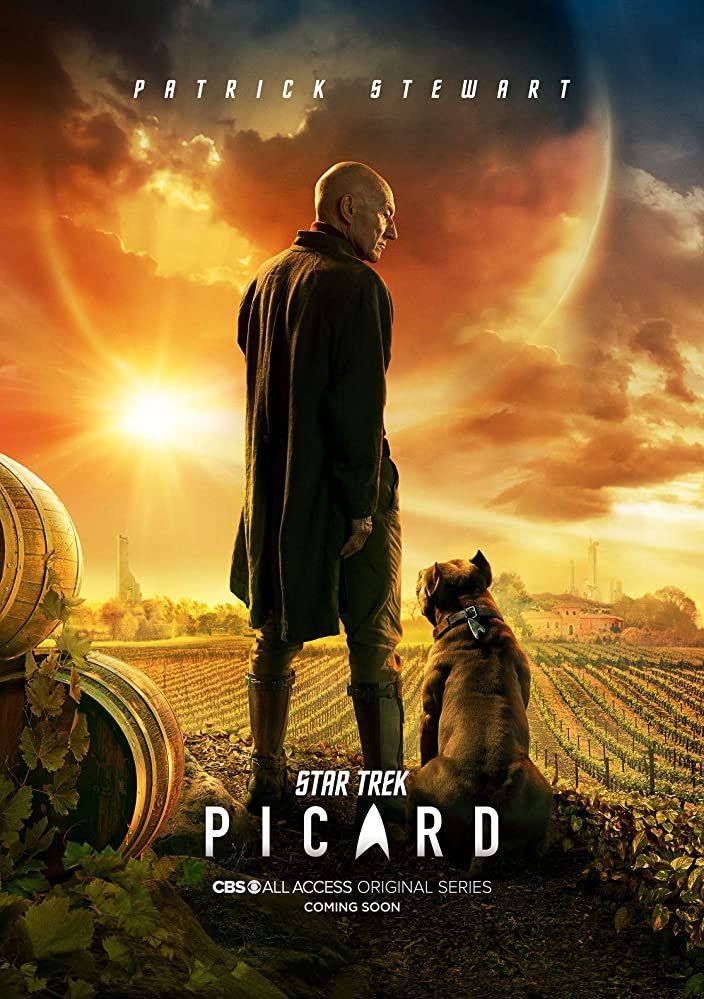
Star Trek: Picard: Non-Pareil


Just finished binging Star Trek: Picard on CBS All Access.  It's the best Star Trek since Star Trek: The Next Generation, which is where Jean-Luc Picard was introduced.  And unlike TNG which was episodic, this first season of Picard was serial, which is a big plus in my book.

But let me get this relatively minor point, in retrospect, out of the way: I thought the weakest part of Picard was the beginning, or the first episodes, which show a 90+ year-old retired Star Fleet admiral down on Earth.  This part of the story was good enough, and enjoyable.  But it's not until Picard literally takes off in a faster-than-light ship that the story really takes off.

The series meshes with TNG and with the entire Star Trek corpus just beautifully.  In addition to Picard, three of the major characters from TNG play important and very satisfying roles.  More minor characters also reprise roles and are equally effective.  And at least one iconic major character from another Star Trek series makes some game changing appearances in Picard.

And Picard borrows well from two titans of off-screen science fiction.  Isaac Asimov is read in this future in paper books, and Dr. Agnes Juradi (nicely played by Alison Pill, billed right after the non-pareil Patrick Stewart) reminds me of Susan Calvin, who figured prominently in Asimov's early robot stories.  And there are a group of warrior nuns in the mix, who echo the Bene Gesserit in Frank Herbert's Dune series.

The cinematography is splendid, reminiscent of Second Life (that's a compliment).  The battle scenes and the warp speeds are palpably portrayed.   The Borg and the Romulans figure crucially in the narrative, and we're introduced to some new planets and people, as well.

If you've noticed that I haven't said anything specific or much at all about the plot, you'd be right.  I don't want to spoil some of the many surprises for you.  But what I can tell you is that, if you're a sentient being, you'll be moved to tears, more than once, as well as laugh and be caught up in the combination of intellectual puzzle and sheer adventure that you'll find in this superb new series.

See also  Discovering Star Trek: Discovery ...   Star Trek: Discovery 2: Tour de Force Story and Characters


InfiniteRegress.tv