Chuck Todd interviews me about alternate histories
Showing posts with label Donald Trump. Show all posts

Monday, November 9, 2026

What the Democratic Landslide Says About the Impact of Social Media?


more about The Silk Code here

Social media have been blamed by the best of 'em for the ascension of Trump, Trumpism, and Maga-Americans.  Andrey Mir convincingly argued in Postjournalism (2020) that the replacement of truth by likes and shares of posts as the goal on social media was responsible for the success of Trump and the Republican lies, and Ezra Klein ("I Didn’t Want It to Be True, but the Medium Really Is the Message", 2022, The New York Times) in a general way blamed social media, supported by McLuhan's the medium is the message, as the source of the successful assault on democracy in American politics.

So what are we to make of the profoundly comprehensive replacement of the Republican deceit with Democratic truth in the election last week?  Social media still prize likes and shares well above truth.  That's a fact.  But how to reconcile that fact with the proximate obvious fact that the Democrats did so well last week?

The answer must be that media determinism has its limits.  Yes, it influences and directs our behavior in many ways -- the success of advertising demonstrates that point -- but media are not the final word in what moves us to vote, and buy things, political and otherwise.  Decades ago, when my first novel The Silk Code was published by Tor Books, and began to sell very well, Tom Doherty, then head of Tor Books (now Chairman Emeritus of the Tor Group), took me to lunch, and asked me what I would like to see Tor do for the novel.  "How about a full-page ad in The New York Times?" I half-seriously replied, hoping to build on the good review that Gerald Jonas had just provided.  Tom smiled, and told me that years of publishing had taught him that an ad like that would likely result in a couple of hundred sales.  "Would what result in more sales?" I asked, between bitefuls of the delicious lunch.  "Word of mouth" from close relatives and close friends, he replied.

That was back in the Fall of 1999, a crucial few years before the advent of social media.  We certainly make friends of a kind on social media, but they are not the same as in-person friends and not at all the same as close relatives.   Those human relationships have far more sway than anything we may read, watch, or hear online.

And therefore I think the Democratic victory is not only good news indeed for humanity, but the result of the human thirst for truth, that transcends the power of social media. And therefore I think the Democratic victory is not only good news indeed for humanity, but the result of the human thirst for truth, that transcends the power of social media. The "autocratic breakthrough" is the term sociologists use to describe the instant when a democracy, besieged from the inside by people and groups who want to destroy it, who want to replace it with a dictatorship, achieve their goal. They work for years, chipping away at democratic practices, demonizing opponents, arresting them, imprisoning them, deporting them, killing them. They stock the government with their supporters. They replace the truth with lies. And though the people who believe in the democracy, who stand up to the fascist tide, do their best to oppose the destructive wave, they eventually are worn down, and the autocratic breakthrough happens. This is exactly what happened in Germany in 1934, when Hitler the Chancellor became Hitler the Führer. Our election last week defied the diminishment of truth in social media, and took a big step in making sure the autocratic breakthrough won't happen here.


Friday, October 16, 2026

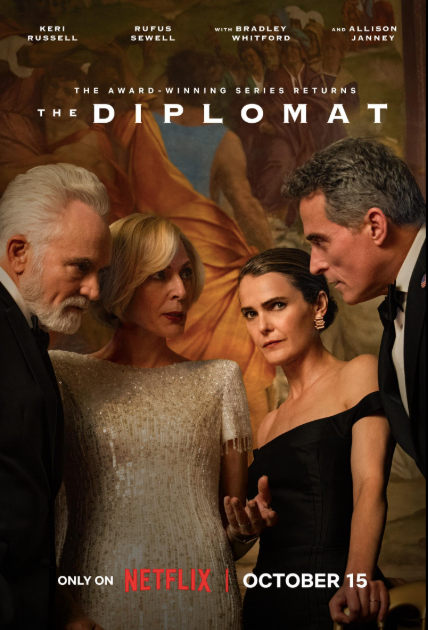
The Diplomat Season 4: How to Deal with Trump


How to continue a streaming Netflix series like The Diplomat in its 4th season of edge-of-your-seat American, British, and therefore world political intrigue and turmoil when the real world we see on our news screens is beset by an American President, Donald Trump, who creates crises home and abroad, with our allies and friends and enemies almost every time he opens his mouth?

You tell a story of an American President who embarks on a course of action even more dangerous than Trump's.

[And there will be some spoilers ahead ...]

Grace Penn (Allison Janney) became US President when the elected President died in office, and Penn as per our Constitution assumed the office.  At the end of season 3, she appointed Hal Wyler (Rufus Sewell) Vice President, and his wife Kate Wyler (Keri Russell) continued as our ambassador to the United Kingdom.   This season, President Penn is shot during a visit to London.  It turns out out that she wasn't very badly wounded -- physically -- and is back up and working as President in lightning-fast time.

Not badly wounded physically.  But we soon learn that her close brush with death did something to her mind, soul, brain, or whatever you want to call it.  And she makes a series of decisions that amazingly pit the United States not only against Russia, but the UK, NATO, and some crucial members of her cabinet.

Kate and Hal and a variety of people -- including Grace's husband Todd (Bradley Whitford, who plays a welcome larger role this season) -- increasingly try, in their disparate ways, to bring the President to her senses.  I won't spoil this season any further by telling you how that worked out, but I will say that wouldn't it be wonderful if people in the current Trump administration tried to do some of that with Trump and his policies of getting us into economic conflicts with our friends in Canada, setting ICE on murderous rampages in the US, starting an ill-conceived war with Iran, and the rest of his depredations.

I guess that's the difference between riveting fiction like The Diplomat and the harrowing reality of Trump.   But, optimist that I am, who knows, maybe watching this season of The Diplomat on Netflix will give some people in his administration a little more courage.

See also The Diplomat 1: West Wing Meets Bond ... The Diplomat 2: West Wing Meets Bond Part 2 ... The Diplomat 3: Thriller in More Ways Than One

My 2021 in-depth interview with Rufus Sewell about The Man in the High Castle


Monday, August 3, 2026

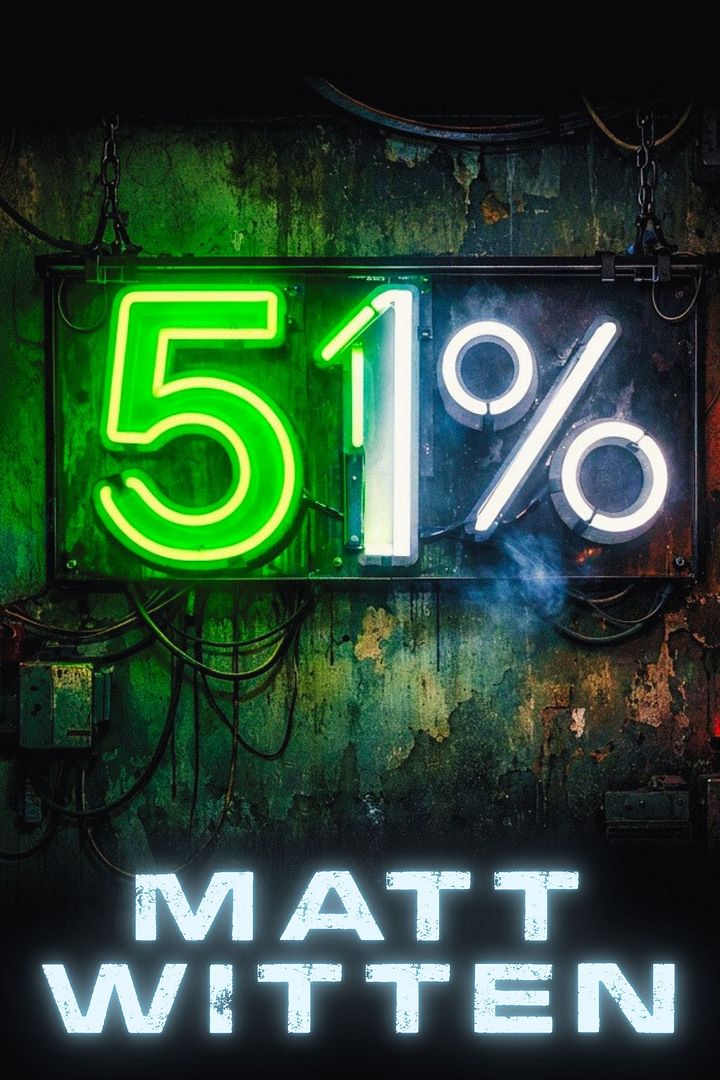
Review of Matt Witten's 51%: 100% Excellent, Relevant, Enjoyable, and Important


There couldn't be a better time to read Matt Witten's cyberpunk novel, 51%, in which Ayn Randian corporate power and philosophy controls and permeates all parts of American life, including the NYPD (New York's police), which are named NYPDInc, and in which police need payment from the people to do their work.  Apple's adaptation of William Gibson's Neuromancer will be streaming this coming January.  Even more important, Trump's hijacking of American democracy is claiming more innocent lives via ICE and other Federal police just about every week -- the most recent, Edwin Lopez-Cornejo, a 41-year-old migrant from El Salvador, died the day before yesterday at the Delaney Hall Detention Facility in Newark, NJ -- and that kind of "legal" killing requires vigorous response in all aspects of communication, including science fiction.

Witten's novel, published this past April, takes place 20 years from now.  People who are not rich pay for their medical treatment, education, and other essential needs by selling percentages of themselves to corporations.  If they sell more than 50%, they become corporate property, with where they live and work completely controlled by their owners.  To make sure that the 51%ers don't try to evade this corporate slavery, biochips are implanted in them, and their owners are alerted if anyone tries to remove them.

This is the environment in which NYPDInc Detective Luke (aka Juke) O'Keefe and his partner Halee Navarro (who carries a gun but is actually a “Crime Marketing Consultant”) must work in as they attempt to find the killer of Talia, a young immigrant 51% woman in New York City, and get drawn into a desperate, ingenious plan to break free of the corporate enslavement.  Witten has a keen sense of what the city would look like in such a corporate-glorified country, with streets renamed "Ayn Rand", "Randy Weaver", "Fountainhead", and "John Galt" -- right alongside current names like "Waverly" -- and gun models called "Hestons" and "Ruby Ridges".  Witten also knows his kittens, writing  "She started down the hall -- and tripped on a kitten, which had slipped out of the speck between her legs".  ("Speck", by way, is slang for apartment in this Big Corporate Apple, in which NYPDInc cops are called "Dincs" and the FBI cleverly called "Fincs".)

Given the ascent of AI in our world today, there of course is an AI character in 51% who, in another move that will make you smile, speaks with Margaret Thatcher's voice.  There's also use of fireflies in the story, which I'm also glad to see because they harken at least as far back in science fiction as my 1999 novel The Silk Code and Peter Watt's 2006 Blindsight, and they warrant more widespread use in our world.  And in the last third of the novel, there's almost nonstop action that will keep you glued for at least a few hours or longer, capping the memorable love story throughout.

But those are the science fiction and police fiction wheels of 51%, and the most important raison d'etre for this successor to Aldous Huxley’s Brave New World and George Orwell’s 1984, along with the enjoyment it provides, is the lesson it gives us about the likes of Trump and his allies and the damage they continue to do to our country and our world, and why we must show up at the ballot box this November and begin to get them out of office.

more about The Silk Code here


Tuesday, April 28, 2026

The FCC Raises Its Fascist Head Again


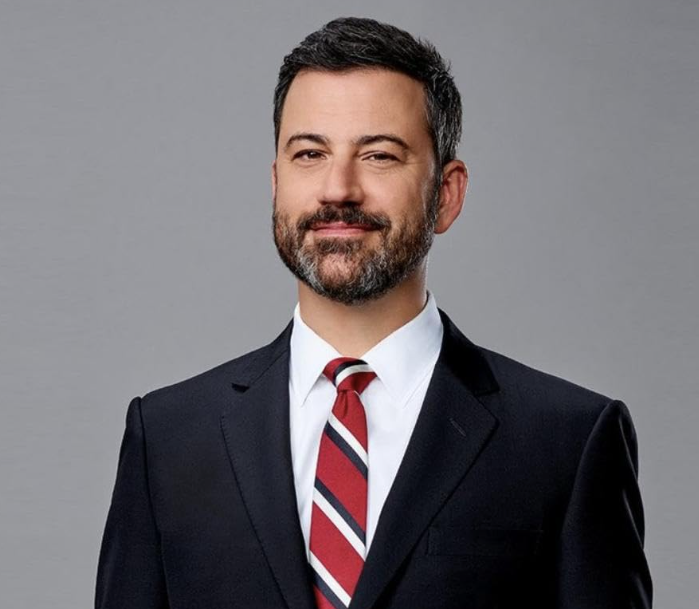
Here we go again.  "F.C.C. orders a review of ABC’s broadcast licenses," The New York Times reports. Since ABC/Disney hasn't moved fast enough to fire Jimmy Kimmel because of his joke about Melania Trump being an "expectant widow" last week -- before the presumed assassination attempt on the President on Saturday -- the FCC is flexing is fascist muscles.

The Chair of the FCC threatened to do this in September 2025, if Disney didn't do its bidding and fire Kimmel because Trump and company were tired of Kimmel's delightful barbs at the President's expense. Back then, Disney complied, but correctly reversed itself after the popular outcry against getting rid of Kimmel.

Popular outcries -- they're in many ways the essence of democracy.  So is the First Amendment and its insistence that the government keep its hands off speech and press.  But Trump and his henchmen couldn't care less about such essential freedoms.  The feelings of the President are much more important to them.

As I've been saying now for decades, the FCC, created in the Communications Act of 1934, was unconstitutional the moment it was created.  In a major failure of our judicial system, it was never struck down as the blatant negation of our Constitution that the FCC was and is.

Someday, some enlightened Supreme Court will do that.  Until then, the best we can do is resist the thuggish actions of this miscreant agency.

See also The Firing of Jimmy Kimmel: The Latest Step on the Road to Fascism


Saturday, April 11, 2026

Which President Was Most Responsible for the Artemis Project?


The Orion spacecraft during trans-lunar injection, to bring an Artemis mission to the moon. (Image credit: NASA)

The short answer, much as it pains me to say this, is that our current President, Donald Trump, is the President most responsible for the Artemis Project.  My readers will know how strongly I have opposed and criticized Trump's policies in his two administrations, on immigration, ICE, just talking about destroying Iranian civilization, and just about everything else.  But a key factor in Trump's policies is his disregard for the truth.  And the truth is that the Artemis Project was initiated in Trump's first administration, enacted with the uncrewed Artemis I in Joe Biden's administration, and furthered with the human trip around the Moon just completed by Artemis II, in the current second Trump administration.  The truth therefore is that Trump is the President who was most responsible for Artemis.

There's of course a history to all this.   As I outlined in several books -- Realspace: The Fate of Physical Presence On and Off Planet and Touching the Face of the Cosmos: On the Intersection of Space Travel and Religion -- Richard Nixon, a Republican, stopped trips to the Moon in the space program, dropped them like a hot potato, after the extraordinary success of the Apollo Program in 1961-1972, because it heralded the vision of John F. Kennedy, a Democrat, who beat Nixon in the 1960 election and ignited NASA and the US space program after its slow start in the 1950s under Republican Dwight Eisenhower.  By the time we got to the 1980s, Democrats like Walter Mondale were active opponents of spending money on space, and Ronald Reagan and the Republicans had become the champions of extending our species off this planet.  That reversal continued into the first Trump administration.  Democrat Bill Clinton did little for space.  Republican George W. Bush started the Vision for Space Program in 2004, which included the Constellation initiative, a vehicle aimed at returning astronauts to the Moon by 2020 as a stepping stone to Mars.  Democrat Barack Obama ended the Constellation in 2010, which almost made me sorry I voted for him.

This history is important, because it spotlights the significance of Joe Biden's strong support for Artemis in his one term in office.  That crucial support makes Biden the first Democratic President to fully support the space program -- specifically, getting human beings to actual moons and worlds beyond this planet -- since LBJ in the 1960s.   When the history of how the human species went out into the universe is someday written, it will show that we Americans, supported by both parties, led the way.  And if Donald Trump was a crucial factor and force in that success, so be it.   

That doesn't mean that we have to support Trump and his dangerous policies that threaten our very democracy.   But it does mean that we have to stand up for the truth, which in just about every other aspect of his presidency, Trump disdains.


Tuesday, March 3, 2026

Tehran: Did the TV Series Trigger Trump To Do the Bombing?

In a feat of perfect timing, I finished watching the third season of Tehran the night before Trump announced the joint Israeli-US attack on Iran.   We know that Trump watches a lot of TV, and is very much influenced by it, choosing cabinet members based on their performances on cable news shows.  I wonder to what extent his ultimate decision to attack Iran was based on his viewing of the series named Tehran?

First, let me say that I saw all three seasons of the series in the past few weeks, and talked my wife into watching it, too.  It's an excellent series, which started out very well, and just got better and better. Apple TV+ and the Israeli TV broadcaster KAN 11 are part of the production team, and Tehran indeed has a lot of the flavor, power, and feel of Fauda, which is also an Israeli production.  It was also good to see Sasson Gabai back in action in Tehran, after his success in a very different kind of role in Shtisel.

The essence of Tehran is what kind of military back-up will Israel give its Mossad agents who are already widely embedded in Iran.  In the third season, in particular, we find agent Tamar Rabinyan (very well played by Niv Sultan) struggling to stop Iran from finally creating a nuclear weapon -- struggling to do this before Israel bombs the site, which would release damaging radiation (not as bad as a nuclear explosion, of course, but the "dirty" explosion would engender serious health risks).  All of this occurs as Iran is literally on the edge of developing nuclear weapons.

Was Trump watching this thrilling series, and that's what led him to make the decision to bomb Iran?  Well, the edge-of-your-seat season 3 finale of Tehran the series was aired on February 27, and the US started bombing Tehran the city on February 28.


Sunday, January 18, 2026

About Bob Dylan's Science Fiction Novel


Bob Dylan on Instagram

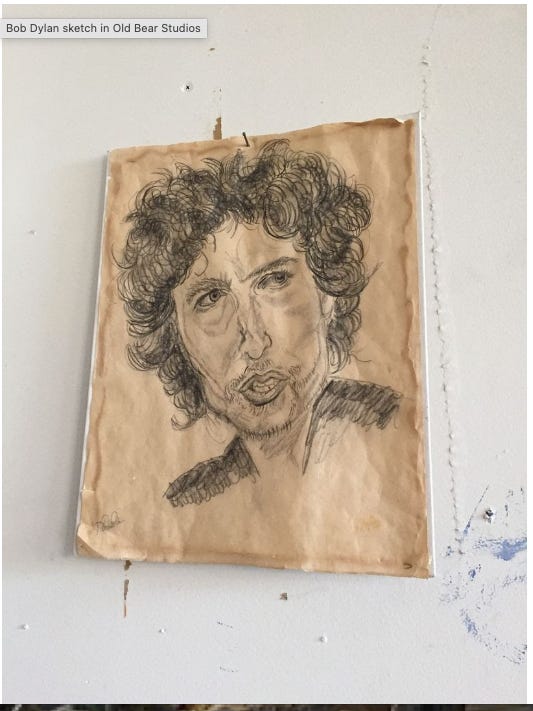
Dylan posted the above on Instagram yesterday (my son Simon Vozick-Levinson alerted me to it this morning). On Instagram and Reddit, and probably in other places, people are speculating that if Dylan did write it, he used AI to write it. I’m no expert on AI, but I’ve been listening to Dylan’s lyrics since the 1960s, and the excerpt he posted certainly seems consonant with the style and content of his lyrics. 

 Lyrics often repeat ideas and feelings — indeed, that’s what choruses explicitly do. And the ideas and emotion presented in this excerpt feel like a lyric — a song without music, lamenting, protesting, objecting to the danger, the destruction of our democracy that we see happening all around us, every day. I’m glad to see a man who actually won the Nobel Peace prize come out and assess this, decry this, in his own inimitable way. 

His novel/lyric aim in particular at universities who acquiesce, crumble under the pressure of the Trump administration and his allies. I’m looking at you, Columbia University. 

And, by the way, Dylan’s no stranger to science fiction. His Frankenstein-like song, "My Own Version of You" in his Rough and Rowdy Ways LP in 2020, is a funny, great little piece of science fiction, in one of his best albums. We the people who believe in freedom and democracy need all the help we can get in these desperate days, and it’s welcome indeed to have Dylan stepping up and in any way he can.

See also Dylan's Murder Most Foul: From Then To Now

Monday, November 3, 2025

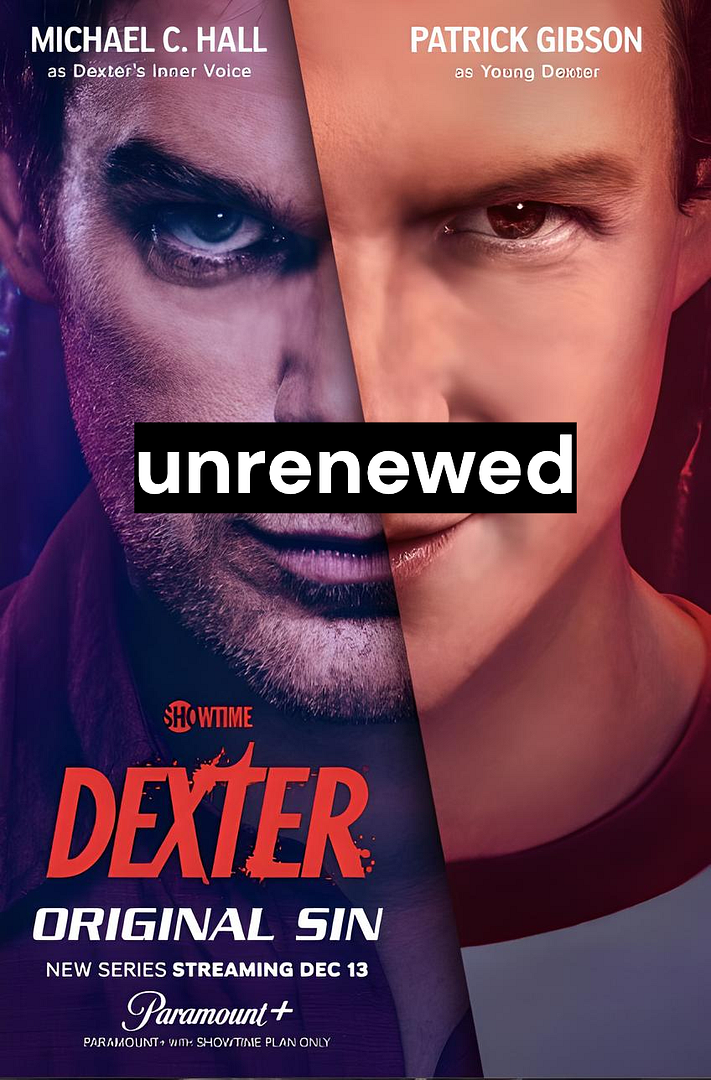
A Political Hypothesis about Why Dexter Original Sin Was Unrenewed


I've been a devoted fan of Dexter since it debuted on Showtime in 2006.  My very first review of a TV show on this blog in December 2006 was a rave review of the first season of Dexter 20 years ago on Showtime.  The review is entitled First Place to Dexter.

I've reviewed in this blog every episode of every season of Dexter since then.  And of course I reviewed every episode of Dexter: Original Sin last summer.  I was sad when the original run of Dexter ended in 2013, thrilled when Dexter returned in New Blood in 2021, disappointed when Dexter Morgan apparently died at the end of that one season in 2022, delighted with the prequel Original Sin, glad that it was renewed earlier this year, and I think Dexter: Resurrection this year was masterful.

So you can imagine how stunned I was about the announcement that the renewal of Original Sin for a second season had been reversed, the prequel series cancelled, this past August.  As Alisha Grauso pointed out in her Screen Rant article four days ago, Original Sin "immediately became Showtime's most-watched premiere ever, with 2.1 million viewers".  She then says its about-face cancellation by Paramount four months after Original Sin had been renewed "was seemingly a casualty of the Skydance-Paramount merger," and goes on to explain that after the merger, Paramount reviewed all of its programming (ok, that makes sense) and she further suggests Paramount may have to decided to revoke its renewal because prequels are narratively difficult and even when successful often satisfy their viewing audience with just a single season.  And that makes no sense to me at all.  Even if that characteristic of prequels is true, there was no way Paramount would not go for a second season of Original Sin, given how successful -- immediately becoming "Showtime's most-watched premiere ever" -- Original Sin on Showtime was.

My wife, also an avid fan of Dexter on television, didn't get a chance to watch Original Sin until this past week.  I was half-watching it with her and enjoying it immensely.  And I starting wondering, again, why had  Paramount reversed itself?  Why cancel at a time when the Dexter franchise was taking the screen by the storm? Yes, that decision was indeed a result of the Skydance merger.  And what else had happened with Paramount and CBS after that merger?  Well, The Late Show with Stephen Colbert had been unceremoniously cancelled (effective May 2026) after Skydance got in the driver's seat.   And why was that?  The billionaire who owns and runs Skydance is a big Trump supporter, and Colbert's sarcastic comedy has been at its sharpest when it came to Trump.

But Dexter: Original Sin had no political comedy, right?  Ok, but maybe one of its lead actors, or writers, or directors, had spoken out against Trump and the march towards fascism in America he's engendering and leading.  I did a search on Christian Slater (who brilliantly plays Dexter's father Harry in Original Sin) and Trump.  And bingo!  Back in 2018, Slater called Trump an "asshole".  Breitbart, a right-wing publication, was so upset about that, they devoted a whole article about it.   Surely Trump, who keeps track of every insult, real and imagined, was bearing one of his myriad continuing grudges, and desire for revenge, against Christian Slater.

Of course, I have no proof of this.  But I wanted to put this hypothesis out there.  Was Christian Slater and thereby Original Sin another victim of Trump's rampage against free expression, abetted by the billionaires who support him, in this case, a billionaire whose company now in effect owns Paramount, and thereby has easy control over its programming?  Maybe, given the damage Trump has already done to the arts and culture in this country, I'm being too quick to see him as the villain behind Paramount's illogical reversal on its renewal of Dexter: Original Sin.  But the other explanations just don't add up, given Original Sin's enormous success, and I really can't think of a more convincing explanation of why it was cancelled after it had been renewed.

See also: Dexter: Resurrection 1.1-1.2: The Imposter ... 1.3: Killers and Prey ... 1.4: The Nefarious Club ... 1.5: Father and Son and the Watch ... 1.6: What's Half of Gemini? ... 1.7: Batista and Dexter in the Car ... 1.8: The Enemies: An Evaluation ... 1.9: And Then There Were Two ... Season 1 Finale: First Place in the TV Age of Sequels

And see also Dexter: Original Sin 1.1: Activation of the Code ... 1.2-1.3: "The Finger Is Missing" ... 1.4: The Role of Luck in Dexter's Profession and Life ... 1.5: Revelations and Relations ... 1.6: On the Strong, Non-Serial-Killer Parts of the Show ... 1.7: First Big Shocker ... 1.8: Dexter's Discovery ... 1.9: Brian's Story ... Season 1 Finale: Satisfying


And see also Dexter Season 6 Sneak Preview Review ... Dexter 6.4: Two Numbers and Two Killers Equals? ... Dexter 6.5 and 6.6: Decisive Sam ... Dexter 6.7: The State of Nebraska ... Dexter 6.8: Is Gellar Really Real? .... Dexter 6.9: And Geller Is ... ... Dexter's Take on Videogames in 6.10 ...Dexter and Debra:  Dexter 6.11 ... Dexter Season 6 Finale: Through the Eyes of a Different Love


And see also
 Dexter Season 4: Sneak Preview Review ... The Family Man on Dexter 4.5 ...Dexter on the Couch in 4.6 ... Dexter 4.7: 'He Can't Kill Bambi' ... Dexter 4.8: Great Mistakes ...4.9: Trinity's Surprising Daughter ... 4.10: More than Trinity ... 4.11: The "Soulless, Anti-Family Schmuck" ... 4.12: Revenges and Recapitulations

And see also reviews of Season 3: Season's Happy Endings? ... Double Surprise ... Psychotic Law vs. Sociopath Science ... The Bright, Elusive Butterfly of Dexter ... The True Nature of Miguel ...Si Se Puede on Dexter ... and Dexter 3: Sneak Preview Review


Sunday, October 26, 2025

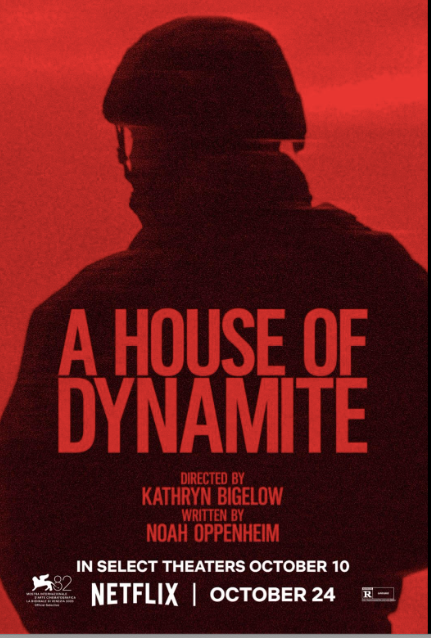
A House of Dynamite: MAD -- Mutually Assured Destruction -- In Our Day and Age


I grew up in a world in which Dr. Strangelove was a plausible movie, a world in which we lived with the Soviet Union, armed to the teeth with nuclear weapons, as were we, and our best chance that we wouldn't blow up the Earth, if not to smithereens, to an uninhabitable planet, was MAD -- the mutually assured destruction that a nuclear war would engender, which would stop we human beings from ever starting such a no-win war.

As A House of Dynamite on Netflix tells us, at the beginning, we the world gradually learned to scale down our armaments, but the world has gone back to at least verbal apocalyptic belligerence in the past decade, with Russia, in particular, refusing to rule out nuclear weapons if the US and NATO attacked it in response to the Russian attack on Ukraine, or maybe if we gave Ukraine too much assistance.

[Spoilers ahead ... ]

A House of Dynamite posits such world in which a missile is launched towards the United States.  Attempts to intercept it with our missiles unaccountably fail.  Maybe our defense system has been compromised by prior surreptitious cyber attacks.  Maybe the system wasn't that effective in the first place. We’re told that stopping a missile like that is like “a bullet hitting a bullet”.

We soon learn that Chicago is the target.  (Here I'll say that the movie was made before Trump unconstitutionally targeted Chicago for National Guard deployment.  Just sayin'.)  We see this story play out from three different simultaneous angles, from the standpoints of American military and political leaders and personnel.  The actors are top notch: Idris Elba as US President (he's been great in everything I've seen since Stringer Bell in The Wire), Jared Harris as Secretary of Defence (Hari Seldon in Foundation), and Rebecca Ferguson as a Captain who finds herself heading the White House Situation Room (Juliette Nichols in Silo), are just three of many examples.

All three stories end with the missile seconds from hitting Chicago, and the President struggling to make a decision.  Retaliate?  Against which country?  Russia, China, North Korea?  And what kind of retaliation -- how much of the presumed enemy will be destroyed?  How much of the Earth will be left inhabitable?

And here the movie ends.  Right.  Just like the last scene of The Sopranos.   We the audience need to fill in the ending.  Or at least think about it.   Is this good movie-making?  I actually thought it worked great in The Sopranos (see my reviews, beginning here, for what I think happened to Tony).  But The Sopranos was clearly a totally fictitious story about familiar characters in our reality.  A House of Dynamite is fiction, too, but somehow seems less a fiction, much closer to our reality, the world I grew up in, the world we now inhabit.

And as a denizen of that world, I found the ending unsatisfying.  But maybe in such a scenario there is no narratively satisfying ending.  A happy ending would have been the missile hitting Chicago with no bomb, or no bomb going off.  Deputy National Security Advisor Jake Baerington (played by Gabriel Basso, who believe it or not played J. D. Vance in Hillbilly Elegy) tells the President this a possibility, in an attempt to caution him not to launch a massive nuclear counter-strike.  This of course goes against the military advice of General Anthony Brady (Tracy Letts, Elvis and Nixon -- hey, it's a movie about a President).

So who would the President listen to?  I'd hope it would be Baerington not Brady.  But maybe that's not realistic, after all.  

Saturday, October 4, 2025

Applying Marshall McLuhan to Our Current Predicaments


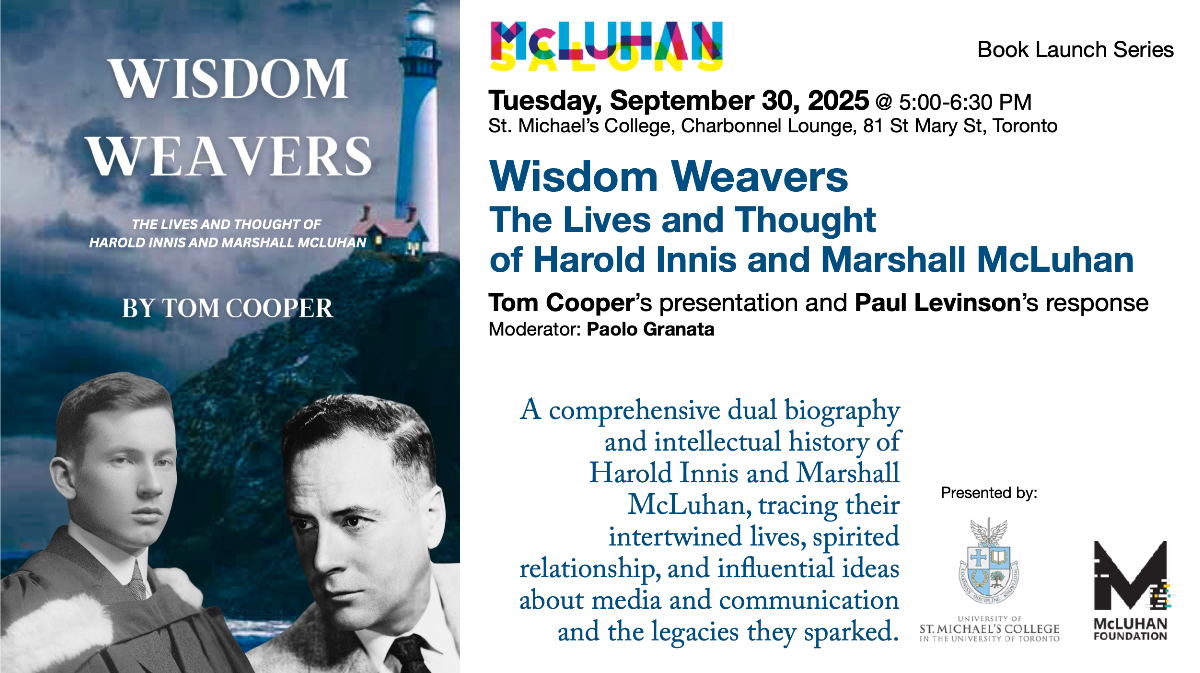
On September 30, 2025 I took part in a McLuhan Salon organized by Paolo Granata in Toronto.  The Salon was devoted to a consideration of some of the many issues Tom Cooper explored in his book Wisdom Weavers: The Lives and Thought of Harold Innis and Marshall McLuhan, published by Connected Editions on May 1, 2025.  The following is a slightly edited transcript of my responses to each of the three sections of Tom Cooper's presentation, in addition to my responses to two subsequent questions raised by members of the audience.  The audience in Toronto was present in-person with Paolo Granata at the event.  Tom Cooper and I attended via Zoom.

Part 1

I've been thinking increasingly in the last couple of years that the work of Marshall McLuhan and Harold Innis has never been more important to our world than it is now. As all of you up in Canada know all too well, the United States is being pulled apart by a President and his supporters, who seem to be happily marching increasingly towards a fascist government. And people who are upset and concerned about that are, among other things that they're doing, desperately struggling to understand how that happened, and what we can do, if we do understand how and why that happened, to stop and reverse that trend.

So, Tom Cooper contacted me in August of 2024 -- it seems now like about 10 years ago, because so much has happened since then -- to tell me about his book, Wisdom Weavers, an intellectual biography of Marshall McLuhan and Harold Innis, which he wanted to get published. By the way, it's worth noting that this book literally has been about half a century in the making, in the writing. And that's something that we all know, that books take a long time to write, and sometimes even longer to get published, but I think most of us can agree that 50 years is a very long time. But that's one of the great strengths of the book. And Tom had been working on this, and has been witness to all of the political upheavals in the United States.

And I have noticed, if you pay any attention at all to the news, in this struggle to understand how we got here -- we being we here in the United States, we being the United States and Canada, we being the whole world -- that increasingly, Marshall McLuhan's name comes up, because most people who understand anything about the history of communications and media, who at all have a sense that what we see and hear on television, listen to on the radio, talk about through our smartphones, and most importantly, what we do now through social media, are also aware that, well, there was this theorist Marshall McLuhan, who talked about a global village. Not in 2012, not in 2002, not in 1992, but way, way back in 1962.

And maybe some of the things that McLuhan talked about, and as we also know, when you delve into the history of Marshall McLuhan as a scholar and as a person, his awareness of and interaction with and reading the works of Harold Innis, maybe, maybe that has something that we can learn from and we can use to help us better contend with these momentous changes.

So when Tom contacted me and told me about his book, I immediately said, well, send it to me. And that very evening as I was reading it, I knew what a crucial gift this would be to our current world as we struggled to make sense of what was going on.

So I don't think that Harold Innis and Marshall McLuhan have ever been as important to the world as they are now, and I think we're very fortunate to have a book like Wisdom Weavers that can tell us so much about those two.

And I'm glad that I happen to have this publishing company, Connected Editions, that could publish this book. My wife Tina Vozick and I, back in the early 1980s, created an organization called Connected Education. Connect Ed or ConnectEd, for short, and what we were doing back then was offering online courses for academic credit. And we had arrangements with the New School for Social Research, with Bath Spa University, originally called Bath College over in England, with Pacific Oaks University out on the West Coast of the United States. And we had this program going for about a good 15 years -- before I got tired of teaching online and decided to go back to the classroom and teach in-person -- but one of the things that I thought our organization could benefit from was creating an online publishing company, and since we had Connected Education, I thought it would be good to have another Connect Ed company, in this case, Connected Editions.

That's how the publisher of Wisdom Weavers was created. And when we decided to wrap up Connected Education, we still kept Connected Editions going, because we'd published a few books, and we thought they were important books. But, Connected Editions was pretty much in the closet in 2024, so in addition to everything else, the timing was right, because when Tom and I had that conversation, and, I got off the phone, and Tina said who are you talking to? I said, well, you may recall Tom Cooper. And I immediately said, you know, maybe it's time to bring Connected Editions back into the forefront, back into the fight to not only get more people aware of the important things in the world, but in the fight that I think all of us who believe in freedom are now conscripted in the political army to fight.

Part 2

I'd like to talk about about the power of parasocial relationships. And here's a true story that concerns Marshall McLuhan.

It also concerns a very good friend of mine, someone who sat next to me in the Media Ecology Program at NYU, who completed his PhD, literally, in the same few months that I completed mine. His name may be familiar to some of you, Joshua Meyrowitz. And here is this true story which shows the power of parasocial relationships, which, by the way, Josh Meyerowitz, who's remains a very close friend of mine, investigated in his doctoral dissertation, No Sense of Place, which he eventually, I guess, 6 or 7 years after he finished his PhD, developed into the book No Sense of Place, which is on the verge of celebrating its 40th publication anniversary by Oxford University Press.

Anyway, as many of you, maybe all of you, know, December 1980 was a pretty grim time as far as the loss of people that many people in the world, for different reasons, regarded as absolutely essential to their understanding of the world.

One was Marshall McLuhan, who had suffered a stroke earlier in that year, but left us, finally, in December 1980. And at that point, I was pretty close friends with Eric McLuhan, Marshall's son. And with Corinne McLuhan, Marshall's wife -- and by the way, there's a lot about the women, who played such a big role in both Marshall's life and Harold Innis' life, in Tom's book.

But as soon as we heard about Marshall's passing, Tina and I knew that we were going to go up to Toronto to attend as much of his funeral and services as people who are not members of his family could attend. And that's what we did. And as we were getting ready to do this -- that is to go up to Toronto, Tina and I -- I called Josh, who at this point was teaching at the University of New Hampshire in Durham, New Hampshire. He was then married to Candy Leonard, who would go on to actually write a couple of books about the Beatles, a very significant author. And I said to Josh, by the way, are you and Candy going to come up to Toronto for Marshall's funeral?

But another tragedy had occurred in December. John Lennon was assassinated. And, as I've been telling people for a while, ever since I wrote a novel called It's Real Life, an Alternate History of the Beatles, in which John Lennon was not assassinated, that killing changed my life. The novel is fiction, science fiction. Which I enjoyed writing. But in our world, the reality is he was assassinated.

And so those two things happened in December 1980. And the point I'm getting to is that Josh said, no, we're not going to go up to Marshall's funeral much as we would want to.

And I said to Josh, well, why not?

And he said, well, there's an event in Manhattan. People are getting together to basically express their horror at what happened to John Lennon and their love of John Lennon and his music. And Candy and I decided that's what we're going to do. We're going to be traveling, but we're going to travel from New Hampshire to Manhattan, not from New Hampshire to Toronto.

And if you think about it, there you have a parasocial relationship so powerful, that even though Joshua Meyrowitz had met McLuhan -- in fact, one of the things that I was happy that Tom picked up on in Wisdom Weavers was the pot roast dinner that Tina made the night before the Tetrad conference that I organized at Fairleigh Dickinson University in the late 1970s, a dinner in which Marshall and Eric, Tina and I, were joined by Joshua Meyerowitz and Ed Wachtell, another media theorist -- but even though Josh had broken bread with McLuhan, sat across a dinner table with him, Josh and Candy decided to go to Manhattan because of their parasocial feelings for John Lennon.

So yes, Marshall was someone that Josh felt very close to. But the power of his parasocial relationship with John Lennon led him to attend that event in New York, even though he had never met John Lennon in person.  (By the way, I had met John Lennon in person once in a crowded elevator in a building in New York City.) So the parasocial is indeed an incredibly powerful force in all of our lives. We all interact with all kinds of media all the time. And we have very profound emotions about people who don't know us from Adam or Eve. And it's important to pay attention to that.

I wanted also to move to a slightly different topic to defend Marshall McLuhan and what he came up with, one of his most famous "probes," as he would call it. I would call it a concept, but it doesn't matter what the word is. But I'm talking about the "global village". And I think you have to give McLuhan enormous credit for that. In 1962, what got McLuhan to write about the global village, no doubt, was television. And if you think about it, there was nothing global about television back in 1962, and I'm old enough to remember that. And I can see, looking at the audience, that a few of you are old enough, too.

And, not only was it not global, what television created, it wasn't really a village either.

It was national in countries like the United States. Okay, that's a lot of territory, but TV did not create a village, because last time I checked, in a village, people could talk to each other, exchange ideas, across and throughout the village.

What television was ... well, it was basically a media environment of one-way wires. People watched television, but they couldn't communicate at all with the people who were on television. At most, they could communicate with people in their own families, and some friends, and maybe some business associates. At the proverbial water cooler.

So, in this environment, McLuhan talks about the global village. And the global village doesn't come into actual being until a good 30, 35 years later, when the Internet, the web, first came on the scene.

And obviously, the world we live in now is indeed a full-fledged global village, with all its benefits and all its dangers. So McLuhan may not have been entirely right about the global village, but you have to give him credit. You know, you talk about foresight, you talk about a perception that can span decades into the future. His understanding of human communication was so deep and rich that he was able to foresee -- not just predicting something, like some swami who might be able to say, I can predict the future, but no, McLuhan' notion of the global village was based on his insight into human communications, and I think that's one of his most signal accomplishments.

Last point I'll make, but very briefly, and maybe at some point in the future, at another conference, or maybe later at this event, I'll tell you more about it. Here it is: I'm not as worried about AI as many other people are. I think it's just another technology. Yes, it is going to have an enormous impact, it's going to have a good impact, it's going to have a bad impact, everything in between.

We do need to understand it better. But I'm not worried that as soon as this event is finished, there's gonna be a knock at my door, I'll open up the door, and I'll see Arnold Schwarzenegger saying, is Sarah Connor here? I'm not worried about that happening at all, at least not in our lifetimes.

Part 3

Let me pick up on what I was saying about artificial intelligence. It's done us, and is doing us, an enormous amount of good in areas like medicine, in areas like transportation, and this also relates to our health.

I'm old enough to remember, and again, I can see many people in our audience are old enough to remember, when, if you were going over a bridge or under a tunnel, you had to pay a toll. That's still the case, but there was usually some person in that toll booth, a collector, who was collecting your toll.

That person's job at least 8 hours a day, 5 days a week, was to sit there, collect tolls, and breathe in God knows how much carbon monoxide. You know, it's amazing that they lived long enough time to even get trained to be a toll collector. But, now, of course, we go over bridges, we go over tunnels, and we have an AI system keeping track of our tolls, and no one has to do that kind of job. And there are many other unhealthy jobs like that.

Yet I think it's a mistake, in many ways, to even call these systems, and AI in general, AI or artificial intelligence. I think a better word would be AS. And what I mean by that is artificial stupidity.

Because the systems are still not that bright. You know, I wrote a book, very small book, about 100 pages, called McLuhan in an Age of Social Media. I update it all the time. And I thought as I was preparing Tom's book for publication, I would get an idea of how adept an advanced AI program like ChatGPT, not the free version, but, even cheapskate that I am, I paid for a pretty sophisticated version. And so I figured I would do a test case. I would ask ChatGPT, could you prepare a name index for McLuhan in an Age of Social Media (like I might want you to do for Tom's book Wisdom Weavers).

And ChatGPT said, sure. And I uploaded the manuscript, and just a few hours later, it presented an index to me.

In which it missed about 30% of the names, and also included about 4 or 5 names that it pulled out of thin air. This is known as hallucinations in the AI field.

It did do one intelligent thing. I was talking about the billionaire who bought Twitter without mentioning Elon Musk's name, so to give the AI credit, it did put Musk's name in the index it prepared.

Anyway, I worked with that AI for about 2 weeks. It constantly promised that it was going to give me a better version.

Eventually, I said, look, enough is enough already. And I took what it gave me, went over the page by page with my own eyes, corrected the index, and now, finally, there is an index to that very short book. So, one of the reasons why I'm not too worried about AI is if it can't even do an index, a name-only index for a 100-page book. I don't see how much damage it can really do in the world.

And I know there are deep-fake videos and so on, but about that, I'll say, look, you know, we've been in that situation at least as long as since Abraham Lincoln was president. And if you take a look at another one of my books, Fake News in Real Context, you'll see a picture of Abraham Lincoln. It's actually a photograph of Abraham Lincoln. But it wasn't completely of Lincoln.

You see, the problem with Abraham Lincoln was -- he was a brave president, some people consider him America's greatest president -- but one of his problems was he didn't have very good posture. So, these photographers, these early photographers in the 1860s, took dozens of pictures of Lincoln. It was during the Civil War. They wanted to make those photos look as presidential as possible. But in every single picture, Lincoln was slouching. He didn't look comfortable.

So finally, what they did is, they came up with the brilliant idea, they lopped off Lincoln's head, and they took an older photograph of John Calhoun, an notorious Southern secessionist senator. And even though he believed in slavery, he did have one good thing about him, he had good posture.

So they took the photo of Lincoln's head and put it on top of a photo of John Calhoun's body, and that's the photograph of Lincoln that they circulated. And so Lincoln looked great.

In other words, that kind of hocus pocus of fake imagery began in the 1860s. That really is the beginning of fake news, you know, through imagery and videos, and now we have deep-fake videos. The solution to the problem is not to ban AI, or even denounce AI, it's just not to believe anything you see in a video, anything you see in a photograph. Don't believe it. You know, you just have to accept that it could be manipulated. And that pulls the fangs out deep-fake AI-manipulated videos.

And now a brief point about outer space, which Tom mentioned. Here's why I think going out into space beyond this planet is so important. A very simple, straightforward reason.

I'd like to know what the hell we're doing here.  That is what we as human beings, who can go out into space, who can communicate in the way we're doing right now, Tom in Honolulu, I'm up on Cape Cod, all of you are in Toronto, are all about. What is going on here? No other species can leave this planet. We marvel at the intelligence of great apes and dolphins. But last time I checked, none of them had an Isaac Asimov, none of them had a Niels Bohr or an Albert Einstein. Or a Marshall McLuhan. The great apes may be very intelligent, and all due respect to the great apes and other intelligent animals, but they don't have hold candle to our intelligence.

And not only that, we don't really know how everything was created, right? I mean, the Big Bang Theory doesn't explain it, because what created the Big Bang? What created the materials that made the Big Bang?

And as far as religions are concerned, okay, God created everything, but what created God? God created Him or Herself?

That's a clever, logical ploy, but it doesn't really answer our questions, does it? And I think the only way we're going to get a little bit better insight on what we're doing here in this world is to get beyond this pebble. Get beyond this planet where we happen to find ourselves, and see with our own eyes what is going on out there in the universe.

Obviously, not everyone agrees with me. I'll close with what my teacher, Neil Postman, probably the best teacher I ever had, but I disagreed with, like, 95% of his views, including what Neil Postman had to say about outer space. One day, when I made the same point to him that I just made to you about the need for human beings to go out into space, Neil turned to me and he said, "But Paul, you don't understand. There's no air out there."

So, you know, that was certainly true, but obviously we could travel in ships that give us air.

Part 4: Responses to Questions

(a) I think, by and large, that the only way we can improve our lives and our situations is through technology. Not only media, which are technology, but other technologies. So, one of the ways of dealing with not enough food to feed people is to have better agricultural technology -- or even, for example through genetic engineering, and I know that's very controversial in some places, but to make crops that are more resistant to natural ills, that can thrive in harsher temperatures, etc, etc.

And I see all of the concerns about the media need to be taken into a larger perspective of we're still a long way, as a species, from leading the lives we want to live. We, all of us, have disappointments that we see all around us, things which are not working well, and as I said, I can't think of any solution better than technologies which have extended our lives, have made parts of the world more conducive to human beings living there, and a whole series of other positive developments.

(b) Let me just say, I was already, before Trump became what he is today -- going back, actually,to the 1970s -- I was always very interested in the study of propaganda. How it's created and what it does. I studied it as a student in the Media Ecology program. It actually wasn't Neil Postman's specialty, it was Terry Moran's, somebody else in the NYU Media Ecology faculty, who doesn't get enough credit for his contribution to the program. And because of Terry Moran, I read the Institute for Propaganda Analysis, what that group did in their studies, which began in the late 1930s, continued into the early 1940s. And through that, and other research that I did, I became very well aware of what Joseph Goebbels and Adolf Hitler and his cronies did in Germany in the 1920s and 30s, and I became aware very early on that Joseph Goebbels was no dummy. It was Dr. Goebbels. The man had a PhD. He was a monster on an ethical basis, but he was highly intelligent, and he also understood human communication.

And the reason why I'm saying all this is it frightens me, and frighten is almost too weak a word, to see what's going on in the United States today, and in other parts of the world. Because, in many ways, it is following the exact same path that Hitler and Goebbels and their cronies followed in the Weimar Republic in the early 1930s, attacking comedians, rounding up immigrants and demonizing them. I mean, I could talk for an hour about all the things that are going on today in the United States, such as wanting to annex other neighboring countries. You know, one of the first things Trump said, after he was re-elected this second time, is, hey, he thinks Canada should become another state in the United States. I mean, this is, you know, like Hitler's Germany wanting to annex Austria, which he did, wanting to annex half of Czechoslovakia, which he did. And that finally led to World War II.

And so, this is a very real situation. And my best advice is, every single one of us needs to do whatever we can to stop that and fight that. I'm a professor, so fortunately, I have classrooms in which I can talk to my students about that. I have a blog in which I can write my head off about it. I have podcasts in which I can talk about it, I can talk about it even now to you, but every one of us who is concerned about this, well, the worst thing we can do is to keep quiet about it. We have to constantly oppose it and encourage other people to oppose it, and that was the mistake that people in Germany, well-meaning people in the 1930s, did. They didn't take Hitler seriously enough. They dismissed him as a clown. And all too often, I hear people dismiss Trump as a clown. Yes, he is, but he's far more dangerous than a clown, just as Hitler was.


in Kindle, paperback, and hardcover


================================================

Andrey Mir presented  Tom Cooper's talk as a written post on Mir's Media Determinism blog on Substack on October 2, 2025.
InfiniteRegress.tv