
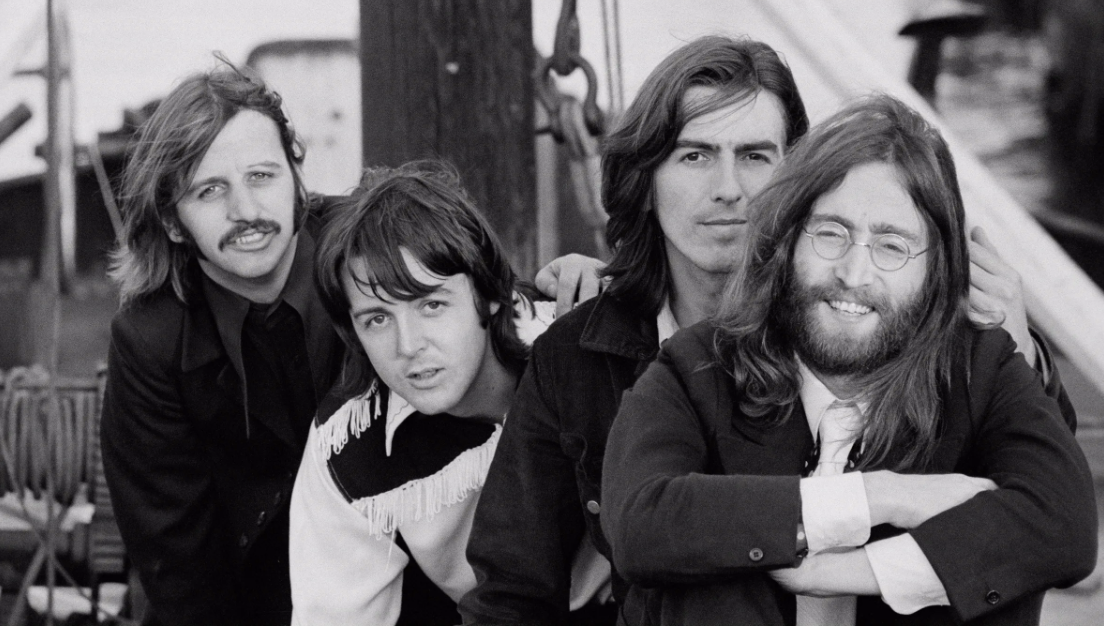
My wife and I watched the renewed and expanded Beatles' Anthology on Disney+ the past three nights. I'd seen and heard bits and pieces of various lengths of the original eight episodes -- on YouTube, The Beatles Channel on Sirius XM, and everything in between -- which originally aired on ABC-TV in 1995, but we somehow had managed not to have seen that original on the unsmart TV in our family room. It was more than wonderful to see and hear what 2025 director Oliver Murray did with the 1995 eight episodes -- uncovering/discovering new footage as well as calling upon Peter Jackson and his elves to bring to current vibrant life what was done in 1995 (just as Jackson had done so miraculously with The Beatles: Get Back in 2021) -- but the real treat for me (treat is too weak a word) was seeing the new ninth episode.
I'll go over some of highlights of the first eight episodes, and then delve into the wonders of ninth episode, and the one problem I had with it.
About the first eight episodes:
- It was great to see Murray the K get his due (just as he had in Martin Scorsese's Beatles '64 last year). I worked with Murray the K when he was at WNBC Radio in New York City in 1970s. He hired me after he read my article "Murray the K in Nostalgia's Noose" in The Village Voice in 1972 (my second-ever published work -- my first was "A Vote for McCartney" a year earlier, my response to dyspeptic critic Robert Christgau's attack on Paul and his early post-Beatles work). Murray never got the credit he deserved back then in ushering in The Beatles, and before then on WINS with Alan Freed, and after when he was on WOR-FM helping to invent the FM radio format. I had such a good time working with him on NBC, I even wrote and recorded a song about him -- "Murray the K's Back in Town" -- which he played on the air. (The late Pete Fornatale -- protagonist of my It's Real Life: An Alternate History of The Beatles -- played that song on his Mixed Bag on WFUV Radio in the early 2010s.)
- Great shots that I hadn't seen before of The Beatles in their 1964 Washington, DC concert!
- There was a spectre, a foreshading, of what would happen to John at the end of 1980. George worries throughout about the exposure of The Beatles in a country in which John F. Kennedy had just been assassinated. (The sick devotion to guns in this country is still claiming lives.) John himself notes after the DC concert that "some bloody animal cut Ringo's hair".
- I was reminded again what a uniquely almost extraterrestrial person Ed Sullivan was. I mean, no one here on Earth had his accent or his delivery. Even in Japan, the Beatles are introduced in Japanese (of course), and the host concludes in English with "Ladies and Gentlemen, The Beatles!" -- delivered in a pretty good mimic of Ed.
- I find it hard to believe that "Pennylane" didn't go to #1 in the UK. Beaten out by Engelbert Humperdinck's "Release Me"? Maybe if it was "Les Bicyclettes de Belsize" ...
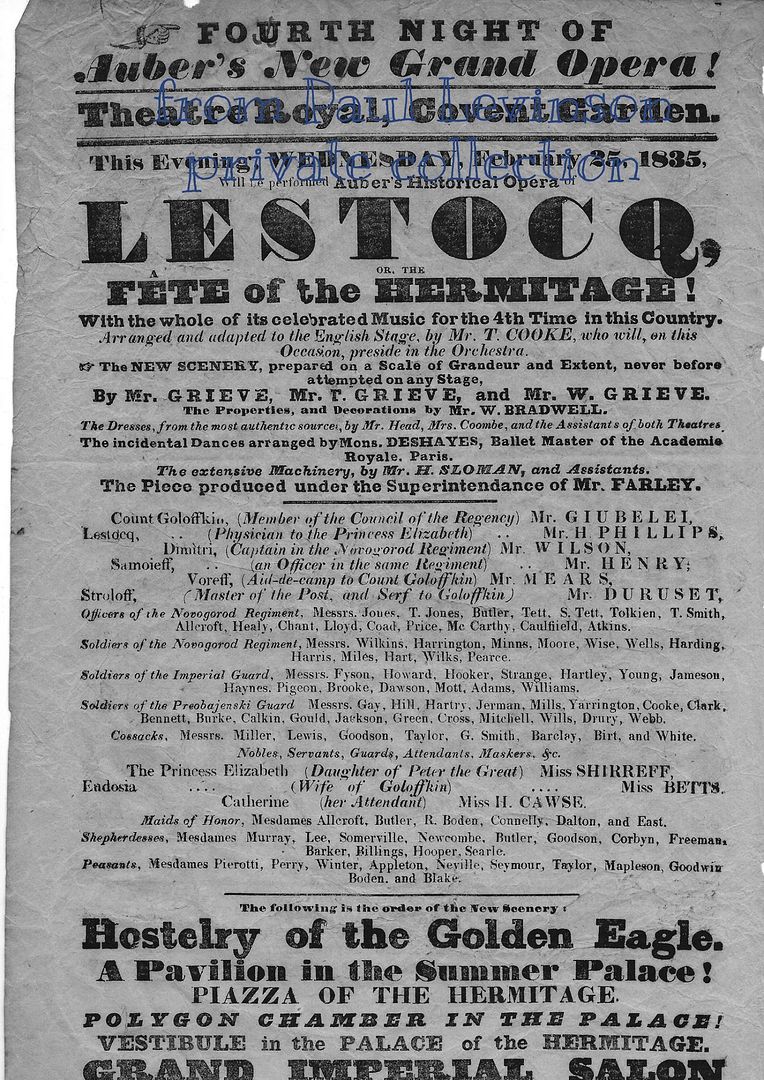
- John -- after The Beatles had broken up and at odds with Paul -- objects to Sgt Pepper being called a "concept" album, saying "Mr. Kite" and all the songs on the album other than the Peppers could easily have been on any other Beatles' LP. (George also critiques Sgt Pepper.) As far as I'm concerned, I think Sgt Pepper is indeed a concept album and what John says is also true. There's really no contradiction here, both are true. And I'll also say how happy I was to find the following poster in an antique shop my wife and I were in, must've been, the late 1970s. It's hanging on a wall outside our bedroom. Every time I walk by it, I smile. It reminds me of Sgt Pepper.
Now, about the new ninth episode:
It was not only heartwarming (to see the three surviving Beatles still making such superb music) and heartbreaking (because now George is gone), it was chock full of fascinating and important information. My favorite example: I had always heard, regarding the genesis of "Free As A Bird", "Real Love", and "Now and Then", that the transformation projects began when Yoko Ono gave Paul a tape with some of John's demo recordings from the 1970s. But in episode 9 of Anthology, George tells us about a crucial preface: When Roy Orbison died, The Traveling Wilburys were thinking of taking some of Elvis's demos and bringing them to life with the inimitable Wilbury voices. But they decided not to go in that direction, because (in George's words), it was "too gimmicky". (George didn't say, but rumor has it that the Wilburys were thinking of inducting Del Shannon into the group, but he took his life in 1990.)
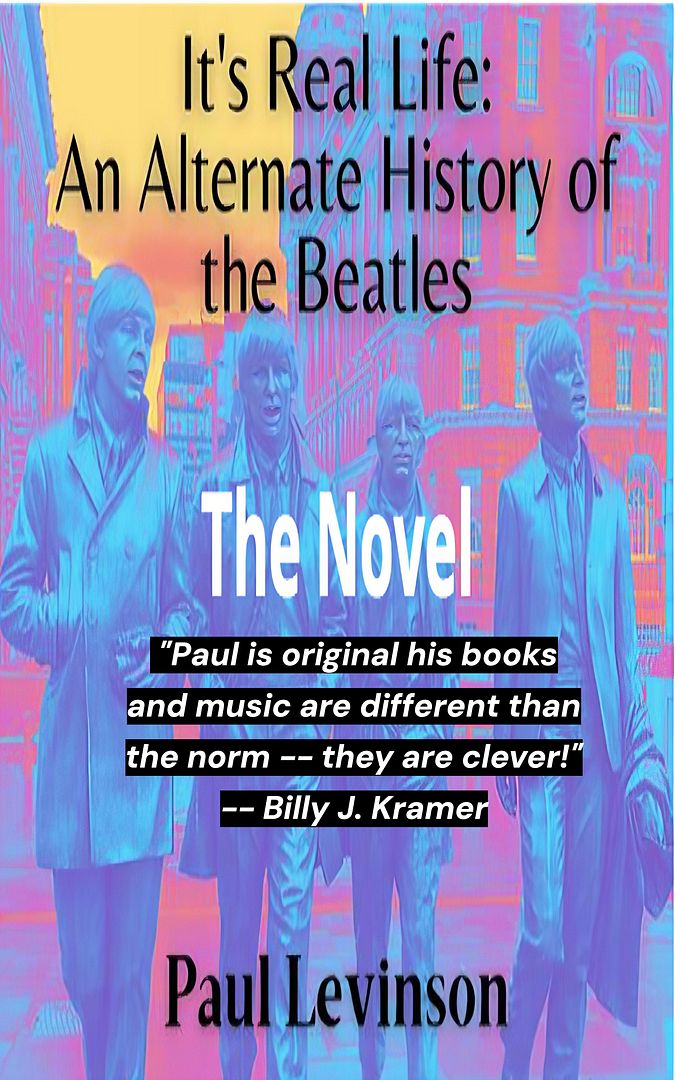
But if I had to pick my favorite moment in the ninth episode, and therefore all nine episodes of this beautifully burnished Anthology, it would be Paul and George completing their incomparable three-part Beatles harmony with John's voice in the chorus of "Real Love". It's been one of my favorite Beatles songs since I first heard it in the mid-1990s. The song inspired me to write It's Real Life: An Alternate History of The Beatles (the video of Anne Reburn's cover of the song follows below -- she performed this in the radio play broadcast on Killerwatt Radio, adapted from the first chapter of my novel; "Real Life", by the way, was John's title for the song before he changed it to "Real Love"). Paul and George's voices being in such synch with John's recording, the harmony snapping into place, snapping into life, is a deeply acoustic proof to me that this uniquely satisfying sound will never die. At that instant, the former Beatles became The Beatles again, and gave evidence that The Beatles will always be with us.
Powers that be often miss the immortality of what is all around them. After Marshall McLuhan died in December 1980 (same year and month as John: their lives were intertwined: they both hit America big in 1964), I proposed a book about him to an editor at St. Martin's Press. He laughed and told me no one cared about McLuhan any more. That book became my Digital McLuhan, which Routledge published in 1999. I still receive royalties checks for sales of that book every year. In the 1970s, I told my doctoral thesis advisor Neil Postman that I thought The Beatles, like Shakespeare, would be known and enjoyed for as long as there were human beings. He laughed too.
Which brings me to the one criticism I have about episode 9. Paul and Ringo are still alive. Yes,The Beatles music including their harmonies will live forever. But not the mortals who made it. Wouldn't it have been wonderful to have another hour, or even just a few minutes, to have Paul and Ringo look back at 1995 from their vantage point right now? Oliver Murray of course interviewed Paul and Ringo in the short film he made, Now and Then: The Last Beatles Song, that accompanied release of the single in 2023. I guess that could be considered a coda to Anthology 2025, but wouldn't a few additional or more words from Paul and Ringo looking back at what they accomplished in 1994 (when "Free As A Bird" was made) and 1995 (when "Real Love" was made) have been just the perfect cup of sencha tea after the marvel we just took in?
Chris Willman asks Oliver Murray in an excellent interview in Variety why there are no contemporary 2025 voices in Episode 9. Murray replies: "I didn’t really like the idea of Ringo [and Paul] in 2025 talking about an interview that he gave in 1995 about something that happened in 1965. It was all too nebulous to do that." I'm not sure I know what "too nebulous" means, in this context. "That is, I think I disagree".


No comments:
Post a Comment