reviewing Black Doves; Cross; Dark Matter; Dept. Q; Dexter: Resurrection; Dune: Prophecy; For All Mankind; Foundation; Hijack; MobLand; Outlander; Paradise; Presumed Innocent; Prime Target; Severance; Silo; Slow Horses; Smoke; Star Trek: Strange New Worlds; Tehran;The: Day of the Jackal, Diplomat, Last of Us, Night Agent; Your Friends and Neighbors +books, films, music, podcasts, politics
George Santayana had irrational faith in reason - I have irrational faith in TV.
22 December 2024: The three latest written interviews of me are here, here and here.
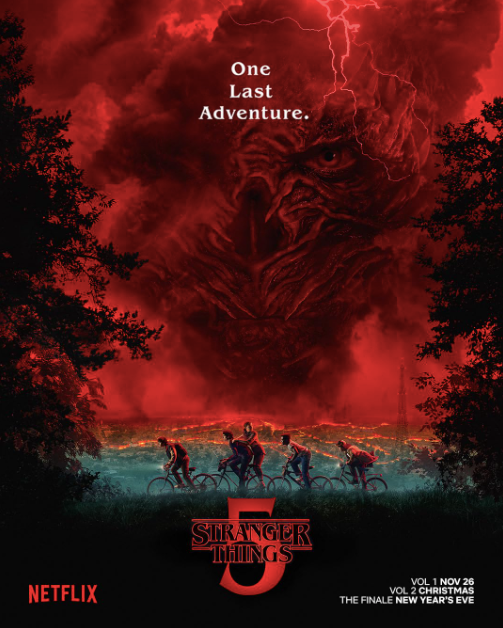
So I just saw the Stranger Things series finale -- on Netflix. Here's a critique -- with spoilers.
The whole ending hinges on El no longer being available to her friends, who in effect are her family. She's either no longer alive -- though we didn't see her die -- or she has deliberately made herself unavailable. Everyone, except Mike, seems to accept that.
But why did El do that? Vecna's dead. Henry is therefore no longer significant. So what's the threat? What is El trying to protect her friends and family from? The U.S. military?
That vicious force, led by Dr. Kay, was already no match for the Hawkins contingent. So El left the people she had come to cherish because of that? I find that hard to believe. I think that El would have found another way.
Perhaps the Duffer brothers intend to make some sort of sequel in which Mike searches for El. He certainly makes clear to his friends that he doesn't think she's gone for good. The Duffer brothers have made clear that they're finished with the 1980s ambience, but they could show Mike and El in the 90s and beyond, or change their mind and revisit the 1980s after all.
The five seasons were a fun ride. As I've said, I thought this fifth and final season really shone. And the finale had its moments. But I can't say that I'm a fan of the way it ended. But also on the strengths of Stranger Things, I'll definitely take a look at anything else the Duffer brothers do.
Well, I said in my review of Stranger Things 5.1-5.4 last month that I thought those first four episodes of the final season were the best in the series so far. I continue to think that, and include the next three episodes in that assessment, having just seen episodes 5.5-5.7.on Netflix.
Here is what I especially like about these penultimate episodes (the final, ultimate episode coming next week) (no spoilers ahead):
Someone says that Vecna and everything our brave crew is fighting is not science fiction but supernatural. Now, on the one hand, labels don't really matter. I said years ago, when my first novel, The Silk Code, was published, that it was science fiction/detective. After all, it features an NYPD forensic detective who discovers Neanderthals may still be among us. But some devotees of mysteries said it could not be a detective or mystery story, because it contained science fictional elements. I eventually got tired of trying to convince those readers the novel was a hybrid or co-genre, and said, it doesn't matter what genre it is, just read it.
But, actually labels are necessary. If I walk into a restaurant that says it offers Japanese cuisine, but it serves only lasagna, I might well be disappointed, even though I love Italian cuisine as much as Japanese. In other words, labels in cuisine and culture have value, because they help us make selections that reflect our tastes and moods. So I think it's helpful that Stranger Things -- or at least, this rendition of Stranger Things in what might well be a larger universe -- identifies itself as a story of the supernatural, even though it has some significant science fictional trimmings.
And, in fact, we get a glimpse of more of those trimmings in these concluding episodes. Talk of outer space, alternate universes and realities -- hey, that's right up my alley, I'm down with that.
And I'll be back here next week after this series, and its part in a larger universe, concludes.
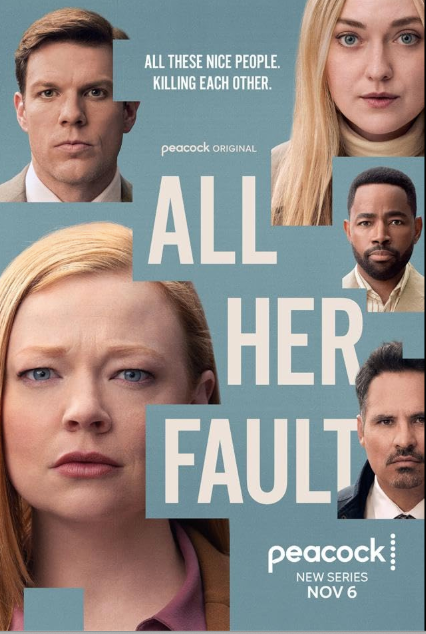
My wife and I binged All Her Fault on Peacock the past two nights. It's a riveting, powerful, different kind of kidnap drama, with all kinds surprises and twists and turns in family relationships.
Herewith some of the highlights, with no spoilers:
The lead detective -- Detective Alcaras (very well played by Michael Peña) -- has real heart. My wife said he reminded her of Brandis in Task, and she's right. You know, it's hard to come up with a fresh take on a genre as well worn as the detective, which goes at least as far back as the 1840s with Poe, but All Her Fault (and Task) does that, and does that very well. I hope we see more of this character (his partner, Det. Greco, played by Johnny Carr, is good, too).
Most kidnap stories focus on the angst of getting the child back home, which All Her Fault does, too. But it also delves deeply into who did the kidnapping, and how and why this came to happen.
The immediate family of the kidnap victim of course is always a central part of a kidnap drama. In All Her Fault, that family is a little more than immediate, and they each have significant stories as well.
Friends and business associates also have important stories, which intersect with the kidnapping story.
Back to the kidnapper's story: there's quite a narrative there, too. Indeed, All Her Fault is as much the kidnapper's story as the family whose child was kidnapped.
Marshall McLuhan liked to talk about synesthesia, the rare blending of senses, that a few people have, in which hearing a sound can immediately generate an image, and more. This plays a crucial role in All Her Fault.
I guessed who the real villain was pretty early on in the eight-episode series, but it was exciting seeing that play out.
How's that for a review without spoilers? I will say that the acting was excellent -- Sarah Snook, who was so good in Succession, is superb as the mother of the kidnapped child, Dakota Fanning was fine as friend Jenny, Jake Lacy was memorable as the father, and hats of to Duke McCloud who played Milo the victim.
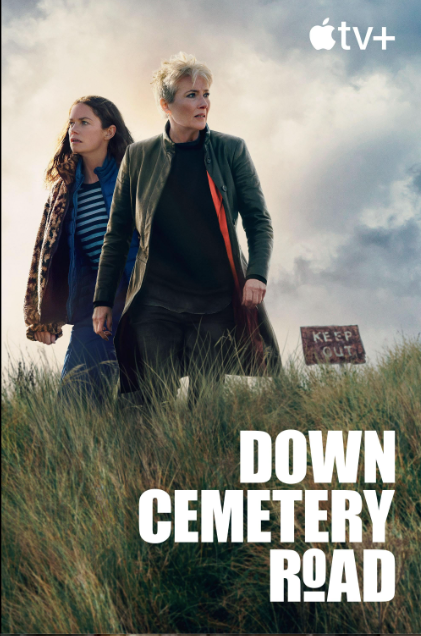
I binged Down Cemetery Road -- all eight episodes -- on Apple TV last night. It's being billed (on Screen Rant) as "the perfect replacement" for Slow Horses, in between its fifth and six seasons, also on Apple TV. Both are adaptations of Mike Herron's novels, and both sport a spiffy amalgam of snappy dialogue and spy-on-spy lethal mischief. But Down Cemetery Road doesn't have a theme-song co-written and performed by Mick Jagger (the best theme for a spy series since "Secret Agent Man"), a lead character who flaunts his flatulence in every episode, and quite the speed of narrative of Slow Horses.
Here's what Down Cemetery Road does have:
Two brilliant and famous lead stars (Ruth Wilson and Emma Thompson) in contrast to one (Gary Oldman). And I thought Wilson's Sarah Trafford was really exceptional.
A really world-class villain, Amos Crane (played by Fehinti Balogun), who could have worked in any Bond movie.
Speaking of Bond, Down Cemetery Road has a train scene nearly as edge of your seat as the scene in From Russia with Love.
Down Cemetery Road has, I don't know, call it more of a soul, than most spy stories, including Slow Horses. I don't recall many tears in my eyes watching Slow Horses, unless they came from laughter, which of course is fine in its own right.
Down Cemetery Road may have slightly hipper dialogue, with a pretty funny extended disquisition over the term "mansplaining".
But the truth is, there's no need to compare Down Cemetery Road to Slow Horses. Cemetery is a unique TV series, with a deft blend of humor and life-and-death excitement. By all means see it.
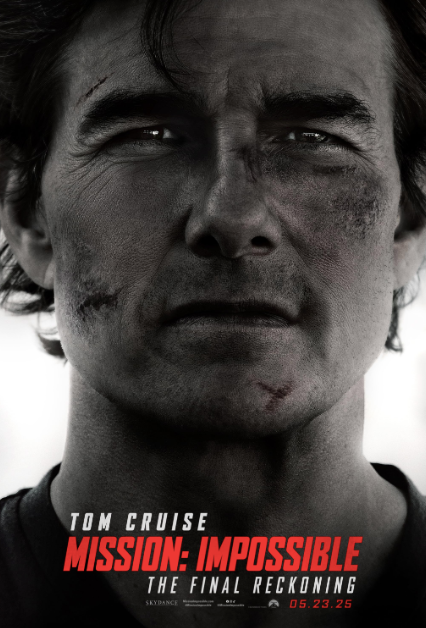
Well, as much as I really enjoyed the seventh Mission Impossible with Tom Cruise (MI: Dead Reckoning) when I streamed it on Paramount Plus this past May, and said I'd be back soon with a review of Final Reckoning (which was Part 2 of Dead Reckoning), which was opening soon in theaters and I intended to see ... well, the beaches on Cape Cod were just too tempting.
But I did manage to see MI: Final Reckoning tonight on Paramount Plus, where it started streaming yesterday, and I thought it was great, for all kinds of reasons. Here, without spoilers, are some of them:
As the eighth and (at this point, at least) the final Tom Cruise MI, Final Reckoning did a fine job of bringing into play elements from the previous seven movies. I guess my favorite was bringing back the Phelps story, which made this eight-movie arc even more a direct descendant of Mission Impossible on television, where of course the story was born with Phelps in command.
I said in my review of Dead Reckoning that the enemy being AI made Ethan Hunt more modern than Bond (at least so far). In every Bond movie, an evil human being has been the prime enemy. There were evil humans to be sure in Dead Reckoning and Final Reckoning, but the worst of the villains indubitably is an AI. Thus not only did Final Reckoning delve into Terminator territory, you can throw in Tron, and while we're at it, War Games and lots of other literally bloodless arch-villians as well.
To be clear, as I've been saying in lots of places these days, I'm not concerned about AI replacing us, destroying us, or anything that's been a favorite of fiction at least since Karel Čapek's R.U.R more than a century ago. And I like those fictions a lot -- but they're fictions. And as far as fiction about AI goes, I prefer Asimov's robots/androids, who sometimes do us harm, but also do us a lot of good.
Final Reckoning has some powerful star power. Tom Cruise's Ethan Hall is a truly memorable character, because he's well written and as well as well acted. Same for the MI team, both in Final Reckoning and the previous MI movies. And I have to say Angela Bassett as US President was superb, as well all as all the other heroes and villains that play out a taut story in which millions if not billions of lives are at stake. (It was also great to see Tramell Tillman -- Severance! -- in charge of a crucial vessel at sea.)
And the action scenes are first rate in every natural environment on Planet Earth, that is, land, sea, and air. In those scenes, Hunt is every bit as impressive as Bond.
I'll just also say that in the midst of all this action, Final Reckoning has a deep and impressive moral core.
If I have any disappointment, well, Cruise has made clear that this is his last Ethan Hunt story. I hope he changes his mind. And gets the recognition he -- and everyone associated with this movie -- amply deserve.
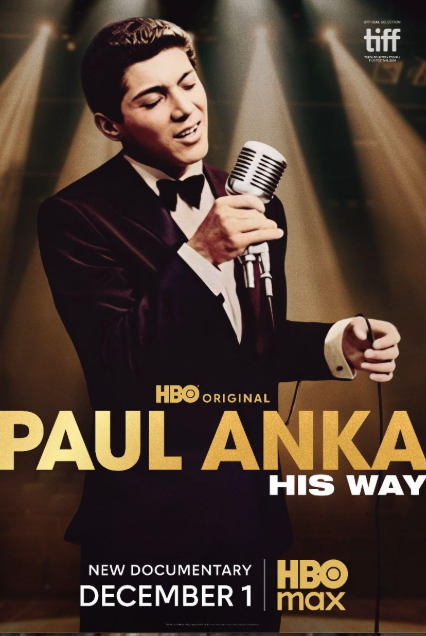
My wife and I saw Paul Anka: His Way, a 2024 documentary, last night on HBO. Why did we wait so long to see it? I don't know. Probably because we weren't paying enough attention.
I've been a fan of Anka since 1957, when I was in 5th grade in PS 96 in The Bronx, and Anka had a great hit, "Diana". Joel Iskowitz, Jordan Axelrod, Steven Auerbach, and Paul Gorman were in my class. I started an acapella group, Little Levi and the Emeralds. I don't think we sang much of "Diana" -- we were more into The Five Satins, The Harptones, and The Del Vikings -- but we sure loved it.
Anka explains and demonstrates at the beginning of the documentary that the ease of playing those 4-chord songs -- C, Am, F, G -- when he sat down at the piano was what drew him into singing and then writing. And he progressed in extraordinary ways, writing "My Way" for Sinatra, the Johnny Carson theme song, and even some songs with Michael Jackson. He also wrote "It Doesn't Matter Anymore" for Buddy Holly and "She's a Lady" for Tom Jones, and those are just a fraction of the more than 900 songs Anka has written!
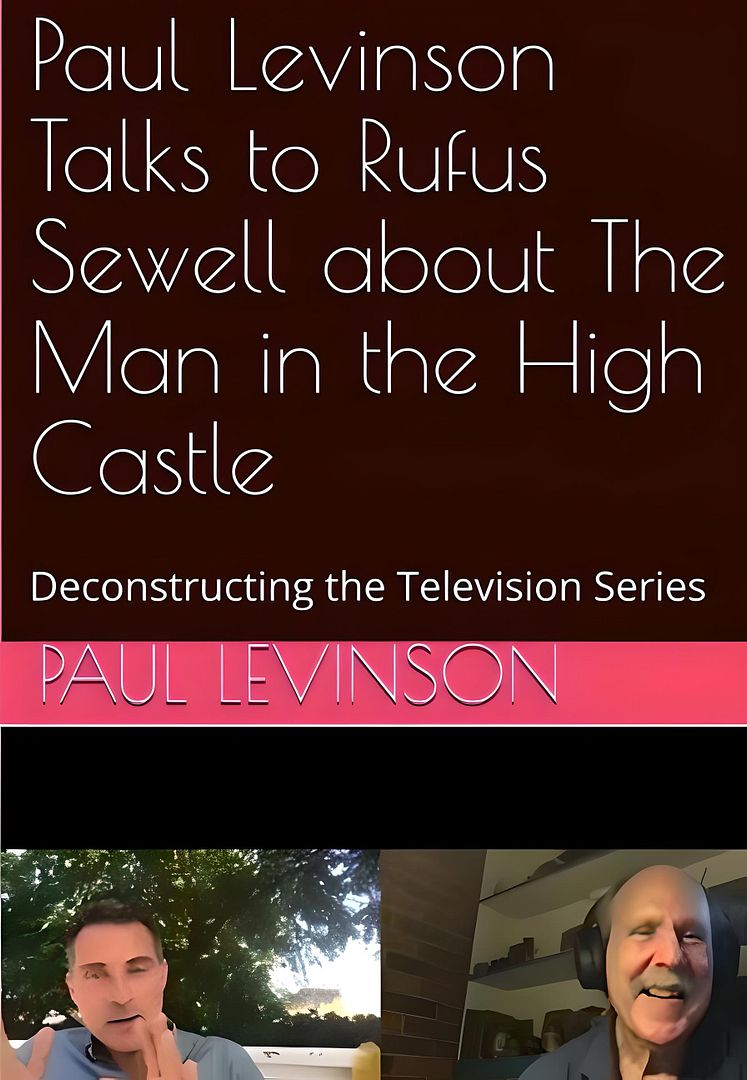
Of course, no documentary can play even small parts of most of that number of songs, but the question always arises (for me, at least) of what songs would I have liked to hear and see Paul Anka perform in His Way? And, yes, there is one, in particular. It's a song that played a crucial role in Amazon's adaptation (by Frank Spotnitz) of Philip K. Dick's The Man in the High Castle, which ran for four seasons (2015-2019) and helped establish streaming as the titan it is today, The first episode of the second season in 2016 opens with an extended mise-en-scène of protagonist John Smith's (Rufus Sewell brilliantly portrays Smith) young teenage son Thomas getting off the school bus and walking into class. Everything seems so normally, happily, suburban American, as Thomas Smith (good job Quinn Lord) looks at the girls and walks into school. We begin to get a disquieting taste of this alternate history in which the Nazis beat America in the Second World War when we see the Nazi insignia on Thomas's arm and then a kid in the class asks Thomas how many slaves George Washington and Thomas Jefferson had. Thomas Smith then looks at a girl in the class in that certain way, she looks back at him when he isn't looking, but the joy of that budding teenage romance is shattered to pieces for the TV viewer when Thomas is called up to the front of the class to give a Nazi pledge of allegiance that he does with pride.
Now, this is one of Spotnitz's best conceived and realized scenes, and he hammers it home playing Paul Anka's 1960 hit song, "My Home Town," loudly and softly in the background until Thomas begins the pledge. This is an upbeat, zestful song, brimming with the enthusiasm and pleasures of living that is a hallmark of Anka's music, especially his early recordings -- the perfect background for the unnerving perversion of American life that the Nazi conquest has wrought.
So, yeah, I missed "My Home Town" in Paul Anka: His Way -- especially given the steps to fascism our country is currently taking -- but the documentary is titled "His Way", that is, Paul's way, and/or the movie's director and writer John Maggio's way, not my way, and as I've been known to say to someone who tells me that they would have had a character in one of my novels do or say something different than what I had them do or say: hey, go write your own novel. :) And all in all, there's not much I would change in this rendition of Anka's incredible inspiring life and journey. At 84 years old, he's still going strong, hasn't reached the top of the mountain yet (as he says), and I'm looking forward to hearing and hearing about the rest of the climb.