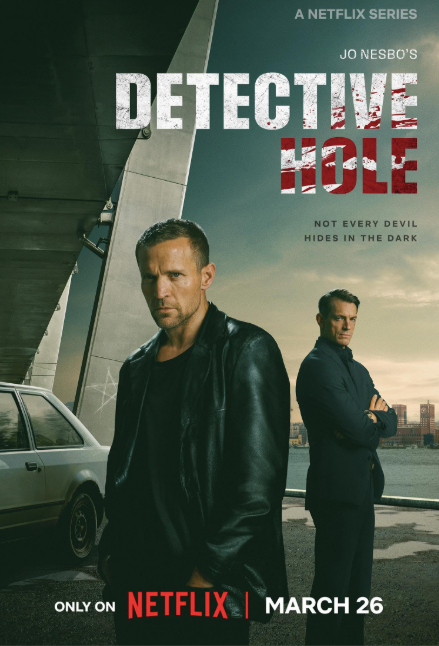
It's been a while since I reviewed a Nordic Noir series, and that's because I've been watching science fiction, and also a variety of Britbox and Acorn whodunnits with my wife. We binged Detective Hole on Netflix the past few nights -- pronounced Holeh or Hola -- and whew, it's a combination of well worth waiting for and Nordic Noir to the max, based on the fifth novel of the Jo Nesbø's series, which I haven't read.
Nesbø was also the writer and showrunner of the series, which began streaming on Netflix in March, so he deserves a lot of the credit for the extremities -- the blood and sheer gore -- or blame, if you find them a bit too much. If you do, I'll say it's at least redeemed by a complex story about serial killing that will keep you guessing until the ninth and concluding episode.
The acting is also top-notch. Joel Kinnaman, whose breakout role as an American police detective in The Killing was outstanding (and who was great in the first through current season of For All Mankind), projects a very different kind of power in Detective Hole. Tobias Santelmann plays Harry Hole (first name pronounced Harey, like you pronounce the word "are"), and like Kinnaman's Tom Waaler, Hole is emotionally crippled, though in a very different way. (The two exemplify a genre that I identified decades ago -- the "defective detective": Barnaby Jones was aged, Columbo was a schlep, etc.) In contrast to Hole, his domestic partner Rakel (very well played by Pia Tjelta) is usually a cool voice of reason like a ginger ale with ice on a hot summer day, and I like Beate's detective work (well played Ellen Helinder) too.
I'm not going to say anything about the plot, because I don't want to give anything away, other than I've always thought, watching shows about serial killers (my first review on this blog some 20 years ago was of Dexter), that the serial killing could be for a very different reason...
But I will say that I read recently that crime in Norway, where Detective Hole takes place, is among the lowest recorded the world, and my wife mentioned, as we were enjoying and sometimes cringing at what we were seeing on the screen, that maybe viewers in Norway have a special interest in seeing in their fiction what they happily don't see much of in their news. But I'd bet that Detective Hole will keep you hostage as a viewer wherever you are.