22 December 2024: The three latest written interviews of me are here, here and here.

Saturday, April 18, 2026

For All Mankind 5.4: Robots Replacing Us in Space?

Well, I didn't like For All Mankind 5.4 much at all.  I'll you why after I alert you to spoilers:

[There will be spoilers ahead ... ]

The big reveal in episode 5.4 of For All Mankind is that Dev is on a path of replacing we humans with robots in our presence on Mars and movement further out in space.

In our reality, critics of our space programs have been saying since the Apollo successes in the late 1960s that a more economic and safer way of extending our species and civilization out in space is via robot surrogates.   I've been thinking and saying for years that robots don't have the emotional subtlety to appreciate what humans see and feel off this planet.  The recent Artemis II return to the Moon brought home that essential point.  As Janet Sayyed back here on Earth noted, "Missions like Artemis II, which require long-duration habitation and hands-on scientific work, depend on that kind of flexibility, the kind no machine can fully replicate."  That's certainly the case for our current AI and technology.

Of course, For All Mankind is alternate history, so what's wrong that it hypothesizing that in the alternate timeline, we have indeed developed the kind of robots that have our human subtlety, in 2012 and ensuing years?   Well, nothing's wrong with that, from a dramatic point of view, if a foundation has been established that in this alternate history, AI and robots have become so advanced in 2012+.  But Dev's plan is a complete surprise.

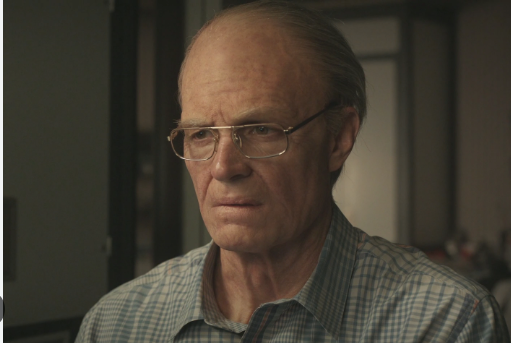
Even worse, however, is why the creators of For All Mankind have chosen this path?   If it's all just a set-up to see Dev and his plan defeated, then I guess it's ok.  There's no doubt that, in our reality, our journey off this planet has been slowed and interrupted by all kinds of ideational obstacles.  So I'll reserve ultimate judgement until we see how Dev's plan plays out.   In the meantime, I'll confine myself to complaining that I didn't particular enjoy this episode after the revelation of what Dev's up to, after I was already disappointed that Ed Baldwin didn't live a little longer.

See also For All Mankind 5.1: On the Intersection of Alternate and Real Histories ... 5.2: Actor Reunions ... 5.3: The Newton, the First Amendment, and ... Last Breath

And see also For All Mankind 4.1: Back in Business and Alternate Reality ... 4.2: The Fate of Gorbachev ... 4.3-4.4: The Soviet Union in the 21st Century, On Earth and Mars ... 4.5: Al Gore as President and AI ... 4.6: Aleida and Margot ... 4.7: Dev on Mars ... 4.8: Sergei and Margot ... 4.9: Progress ... 4.10: Earth vs. Mars

And see also For All Mankind 3.1: The Alternate Reality Progresses ... 3.2: D-Mail ... 3.3-3.4: The Race

And see also For All Mankind, Season 1 and Episode 2.1: Alternate Space Race Reality ... For All Mankind 2.2: The Peanut Butter Sandwich ... For All Mankind 2.3: "Guns to the Moon" ... For All Mankind 2.4: Close to Reality ... For All Mankind 2.5: Johnny and the Wrath of Kahn ... For All Mankind 2.6: Couplings ... For All Mankind 2.7: Alternate History Surges ... For All Mankind 2.8: Really Lost in Translation ... For All Mankind 2.9: Relationships ... For All Mankind 2.10: Definitely Not the End


in Kindlepaperback, and hardcover


Friday, April 17, 2026

Memory of a Killer: Hit Man with a Heart


I rarely review TV series on old-fashioned broadcast television, and even more rarely on Fox. But Memory of a Killer is a worthy exception. 

Part of its power is acting. Patrick Dempsey, who established his creds on Grey’s Anatomy (my wife has been a devoted fan for its umpteen seasons) and was excellent last year in Dexter: Original Sin, was great in the lead role of Angelo Doyle, a hit man suffering from the early symptoms of Alzheimer’s. Michael Imperioli, one of the many standouts on The Sopranos, was good to see as Angelo’s boss/senior partner. And Odeya Rush, whom I probably saw on Curb Your Enthusiasm and Law & Order: SVU, was refreshing as Angelo’s pregnant daughter Maria.

The Dexter connection is especially relevant.  I've been an avid fan since the series began in 2006, and I put the series and its sequels (and one prequel) in the top 5 of all TV series ever.  The key to Dexter Morgan's appeal is that he's a serial killer of serial killers and other monstrous people who deserve to die, but our police and legal system have for some reason missed.  Angelo doesn't get quite the same pleasure from his work, but also takes pride in his victims being people who deserve to die.

[And there will be spoilers ahead ... ]

His unknowingly killing someone who did not deserve to die sets up the central thrilling tension of the series:  the victim's mother Linda Grant (well played by Gina Torres from The Matrix sequels) is an FBI agent, and she's determined to kill not only Angelo's beloved wife, which Grant makes sure happens, but his brother Mike and daughter Maria.   This turns the tables on the serial killer narrative, making the hit man's loved ones the target, and is a nice piece of storytelling,

The other leg of story, a hit man with the onset of Alzheimer’s, is also very effectively told.  Angelo's brother Mike has a much more advanced condition, which adds the heart-rending element of letting us and Angelo know where he's headed.  The series has been renewed for a second season, so we'll get to see some of that, and, optimist that I am, I'm hoping that Angelo finds a treatment that will further delay the progression of this crushing illness.

See also First Place to Dexter and Dexter: Original Sin: Activation of the Code


Saturday, April 11, 2026

Which President Was Most Responsible for the Artemis Project?


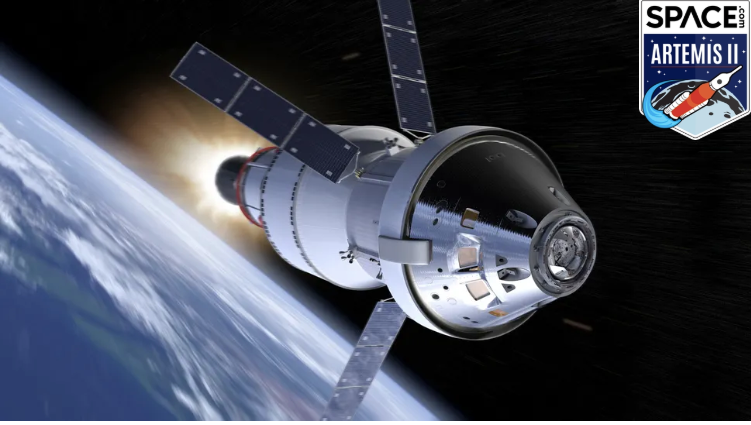
The Orion spacecraft during trans-lunar injection, to bring an Artemis mission to the moon. (Image credit: NASA)

The short answer, much as it pains me to say this, is that our current President, Donald Trump, is the President most responsible for the Artemis Project.  My readers will know how strongly I have opposed and criticized Trump's policies in his two administrations, on immigration, ICE, just talking about destroying Iranian civilization, and just about everything else.  But a key factor in Trump's policies is his disregard for the truth.  And the truth is that the Artemis Project was initiated in Trump's first administration, enacted with the uncrewed Artemis I in Joe Biden's administration, and furthered with the human trip around the Moon just completed by Artemis II, in the current second Trump administration.  The truth therefore is that Trump is the President who was most responsible for Artemis.

There's of course a history to all this.   As I outlined in several books -- Realspace: The Fate of Physical Presence On and Off Planet and Touching the Face of the Cosmos: On the Intersection of Space Travel and Religion -- Richard Nixon, a Republican, stopped trips to the Moon in the space program, dropped them like a hot potato, after the extraordinary success of the Apollo Program in 1961-1972, because it heralded the vision of John F. Kennedy, a Democrat, who beat Nixon in the 1960 election and ignited NASA and the US space program after its slow start in the 1950s under Republican Dwight Eisenhower.  By the time we got to the 1980s, Democrats like Walter Mondale were active opponents of spending money on space, and Ronald Reagan and the Republicans had become the champions of extending our species off this planet.  That reversal continued into the first Trump administration.  Democrat Bill Clinton did little for space.  Republican George W. Bush started the Vision for Space Program in 2004, which included the Constellation initiative, a vehicle aimed at returning astronauts to the Moon by 2020 as a stepping stone to Mars.  Democrat Barack Obama ended the Constellation in 2010, which almost made me sorry I voted for him.

This history is important, because it spotlights the significance of Joe Biden's strong support for Artemis in his one term in office.  That crucial support makes Biden the first Democratic President to fully support the space program -- specifically, getting human beings to actual moons and worlds beyond this planet -- since LBJ in the 1960s.   When the history of how the human species went out into the universe is someday written, it will show that we Americans, supported by both parties, led the way.  And if Donald Trump was a crucial factor and force in that success, so be it.   

That doesn't mean that we have to support Trump and his dangerous policies that threaten our very democracy.   But it does mean that we have to stand up for the truth, which in just about every other aspect of his presidency, Trump disdains.


Friday, April 10, 2026

For All Mankind 5.3: The Newton, The First Amendment, and ... Last Breath


A powerful episode 5.3 of For All Mankind up last night, percolating with all kinds of gleaming details, as befits a series ultimately about the cosmos:

  • There was a nice alternate history touch with talk of the "Newton," which Apple released in our reality with great fanfare in 1993, promoted as the first "Personal Digital Assistant," but discontinued in 1998.
  • Defense of the First Amendment, as my readers and students well know, is one of my primary issues in our reality.  It was therefore gratifying to hear one of the protestors say, as she was being arrested by the police thugs on Mars, "We have the right to protest -- it's the First Amendment!" But much as this was welcome, the cop's response was all too true: "This isn't America -- there is no First Amendment".  And, indeed, no country other than the United States has the ironclad protections of free expression from government interferences prescribed in our First Amendment (even though they're often ignored, as tragically seen in the past year, as our own Federal thugs outrightly murdered Renée Good, Alex Pretti, and who knows how many others who dared to exercise their First Amendment right "peaceably to assemble, and to petition the Government for a redress of grievances").  But the cop on Mars who said only America has this kind First Amendment was, unfortunately, right.  Even our neighbor to the north doesn't have it. I once was explaining the First Amendment in an interview on the CBC, and the interviewer replied, "Well, we don't worship the First Amendment" -- a sad but true acknowledgment, even though support of the First Amendment is a matter of logic, and democracy, not faith.
  • As I've said before when talking or writing about alternate history, in order for it to be convincing, it needs to have salient elements of reality in evidence.  I thus was glad to see Starbuck's and Domino's Pizza insignias in the Martian marketplace.
  • Elvis singing "Love Me Tender" was good to hear.
  • And Baldwin and Gordo in their much younger days was good to see, but--
Did Baldwin take his last breath in the end?  I have a firm principle in watching TV series and movies: unless the character's head is blown off, I think there's a chance the character survives.  Now, I suppose if Baldwin doesn't survive in his human form, his mind might already be embedded in some AI -- after all, For All Mankind is science fiction.  But I'm still thinking that we haven't seen the last of old Baldwin in his human form.

See also For All Mankind 5.1: On the Intersection of Alternate and Real Histories ... 5.2: Actor Reunions

And see also For All Mankind 4.1: Back in Business and Alternate Reality ... 4.2: The Fate of Gorbachev ... 4.3-4.4: The Soviet Union in the 21st Century, On Earth and Mars ... 4.5: Al Gore as President and AI ... 4.6: Aleida and Margot ... 4.7: Dev on Mars ... 4.8: Sergei and Margot ... 4.9: Progress ... 4.10: Earth vs. Mars

And see also For All Mankind 3.1: The Alternate Reality Progresses ... 3.2: D-Mail ... 3.3-3.4: The Race

And see also For All Mankind, Season 1 and Episode 2.1: Alternate Space Race Reality ... For All Mankind 2.2: The Peanut Butter Sandwich ... For All Mankind 2.3: "Guns to the Moon" ... For All Mankind 2.4: Close to Reality ... For All Mankind 2.5: Johnny and the Wrath of Kahn ... For All Mankind 2.6: Couplings ... For All Mankind 2.7: Alternate History Surges ... For All Mankind 2.8: Really Lost in Translation ... For All Mankind 2.9: Relationships ... For All Mankind 2.10: Definitely Not the End


in Kindlepaperback, and hardcover


Friday, April 3, 2026

For All Mankind 5.2: Actor Reunions


It's great to see Joel Kinnaman as Admiral Baldwin in For All Mankind Season 5 still flying morally high, still shaking things up, defying authority to do the right thing, still causing good trouble (as John Lewis put it so well down here on Earth in our off-screen reality), in his advanced age.   Kinnaman is especially impressive in the role, given that he's now also playing a character much closer to his real age in Imperfect Women, which I'll review as soon as its first season is over.

[And there will be spoilers ahead ... ]

Baldwin in Season 5 of For All Mankind has stage-three cancer, and is not supposed to fly.   All the more the impressive that he risks his life in this condition to save Lee Jung-Gil (played by C. S. Lee -- Vince Masuka from Dexter old and new!).  And episode 5.2 concludes with Baldwin's plan to save Lee on the way to working, though as that happens, Mireille Enos's character Celia Boyd -- Enos starred with Joel Kinnaman in The Killing around the same time the original Dexter was concluding -- finds Baldwin unconscious at the controls.

Now if For All Mankind were made by Taylor Sheridan, this might be the end of Baldwin.  But given that Ronald D. Moore is its creator, I'd be stunned if Baldwin didn't survive until at least the end of this season.  In fact, given that Joel Kinnaman has been reported to return as Baldwin in the final season 6 of the series, and though, again, apropos of Sheridan, this could be in flashbacks, I'm thinking we'll see Baldwin in real current time in the final season.  (And while we're at it, in the alternate history spin-off Star City to debut in May, though probably at a younger age.)

Anyway, Celia Boyd is a great new character, so is Leonid played Costa Ronan (from Homeland and The Americans), and all the continuing characters are good to see in this 5th season of For All Mankind. And I'll see you back next week with my review of the next episode.

See also For All Mankind 5.1: On the Intersection of Alternate and Real Histories

And see also For All Mankind 4.1: Back in Business and Alternate Reality ... 4.2: The Fate of Gorbachev ... 4.3-4.4: The Soviet Union in the 21st Century, On Earth and Mars ... 4.5: Al Gore as President and AI ... 4.6: Aleida and Margot ... 4.7: Dev on Mars ... 4.8: Sergei and Margot ... 4.9: Progress ... 4.10: Earth vs. Mars

And see also For All Mankind 3.1: The Alternate Reality Progresses ... 3.2: D-Mail ... 3.3-3.4: The Race

And see also For All Mankind, Season 1 and Episode 2.1: Alternate Space Race Reality ... For All Mankind 2.2: The Peanut Butter Sandwich ... For All Mankind 2.3: "Guns to the Moon" ... For All Mankind 2.4: Close to Reality ... For All Mankind 2.5: Johnny and the Wrath of Kahn ... For All Mankind 2.6: Couplings ... For All Mankind 2.7: Alternate History Surges ... For All Mankind 2.8: Really Lost in Translation ... For All Mankind 2.9: Relationships ... For All Mankind 2.10: Definitely Not the End


in Kindlepaperback, and hardcover


Thursday, April 2, 2026

Eliyahu and McLuhan


                                        YC Torah Library

My favorite part of the Passover seder -- we had a wonderful seder last night at our in-laws in Manhattan -- is when we welcome Eliyahu HaNavi (Elijah the Prophet) to our gathering.  He was a real person in 9th-century BCE Israel, but over time he's become a mythical, magical figure who manages to visit every table across the world where a seder is being conducted.  We appreciate his visit, leave a glass of wine out for him -- but he's a gentleman, and drinks so little that it seems to remain filled after his visit -- but my favorite part of this event is singing harmony to welcome him, for as long as I can remember.

Eliyahu also appeals to my taste for science fiction, or at least fantasy.  And my wife mentioned that Santa Claus also picks up on this power to be in so many, innumerable places almost at once.  Marshall McLuhan's co-explorer of media Edmund Carpenter -- they co-edited the journal Explorations in the 1950s-- also channeled Eliyahu and his omni-presence, noting in Oh, What a Blow That Phantom Gave Me (p. 3) in 1973 that "Electricity has made angels of us all." Not, alas, that it made us all good, but incorporeal images of us human beings everywhere at once, back then on national television, soon on global TV like CNN, and now on the Internet and social media.

McLuhan thought this point was so important, he even made it posthumously, noting with his co-author Bruce Powers in The Global Village (1989, p. 70) how "Lowell Thomas [the radio broadcaster] used to say, 'On the air, you're everywhere'".  The global village, of course, is a centerpiece of McLuhan's work, his second most famous probe "The new electronic interdependence recreates the world in the image of a global village" (p. 31), in his second most famous book, The Gutenberg Galaxy (1962), exceeded only by "the medium is the message" in Understanding Media (1964, p. 7).  My Digital McLuhan (1998) was devoted to showing how the Internet was turning the global village from a metaphor into reality.

And social media continues doing this every day.  A few days before the seder, I talked to my classes at Fordham University about something new I had just discovered on X (formerly Twitter).  A new feed, "Japanese Twitter" that had showed up on my page, likely because I have a number of colleagues and fans  in the Land of the Rising Sun.  For the first time I've seen, we here in America can read, in English, what the Japanese are saying about everything, including us, in their Tweets.  And we don't need to wait for the translation, because AI does it almost instantly. With every step forward, everyone on this planet is becoming more like Eliyahu, everywhere at once.


InfiniteRegress.tv