Chuck Todd interviews me about alternate histories

Sunday, June 21, 2026

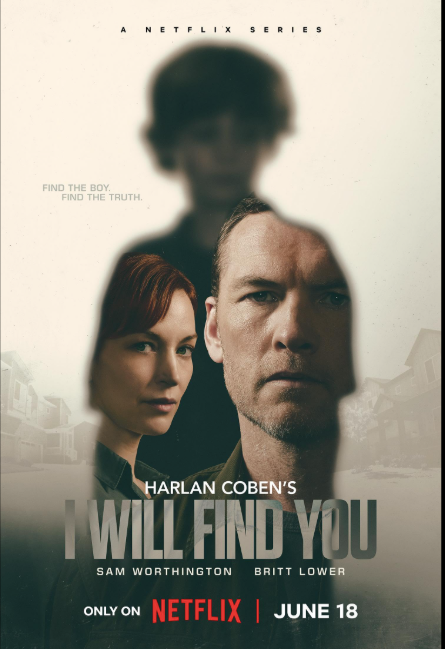
I Will Find You: Find It!


I probably say this about every Harlan Coben series I review here (11 and counting so far) that it's the best of all the adaptations of Harlan Coben novels I've had the pleasure to see (I haven't read any of them), but (a) it's true, and (b) I Will Find You, just up on Netflix, in its high-powered got-you-by-the-throat action and intricate moebius-strip complexity of the characters and their loyalties, is in a class of its own.

In fact, I don't recall ever seeing such a roster of characters with questionable loyalties to the man in prison for killing his son, except in some earlier Coben works, and those characters were far fewer in number.  As you'll know from seeing the trailer (and there'll be no other spoilers in this review other than what's in the trailer), David Burroughs (the father) didn't do it.  And when a current photo turns up in which his son Matthew is alive and well, I  Will Find You is off and running.  Everyone is suspect in one way or another for doing what really happened, just about every friend and relative and supporter has conflicting interests, and may or may not be part of why Burroughs landed in prison.  Even the villains may or may not be responsible for what happened to Burroughs.  The Boston police are riddled with bad guys -- nothing new about that -- and the FBI, with a father and daughter somehow working together, bring what we see in the excellent FBI series on CBS to a new level.

A story like this takes great acting, and I Will Find You has it.   I haven't seen much if any of Avatar, but I did see him in Titan, and Sam Worthington as David Burroughs does a fine job.   I have indeed seen and much enjoyed Britt Lower in Severance, and she's dynamite in this new series.   Jonathan Tucker, whom I first saw in The Black Donnellys and then in Debris, brings his usual intensity as Adam, one of the complex cops. Milo Ventimiglia, whom I first saw in Heroes, and Madeleine Stowe, whom I first saw in 12 Monkeys (the movie), play crucial roles.  Chi McBride, whom I first saw who knows how many years ago in I, Robot, and Logan Browning, whom I don't recall seeing before, were memorable as the father-and-daughter FBI team.  And it's interesting, at least to me, that everyone other than Browning have major science fiction roles in their past.  If there are any science fiction producers reading this, I'd recommend they cast Logan Browning for a major action role.  She's equally adept at leaping tall buildings and sassy conversation.

Today is Father's Day, and I'm looking forward to seeing my family.   I Will Find You was put up on Netflix just a few days ago.   In addition to its other virtues, the series makes a good testament to a father's unbending devotion to his son.


Saturday, June 20, 2026

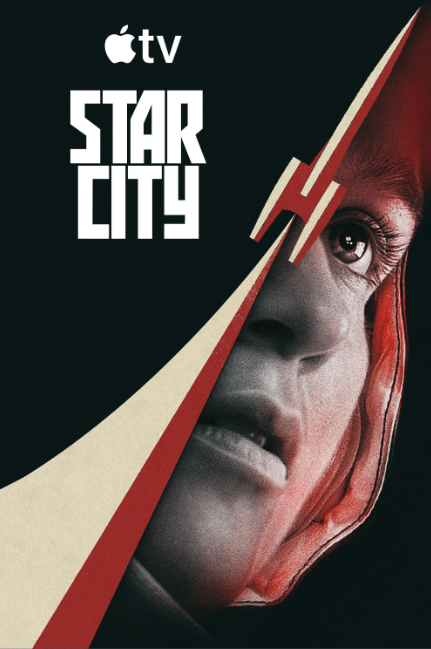
Star City 1.5: The Spy Who Went to Venus


It could have the first hour of a James Bond movie, made back in the 1970s.  Star City 1.5, that is. There wasn't any space flight until the very end, but what we got was a rather brilliant, tightly woven espionage story.  All on behalf of Korolev's, aka the Chief Designer's, secret Soviet mission to Venus.  A fine piece of Bondian science fiction.  Q would have been proud.

The KGB hunt for the Russian cosmonaut or worker in the Soviet space program who was giving crucial information to the Americans already caused the death of a cosmonaut in a previous episode.  The stakes are double life-and-death -- the KGB or Soviet police could kill the cosmonaut who was a spy, and of course he or she could perish in a space mission.  In case you haven't seen this episode, I won't tell you how this all played out, except to say again that we were treated to an excellent piece of espionage fiction. Although there were elements of this in For All Mankind, there was little that was as edge-of-your-seat exciting and ingeniously resolved as what happened in episode 1.5 of Star City.

There's also a bit of romance thrown in.   Sasha's letter to his wife, the first woman on the Moon, was touching.   On the one hand, men and women are thrown together for political reasons in this fascist, paranoid society.   On the other hand, we human beings can love and fall in love whatever the factors and forces that brought us together.  The humanity rising to the surface, and motivating people in this razor's edge story, is one of the highlights of this new series.

To get back to the alternate reality, if the portrayal of Korolev in Star City is even minimally accurate, I'm sorry the real man didn't live a lot longer.  If he had, I'd wager we would be a lot further out in space, with settlements on Mars and Venus, then we actually are today.

See also Star City 1.1-1.2: Fascism and Space ... 1.3: Sadness and Joy ... 1.4: Venus in Blue Genes

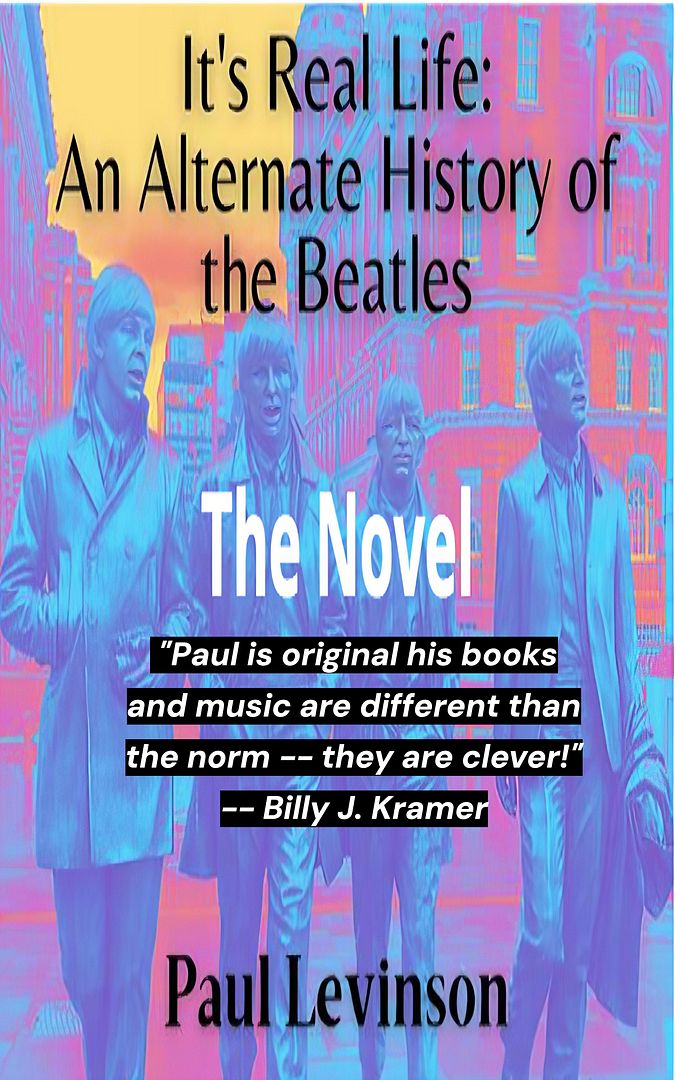
in Kindle, paperback, and hardcover


Wednesday, June 17, 2026

Audio Podcast: Paul Levinson interviews Deana Weibel about The Ultraview Effect


Welcome to Light On Light Through episode 420, in which I interview Deana Weibel about her new book, The Ultraview Effect.  I consider Deana the Margaret Mead of outerspace -- find out why in this interview.

Relevant links:


Check out this episode!

Sunday, June 14, 2026

What I Learned from the Knicks


CNN Sports

I’ve never been much of a basketball fan. But like millions of other New Yorkers and people with their hearts in this great city, I got caught up in the NBA finals and was thrilled with the Knicks victory. And I learned something, confirmed something I already knew. Deadlines are real and often immutable. But until you reach them, anything is possible. Even if there are just split seconds left. 

As a Yankees fan since I was a little kid, I already knew this. One of the best things about the Yankees is the way they win games in which they’re trailing in the ninth inning. (Yogi Berra: "It ain’t over till it’s over.") But baseball, wonderful as it is, is a chess game, slow motion most of the time,  slow motion compared to the high-octane rush of basketball, and the Knicks demonstrated that point incandescently in the last two games of the NBA playoffs. 

The Spurs were leading by sizeable margins at halftime and beyond. The Knicks didn't start their juggernaut until well into the 4th quarter. And the Spurs didn’t know what hit them — twice. In the fourth and fifth games, once the Knicks started scoring, it was almost as if the Spurs were playing a different game, a different kind of basketball, or the same game in a different dimension. 

But the truth is that what the Knicks did is closer to the lives we all live. Deadlines have meaning. We ignore them at our peril, small and large. But until we reach them, anything is possible. While there’s life in a game, there’s hope. While there’s life, there’s hope. That’s a very important lesson, I think, for everyone.


Saturday, June 13, 2026

Star City 1.4: Venus in Blue Genes


The most exciting thing in Star City 1.4 -- at least, to me -- is Chief Designer Sergei Korolev moving ahead with his plans for a ship with cosmonauts to go to Venus.  This, of course, never happened in our reality, because the real Korolev had died by this time (the early 1970s), and the Soviets pretty much had lost interest in bigtime expeditions into the solar system.

In Star City the series, the Soviets are still gung ho about space, and Venus is a nice counterpoint to Mars as a focus in For All Mankind, after everyone got to the Moon.  But Korolev has to contend with not only the exquisitely difficult engineering, but the excruciatingly intrusive Soviet KGB, which are breathing down his neck, and everyone else in the successful space program, every minute of the night and day.

In the Soviet Union, everyone's under observation, anyone could be spying for the Americans, and anyone could be working for the KGB.  On the one hand, the Soviets are justified in their concern about the Americans stealing some of the ingredients that got the Soviets so far thus far, and could to lead to far greater accomplishments -- like Soviets on Venus -- in the very near future.  On the other hand, the KGB are always on the verge of doing serious damage to the Soviet space program, and as we just saw last week, their meddling -- which it turns out was justified -- already got one cosmonaut killed. 

Star City has done a good job at portraying this volatile pressure cooker, and at this point, it's every bit as much as a good espionage thriller, as it is a significant piece and counterpoint to the alternate history space travel saga being done so well by For All Mankind.

See also Star City 1.1-1.2: Fascism and Space ... 1.3 Sadness and Joy

in Kindle, paperback, and hardcover


Friday, June 12, 2026

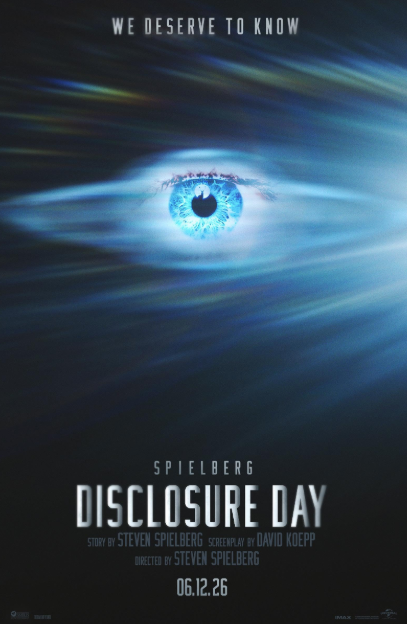
Disclosure Day: The Interstellar Birds


My wife and I just got back from seeing Steven Spielberg's Disclosure Day on its debut day at the Chatham Orpheum Theater.  I thought it in many was a terrific, at times terrifying, tender, and sage movie, with a couple of flaws.

Here is some of what I especially liked about it:

  • The action scenes, especially the ones with trains and cars, were outstanding.  Edwin Porter, Alfred Hitchcock, and James Bond would have approved.
  • Sister Maura (Elizabeth Marvel) was a persuasive and plausible source of wisdom.  As I discussed in my 2020 essay The Missing Orientation, researchers have found that the organized religious group which finds the 1947 Roswell Incident (the first contact of the interstellar visitors in Disclosure Day) most likely a landing of travelers from somewhere beyond the Earth are Roman Catholics.
  • Nixon showing off the interstellar bodies to a 1950s TV star (who looked like Jackie Gleason) was a perfect touch.
  • The television news media were portrayed very well, at least as far as I know.  Margaret Fairchild (Emily Blunt) asking for makeup before she makes her earth-shaking announcement is a good move for anyone who goes on any kind of television, for whatever reason: never say no to makeup.
  • Mental telepathy plays a big part in the movie.  I was just debating on Facebook the other day with Steve Davidson (publisher of Amazing Stories) about whether mental telepathy was still a bonafide science fiction feature.  I said it was, and referenced Alfred Bester's 1956 The Stars My Destination.  Steve said it was then but now wasn't.  I said it still was. I thought Steven Spielberg made a good case for it in Disclosure Day.
  • It's always great to see Colman Domingo on a science fiction screen.   Colin Firth put in an especially fine performance, too.
Here was what I wasn't especially thrilled with in the movie:

  • I love wildlife, especially birds.  The idea that the interstellar visitors would masquerade as them so as not to unduly frighten we humans is sweet but a little ridiculous.   I guess Walt Disney would've liked that, though.
  • I thought the story took a little too long to find its wings.  Maybe that's just me.
  • I also thought the ending happened a little too quickly.  There's a lot of profundity to unpack in this narrative.  Maybe it would have been better told in a limited streaming series. 
But that last point is actually a kind of praise, and I highly recommend Disclosure Day.

Saturday, June 6, 2026

Star City 1.3: Sadness and Joy


Apologies for reviewing Star City 1.3 a late evening later than I expected -- I was busy listening to the New York Yankees lose to the Boston Red Sox  (not happy that, in the Cape Cod area, TV coverage of the game was blacked out, plus I'm a big Yankee fan) and watching the New York Knicks win (happy I could see that on TV, and I'm a Knicks fan).   But I was nothing but happy about the Star City nightcap.

Not that the story was happy -- the Soviet Union was a tough, paranoid place to live, especially if you were a cosmonaut or otherwise connected to their space program.  The cosmonauts and their private lives were monitored, and the paranoia about the Americans trying to sabotage the Soviet program was by no means completely or even partially crazy.  A large part of the fun of this episode was figuring out who the U.S. collaborator was, and their identity was suitably surprising, as the cost to the Soviet space program of stopping this traitor was not.

But there was an underlying joy, for me at least, in seeing the Soviets work so hard to get ours species off this planet, albeit in their fascist way.  In our offscreen reality, no spacecraft with humans aboard has landed on the Moon since the final Apollo mission in the early 1970s.  In the alternate reality of For All Mankind and Star City, the Soviet Union has already landed on the Moon, and Korolev aka the Chief Engineer is already in the early stages of working on a trip to Venus.  Writing this now seems like science fiction.  And that's of course what For All Mankind and Star City are.  But they could easily have been reality.

For All Mankind excelled in exploring the lives of the human beings who made these voyages, and eventually came to live on Mars.  Star City looks like it might be beginning to do that for Venus. If you'd like know more about the human beings who have actually made it beyond this planet -- beginning with Yuri Gagarin, the first person to orbit this planet, a Soviet -- I highly recommend Deana Weibel's The Ultraview Effect, just published.

And I'll be back here next week with my review Star City 1.4.

See also Star City 1.1-1.2: Fascism and Space

in Kindle, paperback, and hardcover


InfiniteRegress.tv