Chuck Todd interviews me about alternate histories

Monday, August 5, 2019

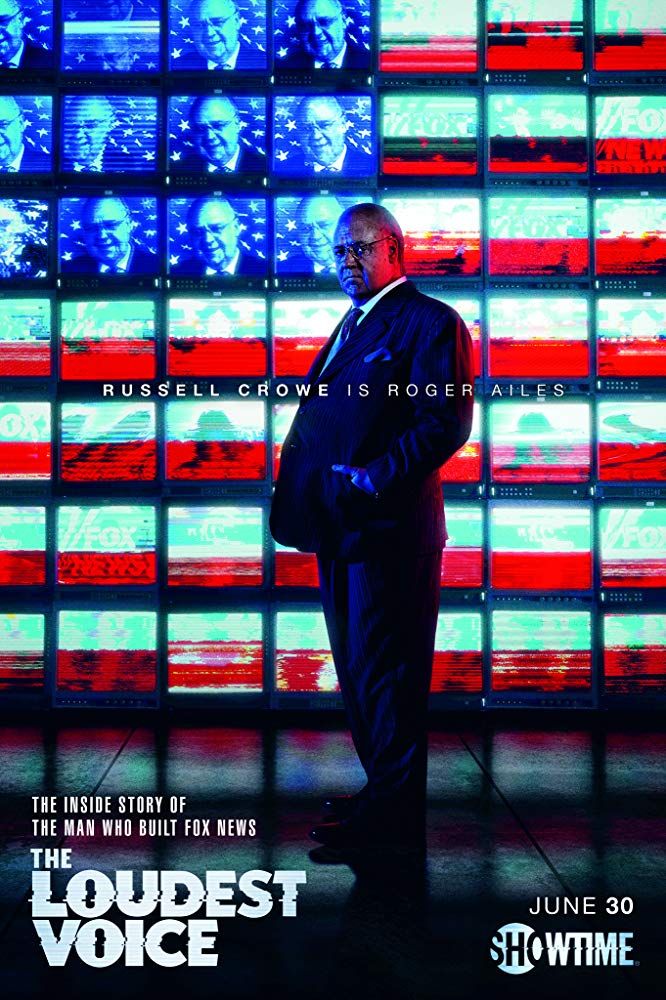
The Loudest Voice 1.6: "Television Has Replaced the Political Party"


That's what Roger Ailes says in The Loudest Voice 1.6 - "television has replaced the political party." I'm not so sure.  I mean, I believe Roger Ailes certainly thought that and likely said that.  But I'd say Twitter more than television is the most significant political medium in this Trumpian age.  Maybe 2016 was a little too soon for anyone, even Ailes, to recognize that.  Maybe Ailes was constitutionally incapable of recognizing the Twitter revolution, given his running the engines of television for politics, going back to Nixon.

As I've been saying all along, I don't quite buy a lot of what we're seeing in The Loudest Voice about Ailes and politics.   Most especially that he made Donald Trump.  What he made was Fox News as such a behemoth of cable news.  That part, I believe.  As for the womanizing, I wasn't there so I don't know any of that for a fact.  But I have no problem believing that, either.

But not the Trump part.  The limited series will end next week, and will leave us with the message that Trump was an Ailes creation.  The 2020 election is still more than a year away.  If Trump loses, that will support the thesis of this series.  Trump lost because he lost his diabolically powerful media booster.  If Trump wins, that would mean that Ailes was not so crucial to Trump after all.

You know what?  I usually like to be proven right in my media criticism.   But there are some things more important than proof of professional acumen.  As a human being, I deeply hope that Trump loses, and therein lends support to the claim that Ailes got Trump in office the first time, and Trump lost the second time he ran for President because Ailes was no longer around (as in, not on this Earth).

The series ends next week.  I'll say a little more about this then.  As for that welcome ultimate disproof, we'll have to wait until November 2020.

See also:  The Loudest Voice 1.1: Fox Launch ... The Loudest Voice 1.2: September 11 and After ... The Loudest Voice 1.3: Prelude to Trump ... The Loudest Voice 1.4: "We Create the News" ... The Loudest Voice 1.5: Was Ailes Really All That Powerful?

The Rook 1.6: Family


Myfanwy meets her sister in The Rook 1.6 - assuming she is her sister, real family.  This in contrast to Checquy, who act as if they're her family.  Checquy is certainly as dysfunctional as many families, we'll give them that.  (I like how each of the Checquy pronounces their name slightly differently, you notice that?)

By the end of the encounter, we and Myfanwy are convinced that her sister is her sister.  She tells Myfanway how the Checquy ripped her apart from her  family when she was 12 and her EVA powers manifested.  More convincingly, Myfanway feels something she recognizes when she strokes her childhood bedcover, and this leads to other memories.  Yeah, the sister is likely her real sister, and Checquy are likely monsters.

The Home Secretary is beginning to learn the monster part, the hard way.  Farrier's super powers have convinced the Home Secretary that her success resides in working with rather than against Farrier. She instructs Conrad to rehire her.

And this at the same time as Myfanwy, after thanking her sister, tells Gestalt that Farrier caused all the recent damage - the bridge executions, the memory wipe, all of it.  Of course, she knows this mainly because Nazim told her, and is there any reason she should so value his information.

But Farrier, who apparently caused some real damage to the Checquy, is back in that family fold.  Which only shows, again, how dysfunctional that family really is.

See also:  The Rook 1.1: Dickian Pastiche ... The Rook 1.2: Live Details ... The Rook 1.3: Gestalts ... The Rook 1.4: The Bristol Stomp ... The Rook 1.5: The Home Secretary


They're coming out into the open, for the first time in centuries ....

Saturday, August 3, 2019

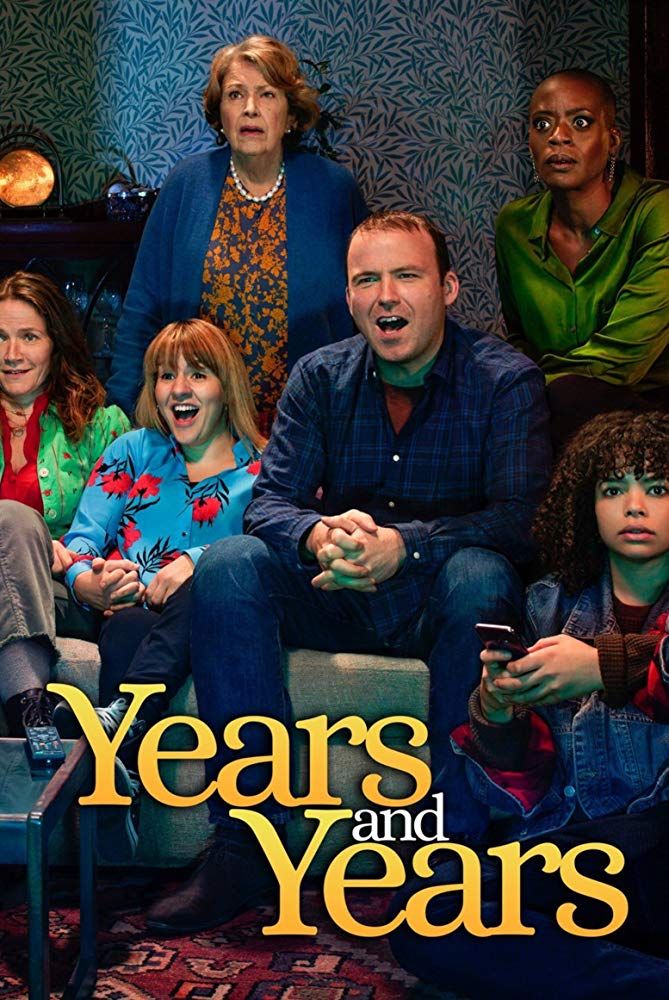
Years and Years 1.6 (Finale): Power


Years and Years had an especially powerful finale last Sunday.  In part because it was, in effect, a two-part finale.  In part because each part was so strong.

The first had to do with a happy ending to the dystopian near future which was the political part of the narrative.  This near future Britain was worse and better than our Trumpian America.   Worse in that the BBC was forced to close down, and undesirables were not only rounded up but killed.  Events as massive as the atomic attack on the Chinese island were taken by an increasing number of the public as fake news.

But, in the end, the power of the people rose up and swept Vivian Rook and her totalitarian system from office.   Which is not to say that a new demagogue might not ever arise - Trumps and Rooks are always never far from center stage - but at least, for the time being, freedom and truth won the day.

The second had to with a happy ending to the science fiction in the story.   Uploading yourself to a computer as a way of cheating death and achieving immortality has long been a trope of a science fiction (see my review of Charles Platt's Silicon Man from 1991, eight years before The Matrix).

On Years and Years, the personality and memories are downloaded (to water) rather than uploaded.  But Edith, who absorbed a slowly lethal dose of radiation in that atomic blast, is able to survive, sans flesh, in that aquatic digital fluid.   As neat and satisfying a science fictional solution (sorry, I can never resist a pun) as has come along on television in a while.

A great ending to a great success of a little series that couldn't be more relevant to our dangerous world.

See also Years and Years 1.1-1.4: "Democracy ... Worn Out" ... Years and Years 1.5: The Disappeared


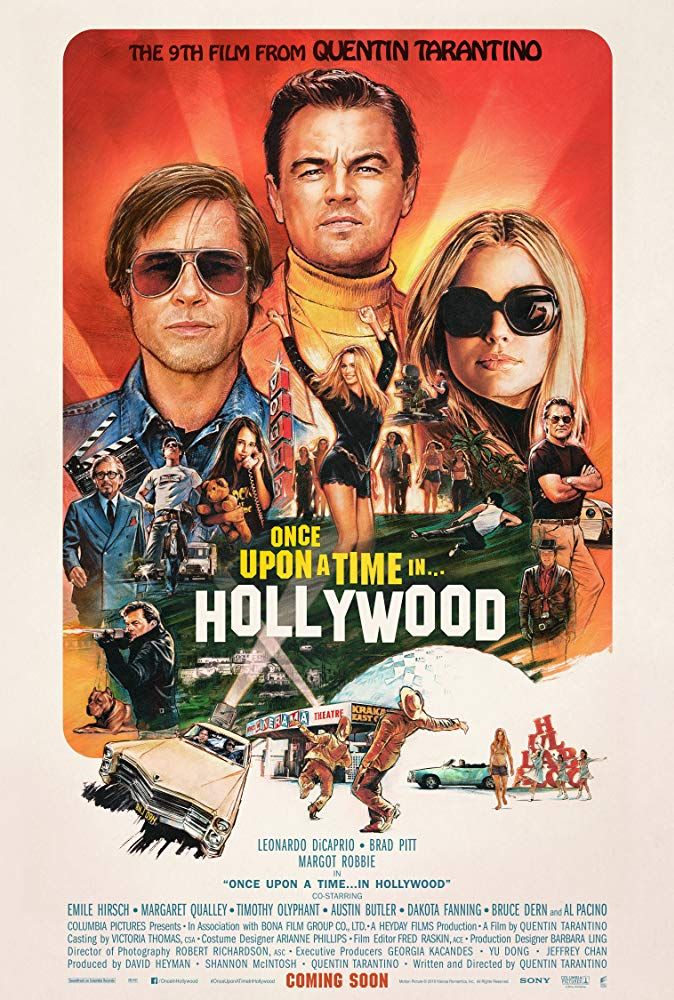
Once Upon a Time ... In Hollywood: Masterful Alternate Reality


My wife and son and I just saw Quentin Tarantino's Once Upon a Time ... In Hollywood at our son's invitation. He's an even bigger Tarantino fan than I am, and my wife liked a couple of his earlier movies too.

The latest is among the best three Tarantino ever made - right up with Reservoir Dogs (in a class by itself) and Jackie Brown, which was just an all-out brilliant movie.  I use the phrase "alternate reality" in the title of this review.  As many of you know, I'm a science fiction author, and a copious reviewer of science fiction television series and movies.  I don't mean to suggest that Once Upon a Time is science fiction alternate reality, in the way that, say, the recently departed Counterpart on television was.   But as the title surely suggests, Once Upon a Time is a fable, neither docu-drama (though it does touch upon many aspects of real history) nor sheer fiction.

And the aspects of reality woven into this marvelous movie that takes place in 1969 Hollywood range from Bruce Lee to Mannix on television to the Playboy mansion to Charles Manson and Sharon Tate.  The fictitious characters are headlined by Rick Dalton (a somewhat washed up 1950s TV Western actor) and his stunt man double, Cliff Booth.  Rick is played by Leonardo DiCaprio and Cliff by Brad Pitt.  I've been saying ever since the two began burning up the screen decades ago that their looks almost made them interchangeable.  It was good to see Tarantino finally build a movie around this.

The movie is chocked full of memorable scenes, including Sharon Tate enjoying her own movie, Cliff getting the better of Bruce Lee in either a fantasy or a flashback, and Al Pacino playing a agent whose name is Schwarz and insists that people don't call him Schwartz (I've known a few people named Schwarz over the years, and have always been aggravated that I couldn't call them Schwartz).  And a plethora of great lines, including Dalton exulting in fried "sour kraut" when he takes a flame thrower to Nazis in an audition for a movie.  (I wouldn't be surprised if Tarantino came up with that line when he was 15, and was just waiting for a chance to write a scene in which he put it into a movie.)  And a full-house of great stars, most of them no youngsters, playing all kinds of bit and bigger parts, as per just about all Tarantino movies.

But the best part - and I won't say more, lest I give too much away - is the ending of the movie, which is why I say this movie is alternate reality (or alternate history, depending on how you look at it).  With so much of our reality animating this fable, Tarantino lulls us into thinking that just about everything will be the same.  It isn't, and that what's wraps up this wonderful package of what will go down as a quintessential Tarantino masterpiece.


real alternate reality, if that makes any sense
"flat-out fantastic" - Scifi and Scary


Thursday, August 1, 2019

Listen to the Way Pacino (Hoffa) Says "Phone"


This has to be one of the best trailers I've ever seen - for Martin Scorsese's new movie, The Irishman, due out on Netflix and select theaters this Fall.  It stars Robert De Niro, Al Pacino, and Joe Pacino.  It's about Jimmy Hoffa.  How could you go wrong?

But it looks and sounds to be even better than that.  Listen to way Pacino, playing Hoffa, says "phone" (about 28 seconds in).   Pacino's voice and phrasing, the way he bends words just right, like daggers (usually softly) in your heart, has always been one of his strongest suits.  But this "phone" is something else.  Beyond just right.  Sheer acoustic genius.

And De Niro has been subject to a new "de-aging process".   That's something to see, too.  This trailer is like a real window to the past - except the real is the Hoffa story, and the fiction is someone De Niro's current age playing him in a 2019 movie.

Pesci also is in fine form and voice.   I could listen to these three guys all night.   If the movie is anything as good as the trailer, it'll be one for the ages.  Look for my review here in the Fall.

Wednesday, July 31, 2019

Second 2020 Democratic Presidential Debate, Part 2 of 2: Winners and Losers

The headline of the second part of the Second Democratic Presidential Debate, just concluded on CNN, is that Joe Biden did a lot better than he did in the First Democratic Presidential Debate on MSNBC last month. He was still a little inarticulate at times, and a little too prone to let the moderators interrupt him, but he was very impressive.  And so was just about everyone else on stage in Detroit tonight.

Some highlights -

  • De Blasio is completely right that current, private health care premiums, deductibles, out of pocket expenses, not to mention costs of prescribed medications, are far more expensive than what we would pay in taxes for universal, government-provided heath care.  On the cost of pharmaceuticals, good for Biden for highlighting that these obscenely high costs need to be brought under control
  • Castro and Gillibrand were right to call on De Blasio to immediately fire Eric Garner's killer, officer Daniel Pantaleo (Harris joined in on this call, too.)
  • Inslee was right to call for end of Senate filibuster.
  • Biden handled criticism of some of his past decisions pretty well.  He explained what he was trying to accomplish at the time, on issues ranging from busing to the Hyde Amendment, and he got support from Gabbard and Bennet.
  • In general, just everyone on stage was sharp and combative when needed.  I'd say the weakest, in terms of ideas and constructive engagement, was Andrew Yang.
One point about Harris: she again wrongly contrasted science vs. science fiction in Democratic vs. Republican positions on climate.  Not that the Republican positions aren't fantasy and counter-factual, it's that science fiction is not that, and not the opposite of science.  She did the same thing in the first debate last month.  Here was my response.
The September debate is next up, and there will no doubt be fewer candidates up on stage for that.  I'll be back with an assessment of what should be another exciting, even inspiring, night.

See also Second 2020 Democratic Presidential Debate, Part 1 of 2: Winners and Losers

Tuesday, July 30, 2019

Second 2020 Democratic Presidential Debate, Part 1 of 2: Winners and Losers

I thought the first part of the second 2020 Democratic Presidential Debate, just concluded on CNN, was much better than the first part of the first 2020 Democratic Presidential Debate on MSNBC last month.  By "much better," I mean that almost every candidate on the stage expressed her or himself better than what we saw last month.

Among the highlights -

  • Bernie and Elizabeth Warren were clear, passionate, and outstanding on their view that the avarice of private health insurance means that the best path forward is the government provides all of it.  As Bernie said, health care is a human right.  (I would add, the government protects us from human parasites, why not from micro-parasites and lethal cells?)  And as Warren said, private insurers are all devoted to maximizing profits, which means taking in as much money as possible in premiums, and keeping expenditures for health care to a minimum.  Later in the debate, Rep. Delaney's equation of private pensions and private health insurance was wrong: there is no immoral profit motive in companies providing pensions for employees.
  • Amy Klobuchar was outstanding on the need to finally stand up to the NRA as the only way to get sensible gun reform in America, and stop the massacres.
  • Back to Bernie and Elizabeth Warren: Bernie was better than Warren in wanting to cancel all student debt, in contrast to Warren, who wants to cancel 95% of that debt.  But good for Warren for being better than everyone else on that stage on that issue, other than Bernie
  • Good for Pete Buttigieg for insisting that all U. S. military engagements (i.e. wars) get Congressional approval,  and that approval have a three-year sunset clause.  Here's a better idea: how about we follow the Constitution, and insist on a Declaration of War (but also with a sunset clause).
  • Buttigieg also put out an important challenge to all Republicans in Congress: do you want to be remembered as someone who didn't speak up about the racism of Trump?
  • Bernie's denunciation of Trump as a "pathological liar" is always good to hear.
  • Especially powerful closing statements by Buttigieg, Warren, and Bernie.
As to everyone else in the debate, I thought that Rep. John Delaney spoke the best, and offered the best arguments against Bernie and Warren.  But I didn't agree with him.  And as for the rest, well, I look forward to not seeing them on stage in the third debate, in September.
See you here tomorrow night.

Monday, July 29, 2019

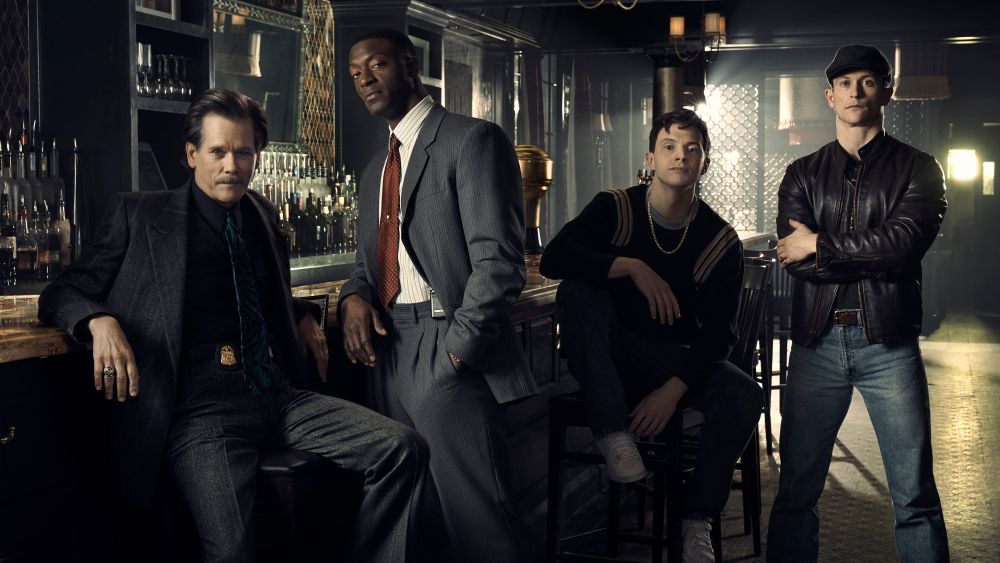
City on a Hill 1.7: The Bodies


Jackie continues to get his way in City on a Hill 1.7, squeezing Jimmy to reveal the locations of the bodies from the heist, essential to DeCourcy making a case.

That was the end of the episode.  The beginning also had a body, but one which just managed to survive.  That would Michaela, who winds up at the bottom of a steep flight on Boston stairs, barely alive.   Did Jackie have something to with this, as well?

We know that Michaela's been investigating Jackie.  Did he push her, or have her pushed, down that flight of stairs?   The medical assessment is she fell - but we know how out of touch with reality those can be.   Well, one thing's for sure.  It's not likely Bonnie from Big Little Lies did it.   She's presumably still in California.

But the serious question about Jackie remains.  Would he actually kill someone to protect his vital interests?  I would say if the person was a dangerous criminal, yes.  But a reporter, investigating him?  On balance, I'd say no.  Jackie's sense of morality may not be the strongest, but it's there.  And as a practical matter, killing a reporter could well only invite further investigation.

Even with Michaela surviving, it already has.  Rachel has now taken up Michaela's investigation.  And, as an insider, she has a lot more at her command than does/did Michaela.  In fact, Rachel looks to be the most serious opponent Jackie may encounter on City on the Hill this season.

Which makes it eminently worth watching.

See also City on a Hill: Possibilities ... City on a Hill 1.2: Politics in a Cracked Mirror ... City on a Hill 1.3: One Upping The Sopranos ... City on a Hill 1.4: Enjoyable Derivative ... City on a Hill 1.6: Tony's Mother, Mayhem, and Family


The Rook 1.5: The Home Secretary


The Home Secretary came into focus in The Rook 1.5 last night.  No figure head, she, but a crucial player, who's been having an affair with Conrad, and wants to be Prime Minister.  And she's well played by Gina McKee, whom I first noticed in The Borgias.

But the big news is Farrier, who's not only fired by the Home Secretary, but displays some powerful super powers of her own.  Unless I haven't been paying attention, this is the first time we've seen them.   As this series progresses, it's apparent that there are more EVAs than first met the eye.

I've said the show reminds me of Heroes.  It also has threads of Sense8.  The Gestalts, indeed, are closely related Sense8 clusters - born on the same day, in powerful telepathic connection, the only difference being the Sense8 cluster members are not physical twins.  But the cluster members come from all around the world, and the back story of Nazim brings home the global distribution of EVAs.

The resonances of The Rook with other series - in reviewing it in the past weeks, I've mentioned Heroes, Counterpart, and Sense8 - is actually its great strength.   Because although it bears resemblances to these and other shows, there's something about The Rook that's all its own.  Something in the pacing, or the characters, or both.  Take the Home Secretary, for instance.

She's having an affair with Conrad, and the rules say they either now must break it off or go public with it.   Jennifer (that's her name) breaks it off, because she thinks the Prime Minister is vulnerable and thus open to Jennifer becoming the PM.  So, I'm wondering - is she also an EVA of some sort, and if she becomes PM, wouldn't that be a provocative development?  (Hey, the current Prime Minister in our real world is ... well, let's not go there.)

See also:  The Rook 1.1: Dickian Pastiche ... The Rook 1.2: Live Details ... The Rook 1.3: Gestalts ... The Rook 1.4: The Bristol Stomp


They're coming out into the open, for the first time in centuries ....

The Loudest Voice 1.5: Was Ailes Really All That Powerful?


The fifth episode of The Loudest Voice makes clear what the series has been more than hinting at all along: it was Ailes more than anyone else who put Trump in the White House.  Or, at least, the coming attractions do, after we see Ailes do his utmost to get Obama to lose in 2012.  Ailes blames his failure on that score to the lameness of Romney as a candidate.

I should point out that I'm not a particular believer in any single reason for Trump's winning in the Electoral College. Not the Russians, not Facebook, not Ailes.  All of those contributed in one way or another, but none was decisive, and even all together, those reasons, and those kinds of reasons, don't add up to a factor that was much more important: there were enough racist people in the country, along with people who see their futures eclipsed by what I and others see as progress, like health care for all, that they put Trump over the top.  Because they just happened to be in the right places to do this, given the oddities of our electoral system.

So Ailes, who played a role, was not quite the king maker he's made out to be in The Loudest Voice, and Ailes himself apparently and presumably believed.  A genius for understanding what a significant segment of the American public wanted in its news, yes.  A paranoid conservative with boundless confidence, willing to always act on those beliefs, yes.  A womanizer, yes.   But if he was responsible for Trump, he shares that awful distinction with millions of other Americans.

Back to tonight's episode, it was another powerhouse of docu-drama.   His firing of Brian Lewis, his near destruction of Joe, his groping of Gretchen - all parts strongly played by their actors (Seth MacFarlane, Emory Cohen, Naomi Watts) - not to mention the searing off-the-charts performance of Russell Crowe as Ailes - make The Loudest Voice a show to behold.

See also:  The Loudest Voice 1.1: Fox Launch ... The Loudest Voice 1.2: September 11 and After ... The Loudest Voice 1.3: Prelude to Trump ... The Loudest Voice 1.4: "We Create the News"


Sunday, July 28, 2019

Just Published: Robinson Calculator


They're coming out into the open, for the first time in centuries ....


my new novelette ... not related to any fiction I've published before ... available on Kindle and paper 

Thursday, July 25, 2019

Years and Years 1.5: The Disappeared


Episode 1.5 of Years and Years couldn't be more tragically relevant to our lives right now in the United States, off-screen.  It was about the treatment of immigrants, their placement in concentration camps, and what that really means.

Here in the United States, the detention now of would-be immigrants in camps at our southern border, where children and parents are separated, and children are kept in deplorable conditions, including having so little room as needing to sleep standing, in holding areas without access to toilets, has been decried by Representative Alexandria Ocasio-Cortez and others as "concentration camps".  Trump and his minions have characterized these members of Congress as "socialists," and feigned outrage at the use of the phrase "concentration camps," which the Trumpists claim is an insult to the Jewish people, whose relatives were put in real concentration camps by Nazis in World War II.

First, I should say that I'm Jewish, and I wasn't insulted by use of the term "concentration camps" to describe the awful conditions in the Federal holding facilities.  No, I wasn't insulted, I was horrified to learn about these conditions.

In Years and Years, Vivian Rook, the wily, fascistic Prime Minister of Britain, actually says something which supports the position of the Congressional observers here now in the United States.  Viv rightly says that concentration camps do not necessarily have to mean death camps -- they can relate to any concentration of people or any thing in a given place.

But, given the nightmare scenario that is Years and Years, Viv soon uses the cover of non-objectional concentration camps indeed to do what the Nazis did.   Borrowing an approach from fascist regimes in real-life South America, the British government quietly begins "disappearing" (i.e., killing) the immigrants it's keeping in concentration camps.

In the season finale next week, we'll see if this means the end for Viktor.  In the meantime, score another powerful and horrifyingly relevant episode of Years and Years.

See also Years and Years 1.1-1.4: "Democracy ... Worn Out"

Wednesday, July 24, 2019

Reflections on Mueller'sTestimony Before House Intelligence Committee, Wednesday Afternoon

Mueller's testimony before the House Intelligence Committee, just concluded this afternoon, was stronger than his testimony before House Judiciary Committee this morning.

Schiff's opening and closing statements were both powerful, in contrast to Nader's, whose opening statement and questions were excellent, but whose closing statements were not memorable.   In general, Mueller answered more questions, and gave fuller answers.  He has a genuine passion about doing something to stop Russian interference in our electoral process. 

Unlike in previous years, Republicans do not share this, certainly not with the same passion.  This left the field open to the Democrats, who probed Trump's alliance as a candidate with Russians continuously and effectively.  In contrast, Republicans resorted to their typical tactic of yammering about straw-men, this time characters named Joseph Misfit and Kathleen Cadillac (well, that's what they sounded like).

But Russian interference with our last election, and the certainty that they will at least try to do it again, is no laughing matter.   If this afternoon's testimony wakes up more Americans to this problem, Mueller's appearance will have been worthwhile.

Whether this and the morning's testimony will empower the move towards impeachment, and/or the success of Democrats in the 2020 election for President and regaining the Senate, remains to be seen. My guess is it won't do much  for the first, certainly won't in itself lead to impeachment in the House, but may well have strong underlying effect in the next election, leading to Democratic success at the polls.

See also Reflections on Mueller's Testimony Before House Judiciary Committee, This Morning

Reflections on Mueller'sTestimony Before House Judiciary Committee, Wednesday Morning

Some assessments of Robert Mueller's testimony before the House Judiciary Committee, just concluded.

Mueller is clearly not a very fluent speaker, and all too often responded to questions by deflecting to his report, or just flat-out declining to answer the questions.   But there were several powerful responses from Mueller this morning:


  • He agreed with and even said, in response to one question, that there were a lot of "liars" amidst the President's cadres.   He even characterized some of those people interviewed in his investigation as "outright liars".
  • Although he refrained from specifically recommending impeachment, he acknowledged that impeachment was a next step, in view of his insistence that he as Special Prosecutor could not indict a sitting President.
  • He repeatedly did not back down from his insistence that his report did not "exonerate" the President, as Trump and his supporters repeatedly claim.
  • He strongly backed the people who worked for him in his office as "non-political," despite Republican claims to the contrary.
Most of the Republicans on the committee also came across as motor-mouths and nasty.  Their conspiracy theories about Hillary Clinton, etc came across as unpersuasive.  In contrast, the Democrats quoting from the Mueller, and getting Mueller to agree with their quotes, was an effective way of getting more details of the report out to Americans.

So, all in all, the morning session was very much worthwhile.  Mueller's testimony was valuable when he chose to answer the questions put to him.  But he should have answered more of them.

See also Reflections on Mueller's Testimony Before House Intelligence Committee, This Afternoon

Tuesday, July 23, 2019

Stranger Things 3: Growing Up


An excellent third season of Stranger Things - in fact, my favorite of the three so far - which couldn't be more timely in this age of Trump and Putin.   In the 1980s, the Russians were the Soviets, but they occupy the same place in Western popular culture - adversaries - and so they make great villains along with the monsters that the breakthroughs to the other dimension engender.

And all of our team were in top form.  Dustin's as sharp as ever, this time with a girlfriend, though his friends doubt her existence.   El's superpowers are formidable, though not unlimited, and she's falling in love - with Mike. His sister Nancy makes a cool and on-target reporter, and a good couple with Jonathan.  As always, there are at least three plot lines developing at the same time, peopled with interrelated characters, and converging well, if bruised, at the end.

The most compelling relationship is between Joyce and Jim, though it's hardly as yet a relationship.

Joyce lost Bob to the evil in Season 2, and she's wary of a new relationship.  Jim's not exactly her type.  But there's a chemistry there, which makes it all the more heart-wrenching when he's apparently killed in the Season 3 finale - a grievous blow not only to El, his beloved daughter, but Joyce.

Except - well, I and millions of fans don't think he's dead.  I never think a character is dead unless I see his or her head blown apart.  Jim just disappears when Joyce destroys the portal.  And in the coda, we learn that those nasty Russians have an American prisoner (unseen).   Since no one else from Hawkins has gone missing, I'd say Jim's survival would not only be most welcome, but is wide open.

The series is growing up well.  It's good to see the gang getting beyond their board games.   Cars have replaced bicycles as the most onstage mode of transport.  The sexuality is handled in an intelligent way, including an important character who turns out to be gay.   All of this adds up to a great foundation for a Season 4, which I look forward to seeing as soon as possible.

See also Stranger Things 1.1-1.5: Parallel Horror ... Stranger Things 1.6-18: Lando to Fringe ... Stranger Things 2: Bigger, Better


more parallel worlds ... "flat-out fantastic" - says Scifi and Scary

Monday, July 22, 2019

City on a Hill 1.6: Tony's Mother, Mayhem, and Family


I didn't get a chance to review City on a Hill (1.5) last week.  Actually, I was so upset that Kevin Chapman's quintessential cop character was killed that I didn't feel like writing a review - only kidding, I was unhappy the Chapman's character was killed, but I just got caught up in too many other things (like seeing and reviewing Jeff Lynne's concert in New Jersey).

But there's no way I could let episode 1.6 go by without a review, however busy I was.  It was the best episode of the series so far, in many ways.  Even Jenny's mother put in a notable appearance, showing she's in all of this for herself.  She's more than willing to help Jackie get back with Jenny, if Jackie can help his mother-in-law get back her license (she hit a school bus).  She's the most reminiscent I've of Tony Soprano's mother, in lo these many years.

Dean Winters also had a good spot, nice to see after his Law and Order SVU sojourn and his All State Insurance commercials as Mayhem.  In City on a Hill, he's the vehicle for Jackie being a  self-described "piece of shit" - but it's for a worthy cause, getting the AK-47 that was used in the killing of three guards in the right hands, i.e., the killer's.   But even this was set-up for the big event of the hour: as Jackie finally gets the bad guys within prosecutorial range, he receives news that his daughter is missing.

Jackie may not be that good to his wife, but he loves his daughter.  (I think he loves his wife, too, but that's another story.)  It was a great to see Jackie galvanized into action to find his daughter - including his well-taken brush-off of that annoying reporter - and although the result is not quite he and Jenny back together, it was a step in the right direction to see them under the same roof again, after her throwing him out in the same episode.

And episode 1.6 was firing on other cylinders, too.  Frankie's in need of cash to pay his mother's medical bills - robbers didn't easily get insurance back in those cruel 90s - and this puts in motion the beginning of another heist, great for the series if likely not Frankie.  And DeCourcy has an excellent night, too, standing up to a smack on the face by the sleazy priest.

The series has now really come into its own, and I'll see you here next week.

See also City on a Hill: Possibilities ... City on a Hill 1.2: Politics in a Cracked Mirror ... City on a Hill 1.3: One Upping The Sopranos ... City on a Hill 1.4: Enjoyable Derivative


Big Little Lies, Season Two Finale: Too Happy Ending


Well, I thought this seven-episode second season of Big Little Lies was superb, if short - except the ending tonight, which was too upbeat.

Not that I don't like happy endings.  But this one was too much.  Celeste wins her case, completely.  Ok, that was welcome and justified.  Madeline and her husband renew their vows and everything is hunky dory.  That was a little much.  And it looks like Jane and her boyfriend are on their way to a great relationship, too?

Renata smashing the trains was the best part of the episode, along with Celeste standing up for herself in court.  But Bonnie finally coming to terms with her mother didn't make all that much sense.

And what was happening with the five going into the police station at the end?  Ok, Bonnie is confessing.  That makes sense.  But if she tells the truth, and the other four back her up, they'll all be guilty of obstruction of justice, in addition to Bonnie going down for manslaughter or murder, who knows.

Another episode, or at least another 30 minutes on this finale would have just the thing to explain why the five made the decision, what exactly that was, and what kind legal jeopardy the four will be in.   Ambiguity is sometimes just the thing to end a powerful story.  This time, it wasn't.

Maybe that's reason to get a third season going, with some answers and contexts for this super series, with super memorable characters.

See also Big Lies 2.1: Grandma On a Mission ... Big Little Lies 2.2: Perry's Progeny ... Big Little Lies 2.3: Together ... Big Little Lies 2.4: Bonnie's Deepest Motives ... Big Little Lies 2.5: Little Red Riding Hood ... Big Little Lies 2.6: It (Isn't) Over

And see also Big Little Lies: Big Good, Truly ... Big Little Lies 1.5: Multivalent Whodunnit ... Big Little Lies: Elvis and Answers


The Loudest Voice 1.4: "We Create the News"


Another powerful episode of The Loudest Voice tonight - 1.4 - in which Roger Ailes lays bare the basis of fake news: "we create the news'.  I should say, the basis of real fake news - that is, news that is fake.  We need to make this distinction because Trump now daily bashes our legitimate news media as fake news - which would be fake fake news -  a tactic that comes right out of Hitler's denunciation of the press in 1930s Germany as the Lügenpresse (the lying press).  When you're trying to replace democracy with a totalitarian regime, it's wise to discredit and get rid of the people who can call you out on that and let the rest of the country know - the press.  (See my short book, Fake News in Real Context, for more.)

Speaking of Trump, we also hear on The Loudest Voice tonight that it was Aisles and Fox who gave the Trump the idea that Obama was not really born in America.  I have no idea if Trump got that paranoid right-wing notion from Fox or not.  And here it might be a good idea to mention, as I always do, that there's a big difference between documentaries and docu-dramas.   Even documentaries are not necessarily entirely truthful - they may leave out important facts.  But docu-dramas go even further - they actually make conversations up, conflate events, etc, to tell a more effective narrative.  (The excellent docu-drama Chernobyl, which I reviewed here in May-June, did a lot of that.)

The Loudest Voice certainly focuses only on selected Fox News luminaries - selected for whatever reason.   Tonight we saw a lot of attention to Glenn Beck.  A few weeks ago, it was Sean Hannity.  Both of these Fox News hosts are portrayed in detail by actors.  In contrast, Bill O'Reilly, who had Fox New's leading show for years, is mentioned as such, and shown (the real O'Reilly) briefly on the The Loudest Voice, but no actor portrays him and we see nothing of his back story.  Why not?

I guess all of this adds up to taking The Loudest Voice with a grain of salt, as we should with any docu-drama.  It tells a crucially important story, and is therefore worth watching, even if something less than the complete truth and only the truth shows up on our screens.

See also:  The Loudest Voice 1.1: Fox Launch ... The Loudest Voice 1.2: September 11 and After ... The Loudest Voice 1.3: Prelude to Trump


Sunday, July 21, 2019

The Rook 1.4: The Bristol Stomp


The best episode of The Rook - 1.4 - just on tonight, in which we find out lots of stuff about Myfanwy.

First and foremost: she knew that Bristol had something important to do with her forgotten past.  She thought it was the city (and it's a nice city, one of my favorite in England after London), but it turns out to have been the name of her shrink.  And as soon as they meet in tonight's episode, in the present, it's crystal clear (to the audience, if not yet to Myfanwy) that they were having an affair.  Her earlier self has left her a note, in Bristol's possession (which he gives to her now) that tells her to run if she's in Bristol's presence.

It's not that the earlier self objected to having sex with him.  Apparently, it was pretty good (they do it again tonight).  It's that the sex unleashes much stronger super powers than she usually has.  Hence, Farrier, suspecting that might work, set the two of them up.

Meanwhile, we learn who wiped Myfanwy's memory:  Nazim, a young guy and an enemy agent.  His super power is wiping memories (I mentioned in my first review of The Rook that it owed a lot to Heroes).  But on whose command did he wipe her mind?

Farrier is emerging, not surprisingly, as a somewhat nefarious character.  She set up a trade with the bad guys - they would get Nazim, and she would be Myfanwy.   Her mind wipe was in some way Nazim's attempt to foil this trade?

Conrad will likely find out.  At this point, he's emerging as the most stable and reliable person in Checquy.

See you next week.

See also:  The Rook 1.1: Dickian Pastiche ... The Rook 1.2: Live Details ... The Rook 1.3: Gestalts


"As a genre-bending blend of police procedural and science fiction,
The Silk Code delivers on its promises." - The New York Times Book Review

Thursday, July 18, 2019

Years and Years 1.1-4: "Democracy ... Worn Out"


My wife and I just watched the first four episodes of the British Years and Years on HBO.  It's about as powerful and caustic a depiction of the rise of fascism in our time - that is, so far in the short series (six episodes), 2019-2027 - as you'll find.  Which is, searing and gut-wrenching indeed.

As one of the lead characters in the Leeds family remarks - Edith - whose lives we follow in England into the near future, "democracy was a very nice idea for a while, but now it's worn out".   Although the action is in the U. K, where a demagogic woman is rising to power, the U. K.  and the rest of the world are driven by the United States, where Trump is not only President, as he is now, but re-elected in 2020, making this a horror story as well science fiction.  As a parting shot from his regime, he sends a nuclear missile to an artificial island off China and kills 45,000 people.  Pence is elected President in 2024.  These two events, as depicted in Years and Years, should be enough to make every American vote in 2020.   And the depredations continue.  A U. S. bank crash throws the world into recession.  Fascist regimes arise all over Europe.  Roe v. Wade is overturned in the U. S.  As I said, an all-too foreseeable horror show, if we don't vote Trump and the Republicans in the Senate out of office in 2020.

There are good technological touches in this near future.   Smartphones literally in your hand (as in, embedded).  The beginning of artificial eyes that can function as cameras.  And there are love affairs and break-ups and personal tragedies that I won't tell you about, except to say they're moving, because I've told you enough and I don't want to give everything away.

But I highly recommend this series - fascism as only the Brits can show it - and I'll be back with reviews of the two concluding episodes.

Wednesday, July 17, 2019

Jeff Lynne's ELO at the Prudential Center


There are few groups who are almost as good as The Beatles (none are as good as them).  Jeff Lynne's ELO (Electric Light Orchestra) is one of those few. (I'm reminded of what John Lennon said about ELO in his 1974 interview by Dennis Elsas: "Son of Beatles"). Their string of hits through the 1970s into 1981 - "Can't Get It Out of My Head," "Evil Woman," "Strange Magic," "Livin' Thing," "Telephone Line," "Turn to Stone," "Sweet Talkin' Woman," "Don't Bring Me Down," and "Hold On Tight" are my favorites - are every bit as a good as part of the Beatles output (e.g., "Golden Slumbers," "You Never Give Your Money," etc), and this puts ELO in the rarefied company of the Beach Boys and the Rolling Stones.

But Lynne after he left ELO also went on to do some extraordinary work.  He was a member of the Traveling Willburys supergroup with George Harrison, Bob Dylan, Roy Orbison, and Tom Petty.  He produced and co-wrote (along with Petty) Orbison's "You Got It" (last record before his death).  He did the same for Petty's huge hits "I Won't Back Down" and "Free Falling".  And just to top it off, he produced Lennon's posthumous beauties with the Beatles, "Free as a Bird" and "Real Love" (hey, here's the beginning of a reading I did at Readercon just this past Sunday of a new story I wrote about that song that's an alternate history Beatles tale).

Indeed, there was always something science fictional about ELO, with their other-worldly sounds, which is another reason I love their music.   Add to that Lynne's integration of media-theory themes into his lyrics - in "Telephone Line" and "Sweet Talkin' Woman" ("insufficient data coming through") - and how could I not be crazy their music?  It connects to my three greatest interests in popular culture - the Beatles, science fiction, and the impact of media.

I was really looking forward to Lynne's ELO concert last night, and my wife and I were not disappointed.  They played everyone of my favorite songs except "Strange Magic" and "Hold On Tight," and that's a pretty good hit list.  Lynne's still in fine voice - indeed, better than ever in "Can't Get It Out of My Head" and "Sweet Talkin' Woman" - and the performances and arrangements were top-notch.  "Sweet Talkin' Woman" (yeah, I've always especially loved that song) was replete with a cool electronically modulated "sweet talkin' woman" interspersed throughout the song, and Dhani Harrison (who did a good nine song opening set) singing his father's lead part in "Handle With Care," and Ian Hornal doing a fine rendition of the Orbison part.  (I did miss Rosie Vela, though, who was good in those year 2000 concerts.)

Few of the greats of the 60s, 70s, and even the 80s can put on a show like this any more.  Paul McCartney is a remarkable and unsurprising exception.  I would say that Jeff Lynne, in terms of the great songs he wrote, produced, and still performs in fine voice, is a very close second.  Right up where he belongs.   Catch him if you can.


Monday, July 15, 2019

The Rook 1.3: Gestalts


The most compelling thing(s) about The Rook 1.3 on Starz earlier this evening was the Gestalts and the short but effective explanation we got about them.  They make a nice piece of science fiction, especially for the television screen, and work well in that Philip K. Dickian tradition.

They're a special kind of rook, a group of four in constant telepathic connection, emotional and visceral as well as intellectual.   When Eliza passionately kisses Myfanwy, her three empathic blond brothers feel it to the extent that one of them drives off the road.  Of course, that's not what Chequy recruited, bred, trained, whatever exactly intended for them.  That would be to fight, which we also see a neat example of as the four get Myfanwy out of a perilous situation on a train.  I'm always up for an action scene on the London underground, and this was a good one, ending in the Gestalts capturing a vulture.

That would be someone out to kill or capture a rook, and it's instructive to see the tables turned.  Of course, this captured vulture can't be expected to tell Checquy and us too much, and that's exactly what happens (or doesn't happen).   We still haven't much of clue, for example, as to who is the traitor in Checquy's midst.

One thing I think we can be pretty sure of, however, is that it isn't the Gestalts.  Because one couldn't be a traitor without the other three knowing.  And, if all four were traitors, that would likely be easier to spot than just one.  I'm thinking the traitor could be Myfanwy herself - or, rather, the Myfanwy whose memory was wiped, and left messages for the current rook with that name.  That would make, say, Farrier likely to know this, and her current game being to find out what made the original Myfanwy turn.

But I'm getting too far ahead here, and I'll see you again next week after we find out more.

See also:  The Rook 1.1: Dickian Pastiche ... The Rook 1.2: Live Details


"As a genre-bending blend of police procedural and science fiction,
The Silk Code delivers on its promises." - The New York Times Book Review

Sunday, July 14, 2019

The Loudest Voice 1.3: Prelude to Trump


The most chilling part of The Loudest Voice 1.3 tonight on Showtime is Roger Ailes, in his speech in Warren, Ohio after Barack Obama's victory, saying we need to "make America great again".  That, combined with the talk about immigrants ruining America, on the day that our ICE gestapo began rounding up immigrants for deportation, is an eerily prescient voicing of the worst instincts in America in 2008 and shortly after - when Obama won and became President.

Before that, we see Ailes struggling to stop that from happening.  But he's hampered by his boss Rupert Murdock, who genuinely wants Fox News to live up to its "fair and balanced" moniker.  And he's hampered by the sheer dumbness of Sarah Palin.  And by David Axelrod, who stands up to Ailes and his political abuses.

On being dumb, we also get an eerie glance at our present day when Ailes says Biden, the VP candidate, is "dumb as an ash tray".  Again, our modern day fascist in the White House has said much the same about Biden today.  Trump has not originated much.  He's good at borrowing insults from Ailes and the cunning intelligentsia of the new right in America.

We also see more of the ways that Ailes preys on women.  All of this is leading up to what happened with Gretchen Carlson, which we saw the beginnings of in this episode.   We've yet to see what Ailes did to get Trump in office - in addition to giving him phrases - and get the disaffected in the midwest to leave the Democratic Party.  The Loudest Voice continues to be one of the best accountings of how fascism has managed to get such a grip in America.  In laying that bare, it may also show some pathways for rooting it out.

See also:  The Loudest Voice 1.1: Fox Launch ... The Loudest Voice 1.2: September 11 and After

Big Little Lies 2.6: It (Isn't) Over


First, let me say about Big Littles Lies 2.6, just on HB0: wasn't it sublime to hear Roy Orbison's "It's Over," played in its entirety, over the closing credits?  You don't hear that every day, or every year or decade, on television.  And it befits a show as special as Big Little Lies.

This episode was creme de la creme, especially the court scenes.  Celeste's cross-examination by Mary Louise's lawyer laid it all out.  The only thing he was wrong about was who pushed Perry down the stairs.  But, even so, Celeste still deserves custody of her kids.  And her move at the end, to get Mary Louise on the stand, and personally question her, was a moment of brilliance.

Meanwhile, we finally get Bonnie confessing to pushing Perry - to her comatose mother.  And the confession finally tells us exactly why she pushed him: she was pushing her abusive mother down the stairs.  Unfortunately for Celeste and Jane, who have most motive for killing Perry, Detective Quinlan was not on hand for that confession.   But she's never too far behind.

And the alliance continues to crack, with Madeline this time being the one to publicly doubt why they're protecting Bonnie.   There's a lot to be worked out in this story, and there's only one episode left this season.

Unlike Orbison's finale song, this series definitely isn't over.   And I'm not talking about just next week's finale.  Here's a strong vote for it not being the series finale - contra to what HBO boss Casey Bloys says.  We'll see.  And I'll definitely see you all here next week.

See also Big Lies 2.1: Grandma On a Mission ... Big Little Lies 2.2: Perry's Progeny ... Big Little Lies 2.3: Together ... Big Little Lies 2.4: Bonnie's Deepest Motives ... Big Little Lies 2.5: Little Red Riding Hood

And see also Big Little Lies: Big Good, Truly ... Big Little Lies 1.5: Multivalent Whodunnit ... Big Little Lies: Elvis and Answers


InfiniteRegress.tv