Chuck Todd interviews me about alternate histories

Saturday, September 7, 2019

The Spy: Homeland Brought Home


Gideon Raff is best known for Homeland, soon to begin its final season on Showtime.  In its first few seasons - its best few seasons, by far - Homeland told the story of an American who was brainwashed in Iraq, to hate Americans and identify with terrorists, who returns to the U. S. as a war hero and moves to within a heartbeat of the Presidency.  It was all fiction, of course, but ....

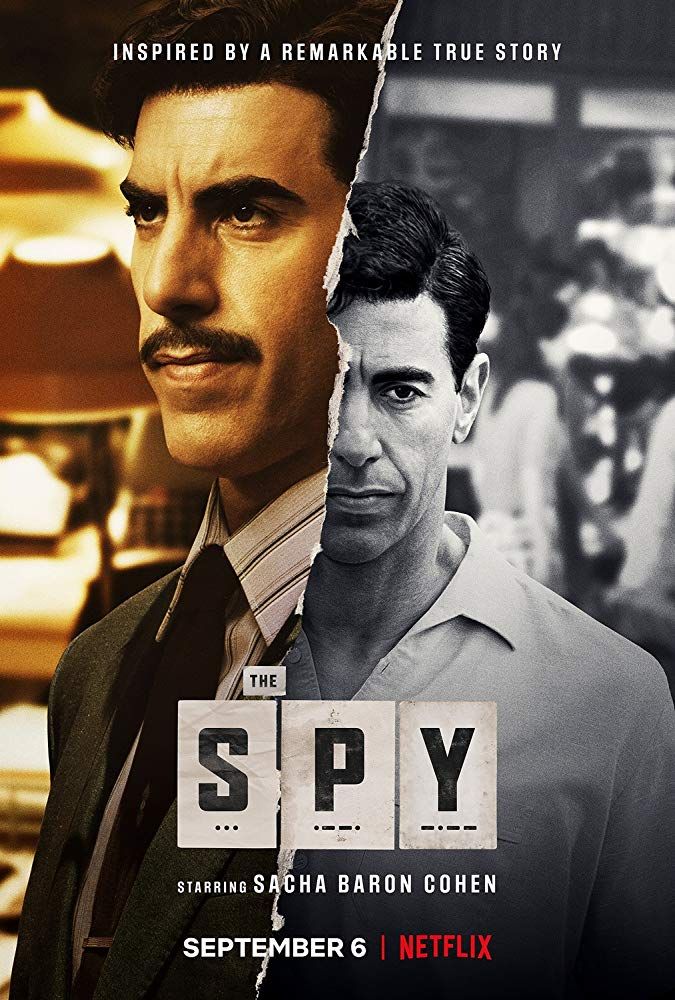
In The Spy (on Netflix), more completely the creation of Raff than was Homeland, we get the true story of Eli Cohen, a brilliant Mossad agent who infiltrated Syria in the early 1960s and provided crucial information to Israel.  In the docu-drama, Cohen is appointed Defense Minister by the Syrian President.  I don't know if this happened in real life, but that touch provides a powerful resonance to Homeland.

Even without that parallel, The Spy, in six episodes, is every bit as good as the best of Homeland, and that's good indeed.  Deftly portrayed by Sacha Baron Cohen - no relation, as far as I know - Eli Cohen struggles with the erosion of his real identity as he becomes the suave Syrian businessman Kamel Amin Thaabet.  Kamel befriends the powerful in Syria, including the military, and gains access to their bases and plans.

The thanks he gets for that back home includes an all but broken marriage.  Cohen is forbidden from telling his wife the truth of what he's doing.   Hadar Ratzon Rotem does a good job as Nadia Cohen, as does The Americans' Noah Emmerich, who plays Eli's knowledgeable boss - knowledgeable in that he knows how this will end for Eli.  Emmerich has the spy master with a conscience down pat.

In case you haven't seen this yet, or don't know Eli's story, I won't tell exactly what that ending is.  What I will say is that The Spy is a masterful piece of work, and just homage to a great Israeli covert warrior.


Sunday, September 1, 2019

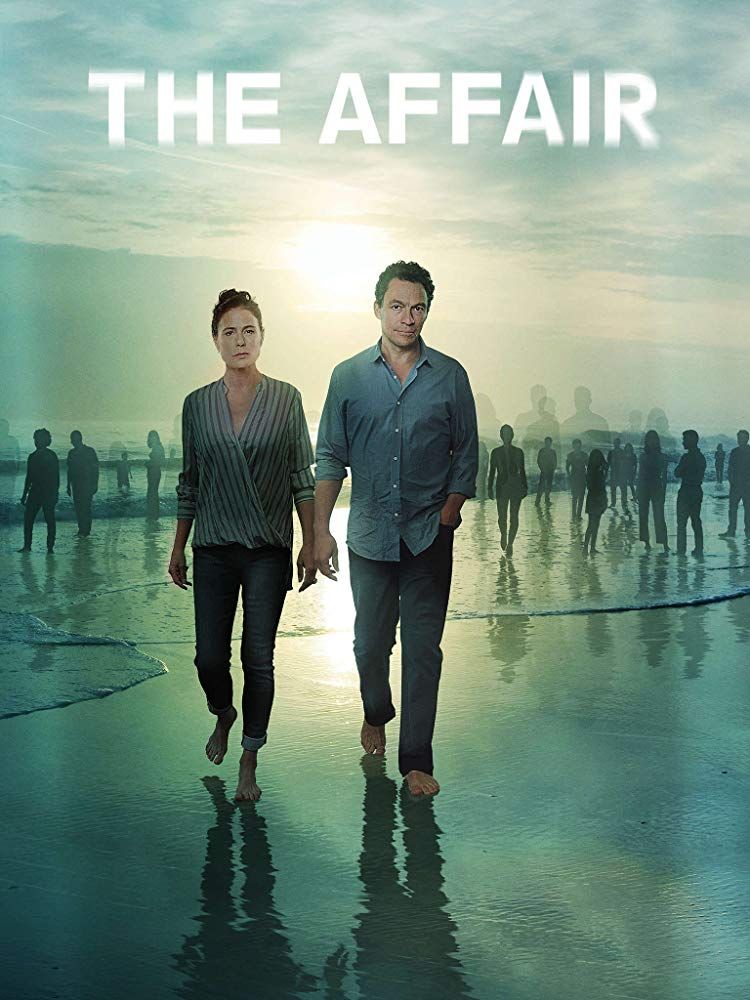
The Affair 5.2: Tears and Floods


Well, as I mentioned last week, and as most of you know, science fiction is my favorite genre (as a reader and viewer, and also as a writer), so I can't help but be the most interested in the Joanie segment, playing a couple of decades into the future.

And I continue to like it, and wish there was more of it.  The flooding part is a bit obvious and overplayed, but everything else from the evaluative toilet to the train to Montauk was nice.  And just when we might be about to find out what's up with Cole - alive or dead, and if alive, where? - the episode ends.

Meanwhile, back in our present, Janelle sleeping with her ex-husband was a good surprise.  It's also consistent with, whatever he does or doesn't do, nothing ever goes quite right for Noah.   Which brings us to Helen.

She hasn't yet fallen for Sasha, but the scene at his house was classic getting to know you.  Let's say he, in effect, is a better version of Noah, because the character Sasha is more self-aware, and more aware of Helen, given that he's playing Noah in the movie adaptation of Noah's book.  Does that mean that Helen might well fall for him?

Probably not.  Maybe sleep with him.  But she's still too hung up on Vic and even the real Noah.  It may be at the end of her segment tonight that she's getting over Vic (I hope so) but she'll likely never get over Noah.

We'll find out soon enough.  But here's hoping that Joanie gets her own half hour soon.


And see also The Affair 3.1: Sneak Preview Review ... The Affair 3.2: Sneak Preview Review: Right Minds ... The Affair 3.3: Who Attached Noah? ... The Affair 3.4: The Same Endings in Montauk ... The Affair 3.5: Blocked Love ... The Affair 3.6: The Wound ... The Affair 3.7: The White Shirt ... The Affair 3.8: The "Miserable Hero" ... The Affair 3.9: A Sliver of Clarity ... The Affair 3.10: Taking Paris

And see also The Affair 2.1: Advances ... The Affair 2.2: Loving a Writer ... The Affair 2.3: The Half-Wolf ... The Affair 2.4: Helen at Distraction ... The Affair 2.5: Golden Cole ... The Affair 2.6: The End (of Noah's Novel) ... The Affair 2.7: Stunner ... The Affair 2.8: The Reading, the Review, the Prize ...The Affair 2.9: Nameless Hurricane ... The Affair 2.10: Meets In Treatment ... The Affair 2.11: Alison and Cole in Business ... The Affair Season 2 Finale: No One's Fault


Carnival Row: Searingly Relevant Steampunk


Maybe I'm a sucker of steam punk - I am - but Carnival Row, the science fiction, science fantasy, mystery/detective, searingly political relevant 8-episode series that debuted this weekend on Amazon Prime, is much more than that.  As those adjectives suggest.

The place, like Game of Thrones, is sort of an alternate Earth.  It's the seventh century in Carnival Row, but the big city has railroads, phonograph (called voxograph, a nice touch), telegraph, and even the beginning of electric lighting.   In our equivalent time - the 1870s - the phonograph (1877) was actually invented a year after the telephone (1876), but there's no telephone as yet in Carnival Row.  Maybe that's because the big city is much like London, and the telephone took much longer to catch on there than in New York.  But I digress.

There are three main species in this story: Men (humans), Fae (human-like with wings), and Puck (human-like with big horns and Klingon-like heads).  The Fae not only fly with their wings, they light up when they're having good sex (i.e., when they have orgasms).   Their sexual adeptness - they'll lift their partners literally off the ground or bed in the act - makes them good prostitutes.  But they only do that as a means of survival in the metropolis in which at least half or more of the people hate or distrust them.   The Puck have evoked similar benighted responses.

That's where the brutally accurate mirror that Carnival Row holds to Trumpian America comes into play.  In just about every scene, and at stake as the plot progresses, there are calls to ban the non-humans from the city, place them in ghettos and, yes, detention camps, and you get the picture.

And all of this is played out against the lead detective, Philo, investigating a series of murders with supernatural and political overtones, navigating the deep love he has for a fairy, whose profession was librarian, but is more physically dexterous than humans.   Other affairs, family secrets, identity revelations, and surprises abound.  I won't say another word, except, see this.  Orland Bloom is excellent as Philo, Cara Delevingne as the winged Vignette, and I also especially liked Tamzin Merchant as Imogen and David Gyasi as Agreus, two important secondary characters. René Echevarria, who contributed so much in producing the Star Trek franchise, hasn't lost his touch in creating memorable television.

For what it's worth, I enjoyed this first season of Carnival Row more than most of the seasons of Game of Thrones.


Wednesday, August 28, 2019

Ejection of Breitbart Reporter from Beto Speech Is Inconsistent with Democracy

I just saw the news that a Breitbart reporter, Joel B. Pollak, who actually is Senior Editor-at-Large at Breitbart News, was ejected, apparently for no valid reason (he wasn't being disruptive, his mere presence was deemed as such) from a Beto O'Rourke speech at Benedict College.

Before I tell you why I think that was such a bad move, let me make two things clear:

1. I intensely disagree with Breitbart's political views.  The last and only time I voted Republican was for John Linsday for NYC Mayor in 1969 (because he was an early opponent of the Vietnam War).  He won, and two years later became a Democrat.

2.  I don't think what Beto's people did is literally a violation of the First Amendment.  A political candidate not currently in office is not a member of Congress ("Congress shall make no law ... abridging the freedom of speech, or of the press") or of any government (prohibited from abridging speech by the extension of the First Amendment in the Fourteenth Amendment).

But, the removal of any reporter on account of his or her political views is grievously in violation of the spirit of the First Amendment, and flies in the face of what the First Amendment is designed to protect, which is the public's right to information and opinions about people in office and people running for office.  How else can a democracy work, if we're not as thoroughly informed as possible, meaning exposed to the entire gamut of political views and actions?

Trump's daily denunciation of the press he finds unwelcome as fake news echos Hitler's attack on the press in 1930s Germany as the Lügenpresse or the lying press.  Trump's characterization of the press critical of him as "enemies of the people" picks up a favorite phrase of Stalin.  Further, Trump not only speaks these epithets, but acts upon them, recently revoking CNN political correspondent Brian Karem's press pass after an exchange between Karem and Trump supporter Sebastian Gorka.  Karem has taken this to court. (The White House backed down last year after taking away CNN correspondent Jim Acosta's pass, and Acosta filed suit.  Acosta and CNN were lambasted as "fake news" by Trump even back when he was President-elect, in January 2017.) 

In tossing out Pollak, Beto's campaign is joining Trump in his contempt for the press, and by extension the American people, which I assume is the last thing that Beto wants to do.  People on Twitter, typically seeking to justify any attack on the right, have sought to explain what happened to Pollak by saying he isn't really a reporter and Breitbart not a legitimate source of news.  That, alas, is a traditional fascist tactic, used to justify suppression and even killing of human beings by arguing that the victims are not fully or really human.

Beto O'Rourke and his campaign can do better than emulating Trump and his fascist tactics.  I hope they see the light and apologize to Pollak.  It would amount to an apology to our democracy.

Sunday, August 25, 2019

The Affair 5.1: Death, Nobility, and Science Fiction


Here's a slightly sneak peek preview review of The Affair 5.1, which will air in just a few minutes on Showtime (my wife and I saw it on Showtime On Demand).   There will be plenty of spoilers ahead, so read on at your narrative peril...

First, there are three segments to this hour: 1st Noah, 3rd Helen, and 2nd, in between, Joanie, as you may have heard, who looks to be about 20 years into her and our future.   This makes her segment science fiction, which is fine with me - as some of you may know, I'm author of six science fiction novels, dozens of science fiction short stories, and who knows how many reviews, which you can find right here on this blog (the reviews, that is; the books and stories are on Amazon and the usual venues).  This first foray into Joanie's future touches some good bases in tech and home-life prediction, but also shows us Joanie pensive and even unhappy - about missing her father, she says, and it's not clear at this point if Cole is absent somewhere or dead.   Significantly, Joanie's segment is untitled, presumably because hers will be the only future story we'll see in this final season (but who knows).

Speaking of dead, though, that's what Vic is in Noah's story, and what he'll be at the end of Helen's piece of the story tonight.   On the one hand, this comes as no surprise.  On the other hand, it's handled very well, especially or mostly in the way it affords Helen a way to react to it.

Noah's story is typically Noah's, with the themes that have always made his stories my favorites in this series.  A movie's being made of his book.  This is a great technique of getting Noah to relive his past with Allison, which is what his book was always about.  Also, as is always the case with Noah, he's the perfect gentleman and an honorable man, trying his best to help Helen through Vic's funeral and the aftermath.  And also as always, the thanks he gets for this from Helen is a tongue-lashing (the verbal kind) in which she laments that it couldn't have been Noah rather than Vic who died.

Meanwhile, also as always, and also good as always to see, Helen is the hero of her narrative, fighting back against the absurdities of life, and her life in particular, making you want to rally to her cause. She still hasn't quite found herself, and it will be interesting if Vic's death finally helps really get over Noah.  I doubt it.

Crime has always been a signal part of The Affair, and the crime of Alison's murder by Ben looms large over this finale season.  It was therefore good to see Joanie seeking Ben in a coming attraction, even it is 20 years down the line.

See you back here next week.


And see also The Affair 3.1: Sneak Preview Review ... The Affair 3.2: Sneak Preview Review: Right Minds ... The Affair 3.3: Who Attached Noah? ... The Affair 3.4: The Same Endings in Montauk ... The Affair 3.5: Blocked Love ... The Affair 3.6: The Wound ... The Affair 3.7: The White Shirt ... The Affair 3.8: The "Miserable Hero" ... The Affair 3.9: A Sliver of Clarity ... The Affair 3.10: Taking Paris

And see also The Affair 2.1: Advances ... The Affair 2.2: Loving a Writer ... The Affair 2.3: The Half-Wolf ... The Affair 2.4: Helen at Distraction ... The Affair 2.5: Golden Cole ... The Affair 2.6: The End (of Noah's Novel) ... The Affair 2.7: Stunner ... The Affair 2.8: The Reading, the Review, the Prize ...The Affair 2.9: Nameless Hurricane ... The Affair 2.10: Meets In Treatment ... The Affair 2.11: Alison and Cole in Business ... The Affair Season 2 Finale: No One's Fault


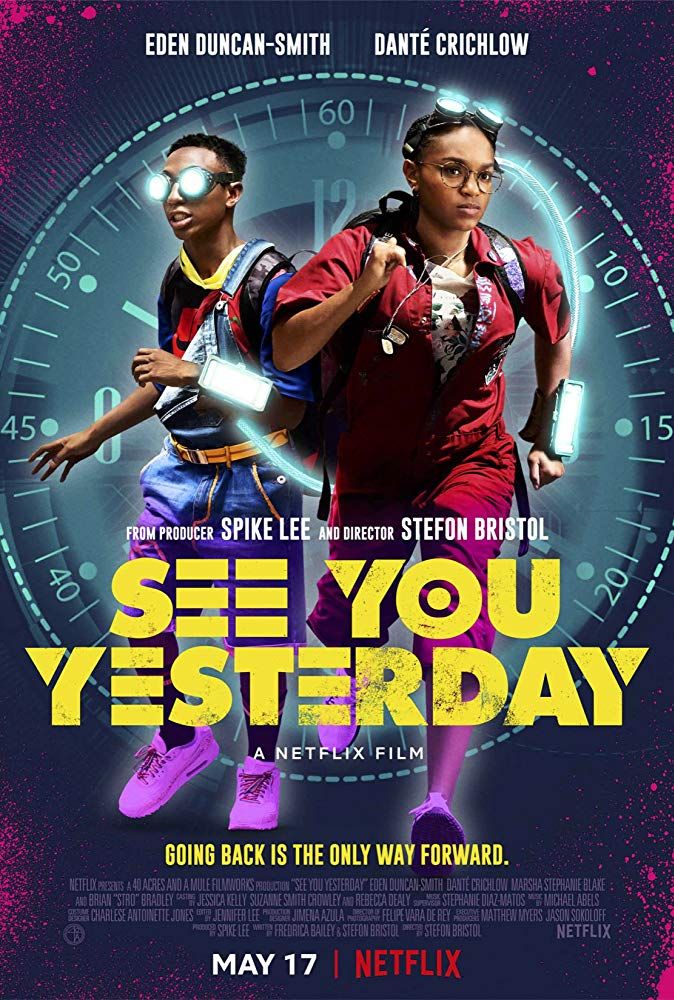
See You Yesterday: Time Travel meets Black Lives Matter


I just saw See You Yesterday, the Spike Lee production, directed and co-written by Stefon Bristol (with Fredrica Bailey), which came out on Netflix this past May.   As a time-travel story, it's good enough.  As a narrative about the continuing murder of African-American young men in American cities by cops, as told through the mechanism of time travel, it's a crucial masterpiece.

C. J. and Sebastian (well played by Eden Duncan-Smith and Dante Crichlow) are two genius Brooklyn high school kids who invent a time machine.  They use it to go a day back in time (its limit) to stop the police killing C. J.'s brother Castro (good performance by Astro), shot down by NYPD who wrongly suspect Castro of robbing a bodega.   They succeed - but Sebastian is shot and killed in the process.  C. J. goes back again to prevent that from happening, but Castro sacrifices himself to save Sebastian.  C. J. goes back one more time, and the movie ends without our knowing what happens this time ...

As I said, a good enough time travel story, by which I mean that it was done well, but we've seen the perverse difficulty of improving history via time travel, including personal history, many times before.  As a commentator on time travel and also a science fiction author, I frequently invoke the stubborn resistance of the universe to change (see, for example, The Chronology Protection Case).

But the melding of this time travel metaphysic with the brutal reality of Black Lives Matter is something we haven't seen before, and something we and everyone needs to know. C. J.'s repeated attempts to undo or prevent the cops' ill-considered, racist bullets with the same lack of result is a powerful, sobering metaphor for the difficulty of bringing to justice police who murder in our off-screen reality.   Even videos, which we've had as far back as Rodney King, beaten to within an inch of his life, don't usually help.

And the ambiguous ending of See You Yesterday similarly captures a profound and unsettling reality in the fight to educate and reform cops, and put the ones who kill innocent people behind bars.  Just as we don't know what C. J. will now do, we have no clear course of action, a pathway everyone can see, towards stopping once and for all these murders of African Americans.

But movies like See You Yesterday are part of the answer.   Getting the word out in as many ways as possible is the only way forward.   Looking into the future, I expect that See You Yesterday will become a classic in this effort.


Mortal Engines: Reasons to Praise It


I just saw Mortal Engines on HBO.  It was released here in the U. S. in December 2018, and received almost universal criticism from the usual group of myopic and tone-deaf self-appointed experts.  According to Wikipedia, "It was the biggest box-office bomb of 2018 (one of the 10 biggest of all time, as of August 2019)".

Unsurprisingly, I disagree - not with Wikipedia's statement of the movie's lack of success at the box-office, but with the critics.  In particular, I thought the Shrike story - the reanimated man and Hester - was one of the best of this kind.  The Shrike had a winning combination of insanity, obsessive violence, and tenderness, and Hester's love for him made a lot of sense, too.

And I liked Hugo Weaving's performance as the villain Valentine, whose character also made a lot of sense.  If you're going to be a power-mad conquerer, you might as well be consistent. That's certainly in tune with real-life current leaders who are not yet conquerers, but pretty clearly power-mad (as in Donald Trump).

One thing the movie did get its just recognition for was its special effects, which were indeed outstanding.   And the general ambience, a cross between Mad Max and Lord of the Rings, and suggestive of what James Blish's Cities in Flight might have been, had it been made into a movie, worked quite well, too.   (Peter Jackson was one of the main creative forces.)

But the sad thing about the combination of critical pans and poor box office is that it tends to put a kibosh on sequels.  I hope that Peter Jackson and others behind this powerful and entertaining movie ignore all of that, and get to work on the continuing the story (the movie comes from Philip Reeve's novel of the same name, and there are four in the series).  I'll certainly watch it, and even likely be able to talk my wife into seeing it on a big screen.


Thursday, August 22, 2019

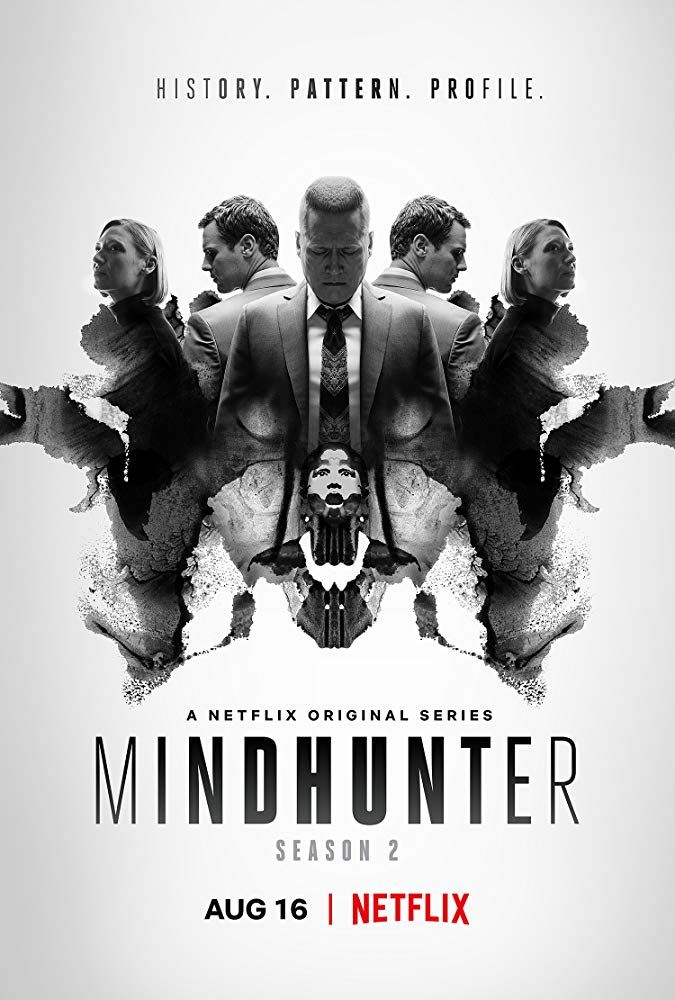
Mindhunter 2: Riveting Nonfiction vs. Fiction


My wife and I very much enjoyed the first season of Mindhunter, but, whew, the second season was much better - more compelling - in just about every way, except one.

Among the highlights were interviews with the Son of Sam and Charles Manson. Having seen Once Upon a Time in Hollywood a few weeks ago, the Manson interview, and a bit later, disciple Tex, one of the actual killers, was especially riveting.   And the long harrowing story of the Atlanta Child Murders, culminating with the arrest and conviction of Wayne Williams for just two out of most of 28+ which he likely committed, was a masterpiece in itself.

The one part I didn't care for was the story of Brian, Bill Tench's son, who witnesses the murder of a little child, tries to revive the child by placing him on a crucifix (at least, that's the best interpretation his parents can make of this), and is profoundly traumatized by all of this.  I guess the creators of Mindhunter thought that putting the senior FBI hunter in this situation - his son may be on the way to becoming a sicko killer - made for a powerful narrative.  I thought it was mostly distracting.

Mindhunter is based on real characters, but is not even docudrama-level true, given that, unlike the serial killers, the main BSU players were not actual people.  This in some ways was a good move, since it allows for intriguing developments of the characters that may or may not have actually happened at the FBI.  Dr. Wendy Carr's (Anna Torv) love life would be an example of this strategy working well.

But the time given to Brian's story, making it almost a counterpoint to the unfolding Atlanta story, was just too much.  Yes, it had the advantage of keeping Tench (brilliantly played by Holt McCallany), away from Atlanta much more than he wanted. but surely some other development could have done the same thing.   The problem with Brian's story is that its emotional intensity was so strong that it sapped energy from the intense Atlanta story.   In effect, what you have is complete fiction (Brian's story) competing with fact-based historical narrative (Atlanta).  Given that the strong suit of Mindhunter its reflection of the reality of the BSU and its revolutionary way of apprehending serial killers, to water that down with a big fictitious story makes not much sense.  (See The Wrap - which liked the Brian story - for research that it is fictitious.)

But ... the rest of Mindhunter was so outstanding that my wife and I will be sure to watch its season 3, which has yet to be announced.   It will be something to see Holden Ford's (Jonathan Groff) astonishing mind bring down the BTK killer and who knows who else.

See also Mindhunter: Best of Its Kind


Monday, August 19, 2019

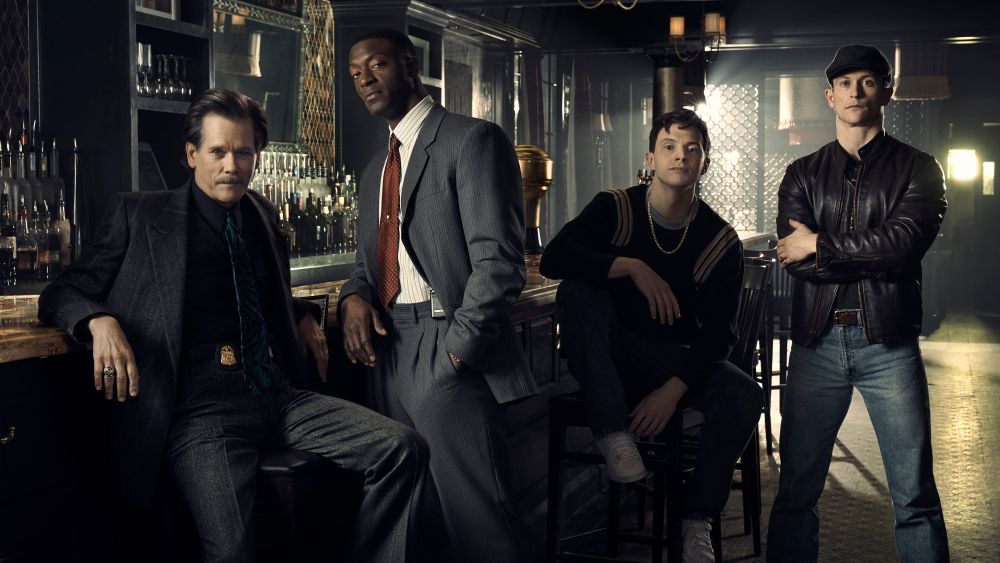
City on a Hill Season 1 Finale: "You Ain't that Good, and I Ain't that Bad"


"You ain't that good, and I ain't that bad," Jackie says in the Season 1 finale of City on a Hill last night.   It was the best line in an excellent hour, and it doesn't matter who the "you" is, because it's actually all of us in the audience, and it captures the essence of the series.  Jackie cuts corners all the time, even murders people.  But, somehow, most of his actions are on the side of the good. And, the murdered - certainly Clay - though they should have been tried and convicted, deserved what they got.  And so while DeCourcy and Benham are right to take umbrage at a lot of what Jackie does, they're not right, certainly not completely right, to want to destroy him.  Because, he ain't that bad and they ain't that good.

And, significantly, Jenny sees this, too.  I knew she wouldn't leave him.  And her staying with Jackie is not an act of weakness.  It's an act of strength and love.   There's a path between leaving Jackie and just accepting what he does.  Jenny has chosen that path.  And it was good to see her finally tell off her mother, who clearly is the worst person in that family.  Jackie ain't that bad.  Jill's mother is.

Speaking of strength, Cathy has become one of my favorite characters, and she was never better than she was last night.  She's the bond that will hold her family together.   Frankie was unable to say no to his rat brother Jimmy.  But Cathy won't be.  And with Jimmy out and about and Frankie behind bars, Cathy will sooner or later come into big conflict with Jimmy, and I'm looking forward to seeing how that plays out next season.

My sense of the series is that it has picked up power and intensity with each episode.  I very glad to see it's been renewed, and I'll be back here next year with more reviews.

See also City on a Hill: Possibilities ... City on a Hill 1.2: Politics in a Cracked Mirror ... City on a Hill 1.3: One Upping The Sopranos ... City on a Hill 1.4: Enjoyable Derivative ... City on a Hill 1.6: Tony's Mother, Mayhem, and Family ... City on a Hill 1.7: The Bodies ... City on a Hill 1.8: Personal Business and Its Accompaniment ... City on a Hill 1.9: Changes


Sunday, August 18, 2019

The Rook Season 1 Finale: Letter to Her Earlier Self


The Rook Season 1 finale, just on tonight, was an excellent, brilliant episode on all kinds of levels, including Gestalt in unified attack action again, and Myfanwy getting the better of the Russian guy who looked like Putin.

But my favorite part was next to the very end, when Myfanwy writes a letter to her earlier self.  Of course that's impossible, because she can't time travel, and that's why she sends the letter to her earlier self by throwing it over the bridge into the river Thames, the place where all of this started.  But there's enormous narrative significance in this.   The preceding episodes this season all play off the letter and communications Mifanwy's younger self sent to her older self, the self whose mind had been wiped.  The reversal of this in the end shows that Myfanwy has recovered her mind, or enough of it to be a full person, and write meaningful letters to herself again, even if they can't be delivered.

Two other notable departure points near and at the very ending.   Monica asks to have her memory wiped, so she can forget about the guy who's been haunting her.  The result is she might be dead.  Meaning?  Maybe that guy meant so much to her that she can't be alive with no memory of him.  But I'm betting if there's a second season - which I sure hope there is - we'll see Monica recovered, at least in some form.

And Linda joining Myfanwy's sister's group of free EVAs is a very nice touch, too.  This means that, if there is a next season, we may see Linda and Myfanwy at active odds, since Myfanwy is apparently still part of the Checquy, 

Lots of things to look forward to in a season two, which as of this instant hasn't bee announced.  I'm going to use all of my EVA powers as a reviewer to make that happen.  These powers are fairly subtle, but you never know.

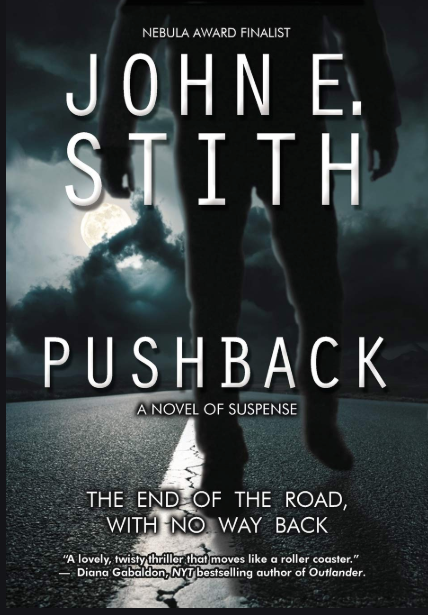
Review of John Stith's Pushback: Grab It


I usually review science fiction novels here.  But when I came across Pushback, an adrenalin pumping mystery novel by John Stith, who wrote Red Shift Rendezvous, one of my all-time favorite science fiction novels, hey, how could I resist?  Besides, the who dunnit of mystery and detective fiction is a close cousin of the what dunnit of science fiction.

The basic story of Pushback is an amiable investment counselor in Colorado Springs, Dave Barlow, finds himself the victim of an increasing series of pranks - increasing in both frequency and intensity - which soon became bizarre and sadistic attempts to murder him.   It starts when he shows up to a high school reunion and nobody remembers him because the people at the reunion are unknown to Dave and vice versa.  This escalates into his car filled with concrete, Dave almost killed in a hit-and run, his home leveled, Dave poisoned having dinner in a nice restaurant with a pretty actress trying to help him, and Dave nearly being blasted by a shotgun rigged to go off when he shows up at a client's home to talk finances.  Who is behind this and why?

Dave may be amiable but he's no slouch.  He fights back with intelligence and style, reported through the wry voice of John Stith, who serves up this surprising tale with his customary eye for detail, keen sense of humor, and immersion in decades of popular culture.  Dave is equally at home citing Z Z Top and learning how to explode eggs in a microwave on YouTube.  Middle-aged guys coming at Dave with golf clubs are "foursomes of the dead," and he notices a woman in tight jeans "closer to the paint family than the clothing family".

On that last point, there's plenty of romance in Pusback via Dave's new love, Cathy, and a winning tenderness throughout, making it no surprise that the novel was nominated for the Daphne du Maurier Award.   The location in Colorado Springs makes for a great pastel background for this narrative, which, come to think of it, would look great on any kind of screen. 

See also Book Review: Redshift Rendezvous by John Stith is Perfect Science Fiction Mystery Hybrid

Monday, August 12, 2019

The Rook 1.7: A Kind of Time Travel


A great, almost-all explained penultimate of the season episode 1.7 of The Rook last night, in which we learn how Myfanwy knew she was going to lose her memory, and in turn why she wrote that note and left other information for her future amnesiac self, and how specifically she got into that position with no memory on the bridge, surrounded by a bunch of dead guys.

The episode is one long flashback that begins with yet another EVA with another kind of power. It's someone for whom the month ahead or longer can seem but a split-second present, in which the EVA can see all these future events.  Myfanwy has discovered her, and she tells Myfanway that Myfanwy will have her memory wiped, by someone under the sea.

We already knew that Farrier was responsible for Myfanwy's memory loss, and Myfanwy discovers that, too, when she sees Farrier standing under a picture of the sea.  Farrier's reasons are not completely bad, maybe not bad at all.  Erasure of her memories of Checquy is the way that Farrier can let Myfanwy leave the organization and have a normal life, which is what her sister who talks to Farrier wants.

The guys on the bridge were killed by Myfanwy, whose uncontrolled EVA power manifested when two groups approached her, and she had just lost her memory. Afraid, confused, she reflexively protected herself from the groups which she saw as would-be attackers.

Meanwhile, earlier, we get a steamy scene of Myfanwy with the Gestalt, which explains the relationship see has had with them in the previous six episodes.

All in all, a very nice piece of work, with leaves open only one really big question: what will Myfanwy do in the present, i.e., the way we saw her at the end of episode 1.6 last week?  See you here next week, after the season one finale.

See also:  The Rook 1.1: Dickian Pastiche ... The Rook 1.2: Live Details ... The Rook 1.3: Gestalts ... The Rook 1.4: The Bristol Stomp ... The Rook 1.5: The Home Secretary ... The Rook 1.7: Family


They're coming out into the open, for the first time in centuries ....

City on a Hill 1.9: Changes


With only one episode to go this season, on next week, City on a Hill pulled out all the stops tonight in 1.9.   In a nutshell -

Frankie and Jimmy go ahead with the Brinks job in Fall River, but it doesn't succeed, since Jimmy has told law enforcement exactly what's going to happen.  But, although the heist is stopped, there's all kinds of significant damage, expected and unexpected, including -

  • Hank gets killed (which makes the second major character with a badge to be killed on this show, the first being J. R. Minogue).
  • Frankie sees the way Jimmy and Jackie are looking at each other, and realizes Jimmy is the rat.
  • DeCourcy wanted to stop this robbery without Jackie's help.  But Jackie of course shows up, plays a major role in getting the bad guys - he rams their car - and DeCourcy is furious.  I gotta say, though, that it's not right to say Jackie stole the glory.  He, after all, earned some of it, by ramming the getaway car, right?
Those three developments change everything - well, certainly the second and third, since Hank was not that big a character.   But next week's season one finale won't be enough time to work all this out.  Good thing there's a second season.

In either that second season, or in next week's finale, Frankie may well kill Jimmy.  And I predict that DeCourcy will actually reconcile with Jackie - unless Rachel comes up with some damning evidence, like proof that Jackie killed Clay.  Hey, that's why it'll good to see next week's season finale, rather than relying on my predictions.

See also City on a Hill: Possibilities ... City on a Hill 1.2: Politics in a Cracked Mirror ... City on a Hill 1.3: One Upping The Sopranos ... City on a Hill 1.4: Enjoyable Derivative ... City on a Hill 1.6: Tony's Mother, Mayhem, and Family ... City on a Hill 1.7: The Bodies ... City on a Hill 1.8: Personal Business and Its Accompaniment


Sunday, August 11, 2019

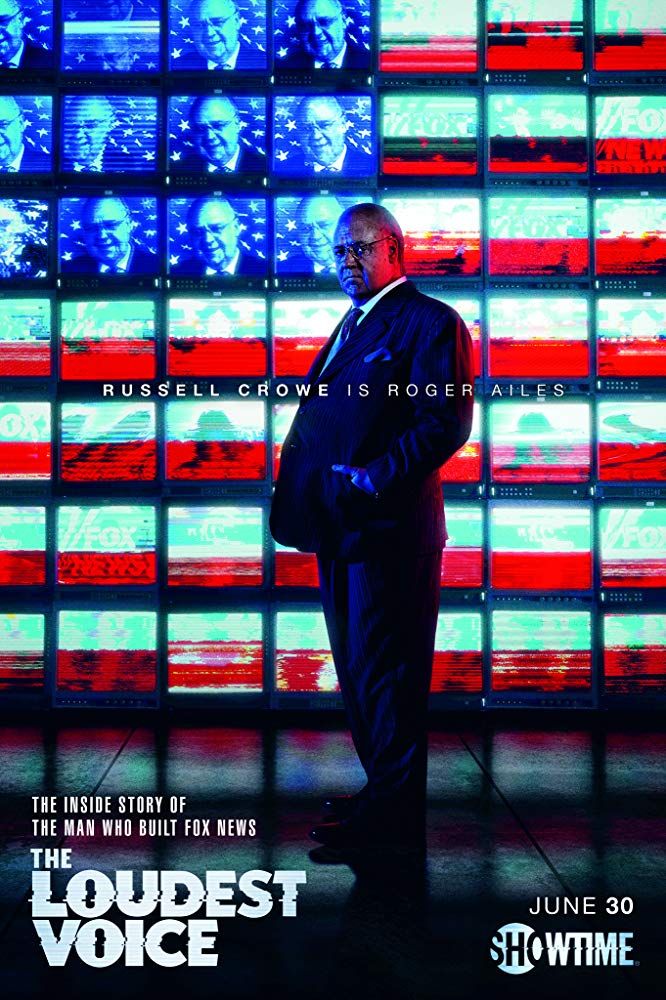
The Loudest Voice Finale: Truth


The Loudest Voice concluded tonight with John Lennon's "Gimme Some Truth," played under postscripts that tell us what happened to major characters after the story portrayed in the series ends.  In many ways, that combo - Lennon's song and the postscripts - were the most compelling part of the series, which was plenty compelling, already.

For example, why does Beth Ailes maintain her husband's innocence after we see her in the series finally disbelieving him, after being told that Gretchen Carlson has tapes of what Roger said to her?  Since there's no public record of what Beth said to Roger privately, let alone her private facial expressions, the most likely conclusion is: Beth's coming to believe the charges against Roger may be artistic license on the part of the The Loudest Voice. As I often say, docu-dramas are not documentaries, and even documentaries, though they don't fabricate scenes, may not tell the whole story.

Along the same lines, why did Ailes's assistant, Judy Laterza, first support Roger in the testimony she gave which she knew Roger was seeing on one of his cameras, and then, after Roger's death, continue to be silent on everything?  How much of the scene in which Roger invited her to join Beth and him for dinner, and Judy was delighted, until Beth nixed it, actually happened?

I raise these points not because I disbelieve Gretchen Carlson and the other women who brought charges against Roger, but because I think we need to keep reminding ourselves that the rendition of this that we saw in The Loudest Voice may be, at the very least, a narrative of truth embellished, in one way or another.  And this, in turn, is important to keep in mind when we consider Trump and the political part of the story, and Roger's view, depicted in The Loudest Voice, that he was more responsible than anyone or anything else for Trump's 2016 victory.   That may or may not be true, even though it's certainly a powerful story.

And there actually are at least two related questions here:  One, did Ailes believe that he was responsible for Trump's becoming President?  And, two, was Ailes indeed responsible for Trump's becoming President?  As I've said before in these reviews, I certainly don't think the answer to the second question is yes.  And I'm just not sure about the first.

But such questions only add to the power of The Loudest Voice, and, indeed, everything about The Loudest Voice was powerful, especially Russell Crowe's performance as Aisles, which abundantly deserves an Emmy.   Kudos to everyone who put together this little series for creating an excruciatingly timely and unnerving masterpiece.

Saturday, August 10, 2019

Fleabag: Beyond the Fourth Wall


My wife and I just binged Fleabag on Amazon Prime Video.  Easy to do, since the two seasons add up to a total of 12 episodes (or about half of what a single season of network television used to be).  Easy to watch, since the dialogue was brilliant, frank, witty, and hilarious - not to mention that it all takes place in London (our second favorite city, after New York, where we live).

But the most provocative part of the series - the whole serious is delightfully and sometimes seriously provocative - comes in the second season, where the conceit of the hero (Fleabag) talking to the camera, or in theatrical parlance, breaking the fourth wall (the first three being the back and the two sides of the stage), takes a momentous turn: a crucial character, the Priest (who loves Fleabag, and with whom Fleabag falls in love), is aware of Fleabag talking to the audience.

In our current age of streaming television, the fourth wall was broken early on, in House of Cards, in which first Frank and eventually Claire talk to us, the audience.  (It was broken dozens of times in earlier television, movies, and plays - the Wikipedia article provides a good summary.  My favorite was Magnum PI.)  But even before including the Priest in the fourth wall breaching, Fleabag did far more than talking to us across the screen.  Her eyes, lips, the way she held her head, provided a compelling and enchanting part of the dialogue, which soon became essential to almost every scene, and in total provided a veritable encyclopedia of non-verbal expressions and how they shed meaning on verbal communication as silent counterpoint.

Phoebe Waller-Bridge, who created, wrote, and plays the lead role (Fleabag) in the series, won a British Comedy Award for her performance in the first season (2016).  The second season (2019) has thus far been nominated for a boatload of awards (eleven).  If there was an award for breaking the fourth wall, I'd give it to Walter-Bridge for the first season, and then give her a special additional award for extending the wall-breaking in the second.

There's no word yet on a third season, and the current indication is that the second season is the final.  But with the fourth wall ripped so wide open, there's another boatload, of questions, to explore.  Why does the Priest see Fleabag's mind looking away, being absent, when she looks and talks to us in the audience?  He is not partaking in the breaching himself - he's not communicating with the audience - and he doesn't quite know that Fleabag is, either.  But how does he come to see she's absent for that split second from him?  Because he loves her so much?

What will happen when Fleabag admits to him what's happening - so far, she's not allowing herself to tell him - will he believe her?  I don't for a minute think his telling her he prefers God to loving her is the end of their romantic and erotic relationship.   But even if it is, there's no reason that he won't continue seeing in her eyes that she's looking at someone else - i.e, a lot of someones else, us.

It took three years after the first to get a second series.  I'm eager to see the third, however long that takes.


Wednesday, August 7, 2019

City on a Hill 1.8: Personal Business and Its Accompaniment


The last scene of City on a Hill 1.8 settled our impression of Jackie, if we had any doubt before.  His swagger, his braggadocio, is much more than that.  When he tells his wife he'll kill the guy who assaulted Benny and landed her in the hospital, he was more than blowing off steam.  City on a Hill specializes in a punch-in-a-gut last few minutes.  Jackie does more than punch this guy, Clay.  He pulls his gun and shatters him.

In other words, Jackie is exactly who he says he is.  He's beyond and above the law.  He not only cuts whatever corners he needs to get the bad guys, he's not above using his gun to settle a personal score.  For better or worse, he's genuinely someone to be reckoned with.   Someone, to return to an earlier episode, who may well have pushed that reporter down the stairs.

The song that accompanies this scene makes it all the more memorable.  It's Jackie DeShannon's "Put A Little Love in Your Heart".   We hear it earlier as accompaniment when Jimmy gets the stuffing beat out of him.  That was effective enough.  But its reprise when Jackie takes care of personal business is creme de la creme.  Jackie accompanying Jackie.

Not only that.  I have to say, Jackie De Shannon sounds a lot like Jenny Rohr.   Jill Hennessy, who plays Jenny flawlessly, is also a singer.   It occurred to me that she could've been singing the song.  You never know. 

City on a Hill has been renewed for a second season.   I hope they have more Jackie DeShannon songs.  I'd recommend "When You Walk In the Room" or "Bette Davis Eyes".

See also City on a Hill: Possibilities ... City on a Hill 1.2: Politics in a Cracked Mirror ... City on a Hill 1.3: One Upping The Sopranos ... City on a Hill 1.4: Enjoyable Derivative ... City on a Hill 1.6: Tony's Mother, Mayhem, and Family ... City on a Hill 1.7: The Bodies


Monday, August 5, 2019

Captain Phil interviews Paul Levinson about his New Music, Science Fiction, and Trump


Welcome to Light On Light Through, Episode 117, in which the notorious Captain Phil (on WUSB Radio) interviews me about my new music, latest science fiction, and Donald Trump's current assaults on democracy.  Phil also plays, at the start of the episode, two rough mixes from my forthcoming Welcome Up album of science fiction songs, to be released by Old Bear Records this Fall: "Alpha Centauri" and "Samantha".  We discuss such topics as the return of Jeff Lynne and the re-launch of Amazing Stories, in which several of my new science fiction stories have appeared. I always have a good time talking to Phil, and this interview was one of the best.

Helpful links:
  1. Robinson Calculator
  2. more on anniversary issue of Amazing Stories
  3. my review of Jeff Lynne at Prudential in Newark
  4. my review of The Loudest Voice
  5. Levinson on television about Trump

Check out this episode!
InfiniteRegress.tv