Chuck Todd interviews me about alternate histories

Sunday, December 20, 2020

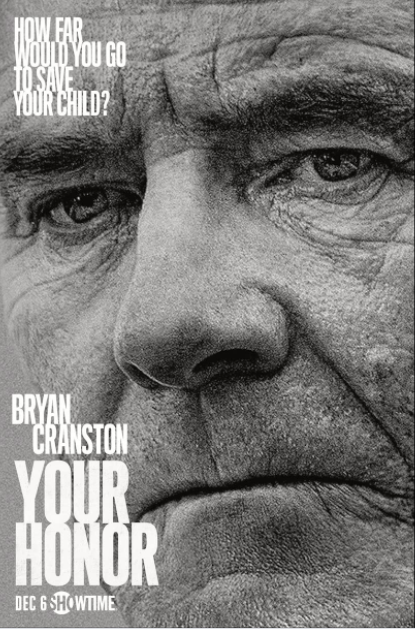
Your Honor 1.3: The Weak Link

It became more clear than ever in Your Honor 1.3 that the weak link in the judge's plan to get Adam off the hook and out of harm's way of his hit-and-run of the mobster's son is Adam.  Tonight he confesses to his teacher/lover.  There's no telling what he might do next week and in the weeks ahead.

That's why, even if Kofi is killed -- and it looks like that's happening when this episode ends -- Adam will not be home free.  Ordinarly, it would indeed mean a get-out-jail-free card for Adam.  Neither the Baxters nor the police would be looking for the hit-and-run driver.  But not with Adam torn apart and confessing to just about anyone who'll listen.

He did do pretty well with the cop who has the hots for the judge.  Adam's a smart and resourceful kid.  But the guilt that he has is unlikely to abate.  What is his father going to do about that?

The New Orleans in this excellent series has dangers on every corner.  No one can be trusted.  What will Kofi's lawyer do if her client is killed.  Just forget about all of this?  Not likely, since she and Judge Michael are already kissing.  And the last thing Michael needs is someone with legal smarts joining Nancy the cop within kissing distance of the awful truth.

So, at this point, it looks as if the judge is in an impossible situation.  But he is incredibly resourceful, too.  He thinks of pretty much every angle, and has been doing a pretty good job of erasing incriminating evidence.  In the end, the question is who will prevail:  the savvy judge or the guilt-wracked son?

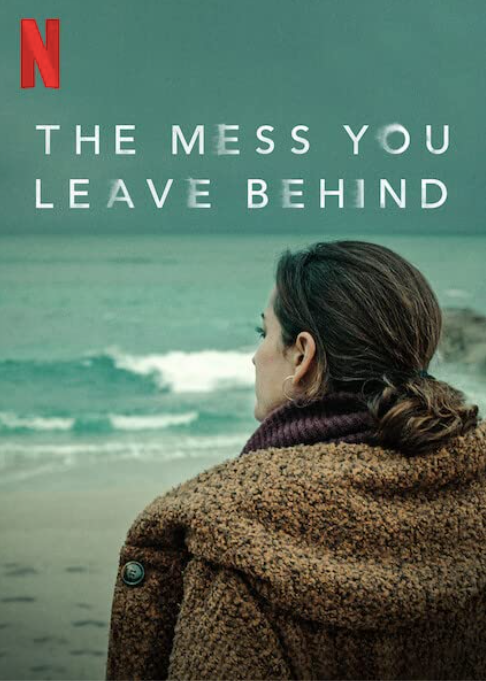
The Mess You Leave Behind: A Rich and Deep Mystery


My wife and I binged watched The Mess You Leave Behind, a Spanish eight-episode series on Netflix.  Nothing really messy about it.  Instead, a rich and powerful narrative of love and crime, presented in a lovely tapestry that intertwines two engaging stories.

Each of those stories is about a beautiful high school teacher, of the same literature class. The first (Viruca) is found dead in the water, a presumed suicide.  The second (Raquel) is her replacement, and has to deal with the same group of students, including a guy who was obsessively in love with Viruca.  The cutting between the two stories is artfully done.  We see Viruca and Raquel literally in the same classroom, standing before the same mirror, walking the same paths by the river.

Those paths lead to sex, love, and danger.   Did Viruca really take her own life or was she murdered?  If the latter, by whom?   Is Raquel endangering her own life by increasingly wondering about and investigating these questions?   The acting -- Bárbara Lennie as Viruca, Inma Cuesta as Raquel, and Arón Piper as Iago, the love-struck teenaged guy who has a violent edge -- is excellent.  And the ambience is a creative blend of almost 19-century countryside and 21st smartphones and laptops, all of which play important roles in the twin, intertwining stories.

Carlos Montero gets the "created by" and some of the directing credits.  The series is based on his novel of the same name, and its mix of Victorian and digital sensibilities, and the story it tells, is not quite like anything I've seen before.   I highly recommend it.  Take a look, and see if you agree.


Saturday, December 19, 2020

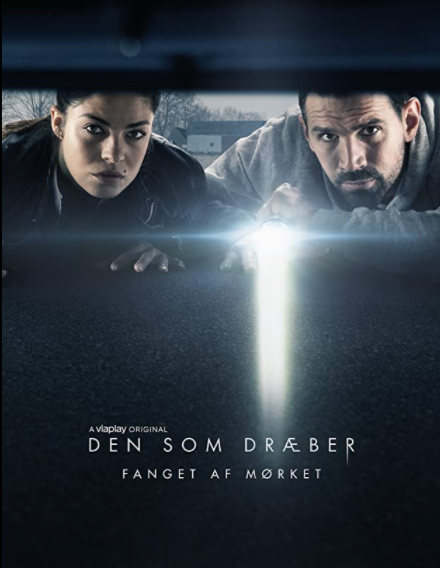
Darkness: Those Who Kill: Brutally and Rivetingly


It's been too long since I reviewed a Nordic Noir series -- Wisting on September 15 -- so I thought I'd jump back with a vengeance and tell you about the Danish Darkness: Those Who Kill, which my wife and I binge watched on Acorn via Amazon Prime Video the past few nights.

Vengeance is a good word for Darkness.  So would brutal, harrowing, and riveting.   A squad of ok not brilliant detectives in Copenhagen, assisted by a profiler who is sharp enough but also has some demons in her background, struggle to apprehend a serial kidnapper/killer.   Who turns out to be not one but a serial kidnapper/killer partnership.   

Take that literally.  One is a kidnapper who keeps his young blonde female victims in chains in his cellar and his sex with them because he loves to the control them.   He also has sex with his partner, a woman, who gets off on killing the kidnapped victims.   The kidnappings and the sex are shown in brutal detail, in which the victims are usually subdued in a flurry of punches.

[Spoilers ahead.]

There's in-depth development of the killer's story, who was raped as a young teenager by her even younger brother, after leading him on.   Being a woman, she's just not suspected as being part of this murderous spree, and in fact being the one who drives it and directs the kidnapper.   It understandably take the police and the profiler a long time to catch on to what's going on.

There's edge-of-the-seat action in every episode, along with the punching and the degradation of the victims.   Well worth watching, but not by the faint of heart or the weak of stomach.   Good writing and creation by Ina Bruhn, good directing by Carsten Myllerup, with persuasive acting by Natalie Madueño as the profiler and Signe Egholm Olsen as the killer.


Friday, December 18, 2020

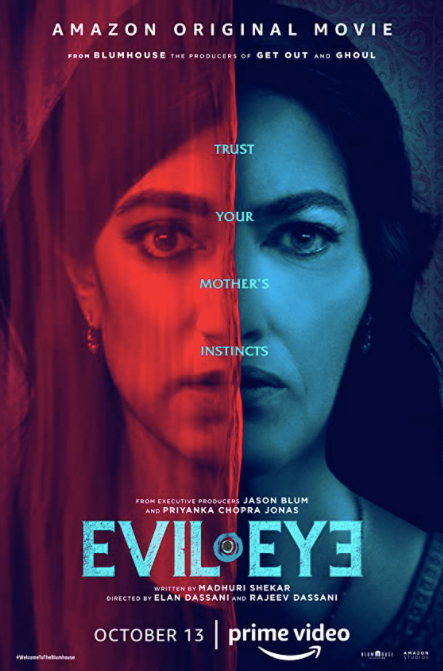
Evil Eye: Reincarnation Across Continents


Do you believe in reincarnation?  Or, if not, are you open to accepting it as a premise for a taut, slow-burning family thriller that builds up to a clutched-by-the-throat ending?  If yes, you're in for a rewarding 90 minutes with Evil Eye.

This is the third Blumhouse production my wife and I have seen on Amazon Prime Video in about as many nights.  The Blumhouse "program" on Prime Video is presented in the promotional trailer as a quartet of "horror" stories.  But, The Lie was straight-up crime.  Black Box was science fiction -- nothing supernatural.  Both were excellent, but neither was horror.  I haven't yet seen Nocturne.  Evil Eye was also excellent -- and, at last, horror!   So, if that's your cup of strange tea, come and get it.

Here's the set-up:  Usha in India is worried that her daughter Pallavi, in the U.S., is 29 and not yet married.  That may soon be corrected, though, when she meets a cool, well-spoken, good-looking guy.  But Usha has increasing misgivings, which we eventually learn derive from her being attacked on a bridge when she was pregnant (with Pallavi) by a ten-years former boyfriend.  Usha survived the attack by pushing her former boyfriend off the bridge.   Has he come back in America, transcending space as well as time, in the body of Sandeep, Pallavi's suave boyfriend, to exact some kind of revenge all of these years later on Usha?

Ok, that's all I'll tell you about the story.   I will say that it's fleshed out by a family of appealing characters including Usha's husband, Krishnan, a man of science and therefore not a believer in reincarnation  (good job by Bernard White, whom you may have seen on Homeland), Pallavi (well-played by Sunita Mani) who of course doesn't at first believe in reincarnation, either, and Usha, played by Sarita Choudhury, every bit as impressive as when we first saw her on the screen with Denzel Washington in Mississippi Masala way back in 1991.

Written by Madhuri Shekar, directed by Elan Dassani and Rajeev Dassani, Evil Eye serves up a narrative that blends current Indian and American flavor with ancient belief, in a story that would have fit well in any issue of the late, lamented Weird Tales.


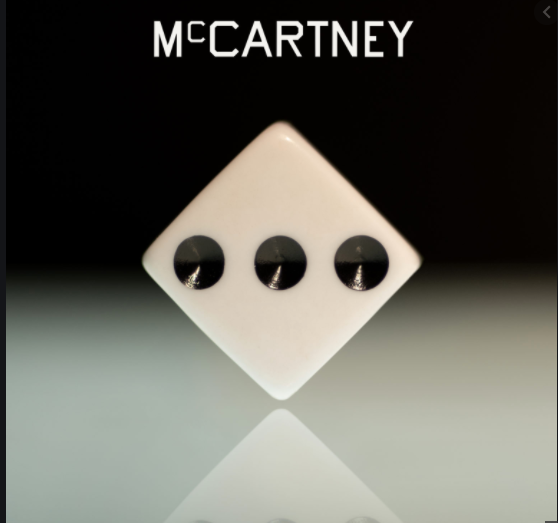
McCartney III: Endearing, Strong, Memorable


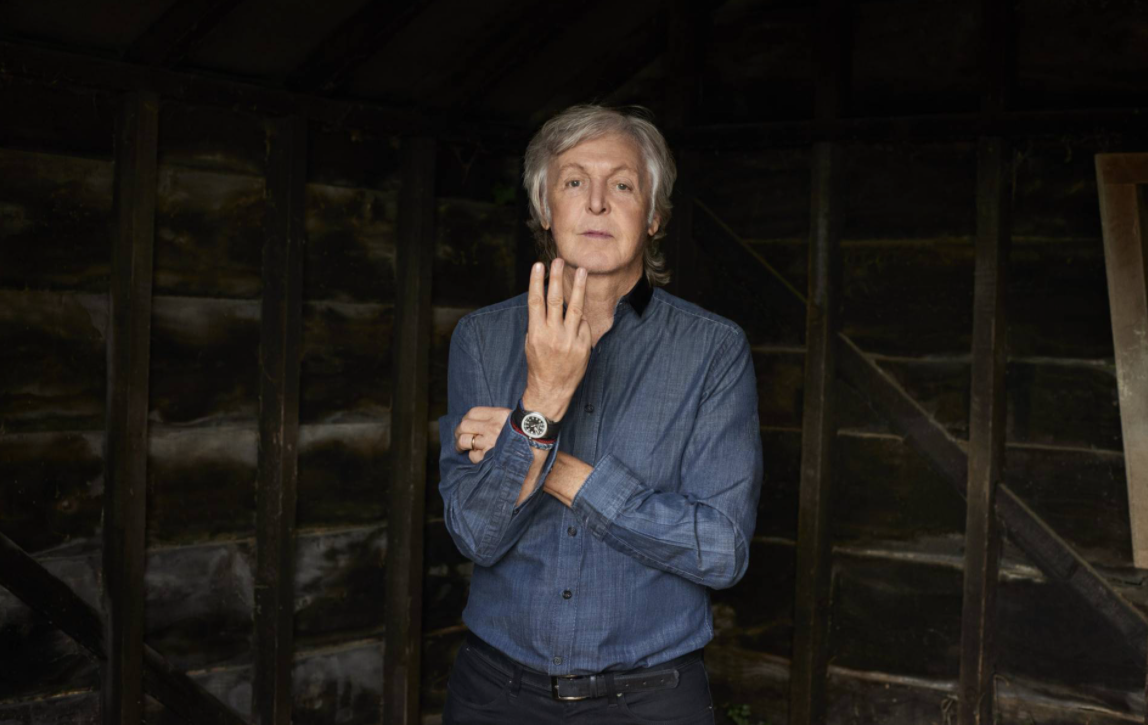
I was never one to look for differences between the Beatles on their individual own and when they were The Beatles. To my ear and soul, Paul, John, George, and Ringo on their own sounded far more like The Beatles, captured and continued their extraordinary essence far better than any other artist. Sure, some solo numbers sounded more like The Beatles than others. I heard "Ticket to Ride" in Paul's "My Brave Face," and when someone on the Steve Hoffman Forum said it evoked "Things We Said Today," I could immediately hear it. 

Maybe that's why Robert Christgau's dispeptic reviews in The Village Voice of McCartney's of first two solo albums felt so wrong to me that I wrote a Letter to the Editor objecting to it, which The Voice published as a straight-up article, which turned out to be my first writing published anywhere.  I realized back then that professional reviewers get to where they are because they write well, not necessarily because they hear well (and the same applies to movie critics writing not necessarily watching well, etc).

So, although I've loved The Beatles more than any other music over all of these many years, I've loved Paul's work almost as much and sometimes just as much, and eagerly await everything he does.  McCartney III, which I just listened to, was well worth waiting for.

The album, as I'm sure you know, is the third album in the McCartney (1970 - the one that Christgau didn't care for) and McCartney II (1980) series of recordings in which McCartney played all of the parts.  One of the reasons why the new album is so endearing is that it evokes elements from both The Beatles and these solo all-McCartney albums.

Here are my favorites:

  • "Seize the Day":  I just love the sound of "when the cold days come and the old ways fade," which could have come from any Beatles album.  Not to mention the double rhymes (cold days and old ways) which I always strive for when I can get them in my own lyrics.
  • "Women and Wives":  A strong song with a good melody and lyric ("chasing tomorrow")
  • "The Kiss of Venus":  Another good melody, which Paul sings in falsetto.  Look, his voice is obviously not as powerful or supple as it was for most of his years, but it's still enjoyable to hear. His phrasing and emotion come through fine.
  • "Deep Down Feeling":  What I really like about this track is the way it shifts into acoustic/melodic in the last minute of the 8-minute-25-second song.  That was one of the fabulous moves in "Admiral Halsey".
All of this is after only one listening to the album.  It took me at least three or four hearings of Sgt. Pepper before I realized how great it was, and I still like Rubber Soul better.  But there's no doubt that McCartney III makes a memorable contribution to Paul's astonishing lifetime of work, which continues to light up many a soul.


from the Steve Hoffman forum

Thursday, December 17, 2020

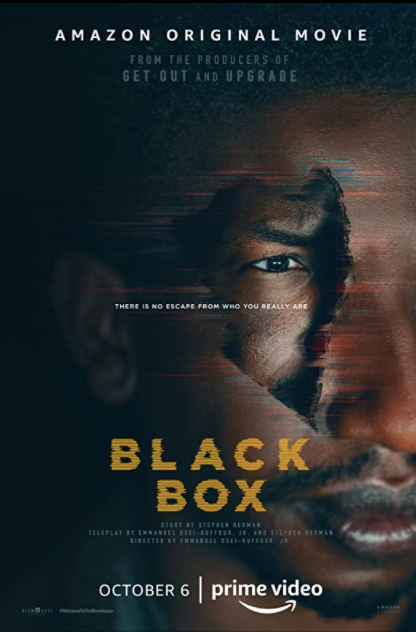
Black Box: With One Body You Can't Dance with Two Minds


Immortality via uploaded minds into computer systems has been a staple of science fiction for decades.  It's rarely done as well on the screen as it is Black Box, on Amazon Prime Video since October.

Nolan's having trouble recovering his memories after surviving a severe car accident, which apparently initially left him brain dead.   That's a start for this kind of narrative we've also seen many times before.  But Black Box becomes memorable in the almost delicate, compassionate subtlety with which Nolan struggles to regain his self, and the traumatic and heart-warming surprises that await him.

The more specific problem for Nolan is he's recovering not only his memories but even more of someone else's.  He goes to a specialist, Lillian, who's very understanding, and puts him through various procedures such as hypnosis and connections to arcane devices.   We learn, the hard way -- or Nolan learns, the hard way --

[SPOILERS AHEAD]

that Lillian has actually downloaded another mind into his body, the mind of her son, Thomas, who died some months ago.  Lillian uploaded his mind before he died, and she hopes to bring her son back to life, or his mind back to life, in Nolan's brain and body.

I've already given away too much of the story, in case you ignored the spoiler warning, so I won't say anything more, specifically.   But I like the way Nolan, who retains some of his memories along with Thomas's, tries to work things out, as does Thomas in Nolan's body, too.   There's an old Yiddish saying, with one tuchus you can't dance at two weddings.   Black Box is in effect a story of with one body you can't do the dance of life with two minds.

Very well acted by Mamoudou Athie as Nolan, Amanda Christine as his precocious daughter Ava, and it was good to see Phylicia Rashad as Lillian.  Fine story by Stephen Herman and directing by Emmanuel Osei-Kuffour.  Highly recommended!

See also Review of The Silicon Man by Charles Platt (1991)  


Wednesday, December 16, 2020

The Lie: Acting about Acting


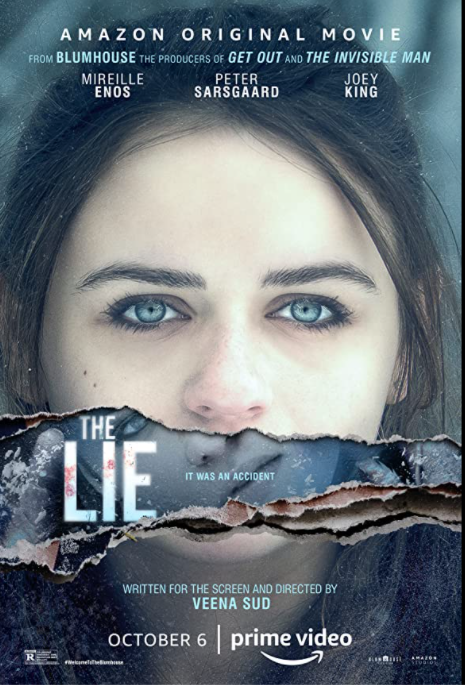
My wife and I caught The Lie last night on Amazon Prime Video.  A scalding little movie from Blumhouse, and from the brain behind The Killing (Veena Sud), with one of its big stars ( Mireille Enos).

[spoilers follow]

First, let me say that I guessed the big shocking reveal at the end -- foresaw this about halfway through the movie.  The reason was two-fold: 1.  We didn't see Britney actually being pushed to her death.  2. Britney's body wasn't recovered.  And although the current was swift, the water didn't look particularly deep.

But this didn't spoil in the least my enjoyment of the movie, which grabs you by your collar as soon as Jay hears his daughter Kayla cry out, and keeps you there for the next ninety minutes.  Further, the acting is really impressive, with a typical brilliant performance by Enos across a simmering and wild range of emotions.

Joey King as Kayla was also noteworthy.  Her acting was, in effect, a double meta-performance.  She has to act to her parents as if she did shove Britney to her death.  And she has to pretend just the opposite to the police: that nothing untoward happened.  And then the big reveal that she and Britney were putting this whole thing on: we need to believe, after that, that Kayla was acting about everything she said before.

I believed it, and so did my wife.   If you've read this far, through the warned spoilers, you've already seen The Lie.  If somehow you haven't, it's well worth seeing.


Playlists: Science Fiction and Fantasy Songs, Songs about DJs, Songs about Phones


Joel Iskowitz illustrator; Delin Gonzales model

Three playlists for your listening pleasure:

 Science Fiction and Fantasy Songs


Songs about Disk Jockeys


Songs about Phones (from 1919-present)

Big Sky 1.5: Winter Finale Indeed!

Well ... [spoilers follow]

Tonight's episode 1.5 of Big Sky provided a winter finale indeed.  A kind of rhyme with the end of the first episode, in which Cody was shockingly killed -- as in, out of the clear big blue sky.  And at the end of tonight's episode, Big Rick is killed, with a bullet to the head, by Cassie.

Ok, it was completely of out of the clear blue as Cody's demise.  Everything had been building up to this, including, especially, Cassie's suspicion and loathing of Rick, and her cool steel nerves.  And there was no way she was going to let Rick gun her down.  But it was still a big surprise, to see a major evil character, in fact, THE villain, shot down dead like that in the middle of a season.

Of course, the three kidnap victims, not to mention Cassie, are by no means out of the woods yet.  The helpful human flesh-dealers from up north are just a few minutes away from the kidnap victims, Cassie, and Rick's body.  And Cassie doesn't know they're close by.  The victims know, but will they have time to alert Cassie?

Barely.  And though Cassie is armed, she'll no doubt be outgunned by the human-traffickers.  There's definitely more than one of them.  So, we should be in for an exciting resumption of action in January.

Ronald will of course play a bigger role.  Has he managed to get his impulses, as his mother calls them, under control?  Will he show up at the scene before the Canadians arrive?  No, not likely.  Before they leave?  Possibly.  And if he doesn't, what will he do when he finds Rick dead and everyone missing?  Will he think the Canadians killed Rick?

Lots of questions which can only be answered by watching the second part of the season, which I'll definitely be doing, and talking about it right here.

 See also Big Sky 1.1: A Pretty Big Deal ... Big Sky 1.2: The "Goods" and the Ruined Plan ... Big Sky 1.3: "You Kidnapped the Wrong Girl" ... Big Sky 1.4: Controls on Psychos


Tuesday, December 15, 2020

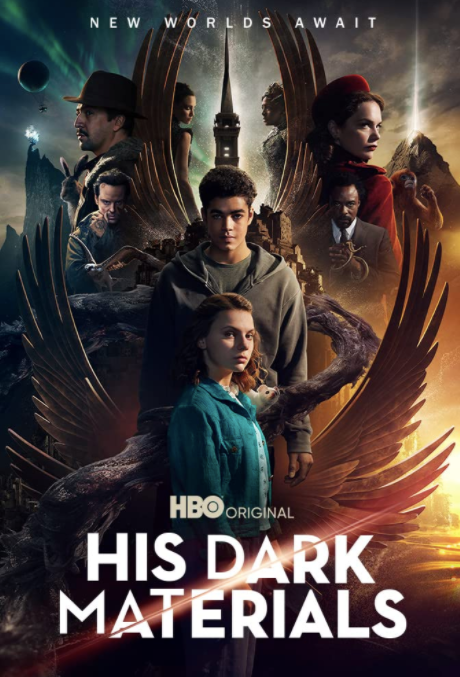
His Dark Materials 2.5: Daughter and Mother


The powers of good did well tonight in His Dark Materials 2.5, to the point that Lyra's daemon gave Mrs. Coulter's daemon quite a thrashing, which means the daughter thrashed the mother.

But that's not all.  Will mastered the subtle knife, and used it to his and Lyra's advantage.  And while Will and Lyra were at this, they managed to recover Lyra's alethiometer, too.   What more could you ask for?

Well --  and again, I haven't read the novels, so all of this is new (and narratively exciting) to me -- I think Mrs. Coulter is increasingly beginning to work on the side of the good.  This comes from the genuine love she has for her daughter.  It's not clear if she knows the extent of the deadly hostility the Magisterium has for Lyra, but there's no doubt that Coulter will kill anyone who wants to hurt her daughter.   Period.

Not that this an undilutedly good thing, either, however.  The last thing that Coulter tells Lyra tonight is to stay away from Will.  Is this solely because of his knife, which Coulter sees as dangerous to anyone around Will, or is there something more?   Whatever Coulter's motives, Lyra and Will are clearly drawing closer, which means that Coulter and Lyra are still on a collision course.

There wasn't much in furthering our understanding of dust aka dark matter tonight, but it was good to see Mary on the case, and she's our best bet for discovering more about dark matter and explaining it in terms we can understand.  In effect, Mary is our the audience's surrogate in this story, and that's one of the reasons she's become one of my favorite characters.  (Good job Simone Kirby.)

Only two episodes remaining in this excellent short season -- like a human and a daemon? --  and I'm looking forward to both of them.

See also His Dark Materials 2.1-3: Dust, Dark Matter, and Multiple Universes ... His Dark Materials 2.4: Chosen by the Knife

And see also His Dark Materials 1.1: Radiation Punk ...  His Dark Materials 1.3: Coulter's Daemons ... His Dark Materials 1.4: The Bears ... His Dark Materials 1.5:  Sleepers and Questions ... His Dark Materials 1.6: His Fast Materials


Sunday, December 13, 2020

Your Honor 1.2: "Today Is Yesterday"

Just saw the second episode of Your Honor, courtesy of Showtime On Demand.  It's about as powerful a chess game with life and death consequences as ever I've seen on television.

As part of his opening move, Judge Desiato tells his son Adam that they have to work to reset the pieces so that "today is yesterday".  No, there's no time travel involved,  but a well-thought out plan to set up a series of plausible alibis today for what happened yesterday, when Adam killed Jimmy Baxter's son in a hit-and-run.  This involves getting someone to steal the car Adam was driving.   And make it appear that the car was stolen yesterday.   The result, if all worked well, would be that Adam would look like he was nowhere near the scene of the hit-and-run, and there would be another plausible candidate to take the rap if that was needed.

A very clever plan. But maybe not that well thought out, because real life has a mind of its own, and before the hour is over Desiato's plan leads to the guy who "stole" the car pleading guilty to the hit-and-run.  This is not quite what Deiasto had foreseen. Certainly not so quickly.  Kofi, who takes the fall, could be snuffed out in a minute by Baxter, with all those cops and who knows how many prison guards on his payroll.  The best that Desiato can do is convince his lawyer to take Kofi's case.  Not all that hard to do, since they have a romantic chemistry and an impending date, but dangerous insofar as she seems to be a pretty sharp cookie, and could well figure out at some point that Desiato is far more involved in this hit-and-run that just someone stole his car.

So what we have here is an edgy, on the edge of unraveling, story of the best laid plans.  Stirred by top-notch acting and surprises popping out of the woodwork.  My only regret at this point is that I can't binge-watch all the remaining episodes.

See also Your Honor 1.1: Taut Set-Up


Saturday, December 12, 2020

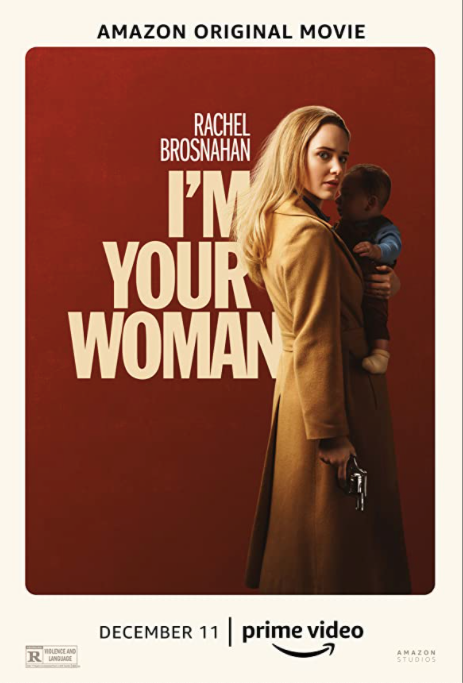
I'm Your Woman: This Is Your Movie


I'm Your Woman, a movie up on Amazon Prime since just yesterday, is a real treat.  A superb, different kind of take on a well-worn subject, brought to life on the screen by Rachel Brosnahan.

The set-up: Jean, played by Brosnahan, is surprised by a baby her husband Eddie brings home to her one day.  She can't have children, and he wants them to have the joy of a family.  He's some kind of mobster killer, though, and shortly disappears.  People presumably on his side show up to help  Jean and Harry the baby survive.

So, we've seen this kind of thing before, as I said, but not with the lead role and baby in Brosnahan's hands.  She starts being clueless about everything, from how to fry an egg to how to take care of a baby, let alone defend herself and him, but gradually draws on awesome instincts that get her out of all sorts of perilous situations, and learns from them and the people who want to help her.   The best part of those helpers are Cal, Teri, and Cal's father Art, who teach Jean everything from how to take care of a baby to how to shoot a gun.

I don't want to say more about the plot, because this is the kind of narrative in which a surprise will jump out and point a gun at you every couple of scenes.  I will say that not everyone survives, and not everyone escapes unscathed.  I'll also say again how good the acting is.  Arinzé Kene as Cal, Marsha Stephanie Blake (See You Yesterday) as Teri, and the ever-effective Frankie Faison as Art are just right for their savvy, homespun, ruthless when-need-be parts.  And when you consider that you last saw Brosnahan on Amazon Prime as Mrs. Maisel, about as different a character from Jean as you can imagine, you can get a good idea of what a first-class actor she is.

Well, actually, Midge Maisel and Jean do have one big thing in common.  A lot of heart.  And that's what makes both stories such a pleasure to see.

Hats off to director Julia Hart, writers Hart and Jordan Horowitz, and everyone else involved in making this movie.


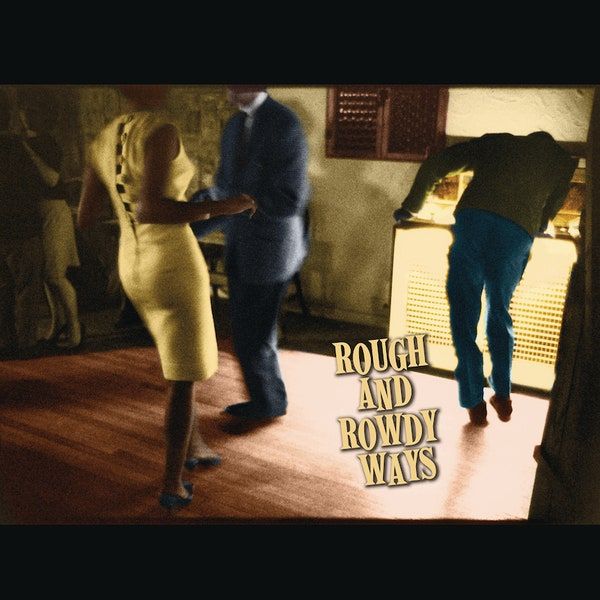
Dylan's Rough and Rowdy Ways: Well Worth the Wait


I reviewed Dylan's "Murder Most Foul" a few weeks ago.  It's a haunting, soul-adjusting masterpiece that's right up there or even better than "A Hard Rain's Gonna Fall" and "Desolation Row" and his very best from the 1960s.  That song, released on its own this past March, is one entire side of Dylan's Rough and Rowdy album released in June.  I thought it time that I listened to the rest, on the other side.

It was time well spent.  All of the songs are bursting with lyrics and allusions we haven't heard from Dylan in years.   Like "Murder Most Foul," they're painted with icons of the past half-century, and Dylan's wry commentary.  Here are my favorites:

"Key West (Philosopher Pirate)": I've long loved Key West, even though I've never been there.  It reminds me, and is probably even better than, Cape Cod, where I've been going with my family since 1982, except this past summer of Covid and its lockdowns.   I thought Bloodlines was excellent, in part because it took place in Key West.  I really like Dylan's rendition of that place in this song.  It's one of the ends of America, and the end of the rainbow.  It's the "place to find immortality".  Dylan already has that, he doesn't need to go to Key West to get it, but it's a tonic and a thrill to hear him sing about it, and tell his gravelly "story".

"My Own Version of You":  Dylan writing and singing science fiction?  Who'd have thunk it?  But that's what this song, Dylan's own Frankenstein story (as in, he's Dr. Frankenstein), is.  I added this to my Science Fiction and Fantasy song playlist, right between "Yoshimi Battles the Pink Robots" and "Monster Mash" (there's also something about a "robot commando" in "My Own Version of You").

"I Contain Multitudes": It's fair to say just about all of Dylan's songs are autobiographical, but this little gem is especially so.  He has something of Poe in him, he paints nudes, has something of "those British bad boys, The Rolling Stones" in him, too, and he makes all of that rhyme.  With dudes, foods, and classical preludes.

"Black Rider":  Ok, one more.  This is the tougher Dylan.  "One of these days, I'll forget to be kind," he says to the rider who's been "visiting" the singer's wife.  And then he becomes much more graphic about what he might do to this masked marauder who's breaking into his life.  Don't mess with this wordsmith who can easily become a swordsmith in his songs.

Dylan took a long time to get back to this level of erudition and power.  Rough and Rowdy Ways was well worth the wait.

Further reading: Simon Vozick-Levinson's review of this album in Rolling Stone's 50 Best Albums of 2020 (Dylan's album is #4).

Why Republicans Continue to Support Trump

Here's my best explanation/theory about why those 126 Republican members of the House of Representatives, and 17 Republican state attorneys general, signed amicus curiae briefs in support of the attempt by Texas to get the U. S. Supreme Court to disallow the votes in swing states Pennsylvania, Michigan, Wisconsin and Georgia that went for Biden in the Presidential election.

Republicans were traumatically horrified when Obama won not once, but twice, and against two mainstream, highly regarded, mainstream candidates. When Trump beat Hillary, even more loathed by Republicans than Obama, Trump won the inchoate love of many otherwise sane Republicans. They support Trump now because they want, against all odds, to somehow hold on to that evil magic.  To keep that sick hope alive.

The Supreme Court wisely threw out the Texas attempt to overthrow the election.   Biden will take the oath of office on January 20, 2020.  But it will take a lot more than one Supreme Court decision to put the fascist, racist rage back in the hole from which it emerged.


Friday, December 11, 2020

Ava: Believable Assassin


Checking in with a review of Ava, a relatively new movie (September 20) about a female assassin which just went up on Netflix last week.

First of all, it has some real star power: Jessica Chastain as the assassin, John Malkovich, Common, and Colin Farrell in her supporting cast.  Now, they've been any number of atrocious movies with big stars over the years.  But Ava isn't among them.  It's a pretty good movie, lifted by the likes of just hearing Malkovich talk.

And the fight scenes are good.  I don't know, are there assassins of either gender in real life who can take on and out 20 people coming at you?  Probably not.  But Ava was convincing.

And so was the worn narrative of your own organization turning against you, because you some sort of weak spot (in Ava's case, talking to the mark about why he or she thought Ava was about to kill them).  This narrative was convincing as soon as it got to the point where you couldn't tell who was going to survive or not, and when.  This included the effective question mark at the very end.

So, if you're up for a somewhat offbeat assassin movie, with characters who manage to be believable because of acting more than the script, give Ava a shot.   And make sure no one like her gets too close to you in real life.


Thursday, December 10, 2020

His Dark Materials 2.4: Chosen by the Knife


Lots of nice touches in His Dark Materials 1.4, though maybe cuts would be a better word, since this episode was all about "the subtle knife," the title of the second book in the original Pullman trilogy.

Haven't read the books, but on TV the knife is able to cut "spirit" as well flesh, a talent that also enables the Bearer of the knife -- capitalized because that's an official title -- to cut between worlds, by cutting a slit between them, in the nearly invisible curtain which serves as a membrane between them.  You can tell, just in that description, how fine a line His Dark Materials cuts between science fiction and fantasy, as I went on about a bit more last week.

We also see a lot more of the Spectres in this episodes, and, as a character observes, I don't like them. I also feel a little bad for SPECTRE of James Bond infamy.  They're no bargain, either, to be sure, but a lot less chilling than these soul-sucking monsters.   Same for Phil Spector, while we're at it.  I didn't like what he did to the Beatles Let It Be, and he's serving time in prison now for murder, but his work with the Ronettes and the Righteous Brothers was top notch, and in any case he's not in the same evil league as the Spectres in His Dark Materials.

Carlo is becoming a more interesting character.  We can understand why he wants the knife.  But if what Lyra and Will and we learned tonight is true, the knife chooses its owner, not vice versa.  And that owner now is Will, with two shortened fingers on his hand to prove it.  But Carlo is at least passingly allied now with Mrs. Coulter, and the two will make a formidable pair.

As a parting point, with the witches on their way to Cittàgazze, we may get a confrontation between them and the Spectres.   Who will survive?

See also His Dark Materials 2.1-3: Dust, Dark Matter, and Multiple Universes

And see also His Dark Materials 1.1: Radiation Punk ...  His Dark Materials 1.3: Coulter's Daemons ... His Dark Materials 1.4: The Bears ... His Dark Materials 1.5:  Sleepers and Questions ... His Dark Materials 1.6: His Fast Materials


Wednesday, December 9, 2020

Big Sky 1.4: Controls on Psychos


First of all, good for Big Sky for at least working into a newscast at the beginning of episode 1.4 that indigenous women and girls have been especially subject to the psycho kidnapping of three young women (not indigenous) which is the centerpiece of this narrative.

As to psychos, that's pretty much just what Ronald is.  His mother realizes it.   My wife thinks Ronald will kill her before too long.  She doesn't seem particularly afraid of Ronald, though.  Does she have a way of controlling Ronald?  Tough to say.  But at present, she's the best chance of somehow getting Ronald to do the right thing.

Interestingly, maybe significantly, that's close to the role Rick's wife seems to be playing.  Like Ronald's mother, Merilee either realizes or senses that Rick is not the stand-up trooper he presents to most of the world.  Knowing what we know about Rick, it seems that Merilee knows that, as well.

By the way, here's one thing I don't get about Rick.  He had no problem blowing Cody away at the end of the first episode.  Why doesn't he do the same for the three women captives?  Wouldn't killing them and disposing of the bodies be less work and less dangerous than seeking to get some guys in Canada to take them off of his hands, and not even pay him for all of his trouble?

I can only hope that the reason is not just to keep the Big Sky narrative going.   Not that I'd to see the three women killed -- quite the opposite.  I'd like to see them escape and triumph.  But we do need a better motivation for Big Rick, other than that he's a psycho, and therefore unpredictable about he'll do in life-and-death situations.


Pictures on the Phone: Demo of Brand New Song


lyrics and details here

Tuesday, December 8, 2020

Your Honor 1.1: Taut Set-up


Your Honor debuted on Showtime on Sunday, with about as tight a set up as you're likely to find in a limited (ten-episode) cable TV series.

Here's what that is: Bryan Cranston plays a tough judge in New Orleans, a widower, with an asthmatic teenage son who goes off to lay a wreath at the site of his mother's death a year earlier.  He's upset, takes his eyes off the road to get his inhaler, and hits another teenage boy riding on the new motorcycle his parents bought him for his birthday.   Adam Desiato (the judge's son) tries unsuccessfully to revive the motorcyclist.  He leaves without calling the police, tells his father (Judge Michael Desiato) what happened, and the judge decides the best thing to do is to bring his son into the police.   Until the judge discovers that the slain boy is the son of one of the most vicious mobsters in the ward (or whatever exactly they call boroughs in the New Orleans).  Not only that, but this boy's father is played by Michael  Stuhlbarg.

So, we not only have a confrontation of good vs. evil -- or maybe, morally ambiguous vs. evil -- but the two sides are portrayed by two powerful actors.  Hunter Doohan as Adam is impressive too, as is just about everyone who opens their mouth in this taut, provocative start of a story.  The best kinds of conflicts, from a narrative standpoint, are those in which the two sides are evenly matched in terms of passion and justification for their position.   The judge wants to save his son.  The mobster wants to avenge his son.  Both are determined their goal will be achieved.  Nothing will stand in the way of either.

In one sense, Jimmy Baxter the mobster has the upper hand.  He's already a killer, and accustomed in the ways of doing this.   In contrast, His Honor, Judge Desiato, is used to following and interpreting the law.  But he'll do anything to save his son, and that no doubt is exactly what he'll have to do.

An excellent set-up, as I said, and I'll be back here next week a report on how it goes.


Monday, December 7, 2020

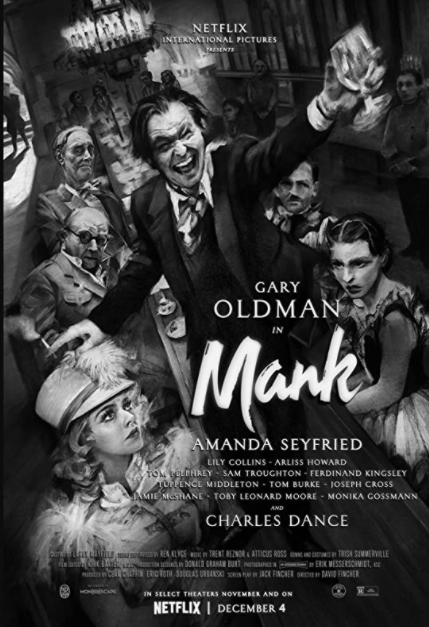
Mank: Elusive Truth


I've had an abiding interest in Herman Mankiewicz and Orson Welles since I first saw Citizen Kane and devoured Pauline Kael's Raising Kane in an MA in Media Studies class I was taking at The New School in 1975.  Welles became such a passion that I devoted one of my Ian's Ions and Eons stories ("Ian, George, and George") to Welles (George actually was his first name, and Orson his middle name) and I even talked about his work in this History Channel interview in 2010:


I've had less opportunity to talk about Mankiewicz, but pleased to discover that his son Frank was Robert F. Kennedy's 1968 Presidential campaign press secretary, and his grandson Josh (son of Frank), a local New York City television and now a national NBC reporter.  I was therefore glad to see Mank on Netflix last night.

I thought it was good but not great.  The black-and-white, flashback format was a nice, if somewhat obvious, homage to Citizen Kane.  Herman's writing of the script, with no credit but ample payment from Orson, at first, and then Herman insisting on getting credit, because he realized the impact the movie would have, was also well presented.  But the probing, enduring questions around the creation of this masterpiece were barely touched upon and not extensively explored.  What was Herman's ultimate motivation in writing such a devastating take-down of his friend and patron William Randolph Hearst aka Charles Foster Kane?  Did Herman love Hearst's young wife Marion Davies, platonically but nonetheless deeply enough to motivate the script?

And speaking of Davies, when Herman's brother Joe asks Herman about the "rumor" that "Rosebud" was Hearst's name for Davies' "genitalia," Herman scoffingly denies it.  Was that denial truthful (which it appeared to be in the movie) or just Herman not wanting to admit the truth to his brother?

The problem is that, since presumably almost no one in the audience for Mank knows what really happened, and why, we have no way of judging the accuracy of this docu-drama.   That's ok.  I often tell my students that you can't expect complete truth even in documentaries, let alone docu-dramas.  But because that elusive truth of such keen interest, I found Mank enjoyable -- and certainly lifted by Gary Oldman's brilliant performance in the title role -- but somewhat unsatisfying.

Sunday, December 6, 2020

Virgin River: The Scenery, the Food, The Acting, and the Story


So my wife and I just finished binge-watching the two seasons of Virgin River on Netflix.  What was I doing watching so much of a romantic drama that takes place in a beautiful town in the woods near the river of the title in northern California?   Well, it does have a big dollop or more of crime in it, and criminal fiction is my second favorite beat, after science fiction which is my first.  But that's not why I watched these two seasons.

The reason is I really liked this story of Mel, a nurse practitioner, who goes up to Virgin River, after her husband is killed in a car accident in Los Angeles.   There she finds Jack's Bar, which is actually a restaurant owned and run by Jack, and a cast of effervescent characters including the mayor, Hope, and her estranged husband, Doc, a doctor.  Hope is played by Annette O'Toole (great to see her on the screen again) and Doc Mullins by Tim Matheson.   They're not the only ones who put in a great job of memorably portraying idiosyncratic characters.   Jack is well played by Martin Henderson, whom my wife remembers and liked from Grey's Anatomy, and Mel by Alexandra Breckenridge, whom my wife likes in This Is Us.  I've never seen either before, but both are excellent in Virgin River, especially Breckenridge, who does a fine job with the conflicting emotions that Mel is confronting and juggling.

Why else did I like Virgin River so much?  The scenery is a real tonic after being locked down for almost three quarters of a year.  Even the food in Jack's restaurant looked really delicious, probably for the same reason.  I'd go out with my wife in a heartbeat to any restaurant where Preach was cooking, and he was well played, too, by Colin Lawrence.

So hey, if you miss cabins in the woods near a river on your summer vacation, or even just some great food in a restaurant that pops up on your trip, check out Virgin River.   And be prepared, as well, for a compelling story that will keep you in your seat at home for as many days as it takes.


Friday, December 4, 2020

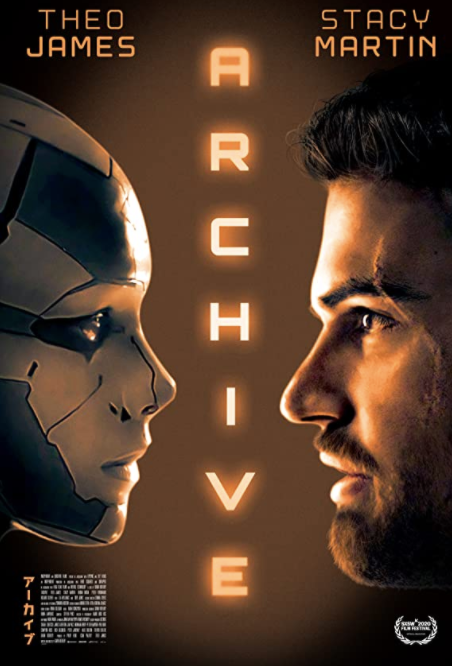
Archive: Androids with Twists


They've been at least three excellent, sometimes outstanding, TV series that probe the philosophic and emotional complexities of androids in the past few years, Westworld, Humans, and recently Raised by Wolves.  But I can't think of an equivalent movie.  Or couldn't think of one.  Until Archive, which has been streaming on Amazon Prime Video since the summer, but I just got around to seeing earlier tonight,

The set-up we've seen in all manner of science fiction and horror movies in the past century: a bereaved husband, who is a genius in AI or other suitable science, determined to use his genius to bring back his deceased wife.  What makes Archive worthy, even great, then, is not in this common set-up.  It's its execution.

Theo's the genius who's lost his wife Stacy in a car crash.  Fortunately, he got a bit of her self (or mind, soul, personality, take your pick), encoded in some kind of digital drive while she was well and alive --- aka the "archive".   Being the genius that he is, and the time about 20 years in our future, Theo is able to build this bit of self into a complete digital persona.  Next step is to put her into an android who looks, talks, thinks, feels like Stacy because, in a very real sense, she actually is.

The stage or story is thus set in two important dramatic ways.  Theo didn't build and therefore doesn't own the archive technology.  So we have corporate conflict.  And Theo can't build a new Stacy first crack out of the box.  On the way to Stacy, Theo builds an android with the mental age of a young child, and another with the age of a young teenager.  The sibling jealousy and rivalry between the teenaged android and the emerging Stacy, along with Theo's patermal discipline and toleration of the teenager are done just right, and would've been worth the price of admission had Archive been shown as intended in theaters.

There are, in effect, two surprises near and at the end of this fine movie.  I'll tell you some about the first but not the second, just in case you haven't seen Archive prior to reading this.  The "Stacy" that Theo is constructing has a personality at least a little different from the original.  Turns out that this new she -- the personality -- was a test-run that Theo got going to make sure the digital entity in the archive could meld well in the bio-digital android he was constructing.   But the new "she" is not exactly the same as Stacy.  So Theo's plan is to swap Stacy's mind into the android, which would mean the new "she" would cease to exist.  The ever-courteous Theo apologizes to the new "she" right before he initiates the transfer and--

Ok, that's where I'll stop in the recounting.  I will say that there is an even  bigger surprise at the very end, and that's the part I liked least in this otherwise outstanding movie (written and directed by Gavin Rothery, in his feature length debut).  Bur see it yourself, and let me know if you agree.


They're coming out into the open, for the first time in centuries ....


Thursday, December 3, 2020

Podcast Review of The Queen's Gambit


Welcome to Light On Light Through, Episode 161, in which I review The Queen's Gambit, reported today (3 December 2020) in The Hollywood Reporter as "atop the Nielsen streaming chart" for the second week in a row.

Further reading:  my blog post review of The Queen's Gambit


Check out this episode!

Wednesday, December 2, 2020

Big Sky 1.3: "You Kidnapped the Wrong Girls"


Well, that was the best line in tonight's episode 1.3 of Big Sky -- "You kidnapped the wrong girls" -- said by The Big Rick (title of the episode) to Ronald, after Rick retrieves Grace, with two arrows in the leg, after Grace escapes and almost makes her escape good, by getting a fisherman to help before Rick shoots him dead -- with an arrow.

In Big Sky, just about everyone is bad ass -- which leads to good drama -- with the exception of Ronald, who can't do much other than taze the girls every time they attack him and try to escape.   When you add to that Jenny and Cassie, who are pretty tough, too, you have a pretty unevenly matched situation: five tough women against one tough man.

How has Rick managed to succeed, at least so far? Mainly cause he's a state trooper, and not considered a bad guy by anyone, except by Cassie and maybe his wife, at first.  But by the end of this episode, Jenny has joined Cassie in her misgivings about Rick, so there may be some hope for the kidnapped women after all.

At this point, I gotta say that Big Sky is moving along a little slowly for my tastes.  Rick emerged as the villain at the end of the debut episode.  All the pieces were set at that point.  And though the two episodes that have followed were each exciting, the pieces on the board are still all, essentially, in the same place.  I'd have much rather seen Grace still at large at the end of this episode.

There are seven more episodes in and under Big Sky.   I'm hoping that sooner rather than later the narrative will break out of the relatively small container that it finds itself in.  Not to mention those three brave kidnap victims.


Tuesday, December 1, 2020

His Dark Materials 2.1-3: Dust, Dark Matter, and Multiple Universes


Back with a review of the first three episodes of the new second season of His Dark Materials on HBO.  I liked them a lot, and thought that, in a variety of ways, these episodes moved the series a bit from high fantasy to steampunk on the genre dial.  A good thing, in my book. (And speaking of books, I'll mention again that I haven't read any of Pullman's novels.)

Multiple universes or alternate worlds have become an increasingly important subset of science fiction.  One of the best novels I've read in years was the late J. Neil Schulman's The Fractal Man, a kaleidoscope of alternate worlds right here on Earth in our own time.  In His Dark Materials, Season 2, Lyra travels from the universe we saw last year, to one which is more like ours.  Smartphones, computers, and the like are in ample evidence in Cittàgazze, and play essential roles in the story.  But "Spectres" which turn adults into zombies are also on hand, and make this more-Earth-like alternate world markedly different from ours.

The computers signify a more scientific bent in this new world.  Lyra discovers that dark matter -- known in this alternate world as well as the world we all now inhabit, in which we can watch His Dark Materials on the screen -- is the equivalent of the dust we have all come to know by virtue of the first season.  Lyra now has a great vehicle for understanding what she needs to understand in order to save herself and all of these worlds.

It's good that she's joined in her often desperate adventures by Will, who understands at some of the workings of Cittàgazze.  They're just friends, at this point, but there's a chemistry that will likely move them closer than friends as the story progresses.  Mrs. Coulter is in good form, meting out cruelty as necessary but ultimately unwavering in her love for Lyra and her need to protect her.  

All in all, His Dark Materials occupies a unique niche of sheer fantasy ala Lord of the Rings and some kind of steampunk as in The Difference Engine, and it's most enjoyable to see.

See also His Dark Materials 1.1: Radiation Punk ...  His Dark Materials 1.3: Coulter's Daemons ... His Dark Materials 1.4: The Bears ... His Dark Materials 1.5:  Sleepers and Questions ... His Dark Materials 1.6: His Fast Materials


InfiniteRegress.tv