Chuck Todd interviews me about alternate histories

Friday, June 7, 2024

Criminal Minds: Evolution 17.1-2: The Elusive Profile


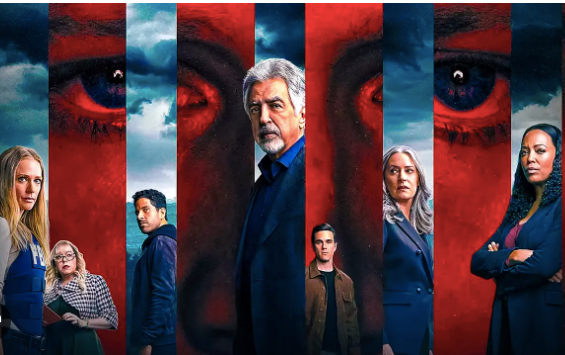
Criminal Minds: Evolution is back on Paramount Plus with the first two episodes of its new season (17, if you count the original Criminal Minds on CBS).  I saw them last night and they were excellent.

[Spoilers ahead ... ]

The story picks up two weeks after the events in the Season 16 finale.  Elias Voit, the mastermind networking serial killer from last season is in jail, but his capture has taken a toll on our heroes.  Rossi is hallucinating conversations with Voit, Emily's on a razor's edge, but the BAU is mobilized to the find the Gold Star killer, whose moniker was introduced at the end of last season.

The only thing that's clear about who and what Gold Star is, well, is that Voit is not Gold Star per se.  Or, to be more precise, he couldn't be the person who actually killed any of the victims in the first two episodes of this new season, because he was behind bars all the time.  Emily thinks Gold Star may be a killer out West, but when she says we're ready to deliver the profile, Rossi tells her no, we're not.  As always, the BAU is rent with disagreement, as well as the FBI Director wanting to get rid of them, but they manage to move forward.

As in the last season, the use of explicit language is refreshing and realistic.  I could do, though, without the explicit gore, but that's just me.  And as long we're talking about how streaming has liberated television from network prudishness, a little nudity -- for our living characters -- wouldn't be bad, either, just sayin'.

The serial killer -- in this case, Voit -- being a necessary but ever dangerous ally of law enforcement is of course something we've seen already with Hannibal Lecter.  But Zach Gilford as Voit was a great addition to the show -- even though every time I hear or write the name I think of Chicago PD -- and it's great to see him back in this new season.

Speaking of which, I'm hoping to see Spencer back before this season is over as well.

See also Criminal Minds: Evolution 16.1-16.4: Outstanding! ... 16.5: Assessment of What Could Have Happened at the End ... 16.6-16.8: Better Than Ever on Paramount Plus ... 16.9: Elias Voit and David Rossi ... 16.10: Gold Star

===

Some reviews of episodes from earlier seasons:


Thursday, June 6, 2024

Podcast Review of Dark Matter 1.6


Welcome to Light On Light Through, Episode 389, in which I review Dark Matter 1.6 on AppleTV+.

Further places:


Check out this episode!

Wednesday, June 5, 2024

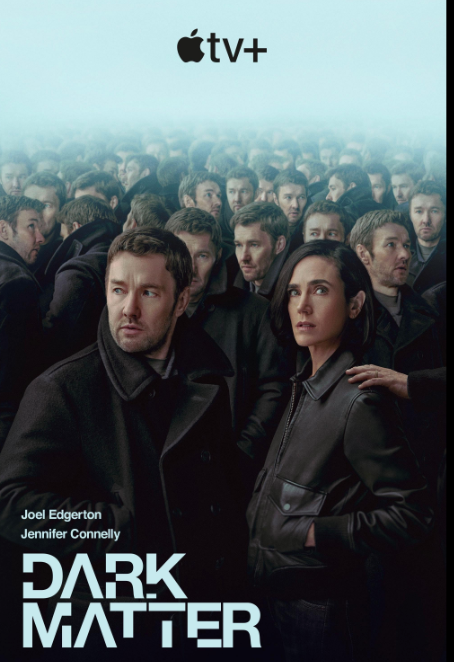
Dark Matter 1.6: "A Bunch of Chicagos"


Well, I thought the best line in Dark Matter 1.6 on Apple TV+ today came from Jason 1 to Amanda 2 about their having visited "a bunch of Chicagos" so far, and none of them were too good.

But that was only one of many good lines in this episode, and the series has now progressed, in my opinion, from excellent to outstanding.

[And here's the place I'll advise you about spoilers ahead ... ]

I'll bullet some of the best moments:

  • Jason 2 gets Charlie 1 some ice cream with nuts, and he has to be rushed to the emergency room where he's saved.  I'm hoping this was just an accident and not something much worse, and I wouldn't put much past Jason 2.  He does give his son who's not his son an Epinephrine shot, and that more than the hospital was actually key to saving him. But Daniela 1 is hit hard by this in any case, the worst in a list of events and characteristics including flossing and leaving keys in the wrong place that's feeding her suspicion.
  • To top off Daniela's misgivings about Jason 2, he takes her to an art show where one of her paintings is hanging, and she's moved to tears -- of fury, because she wasn't finished with the painting yet, and the last thing she wanted was to show it to the public.
  • But lest you think Jason 2 is a good guy, he strands poor Ryan in one of those infinite Chicagos.
  • And here's a thing I really liked in this episode: lots of time for Amanda 2 and Amanda 1.  She's a pivotal character, and Jason 1 may be falling in love with her (he's certainly a consummate gentleman, asking Amanda to leave their bed, though he'd certainly like to sleep with her, in both meanings of that word).
  • And last but not least, an at-once high and low scene at the end of this episode has Jason 2 following through on his vow to seal off or lock up his box/corridor to alternate realities.
So I thought this was a top-notch episode indeed, and I'm looking forward to its consequences in what's to come!


Monday, June 3, 2024

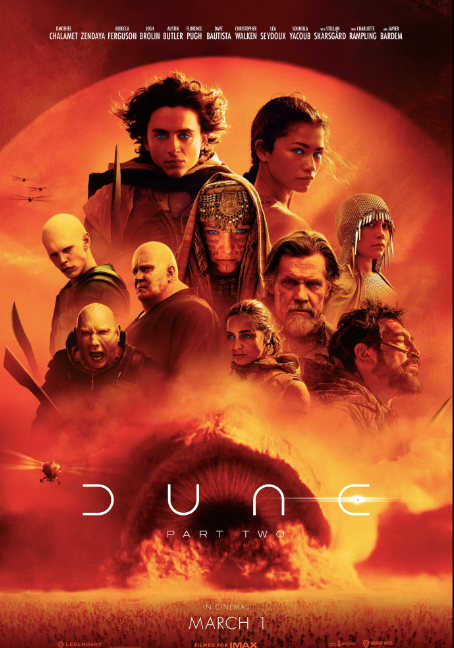
Dune Part Two: Not as Good as Part One


I'm beginning to think I'm bound to be disappointed seeing a science fiction trilogy I love brought to the screen.  Those of you who have read my reviews of Foundation, and/or listened to my discussions of the Apple TV+ series on podcasts, will know my frustration with that TV series.  In a sentence, the part that had nothing to do with the original trilogy, the Cleon clones, was the best, and the series lacked some of the strongest parts of the trilogy (or the extent of the trilogy that has so far appeared on the screen).

Ironically, I thought the first part of Denis Villeneuve's rendition of Dune was excellent on just about every level (here's my review).  But the second part, which I just saw last night, indulged in major changes in major characters, and left others completely out.

[Spoilers ahead ... ]

Let's start with Chani.  The love that she and Paul had for each other lit up the second half of Dune (Frank Herbert's original long novel).  In the movie, she's annoyed or angry with Paul in just about every other scene of the two, including storming off and away at the end.

Alia, Paul's sister, an extraordinary character in the novel, with all kinds of powers derived from the spice she received in Jessica's womb, is seen in the movie only briefly as a young adult in a vision Paul has of the future.  A child with such wisdom and power was a cardinal element of the novel.  In the movie she's reduced to a voice that Jessica hears, presumably coming from the baby she's carrying.  

And what happened to Thufir Hawat the Mentat?  And the Space Guild?  Their way of bending space with their minds actually received more attention in the Foundation TV series, though they indeed were extensively developed in the Dune novel. 

Meanwhile, Feyd-Rautha had plenty of screen time, but I thought his character was reduced to a cartoonish cliche, complementing one Atreides opponent before he kills him, and Paul himself as Feyd-Rautha is about to die from Paul's superior knife-play.  The actual fight, I'll admit, though, was excellent.

And while I'm on the subject of what was excellent in Dune Part 2, I thought Javier Bardem delivered in every scene as Stilgar, whose part was well-drawn in the movie, as did Florence Pugh as Princess Irulan, surprisingly relevant in the movie as in the novel.  Indeed, all the acting was fine or better in Dune Part 2, as was the cinematography.

But I'll end with one more complaint: I don't know, but the scenes of Paul riding the sandworm just weren't as impressive as the scenes required.  All too often, they looked to me as if Paul was riding some kind of undulating carpet made of sand (I was half expecting to hear Steppenwolf in the background).

In sum: see Dune Part 2 -- if only to prepare yourself for the third installment, which will bring Dune Messiah to the screen, which I hope will remedy some of the many problems in Dune Part 2.

See also: Dune, Part 1: Half the Movie, Twice the Power of Most Other Complete Films


Wednesday, May 29, 2024

Podcast Review of Dark Matter 1.5


Welcome to Light On Light Through, Episode 388, in which I review Dark Matter 1.5 on AppleTV+.

Further places:


Check out this episode!

Dark Matter 1.5: The Lesson


Well, Jason 1 appears to have learned a crucial lesson in the fifth episode Dark Matter, up on Apple TV+ just a few hours ago.

And that lesson is--

[Spoilers ahead ... ]

What he needs to do in his original world -- World 1 -- is block the box off, so no one can use it.

He found this out the hard way, in which he and Amanda were treated to a succession of differing horrendous realities, as they tried to wish/will the world they were going into, into being -- which was the lesson that they and we thought we learned last week in episode 1.4.

But as the two applied that logic -- the world-creating power of a feeling (B. J. Thomas's "Hooked on a Feeling" would have worked well here, though his "Rock 'n' Roll Lullaby" is such an outstanding record) -- Jason 1 and Amanda found the worlds they entered were flooded, wracked by a deadly plague, and last but not least a world in which the analog of Jason 1 was in prison, presumably convicted for some kind of terrible crime.  So Jason 1, now -- presumably -- back in World 1, says he needs to wall it off.

This of course will prevent far more than Jason 1 and Amanda not being able to use the box in the alternate realities any more.  It will mean that everyone currently in World 1 will be stuck there.  Including Jason 2. Which means that Jason 1 will have to share his bed with Daniela 1 and Jason 2?

That would be a pretty rough world for both Jasons, right?  Which means, what?  That once Jason 2 got through the box/room into World 1, everyone's life in the infinity of worlds was in one way or another worse than it was before?

I'm not sure.  But I certainly don't hold out much prospect for a happy ending in this fascinating, complex story.

See also Dark Matter 1.1-1.2: Break-Neck Action and Philosophic Contemplation ... 1.3 Missing Fingers ... 1.4 The Multiverse Unveiled


Wednesday, May 22, 2024

Podcast Review of Dark Matter 1.3-1.4


Welcome to Light On Light Through, Episode 387, in which I review Dark Matter 1.3-1.4 on AppleTV+.

Further places:


Check out this episode!

Dark Matter 1.4: The Multiverse Unveiled


A highly informative episode 1.4 of Dark Matter up on Apple TV+ today, as Jason 1 and Amanda make their way through "The Corridor" (the title of this episode) and therein partake of the doors to the multiverse.

And I have to say that my favorite spoken line in this episode is when Jason tells Amanda that the entire corridor with its doors don't really exist, they are rather the result of their human minds struggling to make a little sense of a reality that the human mind cannot comprehend.  The only thing missing in this astute observation was that the true conduit(s) to the universes Jason and Amanda were accessing were the thing-in-itself, which Immanuel Kant realized the human intellect could never comprehend.

Kant made that observation in the 1700s (in our universe).  Jason 1 also draws upon a fundamental principle of quantum mechanics, which of course brings us to the 1900s, and underlies all of Dark Matter. That principle is that the mere observation of a subatomic particle can change it.  Jason explains that he and Amanda can get to the alternate reality they seek by merely clearly thinking about that reality.  This QM on the macro-level has been a staple of lots of science fiction, and Dark Matter is parlaying it very effectively.

Indeed, Jason goes on to explain that his kidnapping that launched this narrative was the result of Jason 2 figuring out in which alternate universe Jason 1 was residing, because Jason 2 wanted to give Jason 1 some of the pleasure of having Jacob 2's accomplishments as a world-famous scientist -- actually, not figuring it out, but envisioning it in some intense way, and thereby finding and identifying the door into that reality.  Since the multiverse consists of all possible realities, which in practice is an infinite number of places, this QM way of locating the place that you want to visit is a good thing to have on hand.

And Dark Matter, as of its fourth episode, is a very good thing.  It's rare to find philosophy woven so well into a thriller, inside a corridor with so many tempting and dangerous doors.

See also Dark Matter 1.1-1.2: Break-Neck Action and Philosophic Contemplation ... 1.3 Missing Fingers


the corridors under Fordham University figure in this novel ...


Thursday, May 16, 2024

Dark Matter 1.3: Missing Fingers


Just saw Dark Matter 1.3, the third episode of what I'd call the interchanging alternate reality series on Apple TV+.  I thought it was excellent.

[Spoilers ahead ... ]

Dark Matter 1.2 ended with the shocking murder of Daniela 2 in Jason 1's reality -- that is, not the Jason who actually built the full-size superimposition box/room that makes shifts into alternate realities possible -- and this in effect is an announcement that this story, or at least some of the characters in it, really mean business.  Their motives are still not clear by the end of the third episode, but Dawn losing a few of her fingers as she tries to stop Jason 1 and Amanda after firing a gun at them confirms that this narrative means business indeed.

The loss of the fingers also serves another important purpose.  We're told that four characters in World 2 entered the box/room, and, who knows, there could be more.   We'll at least now know immediately that if Dawn suddenly shows up in World 1 with missing fingers, she's actually Dawn 2.

But lest you think that Dark Matter is all quantum mechanics and gore, there's also some nicer clever touches in 1.3  My favorite is the guess who's coming to dinner party in World 1, in which Jason 2 struggles to know who everyone is and what they do -- using an iPhone to help (of course it's an iPhone, the series is on Apple TV+) -- and Ryan 1 tells Jason 2 that he's looking good (which he should -- award-winning scientists probably do live and look at least a little better than their harried professor counterparts).

Dark Matter continues to be philosophically provocative, hard hitting, and we can now add, suitably wry. More than enough for me to eagerly continue to watch.

See also Dark Matter 1.1-1.2: Break-Neck Action and Philosophic Contemplation


Wednesday, May 15, 2024

Paul Levinson interviews Mark Dawidziak about Edgar Allan Poe


Welcome to Light On Light Through, Episode 386, in which I talk to Mark Dawidziak about his latest book A Mystery of Mysteries: The Death and Life of Edgar Allan Poe, and another iconic author Mark has written about, Mark Twain.


Check out this episode!

Wednesday, May 8, 2024

Podcast Review of Dark Matter 1.1-1.2


Welcome to Light On Light Through, Episode 385, in which I review Dark Matter 1.1-1.2 on AppleTV+.

Further places:


Check out this episode!

Dark Matter 1.1-1.2: Break-Neck Action and Philosophic Contemplation


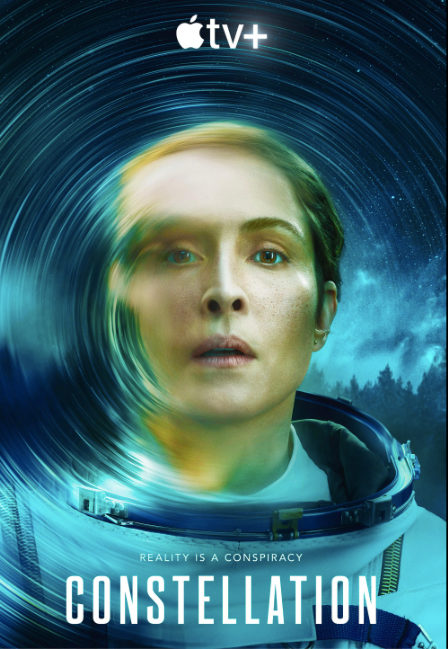
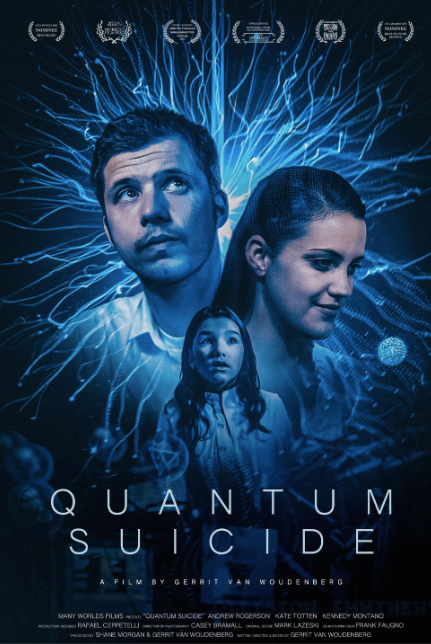
Dark Matter, the first two episodes of which debuted on Apple TV+ today, is the third alternate reality narrative I've seen on the screen in the past month (see my reviews of Quantum Suicide, a film created by Gerrit Van Woudenberg which should be streaming on some major app by the Fall, and Constellation, another series on Apple TV+).  All three bounce off the at-once famous and infamous Schrödinger's cat.  Quantum Suicide has the feel of Primer and the work-at-home scientist.  Dark Matter, as of the first two episodes, has a similar feel.  And I'm beginning to think I don't want to think about these matters too hard, because the more I think about them, the more I think it's possible that I could be in an alternate reality myself, right now.  But, hey, I'm so dedicated to doing this review, that I'll risk it, anyway.

[Some spoilers ahead ... ]

One thing that makes Dark Matter, adapted by Blake Crouch from his novel of the same name published in 2015 (which I haven't read), different from the many other alternate realities that I've encountered on pages and screens is that the two versions of the lead character Jason, once the story gets going, share the same knowledge of themselves and the alternate worlds they inhabit, up to a point.  Or, to be more precise, the two versions of Jason have switched realities -- for some reason we do not yet know -- and each quickly learns about their new reality, while retaining knowledge of their original reality before the time that their original reality split in two.  

We also are beginning to understand that the fork in this particular double reality happened 15 years earlier, when Jason had to make a decision about how he felt about his girlfriend Daniela's pregnancy.  Our story begins in the present, with Jason and Daniela happily married, with Charlie their 15-year-old son.  Before too long, Jason is kidnapped and ends up in an alternate reality in which Jason didn't want to be a father, Daniela had an abortion, and they're living separate lives.  As the two episodes unfold, with an appealing mix of break-neck action and philosophical contemplation, we find the Jasons beginning to struggle with the question: In one reality, he's a happily married father, but he and Daniela have lackluster careers.  In the other reality, Jason is a pathbreaking, enormously successful physicist and Daniela a famous artist, but neither has much of a personal life.  Which life will/would Jason choose?  That is, assuming Jason has the power to now make such a choice.

I'll definitely be watching every episode of this new series, and posting reviews here as appropriate.

See also 1.3 Missing Fingers ... 1.4 The Multiverse Unveiled ... 1.5: The Lesson ... 1.6 "A Bunch of Chicagos" ... 1.7: Obama Tower ... 1.8: A Bevy Of Jasons ... 1.9: Science Fiction and Horror


Sunday, May 5, 2024

Review of Sarah Seltzer's The Singer Sisters: The Musical Mystique


There's a meta-genre of fiction epitomized in different but overlapping ways by Eddie and the Cruisers, Rob Reiner's This Is Spinal Tap, and Daisy Jones and the Six -- the first and the third adapted to the screen from novels -- that helps us understand what those who make music that lights up our nights are doing when they're off-stage and not in the studio.  Sarah Seltzer's The Singer Singers, a debut novel to be published this August, not only fits well in that narrative family, but in some ways exceeds it.  I'd expect to see it adapted on some kind of screen before too long.

The Singer Sisters actually tells us two stories, deftly interwoven.  One is a moving snapshot of the folk-rock music scene,  and therein the larger music venue in which folk-rock played, in the last third of the 20th century.  The other is a tableau of upper middle class Jewish culture, in New York City, Boston, and beyond, in the same period of time.

The Singers -- aka the Zingleman sisters -- strive to succeed across two tempestuous generations along with other fictional singers and writers, against a backdrop of real superstars that even non-devotees of folk-rock will instantly recognize.  The characters worry about "stealing from Dylan".  One of the singers concludes that "Joan Baez was right and Dylan wrong, that kindness mattered more than genius" (I would say that both are crucial).  There's a quote from Gordon Lightfoot's "Early Morning Rain" -- "see the silver bird on high" -- and a mention of Phil Ochs (not a superstar but shoulda been).  And there are fictitious characters that the cognoscenti will surely know, like the rock critic who uses his way with words to unfairly lambaste brilliant work (as the real rock critic did to Phil Ochs -- not to mention Paul McCartney). Meanwhile, the Singer songs are not only spoken of by the characters, but Seltzer actually delivers more than a dozen sets and snippets of original lyrics, demonstrating a considerable talent not only as a novelist but a lyricist, and leaving the reader yearning to hear them put to music and fulfilled in song.  In addition to a movie or a limited TV series, The Singer Sisters also has the makings of a Broadway musical.

The Zingleman sisters are Jewish, and their Yiddishkeit permeates the novel, not only in cream sodas, but their parents' wise view that they'd rather see their children fed with goishe food than go hungry without it. In this sense, The Singer Sisters has a kinship with Philip Roth's Goodbye Columbus, and I hope the novel is recognized as the compelling portrait of Jewish culture in America that it is.  It's especially important, given the rising wave of anti-Semitism that's afflicting our country and the world.

In case it's not obvious, The Singer Sisters is very much a woman's novel, explored in sisterhood, motherhood, and daughterhood, with love, heartbreak, pain, exultation, and a panoply of uniquely female emotion in every chapter.  But men might well get a necessary education from this novel too, and I heartily recommend it to any human being.

more about The Singer Sisters here.

============


my interview with Sarah Seltzer

============


"Paul Levinson's It's Real Life is a page-turning exploration into that multiverse known as rock and roll. But it is much more than a marvelous adventure narrated by a master storyteller ... it is also an exquisite meditation on the very nature of alternate history." 

-- Jack Dann, Fiction Writer's Guide to Alternate History


Tuesday, April 30, 2024

Podcast Review of Rebel Moon, Parts 1 and 2


Welcome to Light On Light Through, Episode 384, in which I review Rebel Moon, Parts 1 and 2.

Written blog post reviews of Rebel Moon, Part 1 and Part 2.


Check out this episode!

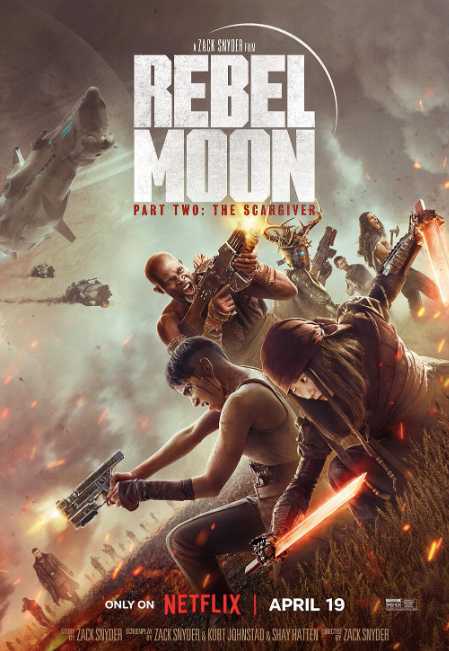
Rebel Moon, Part 2: The Robot and the Freshness


Just saw Rebel Moon, Part 2, on Netflix the other night.  I enjoyed it.  For some reason, my favorite character was the robot, JC-1435, aka James or Jimmy.

I'm not sure what that says about this second part of the movie (which, based on the ending, may well be the beginning of a series of two-part or one-part movies in a saga that now feels to me much more like Dune than Star Wars).  Maybe it's the antlers on Jimmy's head.  Maybe it's the voice -- you can't go wrong with Anthony Hopkins doing the voicing of anything.  But all in all, James conveyed a sensitivity that's rarely seen in robots or androids in movies or TV series, and which in its own way had a subtlety that even Data in Star Trek: TNG seldom quite achieved.

The battles were good and exciting, strong edge-of-your seat stuff.  The villains, however, often verged on cartoonish.   The heroes had more subtlety, and maybe that's because there were more of them than the villains.  I won't warn you about spoilers, because there won't be anything specific in this review, but I will say that this part of the movie which I hope will be a series concluded with fewer heroes than it had at the beginning.

Yeah, I hope we'll see more.  I like looking at the state of the human species at times like these, when we've gone way out into the cosmos, and met other intelligent beings, some of them now deadly foes, others of them loyal friends.  The problem with both Star Wars and Dune, and we can add Foundation to this list,  is that if we've done any reading or watching, we already know who the major characters are and who they will be.  Sometimes we even care about them so much, we don't like it if they're substantially changed in the new treatment (or at least, I feel that way).  But Rebel Moon, even though it deals with very well worn tropes, has a winning freshness and relevance to it.  The heroes in Rebel Moon, when they're not fighting Nazis, are harvesting grain.  Just like they do in Ukraine.

And that's why I'm totally aboard to see more.

See also: Red Moon, Part 1: Galactic Heroes and Villains


Tuesday, April 23, 2024

Podcast Review of Constellation


Welcome to Light On Light Through, Episode 383, in which I review the first season of Constellation.

Written blog post review of Constellation.

Mentioned in the podcast:


Check out this episode!

Sunday, April 21, 2024

50 Years After Understanding Media: Audiobook of My 2014 Keynote Address at Baylor University


Just published:  Audiobook of my 2014 Keynote Address at Baylor University, "50 Years after Understanding Media".  Listen to a free audio sample, buy the audiobook here.


Tuesday, April 16, 2024

Podcast Review of American Rust 2


Welcome to Light On Light Through, Episode 382, in which I review the second season of American Rust.

  • written blog post review of the second season of American Rust

Check out this episode!

Monday, April 15, 2024

Constellation: Alternate Realities and Family


I've read and seen many alternate reality stories.  Some are caused by quantum entanglement -- the mega version of two subatomic particles colliding and then moving in opposite directions but still intimately and instantly connected -- and some just happen or are already there.  I just reviewed a movie with that schema, and have written a few double realities stories and a novel with that premise myself.  But none explore the existence and impact of that on families the way that Constellation does.  Indeed, none do much of that at all in the at once deep and startling way that this new series on Apple TV+ does.

[Some spoilers ahead ... ]

The title and the start of the series makes you think it's a story about space travel.  But space is just the catalyst for a powerful, heart-tugging story that takes place right here on Earth.  Jo is an astronaut on the International Space Station, which suffers a devastating accident.  Most of the astronauts, cosmonauts, and space travelers from Europe manage to return to Earth.  Jo and Paul are left on station. Paul dies of his injuries.  Jo manages to get back to Earth, and that's when the fun begins.  That is, fun for us, quite the opposite for Jo and her family.

Jo soon discovers that things aren't quite the same with her family as when she left for the voyage to the ISS.  Her husband Magnus is surprised with how much Jo seems to like him.  Her daughter Alice doesn't seem quite the same person. We soon learn that this voyage to space has split Jo's reality into two -- literally.  There are, or were, two Jo's, two Magnus's,  two Alice's.  We hear about macro quantum entanglements.  In this case, two families, which in fact are two versions of the same family. And things get really crazy when they try to communicate with one another. 

There's a history to this -- the strange effect of going out into near space has been happening at least since the 1970s.  There's a touch of alternate history, too.  There's an Apollo 18 mission (in our reality, the Apollo Program ended with Apollo 17's trip to the moon).  But the heart of this carefully crafted narrative is the agony that Jo's two families -- the same family, in two slightly but significantly different versions --  go through as they struggle to make sense of Jo's return from space and what's happening to them.

The narrative is immensely savvy, with winks to all kinds of things.  There's a cat that lives and a cat that dies -- the same cat, actually, in alternate realities -- apropos Erwin Schrödinger.  Alice lives up to her literary tradition, in wonderland on both sides of the looking glass.  And the story is lifted by powerful performances, especially Rosie and Davina Coleman (twins) as the Alices, and Noomi Rapace as Jo.  Jonathan Banks as Henry/"Bud" Caldera, an astronaut on that Apollo 18 mission and still very much around in twofold form in the 2020s, puts in an even more memorable than usual crusty performance. And it was good to see Barbara Sukowa as Irena, a cosmonaut whose double plays a crucial role in this story.  Hats off twice to Peter Arness (Wallander) who created and wrote the series.

All in all, a thought-provoking, tightly woven, emotionally valent eight episodes of what could well be the first season of more to come, and I won't soon forget in any case.


Saturday, April 13, 2024

Quantum Suicide: Beholding the Eye of the Storm


Gerrit Van Woudenberg's Quantum Suicide movie (which he wrote, directed, and -- with Shane Morgan - co-produced) won the Best Sci-Fi Dramatic Feature award at the Philip K. Dick Film Festival last week in New York.  I was at the Festival, and moderated a panel with Van Woudenberg, but I had another appointment when the movie was shown at the Festival.  Van Woudenberg was good enough to give me the URL for a screener, which I just saw and greatly enjoyed.  Herewith a non-spoiler review.

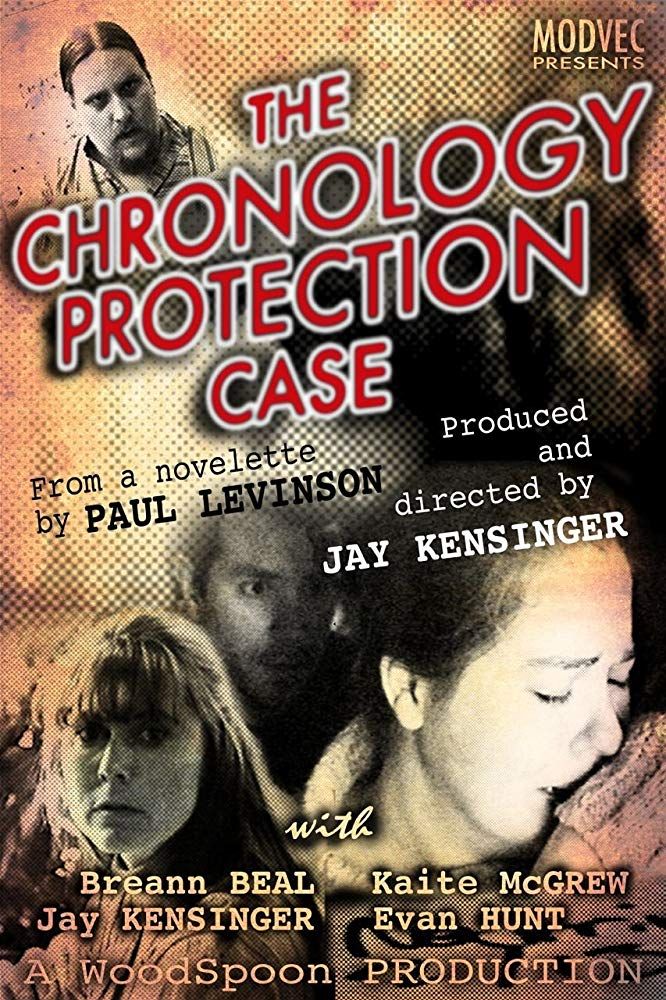
The clockwork of the movie is quantum mechanics, something which will be familiar to readers of my novelette, The Chronology Protection Case, and viewers of the short film that Jay Kensinger made from my story. The multifaceted gist of QM is that is that mere observation of quantum particles affects their location, speed, and existence; that when two particles collide and go off in opposite directions, anything that happens to one instantly influences the other, regardless of how far apart they are, and because this "quantum entanglement" happens regardless of the distance between the particles, it contradicts the widely held notion that speed of light is the ultimate speed in the universe.  Further, particles in themselves exist in either/or states, and observation of a particle determines which state the particle is in, and can even destroy it -- much like, I always think, what trying to fathom the texture of a snowflake with your fingers does to the snowflake.

Quantum Suicide takes this one crucial step further, drawing on the quantum suicide thought-experiment -- in which a gun pointed at the observer can either be shot at the observer's head or not -- and hypothesizing and weaving a story around the premise that therefore the observation of a subatomic particle can also destroy the observer.  Or, more precisely, the experimenter in the eyes of the observer.

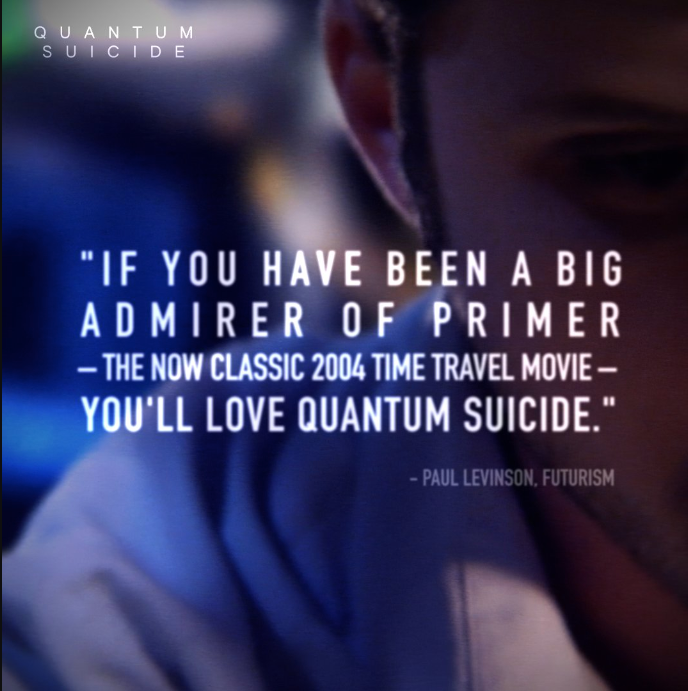
But don't think you need to be a quantum physicist to understand and really enjoy this movie.  I'm not, at least in this universe  If you have been a big admirer of Primer -- the now classic 2004 time travel movie -- or any movie that features the scientist or scientists doing concept-bending and earth-shattering work in their spare bedroom or garage, you'll love Quantum Suicide.  Like Kensinger's The Chronology Protection Case, Quantum Suicide features detailed scientific explanations woven into the action, which always feel to me to be something Hugo Gernsback would've greatly appreciated.   And as for work-at-home science, the movie not only features the scientist and his significant other, but their next-door-neighbor, a little girl who also spends her time building radios and ant farms. 

Kennedy Montano does a good job as that precocious girl, Emily, as does Andrew Rogerson as the work-at-home experimenter Cayman with a penchant for self-destruction, and Kate Totten as his life partner Gen who observes Cayman with increasing misgiving. The music in Quantum Suicide, an original score by Mark Lazeski, is suitably pitched between anxiety and terror producing. The movie is currently making the film festival rounds, nominated for six awards and winning another. It will likely be on one of the streaming services this Fall*.  If you crave a little hard science in your science fiction you can't go wrong with Quantum Suicide, and if you don't, you don't know what you're missing.

More information about Quantum Suicide here, including a synopsis of the plot and a trailer.

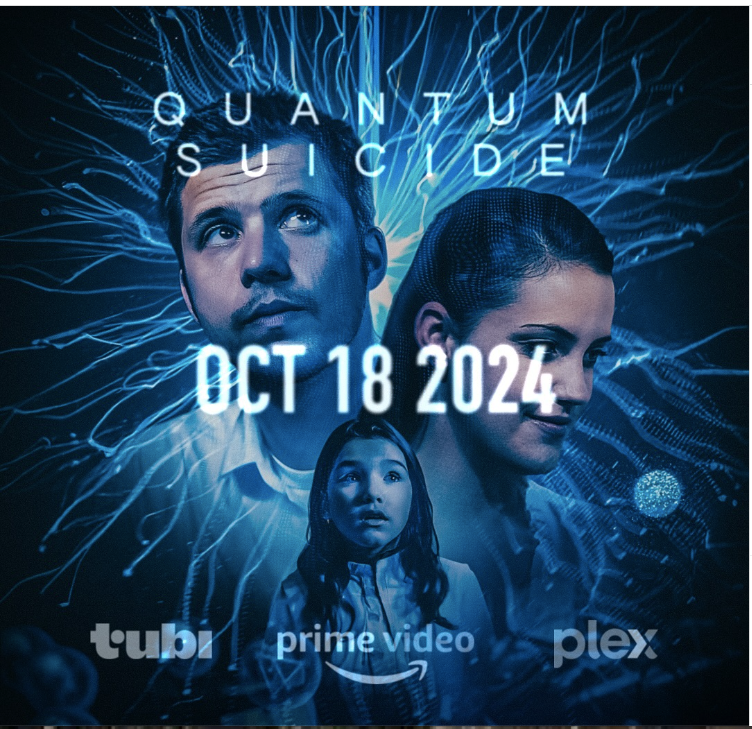
*Note added 13 October 2024: And in fact it will be debuting on Amazon Prime video October 18, 2024. Watch also for my podcast interview with Gerrit Van Woudenberg which will be up here and everywhere you listen to podcasts in the next few days.


watch the movie on Amazon Prime Video


Sunday, April 7, 2024

Fatal Crossing: Anatomy of a Serial Killer


[Big Spoilers ahead ... ]

I've heard -- in television shows and movies about serial killers, I've never done any research into them myself -- that female serial killers are very rare.  Fatal Crossing, the latest Nordic Noir TV series from Kristine Berg and Arne Berggren, does a masterful job of portraying one, and how she came to be.

The villain, Lisbeth/Jyte, tells her interrogator, the journalist Nora Sand, that she's not afraid of being abandoned, she's afraid of being forgotten.  That's as an astute a statement of the obsession with fame that I've come across.  As part of Lisbeth's quest for fame, she likes to be quoted.  I hope this fictional character appreciates that I've at least paraphrased her.

Fortunately, most people who value fame and enjoy a bit of it, including me, don't achieve it and seek to maintain it by killing people.  Lisbeth discovers how much killing attractive young women really appeals to her when she and her best friend Lulu are kidnapped by a man with a taste for harming young women himself, and Lisbeth turns the tables on him, not killing him, but running him and Lulu in support of satisfying her own deadly needs.

We follow the path to discovering this depraved menage a trois via the central character, Nora Sand, an intrepid journalist with her own backpack of emotional baggage.  She's played in compelling detail by Marie Sandø Jondal, whom I've never seen before on the screen.  Indeed, I've never seen a searcher for serial killers portrayed with quite the range of emotional valence Sand brings to the part.

Berg and Bergson deserve a lot of credit for this, as does Lone Theils, herself a Danish journalist and author of the novel of the same name from which this TV series was adapted.  Fatal Crossing is itself the first in a series of novels, and I very much look forward to seeing more of this Nordic Noir with a twist from this team.

See also my reviews of these other Berg and Berggren TV series:  Catch and Release and Outlier

And my 2022 interview with Berg and Berggren:


=====


Saturday, April 6, 2024

'It's Real Life' at the Philip K. Dick Film Festival


Welcome to Light On Light Through, Episode 381, a special Saturday episode of this podcast, in which Captain Phil and I talk about the Philip K. Dick Film Festival going on today at the Musuem of the Moving Image in Astoria, Queens; a panel I'll be moderating there at 2:40 this afternoon on the Anatomy of a Feature Winning Script; my novel It's Real Life: An Alternate History of The Beatles which has just been published and for which no movie or TV script has yet been written (but a radio play has been adapted from the first chapter, see the links below); Philip K. Dick; and much more.


Check out this episode!

Tuesday, April 2, 2024

Podcast Review of 3 Body Problem season one


Welcome to Light On Light Through, Episode 380, in which I review the first season of 3 Body Problem.


Check out this episode!

Monday, April 1, 2024

American Rust season 2: Zooming In on that Ending


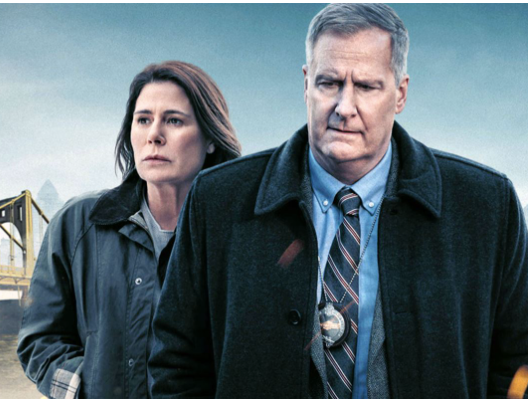
My wife and I really enjoyed the first season of American Rust on Showtime nearly three years ago, and we enjoyed the second season on Amazon that we binged in the past few days even more.

Everything ranging from the dialogue to the plot to even the ending was in high gear in this second season.

[And here now is an advisory about Spoilers in what follows.]

Plotwise, it took a really long time before you could tell who the killer was.  And once we found out and he was disposed of, our heroes were challenged by another killer, which led to the high-octane, ambiguous ending.

By high octane, I mean Grace and Del and Billy and family sitting around a dinner table for several harrowing minutes as Fisher gets them in his sniper sights, perched outside.  When Billy, now with the benefit of some Army training a marksman, spots a red dot, he goes outside to take care of the sniper.  And there second season ends, as we hear a shot ring out.  I looked over that final scene several times, and it looks to me that though Fisher is aware that Billy or someone has exited the house, he hasn't had time to refocus his aim on Billy.  So if there is a third season -- and I surely hope there is one -- I predict we'll find out that Billy shot and killed Fisher before he got off a shot.  (My wife takes a more ambiguous view.) On the other hand, it's certainly also possible that Fisher got off that shot, not at Billy, but at someone inside the house at that dinner table.)

I will say that one problem I had with that great ending is why didn't Fisher shoot at Del or Grace right after he had them in his sights?  Of course, I'm no sniper, so maybe that's what snipers do, play around with getting their targets just right.

Meanwhile, another acutely cliff-hanging note near the ending comes when Steve's assistant cop Hannah comes to in the hospital.  She was pretty much awake when Del gave Steve his confession.  And though Steve was killed by Grace -- another great scene -- and the recording of Del's confession destroyed, Hannah could trigger an investigation of Del and the three murders he confessed to if she remembers what Del said at that moment and anyone in authority believes her.  But, optimist that I am, I think even remembering what Del said is fairly unlikely given the bad shape that Hannah was in -- having been shot by Russell and barely hanging on that moment. Also, I assume that even if she remembers what Del said, anyone defending him at a trial could impugn Hannah's testimony, by letting the judge and jury know what condition she was in when she heard or thought she heard Del talking.

Now, I said that the dialogue was in high gear.  My favorite line: when Vic walks into the bar with his broken finger in a bandage, and the bartender asks him that perfect, sarcastic question.  Not only a great line, but she delivered it with just the right tone of voice.

I read somewhere that Amazon cares less about what reviewers are saying than how many people are viewing a series.  Here's hoping that they're legion, and we see a Season 3 before too long.

See also American Rust 1.1-2: Pennsylvania Noir ... American Rust 1.3: Highs and Lows of Life at the Same Time ... American Rust 1.4-5: Tightening Noose and Fraying Relationships ... American 1.6: The Debts ... American Rust 1.7: The Dead Can't Buy Drugs ... American Rust 1.8: Finally, Some Hope ... American Rust 1.9: Needed, Another Season, or at Least Episode


InfiniteRegress.tv