Chuck Todd interviews me about alternate histories

Friday, August 27, 2021

Clickbait: All That and More


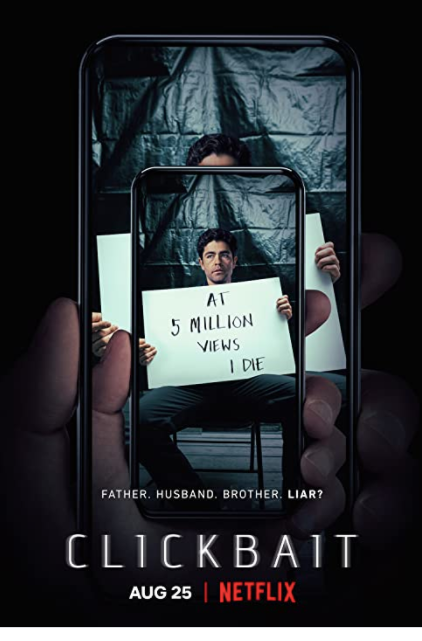
Just saw Clickbait, just up, eight episodes of riveting mini-series, on Netflix.  It was that good.

Nick Brewer, a happily married family man with two sons, is kidnapped and the apparent victim of a sadistic and dangerous video hoax. He ends up --

Well. that's the only spoiler I'll give you.  He ends up-- 

[SPOILER AHEAD]

He ends up dead.

The story then turns on why was he killed, who did this to him, for what motive?  Was Nick not the decent guy he seemed to be?  If not, how bad was he?  What did he do?  To whom?  Each episode unfolds like a nest of Russian dolls -- or it Chinese boxes -- with different answers which fit right in and seem to make sense, until the episode ends.  Characters turn on a dime from good to evil, and then turn out maybe not so bad after all.  Except one.

All of this works, not just because of the carefully sculptured plot, but because of the attractive oddity of the characters and the powerful acting that beings them across.  Zoe Kazan as Nick's sister Pia, Betty Gabriel as his wife Sophie, and Phoenix Raei as Detective Roshan Amiri are especially good.  There's something about Raei's portrayal of Amiri, for example, a logic, a vulnerability, a toughness, a heart on his sleeve, that makes me want to see more of this Oakland detective with big ambitions.   But they're all memorable, Pia's sassiness, Sophie's mix of anger at the world and devotion to her boys (Camaron Engels as Ethan, and Jaylin Fletcher), who also put in strong performances.  As does, while I'm at it, Abraham Lim as reporter Ben Park, too.  I've seen almost none of them before, and now expect to see a lot of them in the future.

Clickbait is also packed with plausible scenarios and villains, and I guarantee that you won't guess the ending.  Ironically, the weakest part of this powerhouse is the first episode, which seems a little too cute and clever, and feels like you've seen it before.  But once the narrative takes off, at the end of the second episode, you won't be clicking on anything else, as Netflix easily serves you what comes next in this story.


Thursday, August 26, 2021

Podcast: Foundation, COVID, Afghanistan


Welcome to Light On Light Through, Episode 188, in which Captain Phil on WUSB-FM Radio (Stony Brook, New York) interviews me about the Foundation series, how it relates to the COVID-19 pandemic, and the news that just broke this morning about the bombings in Afghanistan.   (Note: recorded before the news of the US casualties.)

Further:


Check out this episode!

Monday, August 23, 2021

2067: What's Good and Not

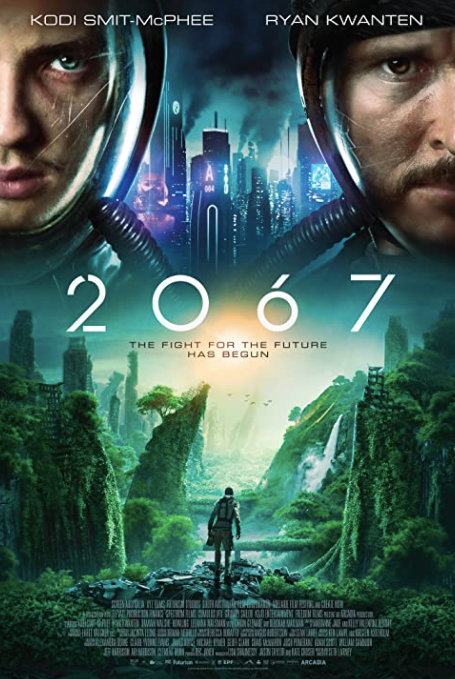
I finally got around to watching 2067 on Hulu, an Australian movie released back in October 2020.  Hey, it's a time travel movie, which I always think entitles reviewers to take their time to review.

And I liked the time travel part of this post-apocalyptic narrative.  The various twists and turns in time, in which the protagonist sees himself dead but nonetheless manages not to get killed, are very well tied up and explained in the end.  On that time travel account, I'd rate 2067 (written and directed by Seth Larney) pretty high,

Not so high on the post-apocalyptic part, though.  Our planet being ruined by an unhinged climate is the story of so many movies these days, that it has to be done with some kind of notable originality to be above the fold.  2067 was obvious and predictable on this account, although the vista at the very end was striking.

Similarly, the characters and their story was somewhat worn.  What fathers intend for sons, the perfidy of government officials, we've seen all of that way too often, as well.  I will say, though, that  Kodi Smit-McPhee as protagonist Ethan Whyte was good and even memorable in an odd but compelling way.

So, if time travel is your thing, as it is for me as a viewer, reader, and author, see 2067. It's a worthy, original entry in the genre.   If not, well, you might get more watching the Weather Channel.


Saturday, August 21, 2021

Podcast Review of Reminiscence


Welcome to Light On Light Through, Episode 187,  in which I review the new movie (released 20 August 2021) Reminiscence.

My written review is here.


Check out this episode!

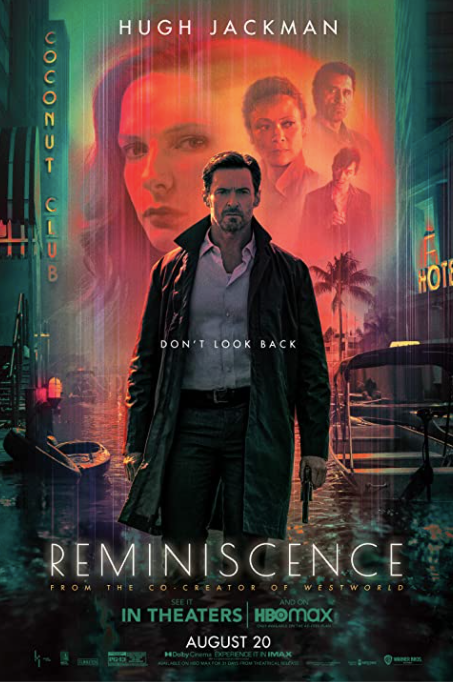
Reminiscence: Recalling the Many Things that are Good and Great about It


So here we are again.  Critics are giving Reminiscence (on HBO Max) mixed reviews, saying it's derivative.  I agree that it's derivative, but think it's excellent.  In general, I think being derivative is not a bad thing, and I disagree with the myopic critics who miss how well Reminiscence does it.

Yes, Reminiscence is reminiscent of Blade Runner.  Even more so in some ways of Total Recall, and for that matter, of all things Philip K. Dick.  But it also recalls a lot of Christopher Nolan's work, as well as movies as far back as the 1940s like Laura, and even Body Heat in 1981 to some extent.  And if it harkens to Westworld, well, Lisa Joy plays a central creative role in both.

I was a little bothered by Thandiwe Newton's character Emily motivated by the exact same thing as her character Maeve in Westworld -- finding her daughter -- but that's just one unnecessary misstep in a long list of gambits and interludes done very well in Reminiscence.  Among them are the deft mix of a flooded world and the refuge in memories, and outstanding acting by Hugh Jackman in the lead role, and Rebecca Ferguson as his all-consuming love interest Mae.

This is first time I've seen Ferguson, and I'm very impressed.  She's Swedish, and even before I knew that, she reminded me of Ingrid Bergman.  Come to think of it, Jackman's Nick Bannister reminded me a bit of Bogart.  Is that supposed to be bad?  Of course not.  It makes Reminiscence even more fun to watch.

I won't go into the plot, so as not to risk spoilers.  I will say that I like happy endings, and I'll leave it to you to decide where the ending of Reminiscence resides on the happy/sad meter.  Nick tells Mae that there are no happy endings, especially of happy stories, presumably because to end them is sad.  Mae responds that therefore she'd like to hear a happy story that ends right in the middle.  That's the kind of dialogue that lifts Reminiscence into a top tier, and if it reminds us of triumphs in cyberpunk ranging from Incandescence to Altered Carbon, so much the better.


Friday, August 20, 2021

Films Before Frankenstein, Parts 1 and 2

I was invited by Phil De Parto to give a lecture/lead a discussion for the Science Fiction Association of Bergen County about science fiction and horror movies prior to Frankenstein, in May 2021.  That event went so well -- aka left so much more to be covered -- that Phil invited me back in August 2021 to give a Part 2 of that lecture/discussion.   Both were via Zoom and were recorded.  Here they are -- enjoy!


Friday, August 13, 2021

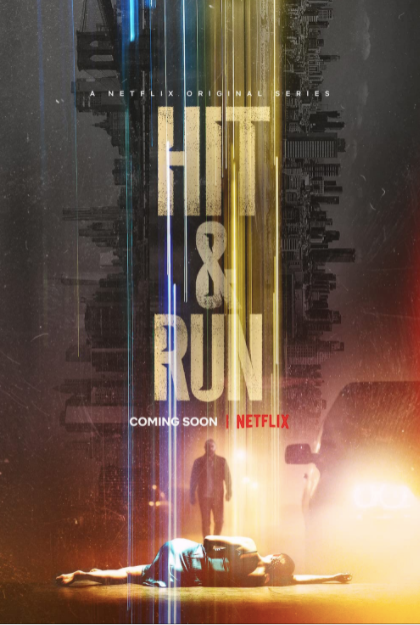
Hit and Run: Lior Raz and Silvercup


I've come to know Lior Raz as one of the creative powerhouses (along with  Avi Issacharoff) of three seasons and a fourth forthcoming of Fauda, about the best depiction I've ever seen of the Israeli-Palestinian conflict, viewed through the eyes of an Israeli undercover unit, in which Raz plays Doron, and therein stars in the series as well.

So of course I was going to see Hit and Run, a new series which debuted on Netflix, which also was co-created by Raz and Issacharoff, and also stars Raz.  This time he's an Israeli tour-guide, married to American ballet dancer, who is killed in a hit-and-run before the first episode is over.  Before the nine episodes of this first season are over, we see Raz's Segev as much in New York as in Tel Aviv, and a narrative seething with action and a cast who promise to become memorable in their first scene and usually do.

My favorites this time, in addition to Segev, are Tali (played by Moran Rosenblatt, also in Fauda), a resourceful, pregnant Israeli police detective who is Segev's staunchest ally in Tel Aviv, and Naomi (played by Sanaa Lathan, not in Fauda, but in The Affair), who's an investigative reporter with New York Magazine, was once in some kind of commando unit with Segev, and is now his staunchest ally in New York.

In addition to the non-stop action and complex fast-twisting plot, there's also more than a fair share of death meted out to all kinds of characters, which I consider a plus in this kind of series, because you begin to realize you never will know who will survive a given episode, because in fact you don't.  The scenery was also good.  As a life-long New Yorker, I was happy to see Silvercup Bakery -- or what was Silvercup Bakery -- in one of the many chases on the highway scenes.  Hey, the bread itself was white bread, probably the worst thing to give a kid, but it sure made a tasty sandwich.

Hit and Run was better than tasty, and I'd be stunned if there wasn't a second season, but I know less about the inner workings of television series than I do about bread, so who knows.  But I'll be back here as soon as I finish bingeing it, if there is a second season of Hit and Run, so see you back here.


getting an education about the workings of television from someone who knows


Monday, August 9, 2021

Outlier: Nordic Noir, Criminal Minds Style


Well, there's no team of FBI profilers working the case in Outlier, in fact no FBI and not much of a team at all,  but Maya Angell, a doctoral student in London who goes back to her hometown in northern Norway to investigate the killing of a young woman, would fit right in with the BAU.

She begins her work in Norway by telling the incompetent police chief that the man he has locked up for the crime couldn't be the killer, because he acts on his emotions too quickly.  The killer, Maya quickly realizes, is a serial killer, who operates much more carefully.

And then things get really interesting, as Maya realizes that some kind of sexual attack she experienced as a child, but can't quite remember, may in some way be connected to this serial killer.  Meanwhile, we get to meet him.  He's married, with two kids, a family man who gets his kicks by kidnapping and killing women when he's out on his job, installing video equipment in peoples' homes.

Maya is an intelligent, resilient, though deeply wounded character, and we get to slowly see how she wound up that way as she pursues the case.  Good acting in this role by Hanne Mathisen Haga, and the northern scenery is vivid and convincing.  The other characters range from interesting to ok.  I found her London fiance who doesn't want Maya to pursue this case to be annoying.  But Hanne's performance brings this definitely not-ensenble series home to a powerful and somewhat surprising ending.

This was just the first season of Outlier.  Will there be a second season?  I hope so.  But whatever happens, hats off to Arne Berggren, who wrote, directed, and executive produced this off-beat nordic noir series, which makes especially fine viewing on a few hot August evenings.


Sunday, August 8, 2021

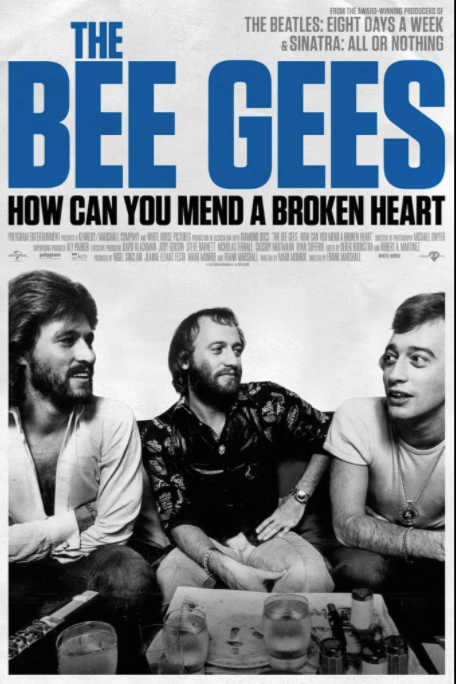
How Can You Mend a Broken Heart: Watch this Documentary, It'll Help.


For as long as I can remember, the Beatles have been my all-time favorite group, with the Rolling Stones and the Beach Boys vying for second place.  The Bee Gees were in my top ten, for sure.  But several things in the past few weeks have brought them into vying for second place too, in my heart and mind.

How Can You Mend a Broken Heart, a documentary named after one of the Bee Gees' great songs (they have so many), which came out last year but my wife and I just saw last night, was one big reason.  It brought home what I already knew, that the Bee Gees, who had such wonderful recordings in the 1960s, like "Massachusetts" (more on that below) and "To Love Somebody" that I loved back then about as much as the Beatles, went on to have an even more successful disco career (with songs that I liked enough, but not as much as their original 60s work), and then went on to record and write all kind of other great songs in the 1980s (with a concert in Australia at the end of that decade that was just nonpareil -- here's a sample -- I gotta say, these two lines from "Heartbreaker" -- "This world may end.  Not you and I" -- are among the best expressions of trueest love in this universe).

The Beatles and the Beach Boys were effectively finished by the 1970s (on the Beach Boys, without Brian Wilson performing and writing new material, they just were a different group).  The Stones continued, but were never quite as good after the departure of Brian Jones.  They had some good songs into the early 1980s -- like "Start Me Up" -- but not as huge in their influence on our popular culture as the Bee Gees' disco phase, the epitome of which was probably in the Saturday Night Fever movie.  So on the basis of just that level of analysis, I now put the Bee Gees in a tie for second place along with the Stones and the Beach Boys.

The Bee Gees of course are known for their harmony.  There are few sounds in this world as appealing and comforting as Beatles' three-way harmony, but the Bee Gees not only came from the same city (so pronounce words the same way) but the same womb.  Their extraordinarily beautiful and tight harmony for all the world often sounds like one person singing three parts.  Three of the Beach Boys -- Brian, Carl, and Dennis Wilson -- were also brothers.  But the fantastical, whispy, soaring arrangements by Brian took the voices in directions other than the vibrating, magical sound of the Bee Gees.

And then there are the individual voices themselves.  I would say Robin has the best voice of every one of the members of the Beatles, Beach Boys, Rolling Stones, and Bee Gees.  Listen to him sing "Massachusetts," and tell me that voice literally does not only touch but massage your heart.

Which brings me to one other reason (I'm not going to tell you all of them) that I've come to hold the Bee Gees in even higher esteem.  Listen to this gem of a cover of "Massachusetts" by the Last Band on Earth, a father and his two young teenage kids (a girl and a boy).  Robin's voice and that song are so thoroughly penetrating of the soul, even this cover manages to capture and convey some that.

Back to the documentary, Barry says near the end that he'd rather have his brothers alive and with him, than all the great hits that they made.  I really wish Robin and Maurice were still with us, too.  But it’s also true that the music they made brings me joy every day.


Monday, July 26, 2021

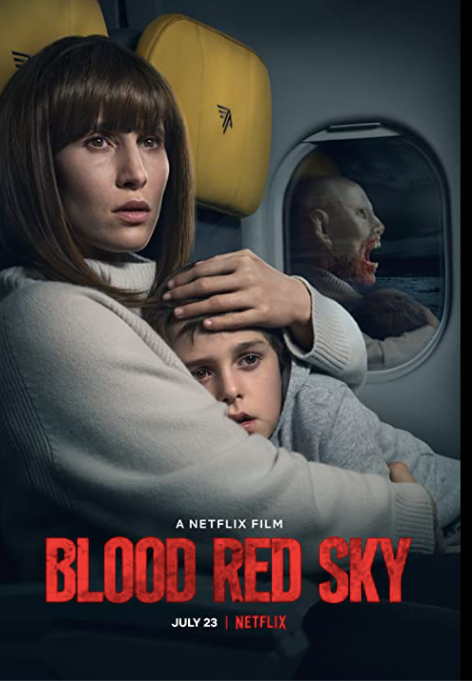
Blood Red Sky: Red-Letter-Day Outstanding


I'm not the biggest fan of vampire movies, but I really liked Abraham Lincoln: Vampire Hunter, and Netflix says Blood Red Sky is currently its most watched new movie, so I gave it shot.  And I think it's outstanding, or, more precisely, a powerful, original mix of two venerable genres -- terrorist hijacking of a plane, and vampires -- with pounding action throughout and a great can't-catch-your-breath ending.

I should add that I haven't been in a plane since November 2019 due to the pandemic lockdown, and I didn't intend to with the recent surge of the Delta variant, but after seeing this movie I don't think I'll go on a plane for a while even if the vaccine I took early in the year were 100% effective and everyone was vaccinated.  

So here's the plot in a nutshell, without any big spoilers.  A plane is hijacked.  Unbeknownst to the hijackers, the young mother on board with her pre-teen son is a vampire (that is, she is and he's not).  Most of the movie is a backstory of the plane's harrowing flight -- the movie starts when the plane lands -- and there's a backstory within the backstory in which we find out how the mother became a vampire, when her son was just a little baby.  

In addition to the backstory within the backstory, Blood Red Sky has other nice touches.  When mom's in full vampire mode, she looks like a character out of the The Cabinet of Dr. Caligari, which makes good pictorial sense, given that Caligari and Blood Red Sky are both German films.  And I liked that one of the heroes of the narrative, Farid, is Muslim.

But, listen, this movie is not for the weak of stomach.  These vampires are savage.  But that savagery is warranted, and makes for several top-notch emotional scenes in which Nadja the mother is torn between vampire lust for blood and motherly love for her son Elias.  That close call of a primal conflict makes for a quite powerful movie.


Thursday, July 22, 2021

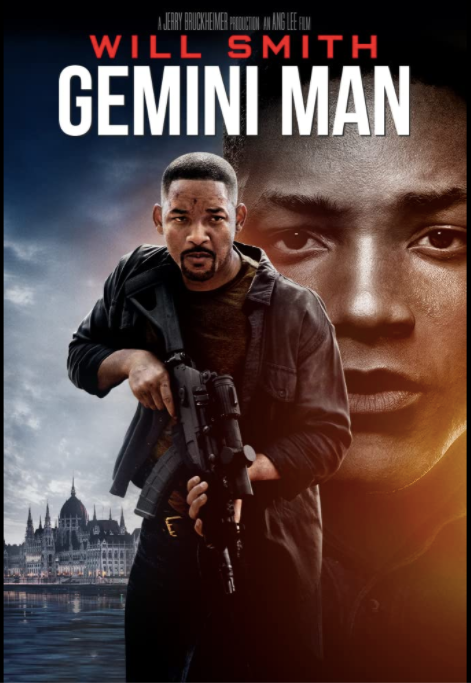
Gemini Man: A Missed Time-Travel Op


I saw Ang Lee's 2019 Gemini Man on Hulu last night.   Mainly because of what it could have been, but wasn't.  It had lots of star power with Will Smith and Clive Owen, and lesser-known Mary Elizabeth Winstead was good, too.  The action scenes were excellent.   As to the plot ...

Well, the story features Smith's Henry Brogan fighting a younger version of himself, sent to do him in by Owen's Clay Veris.   Smith not only acted well, but looked his younger self via a de-aging process I last saw in The Irishman, which worked very well.  My initial thought and expectation is this could amount to a good time-travel narrative, in which young Brogan has the advantage over his older self, in that the younger version could kill the older version, but not vice versa, since if the younger version were killed that would instantly erase the older version from existence.  (Of course, that time travel scenario would have had to account for why the older Brogan didn't remember being attacked by a younger version of himself, but that could have been fun to work out, too.)

Instead, the explanation for the older and younger Brogan is cloning.  Now, that has the advantage of certainly being possible in reality, in contrast to time travel, which (a) hasn't happened yet (as far I know), and (b) is likely to never happen, owing to the paradoxes involved (like the grandfather paradox: if you travel back in time and prevent your grandparents from meeting, how did you exist to travel back in the first place) and the "solutions" which are even more incredible than time travel (travel to past generates alternates realities, one in which the time traveler exists and one which the time traveler does not).  But, in my view, the cloning explanation for more than one Brogan makes for a more mundane, less intellectually challenging, even boring narrative.

But, hey, if I feel so strongly about that, maybe I should write a story with that time-travel mechanism, and get it to a Hollywood producer, rather than complaining about Lee's movie (for which Game of Thrones' David Benioff wrote the screenplay, with two others, so it's not even mostly Lee's fault).  Anyway, see the movie, if you haven't already, and see what you think.


Tuesday, July 20, 2021

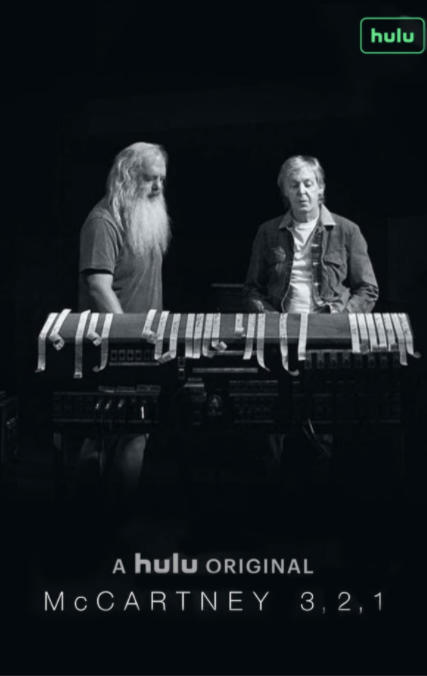
McCartney 3, 2, 1: Guide to Eternity


The first thing I want to tell you about McCartney 3, 2, 1 -- Rick Rubin's incandescent black-and-white three-hour six-episode interview with McCartney on Hulu -- is that in addition to being mind blowing and musically joyful, it made me very sad.

Not just because John and George should by all rights still be with us.  But because Paul says at some point that since the Beatles are finished, their work now complete, he's become a fan of the Beatles, and much better able to appreciate their music which includes his songs, his voice, his bass, his ideas for arrangements, and much more.

And I don't want the Beatles to be finished.  I want them to go on forever making that uniquely wonderful and always evolving music.  And though I know that's impossible, I don't care.  The pleasure that the Beatles brought to me and so many millions and millions of people was and is magical.  Including "Free As A Bird" and "It's Real Love," recorded after Lennon was gone, and which weren't in this documentary and I missed.  But if magic is involved, anything is possible, isn't it?

The conversation, though, was one for the ages, and my guess is it will be watched and listened to and carefully analyzed for thousands of years.  A lot of it I already knew, like how McCartney arrived at Lennon's house with an essentially complete "Here, There, and Everywhere," which may be McCartney's favorite Beatles song.  And a lot of it I didn't, like how Lennon really liked "Here, There, and Everywhere," and how pleased McCartney was when Lennon told him so.

Just hearing the tracks of the songs that Rubin played and played with, as a beckoning of McCartney's remembrances and explanations, were of deepest pleasure to the ear, the heart, and soul.  As some of you may know, ever since The Village Voice published my "A Vote for McCartney" in 1971 -- my defense of McCartney's solo albums, after he left the Beatles, in the face of the Voice's dyspeptic critic Robert Christgau's attack -- McCartney has managed to be more to me than a member of the Beatles.  That essay, after all, was my first published article.  But seeing McCartney 3, 2, 1 brings home just how much this genius contributed to the Beatles, and how he strove to do that.   I used to tell people in the 1970s that I thought the Beatles' music would live as long as Shakespeare's plays.  I'd add now that Rubin's movie will be an important accompaniment to that body of music, more magnificent than ever.


Saturday, July 17, 2021

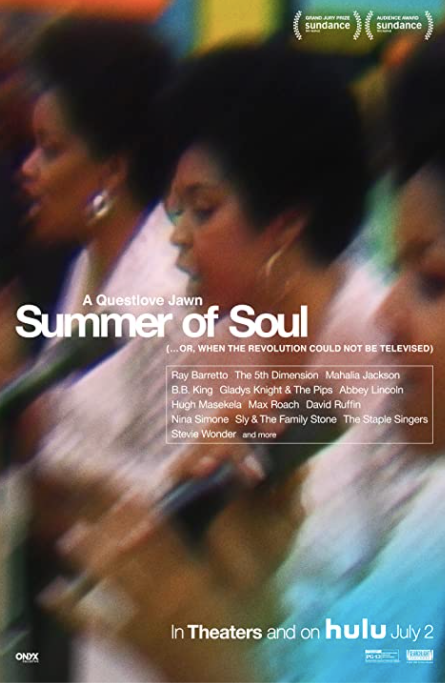
Summer of Soul: Immensely Enjoyable and Crucially Educational


My wife and I just saw Summer of Soul on Hulu.   We loved it.

It's a musical documentary, directed by Questlove, about a festival in Harlem in July 1969, in what is now Marcus Garvey Park.  Around the same time as Woodstock and human beings first walked on the Moon.  The concerts were superbly recorded -- both sight and sound -- at the time.  The line-up included included Stevie Wonder, Sly and the Family Stone, Nina Simone, Gladys Knight and the Pips, the Fifth Dimension, the Staples, Mahalia Jackson, the Chambers Brothers, David Ruffin (he had just left the Temptations), and more.  The mystery is why hasn't this been seen until now?

The obvious answer is racism, but there has to be more to it than that.  I'm wondering why didn't Berry Gordy pick it up, for example?  It's true that Woodstock sucked up a lot of the energy, but surely there were a sufficient number of people who would have been thrilled to see this back then, or any time since then, to get this fabulous tableau of a movie into theaters and/or onto old-fashioned television screens, so the world could have seen it long before now.

Anyway, here's some of what I thought was most rewarding in this documentary:

  • It was great to see Stevie Wonder, the Staples, and the Fifth Dimension sing songs I didn't know.
  • It was great to see some of these groups -- especially Sly and the Family Stone, David Ruffin, and the Fifth Dimension -- sing some of their hit records, aka songs I did know.
  • About the Fifth Dimension, it was also wonderful seeing Marilyn McCue and Bill Davis, Jr. in the present day, or close to it, watching and so deeply moved by their performances back in 1969.  Clearly, this was the first time they were seeing this, too.
  • John Lindsay was Mayor back then.  He remains, to this day, the only Republican I ever voted for (in 1969, the first time I voted, come to think of it) or liked.
  • Jesse Jackson was inspiring as always to see on stage back then.
  • The commentary, by Charlayne Hunter-Gault, Lin-Manuel Miranda, Darryl Lewis, and many others, was top-notch and clarifying.
One point made in the documentary that I don't agree with is the oft-heard lament that the money spent on the Moon landing could have been better spent elsewhere here on Earth.  My take on this is that human beings are citizens of the universe, not just this planet, and getting our species out into the solar system and the galaxy and beyond will be a boon for all humanity.

But that doesn't stop in the slightest this documentary from being a masterpiece, and the rare combination of something that is immensely enjoyable (the music) and crucially educational on the subject of Black Americans being treated fairly and decently, a goal which we still in this country are clearly a long way from achieving.


Friday, July 16, 2021

Podcast: Thinking about Asimov's Foundation on Apple TV+


Welcome to Light On Light Through, Episode 186,  in which I consider the history, implications, and possibilities of Isaac Asimov's Foundation series debuting on Apple TV+ this September.


Check out this episode!

Sunday, July 11, 2021

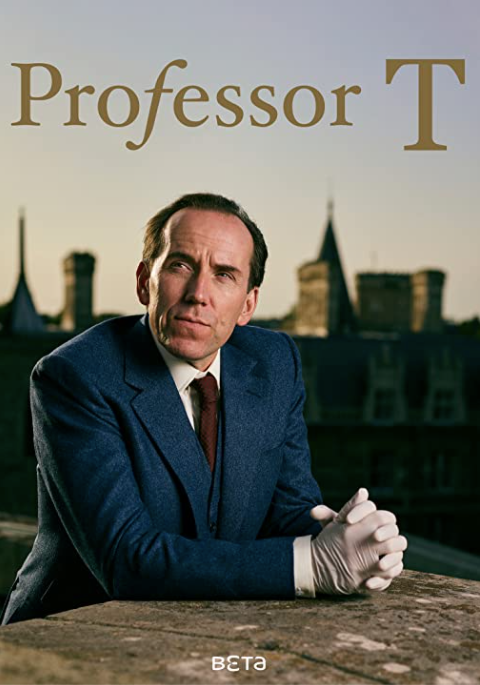
Professor T: Sherlock with a Different Name in the 2020s


Checking in with a quick review of Professor T, a British version of a Belgian TV series which debuted on PBS tonight.  It's quite good.  An idiosyncratic professor of criminology at Cambridge who is mildly OCD and very reminiscent of Sherlock Holmes, called in to help the police with a variety of cases.

Of course the professor is reluctant but of course the professor agrees.  He's brilliantly perceptive, able to hypnotize a reluctant victim,  and bald-facedly lie to a suspect to secure a confession.  The Professor is backed up by a suitably modern of cast of police, ranging from those are thrilled to have him work with them to those who are threatened.

The Cambridge location is anything but modern, though, and that's a big part of the series' charm.  If you subtract the current cars and other 21st century, you could indeed be watching a story taking place in the 1890s or 1920s or 40s.  That's because, in addition to Cambridge, Professor T moves and talks in an ageless way.   Good job by Ben Miller (Bridgerton) playing the professor.

The series consists of new cases in every episode -- rather than an investigation that continues across episodes -- and while I usually prefer the continuing format, the standalone episode format is part of the old fashioned charm of this series, too.  It's on a little too late for me to brew a pot of tea and sip it as I watch the show -- with mik, thank you -- but I'll think of Professor T when I have cups in the morning and during the day, will look forward to watching it on Sunday evening, and will do my best to report back to you about it later that night or straightaway on the next day.


                   another kind of police story 

Virgin River 3: Good to Be Back!


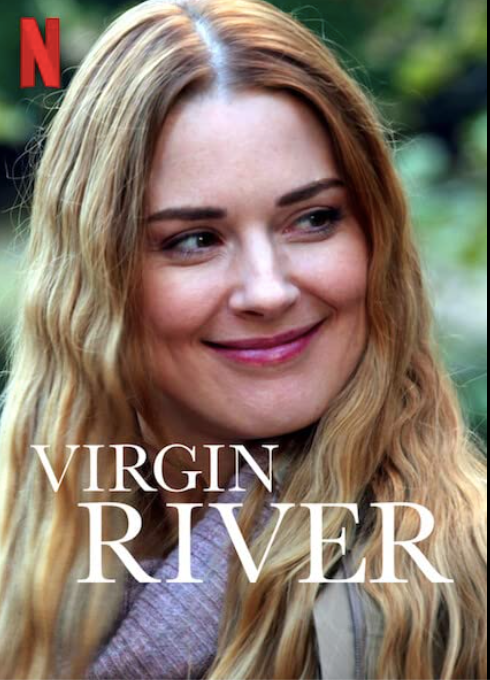
The wife and I binged Virgin River 3, just up on Netflix.  We really enjoyed it, which is to say, we got totally caught up in the romance, the heartbreak, the roller-coaster ride of soap opera life in this fictional town on a river with sunsets at least as beautiful as Cape Cod Bay, where were for all of June.

Here are some bullet points of what I most liked, and didn't (well, just one), and of course these are spoilers, so don't read on if you haven't yet seen this third season [spoilers follow]:

  • It was great to see Mel and Jack together for most of this season.   Because that's where they belong.   Alexandra Breckenridge and Martin Henderson did their customarily fine jobs in these roles, and it was a relief especially to see Henderson as Jack again after he played some weirdo bad guy in The Gloaming, which actually was weird across the board.
  • Accordingly, I wasn't happy with Jack breaking up with Mel for her own good. It was necessary in terms of the ensuing narrative, but didn't make sense given how much he'd longed for her in the first two seasons.
  • Tim Matheson as Doc Mullins was just outstanding, speaking truth to Jack and anyone who would listen at all the crucial moments.
  • Hope was absent from this season, except for a Facetime call or two, because Annette O'Toole couldn't travel due to the pandemic.   The narrative did a good job of working around her absence.  There seemed several times when Hope might return from back East, but the pandemic said otherwise, and you could almost see the narrative being rewritten at those moments.
  • The supporting characters and stories were all strong.  My favorite was Brie (Zibby Allen) and Brady (Benjamin Hollingsworth), tipping at least a little into the criminal element of this narrative.
  • Lilly's death was heart-rending, and was especially resonant with our world today, in which untimely death has been all too present.
  • The very last words of this season were a letter-perfect soap ending, ending right in the middle of a conversation between Mel and Jack (my wife tells me such endings are hallmarks of soap operas).
There's a winning joy woven deep into Virgin River, and I'm up for season 4 as soon as it's on Netflix.

See also Virgin River: The Scenery, The Food, The Acting, and the Story


Cape Cod sunset 


Thursday, July 8, 2021

Podcast Review of The Tomorrow War


Welcome to Light On Light Through, Episode 185,  in which I review The Tomorrow War.    So, I saw today in The Hollywood Reporter that The Tomorrow War has been picked up for a sequel on Amazon Prime Video -- which supports my view  that, contrary to some nitpicking critics, The Tomorrow War is one excellent movie!   Listen to my review and find out why.  (No real spoilers, except at the very end of my review.)


Check out this episode!

Wednesday, July 7, 2021

24 seconds about Social Media


I offer 24 seconds about the impact of social media. Listen to the entire 23-minute interview here.  Also in this interview: Mary Ellen Slater, Elena Valentine, Benjamin O'Keefe, Sven Smith.

Monday, July 5, 2021

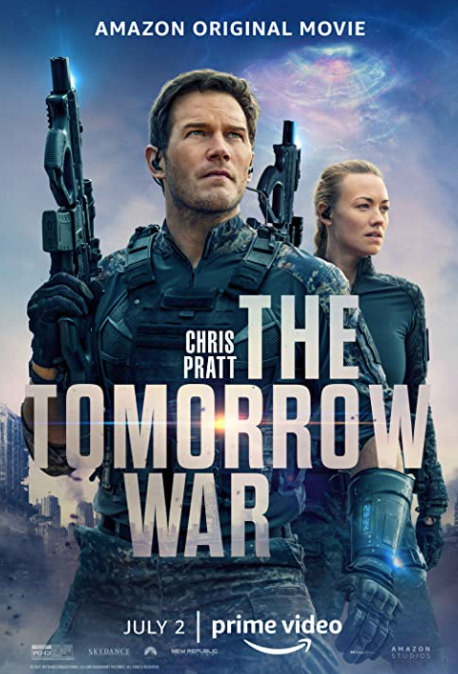
The Tomorrow War: Cli-Fi, Interstellar, Time Travel


I saw The Tomorrow War on Amazon Prime Video late last night.  Some myopic critics gave it mixed reviews.  I thought it was just excellent.  And not because of the time travel, which was ok, but because of the unfolding plot of the movie, which brings in interstellar species, climate change, and parent-child relationships in an original and rewarding way.

The time travel set-up is the most ordinary part of the movie.  Humans from the future come back to our time to recruit soldiers to help in a desperate, losing fight against a species from outer space that moves around here on Earth so quickly they're very difficult to kill.   Severing their heads from their body does the trick, but that's tough to do when dozens of these creatures are on screeching lightning attack for every one human soldier.  So ... former Green Beret and biology teacher Dan Forester is sent pretty much on a suicide mission to maybe briefly delay the extinction of humanity when he's recruited aka yanked from 2022 and whipped three decades into the future.

Until he meets his daughter, Muri, whom he last hugged when she was a precocious little girl, now in the future a fighting colonel and a brilliant scientist working on some last hopes for humanity.   Here's where the movie takes off.  The relationship between the embattled Muri and her father is heart-rending and beautiful.  Dan helps her develop a toxin that can kill the horrific creatures, but of course all they have is a small amount of it, so the only way it can save the day is for Dan to go back in time and kill the Whitespikes (that's their name) right after they first arrived.

But when did they arrive?  Much earlier than anyone thought.  And here I'll leave this recounting of the narrative, on the slight chance that you're reading this and haven't seen the movie.*[footnote spoiler]  But the location and time of the interstellar arrival and why the monsters took so long to emerge is a compelling slice of cli-fi.  

Meanwhile, the action scenes -- the battles with the Whitespikes -- are breathtaking and top notch.  Yvonne Strahovski -- who was excellent in Dexter and 24: Live Another Day -- was even better as Muri in The Tomorrow War.  J. K. Simmons is a pleasure to see in any role, and he was perfect as Dan's estranged father.  And Chris Pratt was fine as Dan, reminding me at times of Tom Cruise in Mission Impossible.

My advice: forget about the nitpicking critics.  Sit back and enjoy an adrenaline pumping, thought provoking, A-1 summer science fiction movie.


a different kind of time travel

=================================================


*I will say, for people who saw the movie, that we could call the world in which Dan goes into the future, before he destroys the Whitespikes, World 1.  In that world, the adult Muri dies.  The destruction of the Whitespikes instantly shifts World 1 into World 2, where the narrative concludes with Dan reunited with his family and young Muri.  She probably will become a brilliant scientist, but she won't be fighting the Whitespikes and won't be killed by them, because they no longer exist.  That part of the story is the best time travel part.

Sunday, July 4, 2021

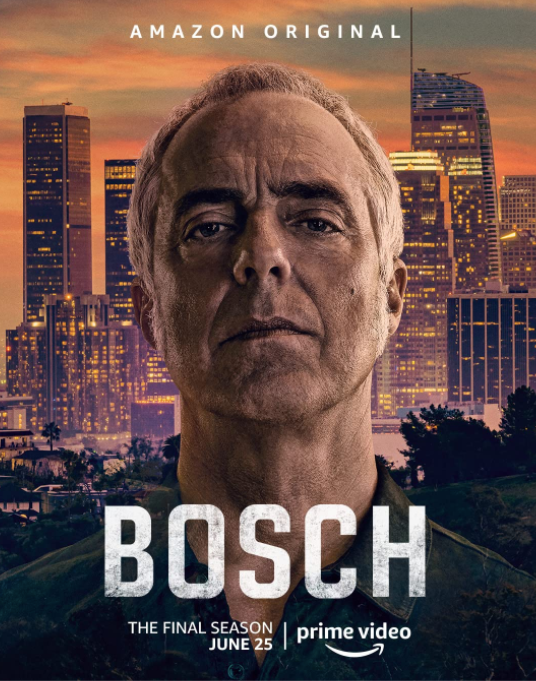
Bosch Season 7: Can't Let Go


It's the theme song of Bosch (written by Jesse Nolan, performed by Caught a Ghost) because it's the story of Bosch's professional life. It's animated every season in this best cop drama ever on television, and never more so than in it's seventh and final season on Amazon Prime Video.

What Bosch can't let go of is satisfying his profound sense of justice, or bringing to justice the perpetrators of the murders he's investigating and haunted by, or haunted by and investigating.  In season seven, the victim is a 10-year old girl who dies in a deliberately set fire.

The eight-episode season is powerful and memorable for other reasons, too.  Episode six contains one of the most intense short shoot-outs I've seen on any screen.  Paul Calderon is practically shaking with tension and fear as his Jimmy Robertson tries to protect Bosch's beloved daughter Maddie from a skilled hitman who has just taken out a judge who is Bosch's current lover.  The acting, by the way, is superb on the part of every character, both in this scene and the entire series.

Titus Welliver in the title role gives the performance of his career.  Jamie Hector as Bosch's partner Jerry Edgar may be even more than impressive than he was as Marlo in The Wire, which is the biggest compliment in my book, in case you didn't know what I think of The Wire.  Speaking of The Wire, Lance Reddick is always good, and he's as good as ever in Bosch.   I've seen Amy Aquino in a few prior series, but she became an essential character in Bosch.  Madison Lintz has really grown into her crucial part as Bosch's daughter, and I'm looking forward to seeing her in the Bosch spinoff.

Bosch began on Amazon at the dawn of our age of streaming, and helped establish it.  The series went out every bit as strong as it began, something you can't say about every great series.  Similarly, it kept a consistency of character and focus, something you can't say about too many things, period, in this our uncertain age.   But I'm certain I'll be watching the Bosch spinoff, and I'll see you back here with a review of that when it's up on Amazon.

See also Bosch: First Half: Highly Recommended ... Bosch: Second Half as Fine as the First ...  Bosch Season 2: Dragnet with Uber ... Bosch 3: Best Season So Far ... Bosch 4: Delivering and Transcending the Genre ... Bosch 5: Room with a Killer View ... Bosch Season 6: The Best Police on Television ... 


                   another kind of police story 


Friday, July 2, 2021

Podcast Review of The Rain


Welcome to Light On Light Through, Episode 184,  in which I review The Rain.

Blog post review of The Rain


Check out this episode!

Wednesday, June 30, 2021

"Merri Goes Round" Played on The Music Authority Today


Robbie Rist + Don Frankel = Sundial Symphony

That's right -- starting at 4 minutes 54 seconds into the first hour of today's Music Authority program, you'll hear Sundial Symphony singing "Merri Goes Round," a song I wrote with Ed Fox in 1971, recorded back then by a studio group I put together called The Trousers.

Sundial Symphony's version was recorded in 2016, and released on Big Stir Records in 2019.  I should mention that Sundial Symphony consists of Robbie Rist (yep, Cousin Oliver) and Don Frankel.  Don played keyboard on lots of the tracks on my 1972 LP Twice Upon A Rhyme, and accordion on "If I Traveled to the Past" and "Tau Ceti" on Welcome Up: Songs of Space and Time, released on Old Bear Records and Light in the Attic Records (vinyl) in 2020.

James Jim Prell, DJ for The Music Authority, says all the songs he plays are chosen by "algorithm".  But I owe him a big thank you anyway, for presiding over that algorithmic choice!


Sunday, June 27, 2021

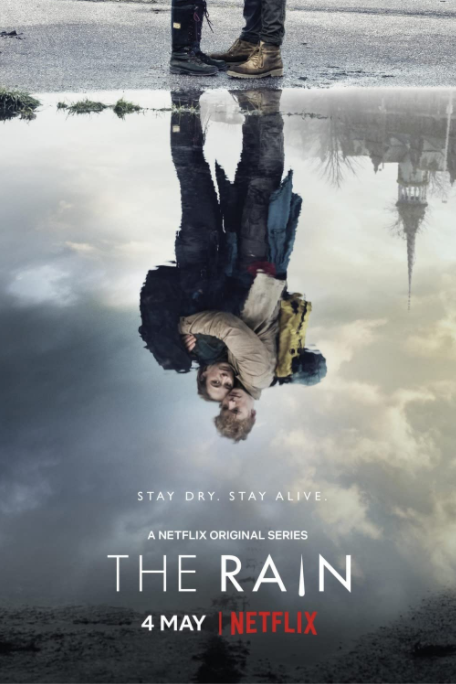
The Rain: Lessons for Today


So, I watched all three seasons of The Rain on Netflix 2018-2020, and see that I somehow never got around to reviewing it at the time.  I'll make up for that now.

The Rain is a Danish science fiction series, in which the rain carries a deadly virus that wipes out most of humanity.  We learn that some group of people embedded the virus in the rain, which makes this a potent biowarfare story.  And since in the immediate aftermath of the series, our species off screen in our world fell prey to the deadly COVID19 viral pandemic, The Rain has special relevance today.

As to the narrative, for a variety of reasons, teenagers are the ones who for the most part survive.  I liked the first season the best, because it's mostly about stranded teenagers struggling to survive.  Simone and her young brother Rasmus take center stage, after their mother succumbs, and their father, a scientist, seems to have disappeared.  We soon learn that he was involved in research about the virus -- whether to create or counter it is not clear at this point -- and Lucas was somehow part of his father's experiment.

Although the quest for a cure continues in the second and third seasons, the narrative switches focus to Simone and Lucas's discovery of various groups of people who have survived the rain plague, in remote and sometimes militaristic communities.  We also begin to see back stories of some of the major players, giving The Rain a Lost-like quality, which works ok but distracts from the central pursuit of getting a cure for the virus.

That quest puts The Rain right in our home territory, where we're trying to vaccinate as much of the world as fast as possible.  The Rain is worth watching not only for its vivid drama, but for the lesson it provides about humans messing with nature, and failing to come up quickly enough with a remedy for their errors.


Thursday, June 24, 2021

Podcast: Supreme Court Protects Student Right to Free Speech!


Welcome to Light On Light Through, Episode 183, in which I discuss the importance of the Mahanoy Area School District v. B.L. US Supreme Court decision yesterday, which found that a high school's attempt to punish a student for using obscene language on her Snapchat violated the student's  (Brandi Levy's) First Amendment rights.

Read the Supreme Court decision here.

Read blog post about the decision here


Check out this episode!

Wednesday, June 23, 2021

Supreme Court Protects Student Right to Free Speech!

A very important and precedent-setting ruling came down this morning from the U.S. Supreme Court,  which ruled 8-1 that the Mahoney Area School District in Pennsylvania was wrong to try to punish high school student Brandi Levy for posting "Fuck school, fuck softball, fuck cheer, fuck everything" on Snapchat in 2017 after she was not given a spot on her high school's cheerleading squad.

The decisive ruling affirms that the protection the Supreme Court gave students in its 1969 Tinker decision -- in which it held that students could not be prohibited from wearing black armbands to school to protest the Vietnam War -- applied to non-political statements made outside of school on a social media network like Snapchat.

The decision is significant for at least three reasons:  (1) it recognizes that obscene language is worthy of First Amendment protection, (2) it protects students from school censorship for statements made outside of the school, and (3) it does not make an exception for First Amendment protection because the communication was on the Internet.

The first point, I hope, should from now on be taken as a precedent not to allow the FCC to censure and fine television and radio media for broadcasting obscene language, which, for example, has led CBS to lacerate rap and hip-hop performances during the Grammys every year.  Today's decision can also be seen as a reversal of the Supreme Court's unfortunate FCC v. Pacifica decision in 1978, which upheld the FCC's right to censure and threaten WBAI-FM Radio for broadcasting George Carlin's seven dirty word routine.

The second point and the third point in effect reverse the Supreme Court's 2011 decision to not even consider Avery Doninger's appeal of the 2008 US Court of Appeals Second Circuit decision (made by a panel that included Judge Sonia Sotomayor, before she was appointed to the Supreme Court) that Doninger's high school was entitled to punish her after she called school officials "douchebags" on her Live Journal blog.  (See my 2009 interview with Avery and Lauren Doninger for more).  Now, just under a decade later, the Supreme Court including Sotomayor has spoken clearly and overwhelmingly on the excesses of school officials, who could use an education themselves on the First Amendment.

The one dissenter in today's momentous decision was Clarence Thomas, who (amazingly) found the Court's decision  "untethered from anything stable".   The First Amendment couldn't be a more reliable post on which to tether our freedoms.

Thomas, of course, was appointed by George H. W. Bush in 1991.  In other words, every single one of Trump's appointees did the right thing in this hallmark case, demonstrating again the independence of our judiciary, which more often than not over the years continues to be one the pillars of our freedom and our democracy.

=== Read the Supreme Court decision here ====

InfiniteRegress.tv