Chuck Todd interviews me about alternate histories

Tuesday, June 11, 2019

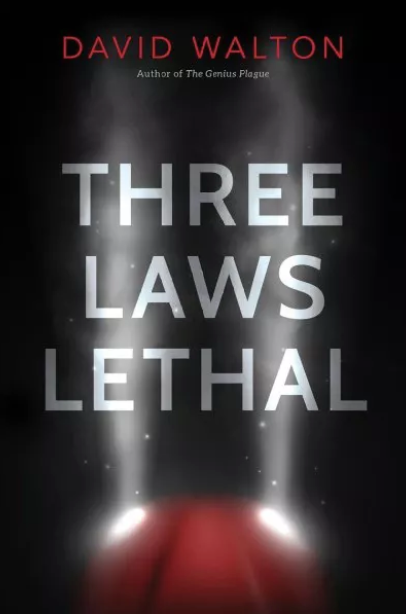
Review of David Walton's Three Laws Lethal: A Few Minutes and Decades Into the Future


David Walton's newest novel, Three Laws Lethal - title inspired by Isaac Asimov's three laws of robotics - begins with what certainly is an ethical quandary that typifies our increasingly AI-driven age, in this case, driven literally.  A mother with her children are passengers in an AI-driven automobile.  She can turn around and tell them to stop arguing, without risking an accident.  She marvels at being in the driver's seat with her hands off the wheel.  And then ...  A big tree falls in front of them.  To plow into the tree would risk the death of both mother and children.  The AI computes the deadly odds, and acts upon it, instantly swerving the car to the right to avoid the tree.  Unfortunately, there's a biker in that lane, and he's killed by the swerving car.

It's not that the AI didn't see the biker - the problem is that it did, and decided the mother and children's lives were more worth saving than the biker's.  Now, people driving in our reality make split-second decisions like this all the time.  They're maybe not quite decisions but instant gut reactions.  Would anyone for a moment think of charging a mother with vehicular homicide if she did what the AI did in the car?  Of course not.   But there's something deeply disturbing about an AI making this decision, any decision, that results in the loss of innocent human life.

This is the problem that opens David Walton's novel, just published by Pyr today.  It's a narrative that is as philosophically profound as it is breathtaking.   Asimov imagined/foresaw that all robots could and would be programmed with three laws:  1. A robot can never do harm, or allow harm to be done, to a human being.  2. A robot must follow all orders given to it by a human, except when following such an order would contradict the first law, i.e., harm or allow harm to be befall a human.  3. A robot must always act to protect itself, except when that would contradict the first or second law.  Asimov wrote great novels and stories that explored what could happen when these laws were bent or broken.  In that sense Three Laws Lethal is an extrapolation of Asimov, a meditation on how an AI programmed to protect human lives can end up taking a life - a life that threatens no one, but whose existence nonetheless must be ended to protect the people the AI serves.  The novel is also Asimovian in the sense that it is an un-put-downable read.

Exploration of driverless cars makes Three Laws Lethal not a story happening the day after tomorrow, as they used to say back in the 1950s, but maybe more like a few minutes from now.  An Uber driverless car already killed a woman in Tempe, Arizona in 2018.  This apparently was more a malfunction than a deliberate decision of the car to kill the woman (a pedestrian walking her bicycle in the street), so it didn't raise the kind of wrenching ethical dilemmas posed by Walton.   But Walton also explores, with the same panache and savvy, the corporate competition and intrigue that has characterized the digital revolution since it began in the 1980s.  In this case, we go from intrigue to outright assassinations, and self-driving cars to fleets that can work as an attack force.  Malignant AIs reminiscent of HAL (an Arthur C. Clarke not Asimov creation) also figure in this story, pitching it at least a few years and maybe decades into the future. 

All of this is played out by a memorable cast of characters all along the continuum of fundamental human decency, which at the bad end includes a willingness to do the aforementioned  murders to get desired results.   In as much Asimov's robot stories were also detective stories, this makes Three Laws Lethal an Asimovian story in yet a third, appealing sense.

Although Asimov defined the genre of sentient robots and therefore AIs, the other two titans of the golden age of science made important contributions to this crucial sub-genre.  In addition to Clarke's homicidal HAL, Robert Heinlein's self-sacrificing Mike has a permanent place in the AI pantheon.  No one can duplicate those achievements, but it's good to see that David Walton is carrying forward that tradition so well as we move to ever more AI in our cars and lives in the 21st century.


Monday, June 10, 2019

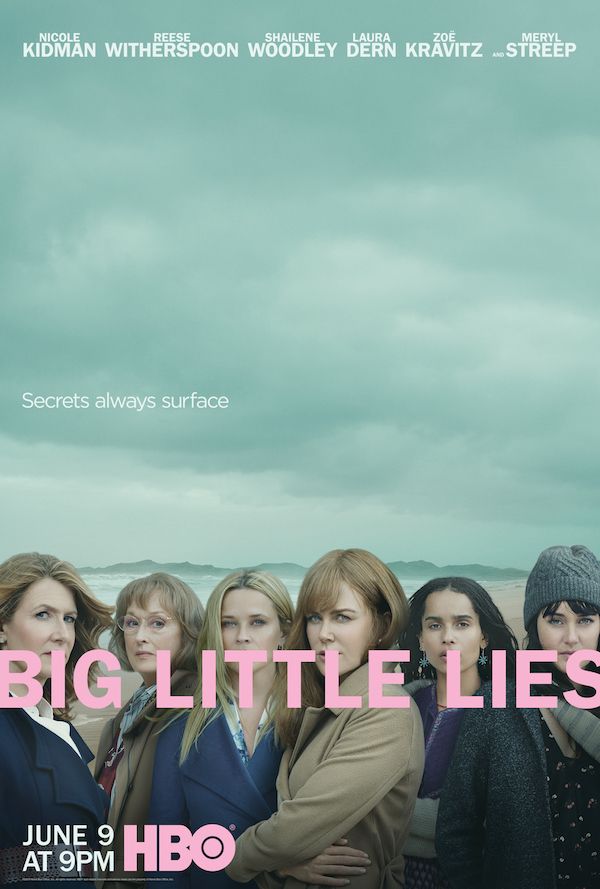
Big Little Lies 2.1: Grandma on a Mission


Big Little Lies was back on HBO last night, with Meryl Streep as Perry's mother Mary, staying with Celeste and the twins, and understandably determined to find out what happened to her son.  You couldn't ask for a better actress than Meryl Streep to convey the suspicion that Mary has that Perry's death was not as everyone is telling her, and it will fun to see those suspicions develop to the point of certainty, which will no doubt lead to Mary plotting some kind of retribution.

Now, in case you didn't see the first season and its stunning ending, we know what happened to Perry.  Bonnie accidentally killed him, deliberately pushing him down the stairs, as she sees Madeline, Jane, and Renata unable to pull him off Celeste.   Every one of those women are justifiably glad to see him dead.  The last thing they'll do is even tell police that Bonnie didn't intend to kill him.  So this sets up the new season with five powerful women lying to the police, and resisting Mary's attempt to learn the truth.

Did Mary know her son was a rapist?  Probably not.  Did she know that he was physically abusive to women, including his wife.  Probably.  Will Mary learning the truth about her son's treatment of women affect her determination to find out what happened to him?  Probably not.  And that has the makings of a pretty good story.

Of the two, I'd give Mary has better odds of finding out the truth than the police.   But Detective Quinlan, also a woman, is no slouch.   Chances are Mary and Quinlan, working for the same thing - to find out what happened to Perry - won't get too much in each other's way.  But once Mary begins planning her retribution, well ... all bets are off.

Big Little Lies in its first season was a unique detective story.  It promises to be the same in its second season, with a much different story featuring almost the very same people.

See also Big Little Lies: Big Good, Truly ... Big Little Lies 1.5: Multivalent Whudunnit ... Big Little Lies: Elvis and Answers


Sunday, June 9, 2019

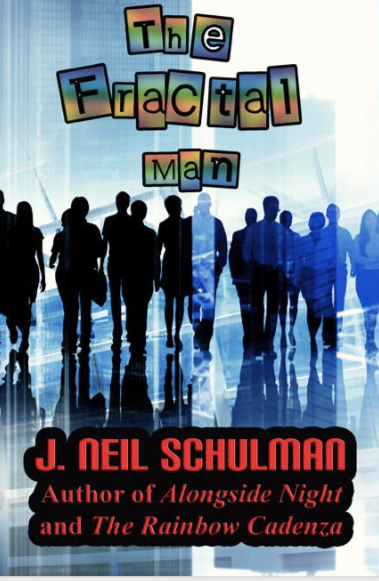
Review of J. Neil Schulman's The Fractal Man: Alternate Reality Autobiographies


Alternate realities have become something of a vogue in science fiction, especially on television with Fringe and Counterpart.  I've even tried my hand at it in a few short stories such as The Other Car.  But J. Neil Schulman has outdone all of this with his novel The Fractal Man, which for most of its 160 some odd pages - meant literally as well as a figure of speech here - is not only a masterpiece of alternate reality, but one of the best science fiction novels I've ever read, literally.

It's also a tour de force of meta-fiction and autobiography.  What do I mean by that?  Well, the main character - the narrator - is David Albaugh, a character in Schulman's 1979 novel Alongside Night, played by Schulman in the 2014 movie that Schulman wrote and directed.  In The Fractal Man, we meet Schulman - one of Albaugh's fractals, i.e., existences in an alternate reality - to the point of the character Schulman warning Albaugh about a danger that lies ahead, because, after all, Schulman wrote Albaugh's account of Albaugh's  alternate reality adventures which is the novel The Fractal Man.   I'd say I'm a sucker for that kind of science fiction, but if a I'm a sucker for delighting in that, then anyone with any appreciation for the finer tropes of science fiction, carried to their logical extents and well beyond, should be a sucker, too.

And the novel is chocked full of tidbits to delight the science fiction devotee and anyone with a taste for new ways of thinking about old things.   Distant galaxies that we see in our reality may be alternate timelines.   Arguments that a couple may have over whether an event unfolded this way or that way may reflect an alternate reality that one of the couple for some reason came from or has access to.   Everything from timeless music to time travel is woven into the undulating fabric.  It's all served up so well that I don't even mind that Schulman and most of his alternates are thorough-going libertarians, in contrast to me (I'm an absolutist only about the government keeping its hands off of all media and communication, i.e., the First Amendment). 

Schulman sprinkles in some of his real libertarian friends as greater and lesser characters in this novel.   We know each other and have worked together, but I can't hold it too much against him that I didn't make the grade, because I'm not a close friend of his, and, as I said, I'm not an across-the-board libertarian.   And he makes up for this with some derring-do espionage escapades across realities, and a galactic scope that reminds of both Asimov and Heinlein, which is no mean feat  (Schulman, at least in this reality, did an important interview with Heinlein in 1973).

What I do hold against the novel is a long play within the novel, near the end, that has lots of relevance to the novel's philosophy and was excellent in and of itself, but comes out of left field, so much so that the reader is offered the option of skipping ahead.  This doesn't exonerate the play's inclusion.

But, hey, the rest of the novel is so bright and wonderful - such an intellectually exciting and satisfying ride - that I put it up there with David S. Michaels and Daniel Brenton's Red Moon and David Walton's Three Laws Lethal (to be published in two days, look for my review) as one of the best standalone science fiction novels I've ever had the pleasure of reading.   Is it a contradiction to describe The Fractal Man and its immersion in alternate realities as a standalone novel?  There's a sequel afoot - "The Metronome Misnomer - the title comes from a fractal version of the author in The Fractal Man, who wrote a book of that title in an alternate timeline" (this quote from Schulman's biography at the end of The Fractal Man) - so you may not need to answer that.


more alternate reality - "flat-out fantastic" - Scifi and Scary

Monday, June 3, 2019

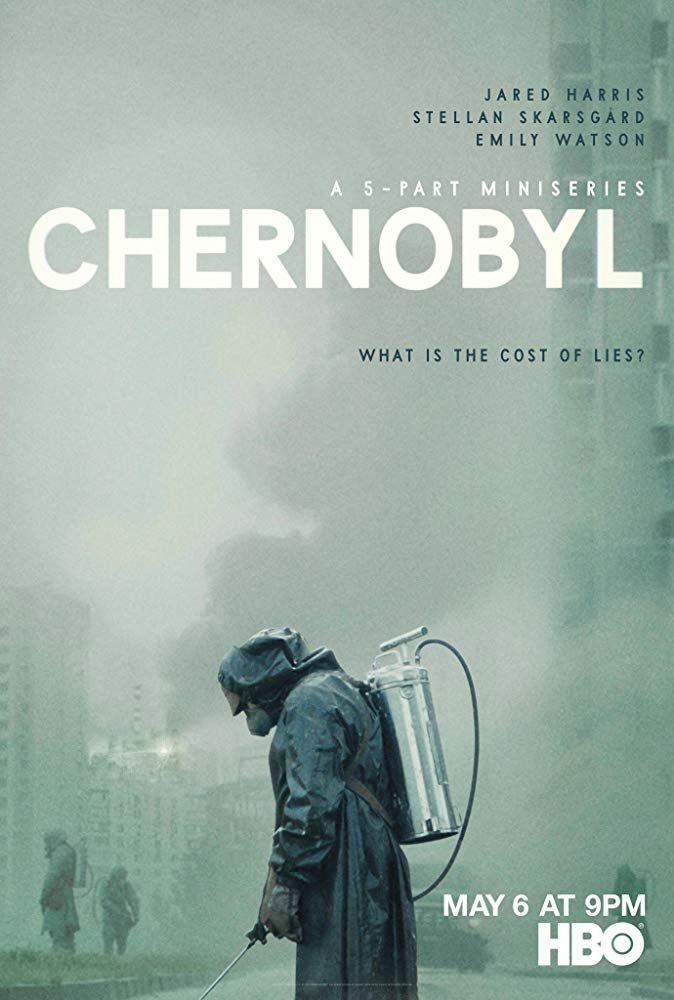
Chernobyl 1.5: "What Is the Cost of Lies?": Chernobyl and Trump


Chernobyl 1.5, the finale of this crucially instructive docudrama, ended with the last words we heard from Legasov's recording: "What is the cost of lies?"

But it's a question that could be put to Donald Trump, and his constant assault on the truth from The White House.   And that makes Chernobyl not only a cautionary true story on the hazards of nuclear energy, but, just as importantly, on the dangers of suppressing the truth, whether on behalf of a misguided state such as in the Soviet Union, or unbridled personal ego as with Donald Trump.

The truth that the Soviets suppressed led to the final straw that broke the nuclear reactor and made it explode: the tips of the rods that were meant, when inserted, to be the failsafe of a nuclear explosion in fact had just the opposite effect.  They made the reactor explode.   The Soviets knew this before Chernobyl, but kept it secret out of fear of seeming ignorant or incompetent about nuclear energy.  Which was in fact exactly what they were.   And then the Soviet regime tried to stop Legasov (given an Emmy-worthy performance by Jared Harris) from letting the world know about this.  (And speaking of Emmy-worthy, the same eminently applies to the whole series - hats off to creator Craig Mazin.)

According to Gorbachev, it was Chernobyl that brought the Soviet Union down, the blatant example it gave of the arrogance and blindness of the Soviet regime.   There were many other reasons that the Soviet regime deserved to fail.  It's tragic, however, that what brought it down was the death of so many innocent people.

We here in the United States who value freedom can only hope that it takes something far less costly - either impeachment and conviction, or loss of the next Presidential election - to bring down the liar in The White House.

See also: Chernobyl 1.1: The Errors of Arrogance ... Chernobyl 1.2: The Horror Movie ... Chernobyl 1.3: The Reasons ... Chernobyl 1.4 Bio-Robots


Bad Blood 2: A Different Kind of Mob Story


Bad Blood is back with its second streaming season on Netflix.   My wife and I binged and liked it better than the first, which we liked a lot.

The reason: Kim Coates' Declan gets a lot more time, as the mob boss who has trust only in himself.  This was actually the essence of the first season, but we didn't learn that until the very end, when Declan has wiped out everyone around him, including the boss and the boss's patriarch father, in Declan's climb to power.

In the second season, Declan has all the power, but he amasses enemies when he refuses to work for the Italians who have an international drug trade, expanding now to include the powerful and deadly fentanyl.   Declan now needs allies, but his possibilities, ranging from bikers and another local mafia mob, are also being wooed, threatened, paid off, and seduced by the international group, who have sent a pair of ruthless twins, female and male, to Montreal to make sure they get their way.

As with first season, no one is safe when the tensions heat up into war, and bullets start flying.  As with the first season, you'll be surprised about who is left standing and who isn't.   Indeed, what makes Bad Blood different from any other television mob series are the number of major players who get wiped out each season.  So many met this fate in the first season, that, other than Declan, we're treated to an almost entirely different cast of characters.  And they're so well played, we barely miss the characters from season one.

Coates does a great job, again, as Declan.  He has an expressive face, and a voice that does it just the right with intonations and inflections in every scene he's in, as a player and a voice-over narrator.  It's not easy to be original in a mob story, it's such well trodden ground, but Bad Blood 2 amply does that and his highly recommended.

See also Bad Blood: New Mob


Luther 5.1: Back in Fine, Depraved Form


Luther was back for its fifth season on BBC America last night.  First and foremost, it stars Idris Elba in the title role, one of my all-time favorite actors since I first saw him in The Wire as Stringer Bell, second-in-command in a drug empire, so erudite he was studying economics in night school and quoting Adam Smith and The Wealth of Nations.

The Luther character is a detective genius who has been through the mill in his personal and professional life, which often are the same and almost always intertwined.  As the trailer for this season aptly shows, Luther's wife and young partner were both murdered in previous seasons.   In the first episode of season 5, Luther continues to take a physical pounding, from the likes of a crime boss we saw in fine crafty and brutal form last season, but the apex case is a sadistic serial killer who's getting more frequent and gruesome in his killings.

Luther's opponent here is not just the serial killer, but a shrink, Vivien Lake (played by Hermione Norris, who was so good as Ros on MI5).  Lake is understandably protecting the serial killer, Jeremy, from the police. He's not Lake's patient but her husband, and likely her partner in sexual kinkiness, which may or may not extend to the killings.   At very least, Lake sacrifices one of her troubled patients, James, setting him up to take the fall for the recent spate of murders that presumably her husband committed.   James commits suicide before the police can nab him, but the case isn't closed.  Luther's new partner, Catherine Halliday, shows her mettle and realizes something is not adding up with James as the killer.

So Luther's faced with the fine kettle of depraved fish we've come to expect on this series.  But the knock on his door in the last scene was better than icing the on cake.  It was from Alice, back from the dead, played by the inimitable Ruth Wilson, back from our side of the Atlantic in The Affair.

See also Luther: Between the Wire and the Shield ... Luther 3.1: Into the Blender ... Luther 3.2: Success ... Luther 3.3: The Perils of Being an Enemy ... Luther 3.4: Go Ask Alice


Monday, May 27, 2019

Chernobyl 1.4: "Bio-Robots"


When Shcherbina and Legasov discover that the Soviet robots designed to move on the Moon couldn't do the job of cleaning up the worst of the rubble at Chernobyl - because the high radiation fried the robot circuity - Legasov suggests "bio-robots," a clever name for human beings.

This was the highpoint of Chernobyl 1.4 - high in the sense that at least it got the job done, though who knows how many of the soldiers died, sooner or later after their work.  In contrast, the slaughter of animals in the radioactive zone was nothing but horrible.   As was the story of the firefighter's wife, who survived the radiation only because her unborn child absorbed it, and died hours after birth.

On the fate of the dogs and cats in the "exclusion" i.e. evacuated because lethally radiated zone, it's worth mentioning the discovery early this year that wildlife is thriving now, in 2019, in that same zone. As one wit and scientist observed, apparently humans were more injurious to animal life than has been the radiation from Chernobyl.

And the true villains in this harrowing, sobering docu-drama are human beings not atoms.  Humans who thought splitting the atom could be safely harnessed to make energy in the first place.  Humans, more specifically the KGB, who covered up a flaw or problem with the Chernobyl type of reactor back in the 1970s, a decade before the explosion, when a similar reactor exhibited the bizarre, counter-intuitive effect of superheating immediately after it was shut down.  As Shcherbina observed, the public relations of the Soviet state, the maintenance of the myth of Soviet superiority, came before disseminating information about this effect, information which could have prevented Chernobyl.

But lest we think that only the Soviet Union was afflicted with placing image before safety, this is something that most nations and institutions can suffer from.   Next week, in the finale of this important docu-drama, we'll learn how our principals were able to get at least some of the truth out to the world.

See also: Chernobyl 1.1: The Errors of Arrogance ... Chernobyl 1.2: The Horror Movie ... Chernobyl 1.3: The Reasons


Killing Eve Season 2 Finale: Possibilities after the End


[spoilers]

Well, the ending of the second season of Killing Eve, on the Beeb tonight, was true to the series name.  Villanelle shoots Eve, who lies on street, apparently dead.   Except, that can't be true, because Killing Eve has been renewed for a third season.  So maybe Eve is lying on the street in the other meaning - meaning, she's fibbing, or the scene is not telling us the truth.

Here, then, are the possibilities:

1.  Eve is indeed dead, and we'll be seeing her next season in flashbacks, or via a heretofore unknown twin.  Nah, all of that is way too trite.

2. Villanelle deliberately grazed Eve.  She's unconscious but not badly wounded, certainly not dead.

3. Villanelle tried to kill Eve but her aim was a little off, because love and disappointment clouded her vision.  Eve's unconscious but not badly wounded, certainly not dead.

4. Eve's not even unconscious.  Villanelle missed completely, and Eve is pretending to be dead, hoping/betting that Eve doesn't send another bullet her way.

4a.  Villanelle missed deliberately.  She was just trying to make a psychological point.

4b.  Villanelle missed because her aim was a lot off.  See #3 above for the rest of this.

5.  The BBC was lying when they announced that Killing Eve had been renewed.  Nah, that's ridiculous.

So the truth of what we saw tonight, to be brought out in the open in Season 3, resides somewhere from #2 to #4a.   I'll see you here next year with more.

See also Killing Eve 2.1: Libido and Thanatos ... Killing Eve 2.2: Villanelle as Victim ... Killing Eve 2.3 Lipstick ... Killing Eve 2.6: Billie ... Killing Eve 2.7: Death and Sex

And see also Killing Eve: Highly Recommended (Season 1)


Sunday, May 26, 2019

Sneaky Pete Season 3: Better than Ever


Sneaky Pete rolled out is third season on Amazon Prime earlier this month, and I enjoyed it even more than I did the first two.  Which is saying a lot, since the first two were full of quirk and jive and action.   I can't quite recall if there ever was a television series about a con man like Sneaky Pete - maybe Maverick is a distant cousin - but Sneaky Pete did it better than anything I've ever seen on television.   And the third season did it more, adding subplots, locations, characters, and action.

The basic story, if you haven't seen it (and the rest of this review will have some spoilers), is that a con man, Marius, takes on the identity of his cellmate, Pete, when Marius is released from prison.  Taking on Pete's identity entails Marius showing up at Pete's family home, where his grandparents live.  Marius knows that the family hasn't seen Pete in years.  But, actually, the two don't look all that similar, and it's a tough sell for the viewer to believe that Marius is able to pull this off.  But part of the charm of this series is that you can almost pretty much believe that he does.

The tension of Pete continuing to fool most of his adoptive family is the centerpiece of the story, the tableau on which the various cons that Marius is enacted are played out.  Indeed, the reason he assumed this identity had to do with a major con.  In the third season, new cons are introduced, involving art forgery and wine, and these played out on the East Coast, where the series originated, and in California, where the series takes up residence.  Although a key member of Marius's conned family - Julia - discovers in the second season that Marius isn't Pete, he continues to grow so close to the family that in the third season he risks cons and alliances to save Julia.   He's in fact a mensch, a decent person deep down, and he's grown to love the family he's been lying to through his teeth.  And they love him, too.  One of the most moving moments in Season 3 is when Grandpa (Peter Gerety) sincerely says to "Pete": "you're a good boy".

One of the great things about Sneaky Pete is how even the secondary characters are real characters (you know what I mean) and memorable.   In the third season, these secondary characters increase in number are so compelling as to be raised to a state of art.  There are so many of them that I'm too lazy to list them all right here.  As for the central characters, Giovanni Ribisi as Marius is superb, and Margo Martindale and Peter Gerety as his "grandparents" are off the charts.   Perfect binging after a day at the beach or the lake or wherever during the summer.

See also Sneaky Pete: True Win (review of season 1) ... Sneaky Pete Season 2: Excellent, Beats the First (Slightly)

Saturday, May 25, 2019

The Fix Ends: In Need of One


Since I reviewed the first episode of The Fix back in March, I figured the least I could do is come back with a few words now that the series has ended, apparently for good.

And actually, that's a good play on words: The Fix has not only ended, as in not being renewed, it's a good thing that it ended.  And not because it told such a great story that it ended in just the right place.   No, The Fix told a story that what was at best ok, and often was a jumbled, cheap soap opera.

I suppose you could say that being an alternate history of the O.J. and Marcia Clark story - that is, a story in which an ADA who unsuccessfully prosecuted a famous guy accused of murdering his wife and someone else, gets a second chance when the murderer is accused of killing his new girlfriend - I suppose you could say that the narrative was bound to be cheap and lurid, since that typified so much of the O.J. trial.   But, I don't know, I'd say that would be too generous a framing for The Fix.

As it is, I thought the plot did have some good surprises and turns - that's what I meant when I said it was ok - and the acting, especially the guy from Lost (Adewale Akinnuoye-Agbaje) who played Sevvy the O.J.  character, was sometimes compelling and always adequate.   But there were also some downright clunkers in the story, including Sevvy's first wife (played by Robin Givens) and the cowboy that Maya (the Marcia Clark character, played by Robin Tunney) loves, who was boringly obvious.  Back on the bright side, it was good to see Alias's Merrin Dungey on the screen again, but I did guess the ending halfway or sooner through the finale.

All in all, I don't deeply regret watching the whole season of The Fix, but chances are I wouldn't of continued watching it had it been renewed.

See also The Fix 1.1: Alternate History O.J.


Tuesday, May 21, 2019

The Red Line Finale: Realism and Optimism


As I've said before in my review of The Red Line, I give CBS-TV a lot of credit for airing this sensitive and important mini-series.  It's the kind of series you'd expect to find on cable or streaming, and its presence on an old, traditional network at once tells us that this network isn't so old or traditional, after all.

[spoilers follow] ....


The ending was realistic and optimistic, a tough combination to find anywhere these days.  The cop, Paul Evans, gets off without a grand jury indictment, which still happens all too often when a white cop is caught on video killing a black man, without justification.  In other words, murdering him.

But Tia wins the election as Alderman.   Even though the corrupt DA also wins.  And, in the end, Evans resigns.  He recognizes that he's racist.  That's progress and optimistic indeed.

The gay thread of this vivid drama was handled very well, too.  Jira's biological father has found her, and that's heart-warming.  But he also found God, years ago, and his devout beliefs tell him a man and a man being husband and husband is wrong.  Jira, as much as she wants a relationship with her biological father, tells him to leave.  All of this is very realistic.

I know The Red Line is billed as a mini-series, but I would tune in immediately if there was a sequel.  And there's ample room for that.  I want to see how Tia does in office.  I want to see how Daniel does with Liam.  And speaking of Daniel - if Noah Wyle doesn't at least get nominated for an Emmy, I'll be stunned.  And, though there have been lots of other strong male performances in short series, I'd say he has a strong chance of winning, as well.

 See also The Red Line 1.1-4: Bursting with Crucial Lessons for Our Age

Videos in which I talk about Black Lives Matter:  here and here


The Enemy Within Season 1 Finale: The Crucial Lie


I thought The Enemy Within season 1 finale, on earlier tonight, kept true to all of its bases and then some.

Shepherd turned out to be loyal to her single-minded goal of killing Tal.  She does this by giving Tal some crucial information (which doesn't ultimately get in the way of the FBI's preventing a massacre of CIA brass) and by shooting Keaton (to make it look for a moment like she killed him, even though the bullet would cause no lasting damage).  And [spoilers ahead] she indeed kills Tal in the end.

But Tal tells her something before she kills him - about a very high-level operative in U. S. Intelligence - and Shepherd lies by omission in a subsequent conversation with Keaton, when he asks her if she learned anything from Tal that Keaton needs to know, and Shepherd declines to reveal what Tal told her about the U. S. operative.

That lie is crucial.   Shepherd, on her way to being under lock and key again, needs something she can use for advantage with Keaton.  That's the formula, after all, that worked so well, this year.  And, by the way, I think it did work well.   The fate of this series is still unknown.  But Shepherd's lie of omission to Keaton sets up a second season perfectly.   The two will hunt the high-level traitor in the U. S. with Shepherd behind bars when she's not out working with Keaton, but Shepherd is in possession of some crucial information unknown to Keaton.

I should also mention that I thought the action tonight was top drawer.  Two desperate operations in two different places, with bullets flying galore.   The storyline always veers close to credibility, which is just the way it should be.  I hope to see more.

See also The Enemy Within 1.4: Microsoft AI ... The Enemy Within 1.5: The New Mole ... The Enemy Within 1.7: The Conversation ... The Enemy Within 1.8: Oranges (Think About It) ... The Enemy Within 1.9: CIA vs. FBI ... The Enemy Within 1.12: Razor's Edge


Chernobyl 1.3: The Reasons


The reason that Chernobyl happened is, as in most catastrophes, actually many interlocking reasons.  Had any of them not been in play, the explosion likely wouldn't have occurred.  You can read all about them, for starters, on Wikipedia, if you're interested.  Tonight on Chernobyl 1.3 Ulana Khomyuk begins to explore them.   As is always the case with these complex, cascading causes, nothing makes sense or seems possible at first as the cause of the accident.   And in Khomyuk's case, it's not helped either by two of the three main managers dying after her initial interview with them, and the third unwilling to talk to her, at least at present.

The greater truth is that, whatever the causes, splitting the atom is just not a safe way to generate energy.   That's why Three Mile Island, Chernobyl, and Fukushima all happened for different reasons.  It's not that almost anything can go with generation of energy from fission.  It's that there are so many parts that have to be operating, if not perfectly, at least within margins of error, that sooner or later something will go wrong, at a very wrong time, or an external event like an earthquake will set in motion that cascade of destructive events, as happened at Fukushima.

The ensuing tragedy extends to all sorts of loss of human life, including heroes who knowingly sacrifice their lives to stave off a greater disaster.  That was well shown tonight with the Soviet miners who had to shed their clothes, it was so hot, to stop the concrete floor from melting.  The lack of clothes didn't really matter, as Legasov has to admit, because the clothes offered no protection against the deadly radiation.  This made a grim and harrowing counterpoint to Lyudmilla Ignatenko not only seeing but hugging her stricken husband Vasily in the Moscow hospital.   Her love for her husband was so strong that she what was not only willing to put her own life in jeopardy, but that of their unborn baby.   Exposure to radiation and its horrors scrambles every human equation.

This mini-series is not easy to watch, to say the least.  But it is vitally important for everyone to see.

See also: Chernobyl 1.1: The Errors of Arrogance ... Chernobyl 1.2: The Horror Movie


Monday, May 20, 2019

Killing Eve 2.7: Death and Sex


I thought the high-point of the next-to-final episode of Season 2 of Killing Eve last night - 2.7 - was the very end, where we see that Villanelle has killed Niko's annoying new girlfriend.  It was a high-point because it amply demonstrates two enduring truths about Villanelle:  she's a cold-blooded killer (as are most paid assassins) and she's loyal to Eve.  So of course she would kill Eve's husband's girlfriend.

The problem for our characters, of course, is these two truths of Villanelle could well come into conflict.  And though nothing is certain, it's better than 50/50, I'd say, that the killer will win out over the loyalty.   With only one more episode this season, and Killing Eve already renewed for a third season, however, it's a 100% safe bet that the killer won't win out in this season, at least.

But there's so much killing in Villanelle, that I'd day we're likely to see at least one other expression of it in the finale next week.  Aaron Peel, the British Mark Zuckerberg, is the most likely victim, but he was so weird and even nauseating last night that I'm beginning to think it's unfair to compare him to Zuckerberg in any way.  But that never stopped me before.

The other moment of note is Eve pulling the cover off a sleeping Hugo, waking him up and having a go at it (is that a British expression?  I'm not sure).  But it was good to see Eve expressing herself that way - taking advantage of the situation at hand - and Hugo didn't seem to mind it at all, either.

Hey, the Game of Thrones finale was on last night, and I managed to watch and now review Killing Eve after all.   Says a lot about how compelling this series is, and my high opinion of it.

See also Killing Eve 2.1: Libido and Thanatos ... Killing Eve 2.2: Villanelle as Victim ... Killing Eve 2.3 Lipstick ... Killing Eve 2.6: Billie

And see also Killing Eve: Highly Recommended (Season 1)


Sunday, May 19, 2019

Game of Thrones Finale: Democracy Almost Comes to the Seven Kingdoms


In the penultimate scene of the Game of Thrones finale, Sam proposes democracy for the Seven Kingdoms: their King or Queen should be chosen by the people.  The gathered noble men and women laugh at him.   Someone remarks, why not let dogs also choose who rules us (taking a line from Socrates, who said something about jackasses, the animals, ruling - come to think of it, Tyrion talked about a jackass in a brothel, too).   Tyrion, ever the smartest person in the group, proposes that these gathered nobility choose the ruler.  They of course like that.  And Tyrion proposes Bran, who is ratified as King by the group.

So democracy almost comes to the Seven Kingdoms.  Instead, they get a kind of plutocracy.  Probably the best that could be done, under the circumstances.   And Bran will not rule over seven kingdoms.  Sansa wants to be Queen of Winterfell.

That, I would say, is the kernel of excellence in the finale.  As for the rest, well, it had its moments.  I liked Arya sailing off to whatever is America in this fantasy world.  I like the interaction between Drogon and Jon after Jon kills Daenery (presumably Drogon didn't know that).   I also liked Drogon incinerating the throne - the pursuit of which killed its beloved mother.

As for the killing of Dany, it was inevitable.  Everything we saw last week, and tonight, before she was killed, required that.  I think a lot of discontent with last week's episode stems from fans of Daenerys who didn't want to see her behave so badly.   But she did.  (And as my wife pointed out, Daenerys promised tonight to do even more and worse.)  And, therefore, she deserved to die.

There were also parts of the finale that were downright trite.  Tyrion and the cabinet jabbering away as the last scene of Westeros was way too obvious.   It was good to see Jon reunited with his direwolf, but the walk beyond the Wall was also just as expected.   And there were scenes that were missing - such as how everyone came to know that Jon killed Dany, after Drogon carried away her body.   And who stopped Grey Worm from then killing Jon, which he surely would have done?  Presumably the council that chose Bran, but it would have been good to see that, rather than having to figure it out.

But most things were wrapped up ok in this series.  I still would've loved to see Arya's direwolf on that ship with her, though.


And see also Game of Thrones 6.1: Where Are the Dragons ... Game of Thrones 6.2: The Waking ... Game of Thrones 6.5: Origin of a Name ... Game of Thrones 6.6: The Exhortation ... Game of Thrones 6.7: Giveth and Taketh ... Game of Thrones 6.8: Strategic Advantage ... Game of Thrones 6.9: A Night for the Light ... Game of Thrones Season 6 Finale: That Library

And see also Game of Thrones 5.1: Unsetting the Table ... Game of Thrones 5.8: The Power of Frigid Death ... Game of Thrones 5.9: Dragon in Action; Sickening Scene with Stannis ... Game of Thrones Season 5 Finale: Punishment

And see also Games of Thrones Season 4 Premiere: Salient Points ... Game of Thrones 4.2: Whodunnit? ... Game of Thrones 4.3: Who Will Save Tyrion ...Game of Thrones 4.4: Glimpse of the Ultimate Battle ... Game of Thrones 4.6: Tyrion on Trial ... Game of Thrones 4.8: Beetles and Battle ...Game of Thrones 4.9: The Fight for Castle Black ... Games of Thrones Season 4 Finale: Woven Threads


And see also Game of Thrones Back in Play for Season 2 ... Game of Thrones 2.2: Cersei vs. Tyrion

And see also A Game of Thrones: My 1996 Review of the First Novel ... Game of Thrones Begins Greatly on HBO ... Game of Thrones 1.2: Prince, Wolf, Bastard, Dwarf ... Games of Thrones 1.3: Genuine Demons ... Game of Thrones 1.4: Broken Things  ... Game of Thrones 1.5: Ned Under Seige ... Game of Thrones 1.6: Molten Ever After ... Games of Thrones 1.7: Swiveling Pieces ... Game of Thrones 1.8: Star Wars of the Realms ... Game of Thrones 1.9: Is Ned Really Dead? ... Game of Thrones 1.10 Meets True Blood

And here's a Spanish article in Semana, the leading news magazine in Colombia, in which I'm quoted about explicit sex on television, including on Game of Thrones.

And see "'Game of Thrones': Why the Buzz is So Big" article in The Christian Science Monitor, 8 April 2014, with my quotes.

Also: CNN article, "How 'Game of Thrones' Is Like America," with quote from me


Line of Duty: Brilliant Hunt for Bent Coppers


I watched the first season of Line of Duty a few years ago, and my wife and I just binge-watched the next four seasons (on Acorn TV via Amazon Prime).   It's an outstanding series, with pretty much everything you could want in a police series - twisted loyalties, unexpected turns, and lots of action.

The protagonists are in a special squad that investigates and attempts to root out "bent" coppers (the series is British).  The antagonists are a ruthless, vicious mafia-like gang, with people placed in the highest echelons of all kinds of police detective units.   The questioning of suspects is the most intense and best I've ever seen in any cop series.  What we get just a bit of in most series is often center-stage and brilliant in Line of Duty.

The action is breathtaking, with major characters often on the verge of getting killed, and indeed sometimes dying.  The three most major characters are Superintendent Ted Hastings (played by Adrian Dunbar), DS (I love those British titles) Steve Arnott (Martin Compston), and DI Kate Fleming (Vicky McLure).  Actually, some of those titles change as the series progresses, but the acting stays constant at superb.   There are also some notable guest stars, my favorite being Polly Walker who made such a good impression in Rome.

The series also has a unique way of telling new stories each season while weaving in unresolved elements from prior seasons.   In that sense, as well as the very fast pace and short time period in which each season takes place, Line of Duty has a lot in common with 24, one of my all-time favorite series.

This fifth season just started streaming and aired last month across the Atlantic.  There's a six season coming along.  It's at the very top of my wife's and my series to watch.   Kudos to creator Jed Mercurio - who also did another powerhouse series, Bodyguard - for a great piece of work! 


InfiniteRegress.tv