Chuck Todd interviews me about alternate histories

Saturday, November 1, 2025

Lazarus: The Real Sense

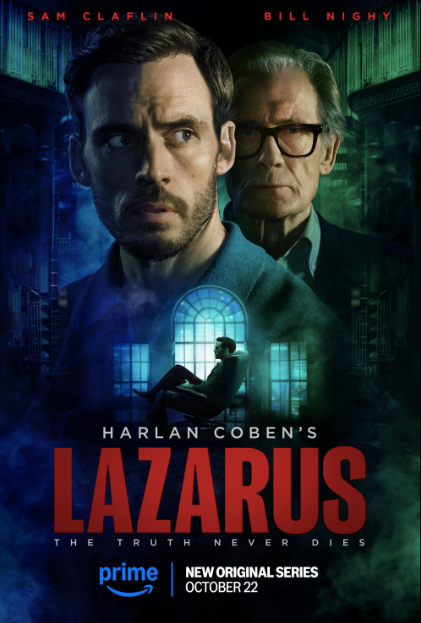
I'm a big Harlan Coben fan -- I've given rave reviews here on this blog to 8 of Coben's streaming series since 2017 -- so of course I was going to watch his latest, Lazarus (on Amazon Prime Video) -- and I talked my wife into watching it, too.

Lazarus is somewhat different from Coben's other works.   Like them, it's a great whodunnit, that keeps you guessing until the very end about who has killed whom.  And the story is so intriguing, that I enjoyed it immensely, even though I half-guessed who one of the worst culprits was.   So, in what way was Lazarus different?

Well, the main character, Dr. Joel Lazarus (a psychiatrist, powerfully played by Sam Claflin, who was memorable is Season 5 of Peaky Blinders), sees dead people, aka ghosts.  Indeed, one of the other characters (Seth, a detective, well played by David Finn) references the signature line from The Sixth Sense, "I see dead people," as he ridicules Lazarus about his interactions with dead people.  This at the very least makes Lazarus an ideal narrative to be released around Halloween.

But -- and this is the closest I'll come to a spoiler -- Lazarus is not really seeing ghosts, he's interacting with these dead people in his head.   As we come to learn, Lazarus for a variety of reasons is himself a troubled person, and his character is also an emblem of physician heal thyself.

A real high point of the six-episode limited series is Bill Nighy playing another Lazarus -- Dr. Jonathan Lazarus, also a psychiatrist, Joel's father.   Nighy is someone who never disappoints in his acting, and he again comes through with a sterling performance.

As does Harlan Coben once again.  I consider him a 100% watch-on-sight creator of great streaming television, and I look forward to seeing his next venture.

See my reviews of other Harlan Coben streaming series: No Second Chance ... Safe ... The Stranger ... The Five ... The Innocent ... Shelter ... Fool Me Once ... Missing You


Friday, October 31, 2025

Audio Podcast: Paul Levinson interviews Brooklyn Demme about One Battle After Another


Welcome to Light On Light Through episode 415, in which I interview Brooklyn Demme about Paul Thomas Anderson’s movie One Battle After Another, in which Brooklyn played a minor role.  But in a movie this great, every role is important.

Relevant links:


Check out this episode!

Sunday, October 26, 2025

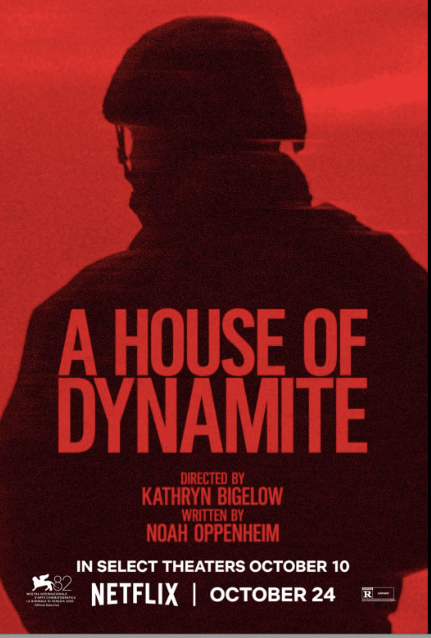
A House of Dynamite: MAD -- Mutually Assured Destruction -- In Our Day and Age


I grew up in a world in which Dr. Strangelove was a plausible movie, a world in which we lived with the Soviet Union, armed to the teeth with nuclear weapons, as were we, and our best chance that we wouldn't blow up the Earth, if not to smithereens, to an uninhabitable planet, was MAD -- the mutually assured destruction that a nuclear war would engender, which would stop we human beings from ever starting such a no-win war.

As A House of Dynamite on Netflix tells us, at the beginning, we the world gradually learned to scale down our armaments, but the world has gone back to at least verbal apocalyptic belligerence in the past decade, with Russia, in particular, refusing to rule out nuclear weapons if the US and NATO attacked it in response to the Russian attack on Ukraine, or maybe if we gave Ukraine too much assistance.

[Spoilers ahead ... ]

A House of Dynamite posits such world in which a missile is launched towards the United States.  Attempts to intercept it with our missiles unaccountably fail.  Maybe our defense system has been compromised by prior surreptitious cyber attacks.  Maybe the system wasn't that effective in the first place. We’re told that stopping a missile like that is like “a bullet hitting a bullet”.

We soon learn that Chicago is the target.  (Here I'll say that the movie was made before Trump unconstitutionally targeted Chicago for National Guard deployment.  Just sayin'.)  We see this story play out from three different simultaneous angles, from the standpoints of American military and political leaders and personnel.  The actors are top notch: Idris Elba as US President (he's been great in everything I've seen since Stringer Bell in The Wire), Jared Harris as Secretary of Defence (Hari Seldon in Foundation), and Rebecca Ferguson as a Captain who finds herself heading the White House Situation Room (Juliette Nichols in Silo), are just three of many examples.

All three stories end with the missile seconds from hitting Chicago, and the President struggling to make a decision.  Retaliate?  Against which country?  Russia, China, North Korea?  And what kind of retaliation -- how much of the presumed enemy will be destroyed?  How much of the Earth will be left inhabitable?

And here the movie ends.  Right.  Just like the last scene of The Sopranos.   We the audience need to fill in the ending.  Or at least think about it.   Is this good movie-making?  I actually thought it worked great in The Sopranos (see my reviews, beginning here, for what I think happened to Tony).  But The Sopranos was clearly a totally fictitious story about familiar characters in our reality.  A House of Dynamite is fiction, too, but somehow seems less a fiction, much closer to our reality, the world I grew up in, the world we now inhabit.

And as a denizen of that world, I found the ending unsatisfying.  But maybe in such a scenario there is no narratively satisfying ending.  A happy ending would have been the missile hitting Chicago with no bomb, or no bomb going off.  Deputy National Security Advisor Jake Baerington (played by Gabriel Basso, who believe it or not played J. D. Vance in Hillbilly Elegy) tells the President this a possibility, in an attempt to caution him not to launch a massive nuclear counter-strike.  This of course goes against the military advice of General Anthony Brady (Tracy Letts, Elvis and Nixon -- hey, it's a movie about a President).

So who would the President listen to?  I'd hope it would be Baerington not Brady.  But maybe that's not realistic, after all.  

Saturday, October 25, 2025

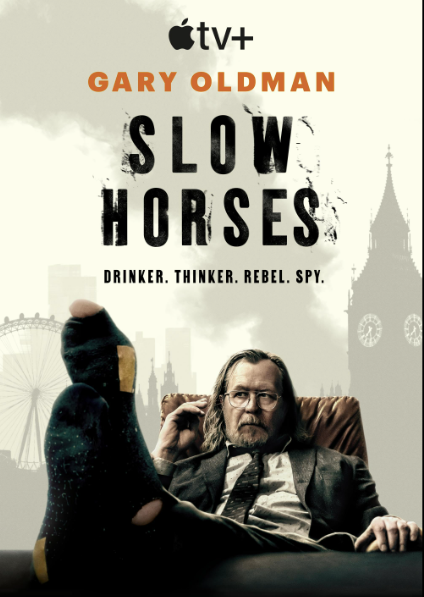
Slow Horses 5.1-5.5: Blasting On All Cylinders


Based on the first five of six episodes of the fifth season of Slow Horses, I think it's in the running for being the best season so far.   In fact, I was going to wait until the upcoming finale this coming Wednesday on Apple TV+ to review the whole fifth season, but this fifth episode was so good (even though I guessed the major twist) that I decided to review the first five.  I'll come back with a review of the season finale this coming week.

Here are some highlights of the first five episodes of the fifth season (with very slight spoilers):

  • James Callis as MI5 Director Whelan has had his best season yet.  Actually, this is only his second season -- Whelan was introduced in Season 4 -- but Whelan was like fingernails on a blackboard being just the right mix of irritating and infuriating in these five episodes.  James Callus, memorable from his role in the rebooted Battlestar Galactica, will be memorable in his role in Slow Horses.
  • Lamb delivers at least one great scene of flatulence in every season of Slow Horses.  The silent but deadly one in Season 5 was his most pungent, with someone commenting that they could get lung cancer from breathing it in. 
  • River's grandfather David has a great scene in which he tries to explain that the team and MI5 are missing what the bad guys are planning to do in their "blind your enemy" attack.  He tries to explain it to River but can't because of David's diminished mental capacities.  Very touching.
  • Coe, also introduced in Season 4, is an excellent addition to the team.  Tom Brooke puts in a fine chillingly spooky performance, especially suitable for this time of year, i.e., Halloween.
  • Taking someone out with a can of paint via a complex Rube Goldberg chain of events is cool.  (I'll say no more about that because I said the spoilers would be slight).
  • Mick Jagger's "Strange Game" as the Slow Horses theme song remains outstanding!
  • Gary Oldman as Lamb is perfect in every scene -- they all are.
See you here next week with my review of the season 5 finale.

Monday, October 20, 2025

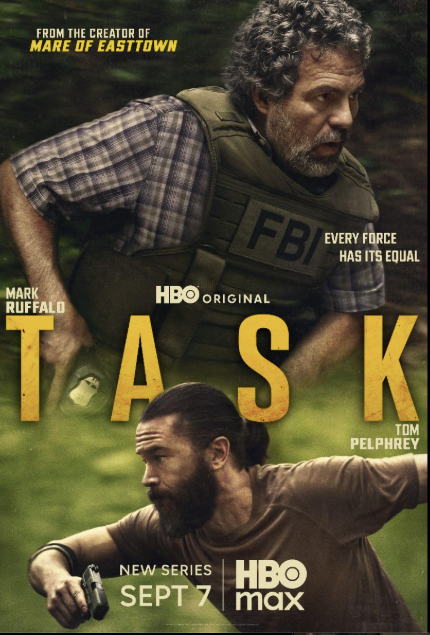
Task: Love and Death


Task concluded its seven-episode first season on HBO Max tonight -- and I hope it is the first of more than one season, because the series is an unusual and ultimately winning combination of love and death.

I don't mean only romantic love, though Task has some of that, too.  But this series has a love of what is, for want of a better word, nature.  Every episode has birds, feeding and chirping.  Crucial characters swim and connect to something greater in lakes and ponds.  There's a lush greenery that comes from the Pennsylvania wild that I'm familiar with, because I've seen a lot of it in New York and Cape Cod.

But the show is an FBI story, and the FBI in this story is looking into drugs and interstate murders, not white collar crimes.   And death is meted out in all kinds of ways, usually in bullets.  Any life, FBI or criminal, is possibly forfeit at any time.  But even in crime and its policing, there is a tempering element.  The lead person in the narrative, agent Tom Brandis (perfectly played by Mark Ruffalo), used to be a priest.  He's experienced death in both his personal and both professional lives, priest and agent.   His ultimate problem is not to identify and bring to justice the criminals he pursues, but how to forgive. Indeed, forgiveness is such an underlying, undulating presence in Task, Don Henley’s “Heart of the Matter” could easily have been its theme song.

His counterpart is a criminal with many lovable aspects.  Robbie (perfectly played by another Tom -- Tom Pelphrey) is in effect a mirror-image, a counterpart, of Tom Brandis. The two even look somewhat alike.  Both are highly intelligent and empathetic, and seek to protect those around them, to the best of their flawed abilities.

And just about everyone in this story needs protection, because death is always close and at hand. Sometimes its killingly cold clutch is predictable, sometimes it's a shocking surprise.  Loose ends abound.  Most but not all are resolved in the end.

Hence my hope for a second season.  The birds are still chirping.  Nature never dies.


Sunday, October 19, 2025

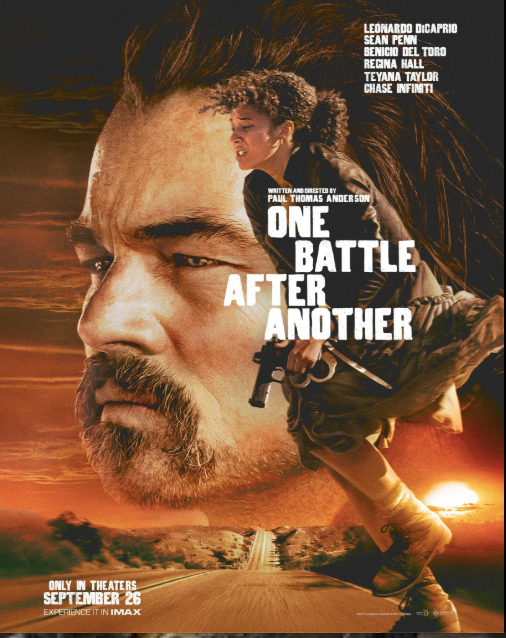
One Battle After Another: More Than Timely and Powerful and Quirky


My son (Simon Vozick-Levinson, Deputy Music Editor at Rolling Stone) invited me to see One Battle After Another with him (he wanted to see it a second time), and I'm sure glad that I just did.  Paul Thomas Anderson's movie (based on Thomas Pynchon's 1990 novel Vineland, which I haven't read) opened in New York City and around the country last month, on September 25.  It tells the story of resistance to a fascist United States of America, a story which is becoming ever more like the reality of ICE and government agents pepper-spraying clergy, pulling innocent American citizens off the street for deportation without a hearing, that we see every day on television and social media.

The only difference is Federal police in One Battle After Another fire real bullets not pepper-spray.  But the dystopian movie -- this fictional film of a Hitlerian dystopia that is nearly here -- gives us a frightening portrayal of the racism and xenophobia of the rich white men and military who order ICE to go out and do their worst.  At the same time, the movie portrays those who are driven to violence to oppose what they rightly see as the destruction of America.

One Battle After Another indeed shows us two generations of opposition to fascist government in the USA.  This has two narrative dividends.  First, it enriches the narrative, exploring the family dynamics of the revolutionaries.  Also first,  it provides a truthful historical depth to the story: in our offscreen reality, fascism and its attendant racism didn't originate in the past ten or twenty years.  It has roots that go back centuries not decades to the birth of America, and its acceptance of slavery.

The movie is also brilliantly acted.  Leonardo DiCaprio, Sean Penn, and Benicio Del Toro never disappoint, and they all were outstanding in this movie.  Chase Infiniti, who was memorable in the TV series Presumed Innocent, was powerful in One Battle After Another, as was Teyana Taylor.  It was also great to see Wood Harris (The Wire) and Tony Goldwyn (Law & Order)  and Brooklyn Demme on the big screen. (Demme was interviewed on the Being Frank podcast this past April, in an episode that ended with Frank LoBuono playing my song "Alpha Centauri").

Speaking of songs, there was some excellent music, across a diversity of times. My favorite was "Soldier Boy" by the Shirelles, which was eerily satisfying to hear, given that it was on Top 40 radio in 1962, the happiest time in politics in my recollection, a time that sparkled with promise and progress, in such stark contrast to this wrought movie and our country today. And there was indeed some gallows humor that was pretty funny in One Battle After Another, which was also a tonic for what was happening on the screen. 

The action scenes were excellent, too. One of my favorite was Del Toro’s character Sensei Sergio St. Carlos escaping via a tunnel under his house, something I’ve always wanted to construct, and one thing I’ve admired about El Chapo. The car chases were exceptional, with one blockbuster chase involving three cars driving at lightning speed in hilly terrain, each driver having a separate agenda, something I've never seen before, even in a James Bond movie.

But the undeniable strength of this movie is its warning against what America is becoming before our very eyes -- a sober warning delivered with all manner of quirks and idiosyncratic characters that all too often border on gonzo -- which couldn't have been delivered at a better, more necessary time.

=============

Simon Vozick-Levinson's A Guide to the Revolutionary Music in ‘One Battle After Another’ in Rolling Stone, September 29, 2025

=============


Saturday, October 18, 2025

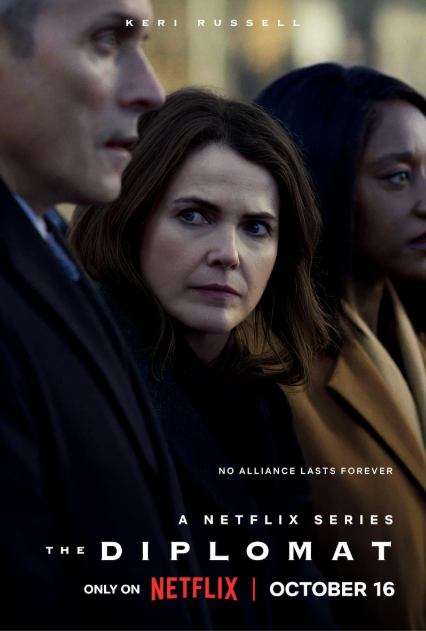
The Diplomat season 3: Thriller in More Ways Than One


My wife and I just finishing bingeing the 8th episode of The Diplomat season 3 on Netflix.  I thought this third season was the best season so far.  Every episode was brimming with excitement and surprise.  Indeed, the only predictable thing in this phase of The Diplomat is the content and conclusion of every episode was unpredictable, and radically so.  This season couldn't have been presented more effectively than all episodes at once.  Each episode was a chapter in a book that you couldn't put down (in both meanings of the word).

It was also was the most romantically explicit -- not that it would be "R" rated, the only nudity was the British PM's backside -- but the romance was hot, inhabiting and invigorating just about every relationship and every episode.

[And there will be spoilers ahead ... ]

Indeed, there was a very big hint at the very end that Hal Wyler (perfectly played as always by Rufus Sewell) as VP of the United States was sleeping with Grace Penn, who became President after the death of Rayburn that was the stunner at the end of season 2, after Kate Wyler (perfectly played as always by Keri Russell) makes passionate love with Callum Ellis in a previous episode, and then in the final episode apologizes to Hal staying away from him physically and enthusiastically adhering to their "secret divorce" in  Ellis's arms.   And the First Man -- Todd Penn -- suspects something may be going on in bed between his wife (The President) and Hal (the Vice President), with the ending certainly suggesting that Hal is living up to his title as "Vice" President in more ways the one.

The thrill of The Diplomat is also political, and a political thriller, almost James Bondian (as I said about the previous seasons), this third season of The Diplomat certainly is.   Not only are the Russians and Chinese involved, but the US and the UK are on the edge of being at serious odds, after the truth comes out that the US was responsible for the sinking of the British ship with which the series began.  And the political thrills are lubricated by the lies that we see the US side cooking up to protect President Penn, blaming the deceased former President for something that Penn was actually responsible for when she was VP.

Also like the Bond movies, we're told at the end of The Diplomat season 3 that there will be a fourth season.  My only regret is that it won't be up on Netflix tomorrow.

See also The Diplomat 1: West Wing Meets Bond ... The Diplomat 2: West Wing Meets Bond Part 2

My 2021 in-depth interview with Rufus Sewell about The Man in the High Castle

Thursday, October 16, 2025

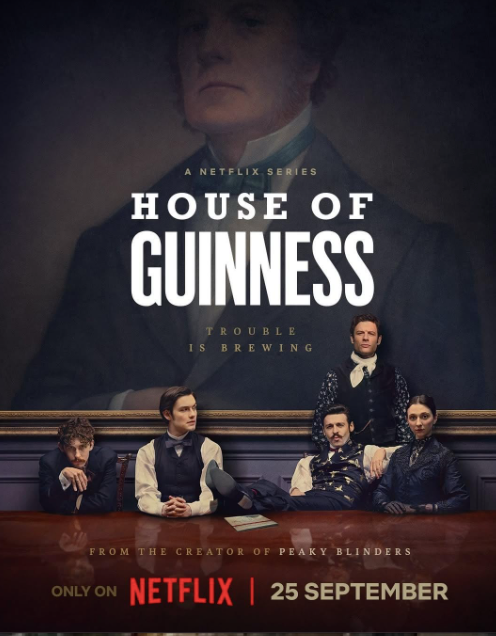
House of Guinness: Bracing, Refreshing, Satisfying


I binged House of Guinness the past few nights.  I'm not a drinker, but I thought the 8-episode series on Netflix was outstanding.

It tells the story -- or the beginning of the story -- of how the four adult children of Benjamin Guinness, after his death in 1868, helped propel the brewery to become the biggest producer of beer in the world by 1886.   The series is billed as "Fiction ... Inspired by True Stories" which means it's even less true than most docudramas but not made up completely or materially out of thin air.   Whatever its mix of truth and fiction, House of Guinness, like a good mug of beer, provides a story that is bracing, refreshing, and satisfying,

The creator of the series -- Stephen Knight -- is best known (at least to me) as the creator of Peaky Blinders, one of the first and still one of the best series to be streamed by Netflix, and less reflective of reality than House of Guinness.  But the pacing, cinematography, and general character development of House of Guinness has a lot in common with its forebear.  You can feel the chill of night, the clinking of glasses, the mud on your shoes in both series.

Both series present all kinds of love stories, about all kinds of love, and are brilliantly acted.  With the exception of James Norton, who does a great job as Guinness enforcer Sean Rafferty, none of the actors were known, or known well, at least to me.  Special kudos to Anthony Boyle and Louis Partridge as Arthur and Edward Guinness, the oldest and next-to-oldest sons of Benjamin, and Niamh McCormack as Ellen Cochrane who, unfortunately for history, was not a real person.

Ellen is a Fenian, the Irish nationalist movement that eventually helped engender today's independent state of Ireland.  The Guinness family is Protestant, and the backdrop of House of Guinness, often bursting into the forefront, is the often violent struggle for Irish independence.  But, hey, I haven't warned you about spoilers, so I won't say anything more about the first season of House of Guinness, expect that there has to be a second season.


Saturday, October 4, 2025

Applying Marshall McLuhan to Our Current Predicaments


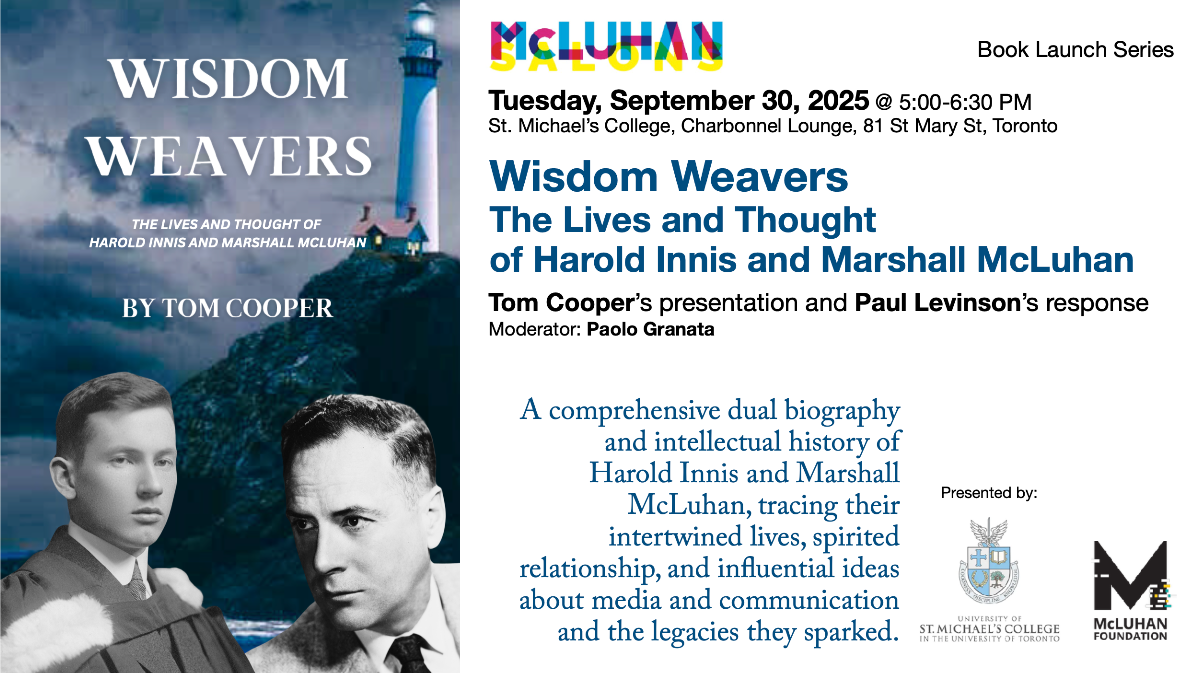
On September 30, 2025 I took part in a McLuhan Salon organized by Paolo Granata in Toronto.  The Salon was devoted to a consideration of some of the many issues Tom Cooper explored in his book Wisdom Weavers: The Lives and Thought of Harold Innis and Marshall McLuhan, published by Connected Editions on May 1, 2025.  The following is a slightly edited transcript of my responses to each of the three sections of Tom Cooper's presentation, in addition to my responses to two subsequent questions raised by members of the audience.  The audience in Toronto was present in-person with Paolo Granata at the event.  Tom Cooper and I attended via Zoom.

Part 1

I've been thinking increasingly in the last couple of years that the work of Marshall McLuhan and Harold Innis has never been more important to our world than it is now. As all of you up in Canada know all too well, the United States is being pulled apart by a President and his supporters, who seem to be happily marching increasingly towards a fascist government. And people who are upset and concerned about that are, among other things that they're doing, desperately struggling to understand how that happened, and what we can do, if we do understand how and why that happened, to stop and reverse that trend.

So, Tom Cooper contacted me in August of 2024 -- it seems now like about 10 years ago, because so much has happened since then -- to tell me about his book, Wisdom Weavers, an intellectual biography of Marshall McLuhan and Harold Innis, which he wanted to get published. By the way, it's worth noting that this book literally has been about half a century in the making, in the writing. And that's something that we all know, that books take a long time to write, and sometimes even longer to get published, but I think most of us can agree that 50 years is a very long time. But that's one of the great strengths of the book. And Tom had been working on this, and has been witness to all of the political upheavals in the United States.

And I have noticed, if you pay any attention at all to the news, in this struggle to understand how we got here -- we being we here in the United States, we being the United States and Canada, we being the whole world -- that increasingly, Marshall McLuhan's name comes up, because most people who understand anything about the history of communications and media, who at all have a sense that what we see and hear on television, listen to on the radio, talk about through our smartphones, and most importantly, what we do now through social media, are also aware that, well, there was this theorist Marshall McLuhan, who talked about a global village. Not in 2012, not in 2002, not in 1992, but way, way back in 1962.

And maybe some of the things that McLuhan talked about, and as we also know, when you delve into the history of Marshall McLuhan as a scholar and as a person, his awareness of and interaction with and reading the works of Harold Innis, maybe, maybe that has something that we can learn from and we can use to help us better contend with these momentous changes.

So when Tom contacted me and told me about his book, I immediately said, well, send it to me. And that very evening as I was reading it, I knew what a crucial gift this would be to our current world as we struggled to make sense of what was going on.

So I don't think that Harold Innis and Marshall McLuhan have ever been as important to the world as they are now, and I think we're very fortunate to have a book like Wisdom Weavers that can tell us so much about those two.

And I'm glad that I happen to have this publishing company, Connected Editions, that could publish this book. My wife Tina Vozick and I, back in the early 1980s, created an organization called Connected Education. Connect Ed or ConnectEd, for short, and what we were doing back then was offering online courses for academic credit. And we had arrangements with the New School for Social Research, with Bath Spa University, originally called Bath College over in England, with Pacific Oaks University out on the West Coast of the United States. And we had this program going for about a good 15 years -- before I got tired of teaching online and decided to go back to the classroom and teach in-person -- but one of the things that I thought our organization could benefit from was creating an online publishing company, and since we had Connected Education, I thought it would be good to have another Connect Ed company, in this case, Connected Editions.

That's how the publisher of Wisdom Weavers was created. And when we decided to wrap up Connected Education, we still kept Connected Editions going, because we'd published a few books, and we thought they were important books. But, Connected Editions was pretty much in the closet in 2024, so in addition to everything else, the timing was right, because when Tom and I had that conversation, and, I got off the phone, and Tina said who are you talking to? I said, well, you may recall Tom Cooper. And I immediately said, you know, maybe it's time to bring Connected Editions back into the forefront, back into the fight to not only get more people aware of the important things in the world, but in the fight that I think all of us who believe in freedom are now conscripted in the political army to fight.

Part 2

I'd like to talk about about the power of parasocial relationships. And here's a true story that concerns Marshall McLuhan.

It also concerns a very good friend of mine, someone who sat next to me in the Media Ecology Program at NYU, who completed his PhD, literally, in the same few months that I completed mine. His name may be familiar to some of you, Joshua Meyrowitz. And here is this true story which shows the power of parasocial relationships, which, by the way, Josh Meyerowitz, who's remains a very close friend of mine, investigated in his doctoral dissertation, No Sense of Place, which he eventually, I guess, 6 or 7 years after he finished his PhD, developed into the book No Sense of Place, which is on the verge of celebrating its 40th publication anniversary by Oxford University Press.

Anyway, as many of you, maybe all of you, know, December 1980 was a pretty grim time as far as the loss of people that many people in the world, for different reasons, regarded as absolutely essential to their understanding of the world.

One was Marshall McLuhan, who had suffered a stroke earlier in that year, but left us, finally, in December 1980. And at that point, I was pretty close friends with Eric McLuhan, Marshall's son. And with Corinne McLuhan, Marshall's wife -- and by the way, there's a lot about the women, who played such a big role in both Marshall's life and Harold Innis' life, in Tom's book.

But as soon as we heard about Marshall's passing, Tina and I knew that we were going to go up to Toronto to attend as much of his funeral and services as people who are not members of his family could attend. And that's what we did. And as we were getting ready to do this -- that is to go up to Toronto, Tina and I -- I called Josh, who at this point was teaching at the University of New Hampshire in Durham, New Hampshire. He was then married to Candy Leonard, who would go on to actually write a couple of books about the Beatles, a very significant author. And I said to Josh, by the way, are you and Candy going to come up to Toronto for Marshall's funeral?

But another tragedy had occurred in December. John Lennon was assassinated. And, as I've been telling people for a while, ever since I wrote a novel called It's Real Life, an Alternate History of the Beatles, in which John Lennon was not assassinated, that killing changed my life. The novel is fiction, science fiction. Which I enjoyed writing. But in our world, the reality is he was assassinated.

And so those two things happened in December 1980. And the point I'm getting to is that Josh said, no, we're not going to go up to Marshall's funeral much as we would want to.

And I said to Josh, well, why not?

And he said, well, there's an event in Manhattan. People are getting together to basically express their horror at what happened to John Lennon and their love of John Lennon and his music. And Candy and I decided that's what we're going to do. We're going to be traveling, but we're going to travel from New Hampshire to Manhattan, not from New Hampshire to Toronto.

And if you think about it, there you have a parasocial relationship so powerful, that even though Joshua Meyrowitz had met McLuhan -- in fact, one of the things that I was happy that Tom picked up on in Wisdom Weavers was the pot roast dinner that Tina made the night before the Tetrad conference that I organized at Fairleigh Dickinson University in the late 1970s, a dinner in which Marshall and Eric, Tina and I, were joined by Joshua Meyerowitz and Ed Wachtell, another media theorist -- but even though Josh had broken bread with McLuhan, sat across a dinner table with him, Josh and Candy decided to go to Manhattan because of their parasocial feelings for John Lennon.

So yes, Marshall was someone that Josh felt very close to. But the power of his parasocial relationship with John Lennon led him to attend that event in New York, even though he had never met John Lennon in person.  (By the way, I had met John Lennon in person once in a crowded elevator in a building in New York City.) So the parasocial is indeed an incredibly powerful force in all of our lives. We all interact with all kinds of media all the time. And we have very profound emotions about people who don't know us from Adam or Eve. And it's important to pay attention to that.

I wanted also to move to a slightly different topic to defend Marshall McLuhan and what he came up with, one of his most famous "probes," as he would call it. I would call it a concept, but it doesn't matter what the word is. But I'm talking about the "global village". And I think you have to give McLuhan enormous credit for that. In 1962, what got McLuhan to write about the global village, no doubt, was television. And if you think about it, there was nothing global about television back in 1962, and I'm old enough to remember that. And I can see, looking at the audience, that a few of you are old enough, too.

And, not only was it not global, what television created, it wasn't really a village either.

It was national in countries like the United States. Okay, that's a lot of territory, but TV did not create a village, because last time I checked, in a village, people could talk to each other, exchange ideas, across and throughout the village.

What television was ... well, it was basically a media environment of one-way wires. People watched television, but they couldn't communicate at all with the people who were on television. At most, they could communicate with people in their own families, and some friends, and maybe some business associates. At the proverbial water cooler.

So, in this environment, McLuhan talks about the global village. And the global village doesn't come into actual being until a good 30, 35 years later, when the Internet, the web, first came on the scene.

And obviously, the world we live in now is indeed a full-fledged global village, with all its benefits and all its dangers. So McLuhan may not have been entirely right about the global village, but you have to give him credit. You know, you talk about foresight, you talk about a perception that can span decades into the future. His understanding of human communication was so deep and rich that he was able to foresee -- not just predicting something, like some swami who might be able to say, I can predict the future, but no, McLuhan' notion of the global village was based on his insight into human communications, and I think that's one of his most signal accomplishments.

Last point I'll make, but very briefly, and maybe at some point in the future, at another conference, or maybe later at this event, I'll tell you more about it. Here it is: I'm not as worried about AI as many other people are. I think it's just another technology. Yes, it is going to have an enormous impact, it's going to have a good impact, it's going to have a bad impact, everything in between.

We do need to understand it better. But I'm not worried that as soon as this event is finished, there's gonna be a knock at my door, I'll open up the door, and I'll see Arnold Schwarzenegger saying, is Sarah Connor here? I'm not worried about that happening at all, at least not in our lifetimes.

Part 3

Let me pick up on what I was saying about artificial intelligence. It's done us, and is doing us, an enormous amount of good in areas like medicine, in areas like transportation, and this also relates to our health.

I'm old enough to remember, and again, I can see many people in our audience are old enough to remember, when, if you were going over a bridge or under a tunnel, you had to pay a toll. That's still the case, but there was usually some person in that toll booth, a collector, who was collecting your toll.

That person's job at least 8 hours a day, 5 days a week, was to sit there, collect tolls, and breathe in God knows how much carbon monoxide. You know, it's amazing that they lived long enough time to even get trained to be a toll collector. But, now, of course, we go over bridges, we go over tunnels, and we have an AI system keeping track of our tolls, and no one has to do that kind of job. And there are many other unhealthy jobs like that.

Yet I think it's a mistake, in many ways, to even call these systems, and AI in general, AI or artificial intelligence. I think a better word would be AS. And what I mean by that is artificial stupidity.

Because the systems are still not that bright. You know, I wrote a book, very small book, about 100 pages, called McLuhan in an Age of Social Media. I update it all the time. And I thought as I was preparing Tom's book for publication, I would get an idea of how adept an advanced AI program like ChatGPT, not the free version, but, even cheapskate that I am, I paid for a pretty sophisticated version. And so I figured I would do a test case. I would ask ChatGPT, could you prepare a name index for McLuhan in an Age of Social Media (like I might want you to do for Tom's book Wisdom Weavers).

And ChatGPT said, sure. And I uploaded the manuscript, and just a few hours later, it presented an index to me.

In which it missed about 30% of the names, and also included about 4 or 5 names that it pulled out of thin air. This is known as hallucinations in the AI field.

It did do one intelligent thing. I was talking about the billionaire who bought Twitter without mentioning Elon Musk's name, so to give the AI credit, it did put Musk's name in the index it prepared.

Anyway, I worked with that AI for about 2 weeks. It constantly promised that it was going to give me a better version.

Eventually, I said, look, enough is enough already. And I took what it gave me, went over the page by page with my own eyes, corrected the index, and now, finally, there is an index to that very short book. So, one of the reasons why I'm not too worried about AI is if it can't even do an index, a name-only index for a 100-page book. I don't see how much damage it can really do in the world.

And I know there are deep-fake videos and so on, but about that, I'll say, look, you know, we've been in that situation at least as long as since Abraham Lincoln was president. And if you take a look at another one of my books, Fake News in Real Context, you'll see a picture of Abraham Lincoln. It's actually a photograph of Abraham Lincoln. But it wasn't completely of Lincoln.

You see, the problem with Abraham Lincoln was -- he was a brave president, some people consider him America's greatest president -- but one of his problems was he didn't have very good posture. So, these photographers, these early photographers in the 1860s, took dozens of pictures of Lincoln. It was during the Civil War. They wanted to make those photos look as presidential as possible. But in every single picture, Lincoln was slouching. He didn't look comfortable.

So finally, what they did is, they came up with the brilliant idea, they lopped off Lincoln's head, and they took an older photograph of John Calhoun, an notorious Southern secessionist senator. And even though he believed in slavery, he did have one good thing about him, he had good posture.

So they took the photo of Lincoln's head and put it on top of a photo of John Calhoun's body, and that's the photograph of Lincoln that they circulated. And so Lincoln looked great.

In other words, that kind of hocus pocus of fake imagery began in the 1860s. That really is the beginning of fake news, you know, through imagery and videos, and now we have deep-fake videos. The solution to the problem is not to ban AI, or even denounce AI, it's just not to believe anything you see in a video, anything you see in a photograph. Don't believe it. You know, you just have to accept that it could be manipulated. And that pulls the fangs out deep-fake AI-manipulated videos.

And now a brief point about outer space, which Tom mentioned. Here's why I think going out into space beyond this planet is so important. A very simple, straightforward reason.

I'd like to know what the hell we're doing here.  That is what we as human beings, who can go out into space, who can communicate in the way we're doing right now, Tom in Honolulu, I'm up on Cape Cod, all of you are in Toronto, are all about. What is going on here? No other species can leave this planet. We marvel at the intelligence of great apes and dolphins. But last time I checked, none of them had an Isaac Asimov, none of them had a Niels Bohr or an Albert Einstein. Or a Marshall McLuhan. The great apes may be very intelligent, and all due respect to the great apes and other intelligent animals, but they don't have hold candle to our intelligence.

And not only that, we don't really know how everything was created, right? I mean, the Big Bang Theory doesn't explain it, because what created the Big Bang? What created the materials that made the Big Bang?

And as far as religions are concerned, okay, God created everything, but what created God? God created Him or Herself?

That's a clever, logical ploy, but it doesn't really answer our questions, does it? And I think the only way we're going to get a little bit better insight on what we're doing here in this world is to get beyond this pebble. Get beyond this planet where we happen to find ourselves, and see with our own eyes what is going on out there in the universe.

Obviously, not everyone agrees with me. I'll close with what my teacher, Neil Postman, probably the best teacher I ever had, but I disagreed with, like, 95% of his views, including what Neil Postman had to say about outer space. One day, when I made the same point to him that I just made to you about the need for human beings to go out into space, Neil turned to me and he said, "But Paul, you don't understand. There's no air out there."

So, you know, that was certainly true, but obviously we could travel in ships that give us air.

Part 4: Responses to Questions

(a) I think, by and large, that the only way we can improve our lives and our situations is through technology. Not only media, which are technology, but other technologies. So, one of the ways of dealing with not enough food to feed people is to have better agricultural technology -- or even, for example through genetic engineering, and I know that's very controversial in some places, but to make crops that are more resistant to natural ills, that can thrive in harsher temperatures, etc, etc.

And I see all of the concerns about the media need to be taken into a larger perspective of we're still a long way, as a species, from leading the lives we want to live. We, all of us, have disappointments that we see all around us, things which are not working well, and as I said, I can't think of any solution better than technologies which have extended our lives, have made parts of the world more conducive to human beings living there, and a whole series of other positive developments.

(b) Let me just say, I was already, before Trump became what he is today -- going back, actually,to the 1970s -- I was always very interested in the study of propaganda. How it's created and what it does. I studied it as a student in the Media Ecology program. It actually wasn't Neil Postman's specialty, it was Terry Moran's, somebody else in the NYU Media Ecology faculty, who doesn't get enough credit for his contribution to the program. And because of Terry Moran, I read the Institute for Propaganda Analysis, what that group did in their studies, which began in the late 1930s, continued into the early 1940s. And through that, and other research that I did, I became very well aware of what Joseph Goebbels and Adolf Hitler and his cronies did in Germany in the 1920s and 30s, and I became aware very early on that Joseph Goebbels was no dummy. It was Dr. Goebbels. The man had a PhD. He was a monster on an ethical basis, but he was highly intelligent, and he also understood human communication.

And the reason why I'm saying all this is it frightens me, and frighten is almost too weak a word, to see what's going on in the United States today, and in other parts of the world. Because, in many ways, it is following the exact same path that Hitler and Goebbels and their cronies followed in the Weimar Republic in the early 1930s, attacking comedians, rounding up immigrants and demonizing them. I mean, I could talk for an hour about all the things that are going on today in the United States, such as wanting to annex other neighboring countries. You know, one of the first things Trump said, after he was re-elected this second time, is, hey, he thinks Canada should become another state in the United States. I mean, this is, you know, like Hitler's Germany wanting to annex Austria, which he did, wanting to annex half of Czechoslovakia, which he did. And that finally led to World War II.

And so, this is a very real situation. And my best advice is, every single one of us needs to do whatever we can to stop that and fight that. I'm a professor, so fortunately, I have classrooms in which I can talk to my students about that. I have a blog in which I can write my head off about it. I have podcasts in which I can talk about it, I can talk about it even now to you, but every one of us who is concerned about this, well, the worst thing we can do is to keep quiet about it. We have to constantly oppose it and encourage other people to oppose it, and that was the mistake that people in Germany, well-meaning people in the 1930s, did. They didn't take Hitler seriously enough. They dismissed him as a clown. And all too often, I hear people dismiss Trump as a clown. Yes, he is, but he's far more dangerous than a clown, just as Hitler was.

in Kindlepaperback, and hardcover


================================================

Andrey Mir presented  Tom Cooper's talk as a written post on Mir's Media Determinism blog on Substack on October 2, 2025.

Tuesday, September 30, 2025

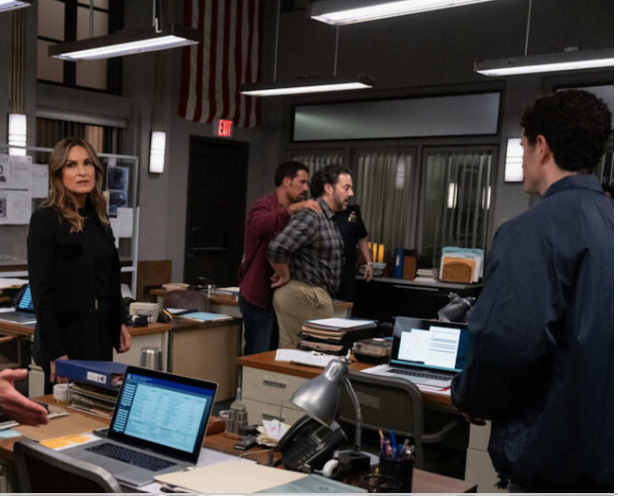
Law & Order: SVU 27.1: Olivia Benson vs. ICE


Just caught up with the season 27 debut of Law & Order: Special Victims Unit on NBC this past Thursday evening. It was excellent in all kinds of ways, but none as ethically important and politically relevant as Olivia Benson standing up to the American Gestapo aka ICE as they do their utmost to impede Captain Benson and the NYPD from bringing a rapist to justice.

ICE is bent on taking Benson's witness into custody and having him deported to El Salvador or who knows where.  Never mind that the witness is here legally.  He looks like a foreigner and that's all Trump's racist goons need to haul him off.  When Benson attempts to stop them, she's taken into custody.

Benson's arrest is actually the least of what these Federal criminals have been doing in real life to fair-minded, hardworking people in government who try to do their job and stand up to ICE when necessary, which is all too often.  Alex Padilla, US Senator from California, was thrown to the ground, when he tried to ask Homeland Security Kristi Noem a question, by another branch of Trump's Storm Troopers a few months ago.  But it was good and important to see a fictional character, wonderfully played by Mariska Hargitay all these years, do the right thing in New York.  Hats off to NBC.

Would a real captain of the NYPD do what Benson did?  I would certainly hope so, but I don't know that I would bet on it.   I don't know that other networks and streaming services would have characters in their dramas do what Benson did, either.  I'm a lifelong devoted Yankee fan, and it's always great seeing them play baseball on YES.   But I was very disappointed to see ads for ICE more than once in between innings on YES in the past few months.

Baseball is about American as you can get.  ICE is about as un-American.  Good to see NBC and Olivia Benson on the right side of this battle for our democracy.


'

Monday, September 22, 2025

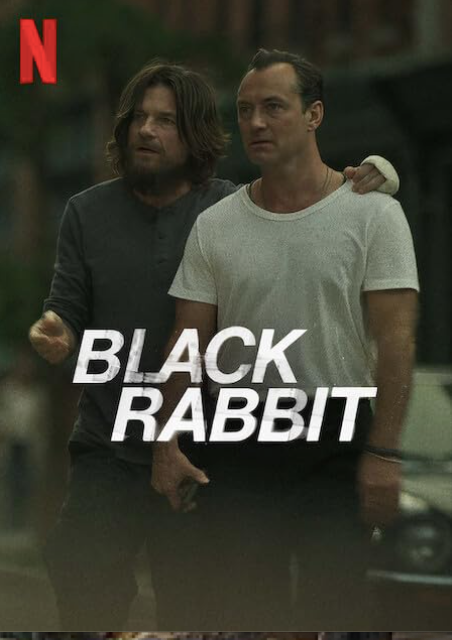
Black Rabbit: The Good and the Bad


Black Rabbit -- all eight episodes -- debuted last week on Netflix.  My wife and I binged the short series the past few nights.  To paraphrase Charles Dickens, I thought watching Black Rabbit was the best of times and the worst of times on streaming viewing.  Well, not the worst -- I wouldn't say I'm hopping mad (sorry) about problems in the series -- but there were indeed some highs and lows.  I'm not talking about what lows just about all the characters experienced in the narrative, but how their story was presented to the us, the audience.

[Slightish spoilers ahead ... ]

Here's some of what I really liked:  The series had incredible soul, great acting, and great music.  About the music, I especially enjoyed hearing a bit of the theme song of MobLand on Black Rabbit -- I think "Starburster" by Fontaines D.C. is the best British hip-hop I've heard, and up there with the best hip-hop period.  The story takes place mostly in lower Manhattan, and the cinematography was real, bracing, and refreshing.  And the story was riveting, with big and bigger surprises throughout.

Here's what I didn't like:  The series was too obvious, even annoying, in the techniques it used to tell the story.  Lots of series these days jump back and forth in time without usually identifying the time.  Even if the date is identified, too much of that can be distracting (my wife feels even more strongly about that).  I guess flashbacks as an essential part of the story was put on the map in Lost.  But in that brilliant, pathbreaking series (until the atrocious finale), the flashbacks were elucidating and revelatory because they were clear, mostly because they were limited to flashbacks about a single character in a single episode.  In Black Rabbit, there were so many flashbacks involving so many characters weaving in and out of the story it sometimes felt like reading a book with some pages randomly torn out and pasted back in in different places.

Sometimes watching Black Rabbit almost felt like watching an entry in a some kind of director's competition for innovation in a movie.  One episode used the now common technique of titling segments with the name of the central characters.  This did give some minor characters more time on the screen, at the expense of the slowing down the action.

But Black Rabbit did get it all together in the last two episodes, with a heart in your throat ending, at once wrenching and beautiful.   All in all, very well worth watching, despite its frustrations.


Thursday, September 18, 2025

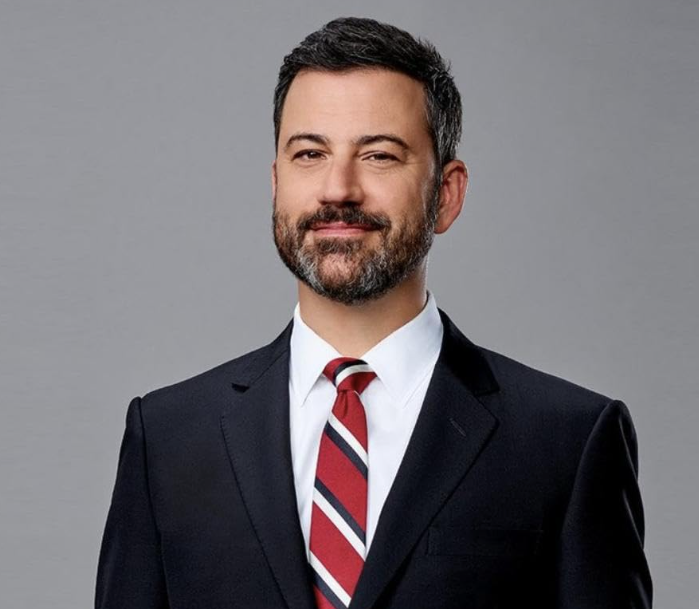
The Firing of Jimmy Kimmel: The Latest Step on the Road to Fascism


The firing of Jimmy Kimmel by ABC -- which is exactly what his "suspension" is -- is the latest step in the road to fascism being paved by the current President of the United States and his allies.  It began with the hounding out of their jobs of  FBI and other people who lawfully investigated Trump's instigation of the January 2021 attack on the Capitol, the pressure on universities to end DEI and other policies distasteful to MAGA Americans and their theorists, and of course the firing of another late-night host, Stephen Colbert, by another cowardly media operation, CBS.  (William Paley must still be turning over in his grave.)

In the case of Kimmel, rumblings were being made about the FCC doing something about him.  I've thought the FCC was blatantly unconstitutional as soon as I was old enough to think.  It violated the First Amendment's clear proscription on the government "abridging the freedom of speech or of the press" -- what else would any honest person say a late-night comedian, ridiculing Trump and his policies, was doing?  The only crime in that would be how easy it was to make those jokes, because the threat to our democratic way of life was so obviously no joke indeed.

FDR, certainly one of our greatest Presidents, jeopardized our democracy when he signed the Communications Act of 1934 into law.  So did Felix Frankfurter in the 1943 Supreme Court decision "NBC v the US," which he wrote, which ratified the FCC's power to regulate broadcasting.  Ironically, that was in the middle of our war with Nazi Germany which FDR was so instrumental in winning, not to mention that Frankfurter was a founder of the American Civil Liberties Union in 1920.

I started teaching at universities in the 1970s, and the danger of the FCC has always been a part of my courses about the media and their impact.  My main point has always been: imagine the FCC under the control of a President bent on willfully superseding our democracy and its protections from dictatorship (see, for example, my 2005 Media Ecology conference Keynote address transcript and video The Flouting of the First Amendment).  I take no satisfaction and indeed am saddened and deeply concerned to see this patent threat to our democracy so vividly realized by this President and the many people who support him.

Note added September 24, 2025:  Last night: Jimmy Kimmel's sage, hilarious opening monologue


To the fascist enablers that prevented this show from being aired in 20% of its markets, I hope you go out of business soon; to fascist enabler Paramount/CBS: reverse your decision to end The Late Show w/ Stephen Colbert]; to everyone: I'll be recording a conversation w/ Frank LoBuono about this in a few hours for his Being Frank podcast


Sunday, September 14, 2025

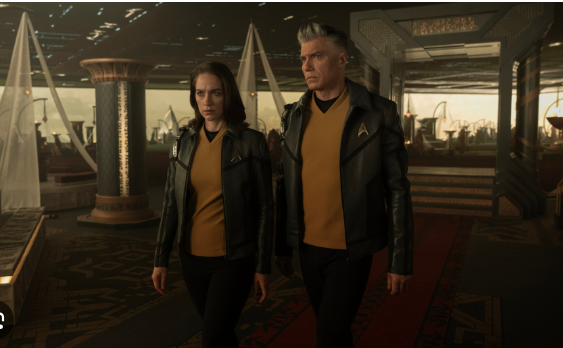
Star Trek: Strange New Worlds Season 3 Finale: The New Story

I just watched the Season 3 finale of Star Trek: Strange New Worlds, the series on Paramount Plus, which as you no doubt know if you're reading this, tells the story of Captain Christopher Pike, a character from a two-part episode of the original Star Trek series ("The Menagerie"), along with the story of Spock, James Kirk, Uhura, Chapel, Scotty younger than they were in TOS, as well as characters we didn't meet in TOS.

Now, if by chance you haven't seen the first season of TOS, you might not to want to read any further, because  there will be a huge spoiler ahead ... Although, maybe not.  How's that for a spoiler warning?

But what I'm getting at is we see about ten minutes of among the best Star Trek TV, movies, and streaming  I've ever seen, tender and heartbreaking and beautiful, the story of Pike not getting disfigured which was the basis of "The Menagerie". Instead, we see Pike and Batel happy together for the rest of their long lives (until Batel is on her deathbed), raising a family, with all the good things life has to offer.

The question is (or, my question is): did this really happen, was it a glimpse of a real alternate reality, or was it an illusion in Pike's and Batel's heads?  The rule of parsimony would make it an illusion.  But I'd like to see the makers of Strange New Worlds make it a reality.  The tragic brilliance of "The Menagerie" hinges on Pike being severely injured in a training accident.  But with the super-potent powers in the universe we humans on Star Trek from time to time encounter, might not one of them, seeing what happened to Pike in the accident, prevented him for being in that place at the wrong time? What that would do is make "The Menagerie" a compelling Star Trek story that we know about but ultimately did not happen, but the rest of  Star Trek corpus would remain intact.

In fiction, in general, prequels are always hostage to stories we already know, the stories that came first to our awareness but come from a time later in the overall narrative.  But I would argue that science fiction has a special permit to diverge from this, if need be, because the essence of science fiction is our encounters with different realities, including those in which a future element in a story we know could be changed by something in the prequel, with the result that we have a more satisfying story.

Actually, The Next Generation at least once already sort of did this, in "The Inner Light," in which Picard experiences his entire life on another planet, only to wake up still Captain, same age he always was, on the Enterprise.  What happened to Picard was not a dream, it really happened.

Whatever happens from now on with Captain Pike and Strange New Worlds, "The Menagerie" deserves even more credit than the warranted kudos it's long been receiving.  It generated in the Season 3 finale of Strange New Worlds a signally important episode among the best in the Star Trek series since TOS and TNG.

See also Star Trek: Strange New Worlds 3.1-3.3: Gorn, Spock & Chapel, and The Walking Dead ... 3.4: Lots of Laughs and Serious Business ... 3.5: Endearing Pseudo-Science ... 3.6: Chris and Jim ... 3.7: The Medium and The Message ... 3.8: Pike's Hair and Spock's Smile  ... [Note: I didn’t review 3.9 because, though it had a few good moments, I didn’t have enough worth saying about it.]


Friday, September 12, 2025

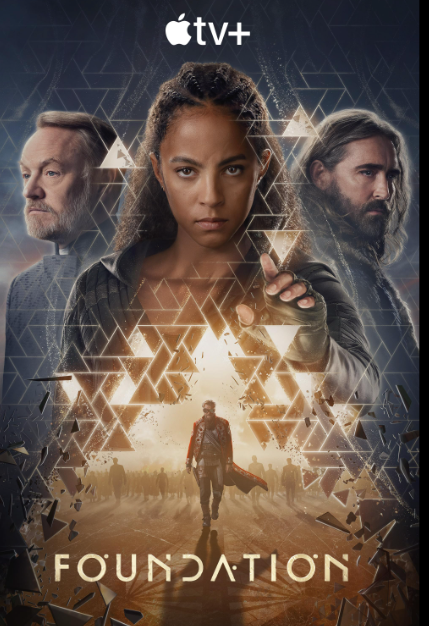
Foundation Season 3 Finale: Big Changes

Well, there were big changes indeed in the Season 3 finale of Foundation on Apple TV+.   Both from Asimov's original trilogy (as there have been throughout this streaming television series), and from this television series itself, up until now.

[And there will be big spoilers ahead .... ]

Here are some of the highlights of what I think I just saw:

1. Demerzel was destroyed in Dusk's rampage.  But I don't completely understand what the robots now have left.  We also see the head that Day brought back to Trantor flickering into life, and there apparently/presumably are other robots out there in the galaxy, so perhaps the Demerzel we've known and (at least for me) not especially loved, could conceivably be back.

2. The Cleonic clonal triumvirate isn't quite destroyed, but certainly disfigured or maybe fundamentally altered is a better way to put it.  Dusk can live forever, because he has his nanites intact and working.  Day is dead.  And Dawn is still alive, if not quite kickin'.  This new combination, combined with what happened to Demerzel, should make for a fascinating next season.

3. The man we thought was The Mule -- the older brother in that previous episode -- was killed by Gaal. But it turns out that Bayta is The Mule?  Or is The real Mule (Magnifico?) indeed controlling Bayta, in the same way he was controlling the older brother whom we first met on Rossom?   One thing is certain: Pritcher was indeed converted by The Mule (whoever he/she is), thus fulfilling what Asimov had in store for him.

4. The Second Foundation and Preem Palver are in the Library on Trantor, thus fulfilling another Asimovian detail.

5. And the Hari we've been seeing is indeed not alive.  But, as I've been saying, I think it's more correct to call him some kind on android, since holograms are reflections or representations, and have no independent agency.

I mentioned a "next" season above.  Today it was announced that Apple TV+ has indeed given a next season the green light.   See you back here when that 4th season begins streaming.  

And, if you'd like some more assessment of this season, check out the conversation I'll be having with Joel McKinnon and Cora Buhlert next week, as we continue our tradition of dissecting each season of this series.

Note added September 18, 2025:   Here's our conversation -- followed by earlier conversations about the first and second seasons of Foundation.


Joel McKinnon, Cora Buhlert, and I discuss the 3rd season of Foundation


Joel McKinnon, Cora Buhlert, and I discuss the 1st season of Foundation


Joel McKinnon, Cora Buhlert, and I discuss the 2nd season of Foundation


See also Foundation 3.1: Now We're Talkin'! ... 3.2: "The Fault, Dear Brutus, Is Not in Our Stars" ... 3.3: Dawn and The Mule ... 3.4: Cleon Knows His PKD ... 3.5: Cleaving Closer to Asimov's Trilogy ... 3.6: Finally! But ... 3.7: The Origin of The Mule ... 3.8: Deconstructing Concepts ... 3.9: Munn tracht un Gutt lacht

And see also Foundation 2.1: Once Again, A Tale of Two Stories ... 2.2: Major Players ... 2.3: Bel Riose and Hari ... 2.5: The Original Cleon and the Robot ... 2.6: Hari and Evita ... 2.7: Is Demerzel Telling the Truth? ... 2.8: Major Revelations ... 2.9: Exceptional Alterations ... Season 2 Finale: Pros and Cons

And see also Foundation 1.1-2: Mathematician, Man of the People, and Cleon's Clones ... Foundation 1.3: Clonal Science Fiction, Hari Seldon as V. I. Lenin ... Foundation 1.4: Slow Hand, Long Half-Life, Flipped Coin ... Foundation 1.5: What We Learned in that Final Scene ... Foundation 1.6: Folded Variations ... Foundation 1.7: Alternate History/Future ... Foundation 1.8: Divergences and Convergences ... Foundation 1.9: Vindication and Questions ... Foundation Season 1 Finale: Right Up There


Saturday, September 6, 2025

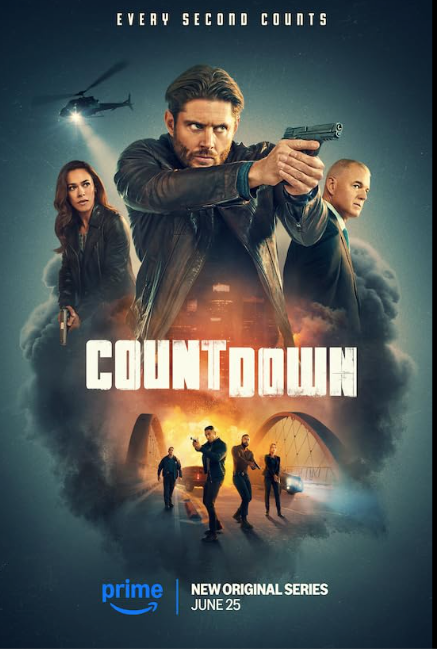
Countdown Season 1 Finale: An Exciting Season-and-a-Half


You know, I don't I've ever seen a series like Countdown before, the first season of which just finished on Amazon Prime Video.

[Some general spoilers ahead ... ]

I'm not talking about the story line, which, as I said in a review of a prior episode, was exciting, with some original elements, and reminiscent of 24.  I'm talking about the structure.  The first 2/3rds or so of the 13 episodes told one story, which was resolved (at least, as far as the good guys getting the bad guys).  The final third tells a very different story, with no connection to the first, other than more or less the same Federal task force is trying to save the day (actually, a Senator and President from being assassinated).

There's also a romantic relationship that was put on hold, even though the two agents -- a man and woman -- are still very attracted to each other.  But other than that continuing romantic story, there's no connection at all -- at least none that I could discern -- between the first story, which is resolved, and the second, which ends with a cliff-hanger.

In other words, we're treated in Countdown to a new narrative structure, which come to think of it, was also the case with 24.   And I have to say I very much enjoyed it.  Being presented one complete story (as far as getting the villains) and one half of another, well, it's radically unconventional, but it worked for me.  Who says storylines have to be cut neatly into individual television seasons?  Why can't a single season present one-and-a-half story lines?

I'm certainly going to watch Season 2 if there is one -- and I hope there is.  I'm eager to find out what happens in the second story.  And find out what part of a new story, or complete story, comes after.

See also Countdown: A Touch of 24 and More


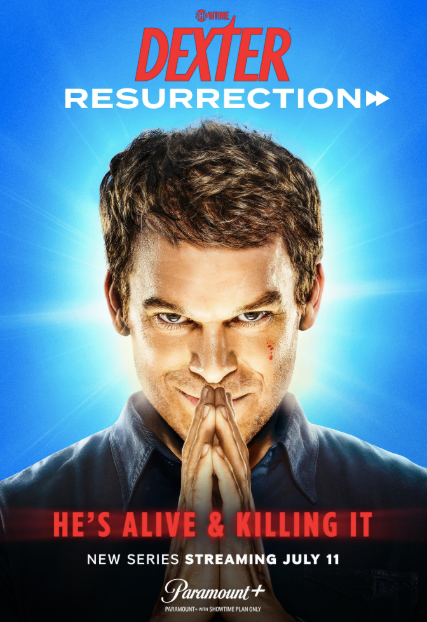
Dexter: Resurrection Season 1 Finale: First Place in the TV Age of Sequels


I've found over the many years I've been watching television -- on network, cable, and now more often streaming -- that the next-to-last or penultimate episode of a season can sometimes be better than the finale.  That was not the case with the next-to-last and final episodes of the first season of Dexter: Resurrection.  Last week's episode was fabulous!  So was this week's.

[Spoilers ahead ... ]

I said in reviews of previous episodes of this standout new sequel series that of the three enemies Dexter was fending off -- Batista, Prater, and Detective Wallace -- that Wallace was the most likely to survive the finale.  And tonight that's what we saw, along with a great scene of her dancing to "Stayin' Alive", her theme song, with her partner Detective Olivia.  Good.  I look forward to seeing them, and hearing that Bee Gees song again, next year, or whenever we see the next season.

Dexter's growth as a human being, which he explains to us in a closing monologue, was also satisfying and appropriate to see.  I'm also very glad that he's now situated in New York City.  We could use a righteous person like Dexter in these mean streets.

And Harrison has grown in this first season of this new Dexter series -- the second season for Harrison to be featured in the series -- as he gets on top of his struggle to understand himself and his urges in this crazy town.  He and his girlfriend are good in bed together.  And his quick wit and depth of intelligence are serving him, his father, and everyone he cares about in good stead.

I'm sure I'm not the first one to say this, but we're living these days in an age of sequels on television.  Some of them are better than others.  I'd say Dexter: Resurrection is the very best.

See alsoDexter: Resurrection 1.1-1.2: The Imposter ... 1.3: Killers and Prey ... 1.4: The Nefarious Club ... 1.5: Father and Son and the Watch ... 1.6: What's Half of Gemini? ... 1.7: Batista and Dexter in the Car ... 1.8: The Enemies: An Evaluation ... 1.9: And Then There Were Two

And see also Dexter: Original Sin 1.1: Activation of the Code ... 1.2-1.3: "The Finger Is Missing" ... 1.4: The Role of Luck in Dexter's Profession and Life ... 1.5: Revelations and Relations ... 1.6: On the Strong, Non-Serial-Killer Parts of the Show ... 1.7: First Big Shocker ... 1.8: Dexter's Discovery ... 1.9: Brian's Story ... Season 1 Finale: Satisfying


And see also Dexter Season 6 Sneak Preview Review ... Dexter 6.4: Two Numbers and Two Killers Equals? ... Dexter 6.5 and 6.6: Decisive Sam ... Dexter 6.7: The State of Nebraska ... Dexter 6.8: Is Gellar Really Real? .... Dexter 6.9: And Geller Is ... ... Dexter's Take on Videogames in 6.10 ...Dexter and Debra:  Dexter 6.11 ... Dexter Season 6 Finale: Through the Eyes of a Different Love


And see also
 Dexter Season 4: Sneak Preview Review ... The Family Man on Dexter 4.5 ...Dexter on the Couch in 4.6 ... Dexter 4.7: 'He Can't Kill Bambi' ... Dexter 4.8: Great Mistakes ...4.9: Trinity's Surprising Daughter ... 4.10: More than Trinity ... 4.11: The "Soulless, Anti-Family Schmuck" ... 4.12: Revenges and Recapitulations

And see also reviews of Season 3Season's Happy Endings? ... Double Surprise ... Psychotic Law vs. Sociopath Science ... The Bright, Elusive Butterfly of Dexter ... The True Nature of Miguel ...Si Se Puede on Dexter ... and Dexter 3: Sneak Preview Review


InfiniteRegress.tv