Chuck Todd interviews me about alternate histories

Saturday, November 30, 2024

Podcast Review of Beatles '64


Welcome to Light On Light Through, Episode 400, in which I review the Beatles '64 documentary that just went up yesterday on Disney+.

Here are links to some of the many people and things I discuss in the podcast:


Check out this episode!

Friday, November 29, 2024

Beatles '64: The Real Thing


Just saw Martin Scorsese's Beatles '64, up today on Disney+.  It's everything you would expect from a master like Scorsese and his masterful 1978 The Last Waltz, but much more, given what the Beatles were and are to so many millions of people on this planet.  As I began saying in the 1970s, that impact will last for thousands of years, right up there with Socrates and Shakespeare, even though at one point in the documentary, a young Paul scoffs at The Beatles having anything to do with "culture," preferring instead to say that what The Beatles are about are "laughs".

Here are some of the highlights of Beatles '64, made possible by some of the footage the late Albert and David Maysles brothers took of The Beatles first trip to America -- for their first appearance on the Ed Sullivan Show, concert in Washington DC, and concert back in New York in Carnegie Hall -- that had special resonance with me.  I present them in more or less chronological order in the movie:

  • A girl fan in New York City tells about the gifts she brought for each Beatle.  For Ringo, it's two "science fiction books".  She doesn't say which ones, but even so, it's good to hear.
  • Another girl says Elvis "is old anyway".  I think Elvis was great, but I get what she means.
  • Yet another girl, who goes to Julliard, explains that "we don't usually like rock 'n' roll ... [but] The Beatles are the greatest".  See below about Leonard Bernstein and his CBS special and his daughter Jamie for more on this point.
  • Ronnie Spector, interviewed probably ten or so years ago, says "Murray the K was downstairs [saying] you gotta get me upstairs to meet The Beatles." My second published article was about Murray the K (in The Village Voice in 1972 -- my first was about Paul McCartney in the same weekly newspaper a year earlier in 1971), and I even wrote a song about Murray the K that he played on his WNBC-AM radio show.  Beatles '64 had a lot more to say about Murray, which I'll discuss below.
  • I loved seeing the Ronettes hold the Phil Spector Christmas Album, which has two recordings by the Ronettes -- "I Saw Mommy Kissing Santa Claus" and "Frosty the Snowman" -- that I still play on YouTube all time.
  • A nasty NYPD cop tells two girls to get off the floor The Beatles were on, in their hotel, to walk down the stairs "before I throw you down the stairs".  An unfortunate parallel to the London bobbies who go up to the roof to break up The Beatles last concert that we see in Peter Jackson's The Beatles: Get Back, also on Disney+, and now a perfect pair with Beatles '64.
  • Black teenage girls love The Beatles; black teenage boys do not, one of them saying, "I think they're [The Beatles are] disgusting."  (But see Smokey Robinson, whom I'll discuss below.)
  • Murray the K appears throughout the movie.  The Beatles tend to think he's too "loud," John mocks him in the movie, and George Harrison remarks in an interview probably conducted in the mid-1980s that Murray, in effect, just glommed on to The Beatles and their first visit to New York. I actually worked with Murray in the early 1970s -- he invited me to come work with him after he read my 1972 article about him -- and I didn't find him too loud at all.  He likely had mellowed by then.
  • Smokey Robinson does an endearing performance of McCartney's "Yesterday" in the 1960s, and in a very recent interview explains that The Beatles had a tender, feminine way of expressing their emotions, which Smokey found very admirable.  Jamie Bernstein (Leonard's daughter) and Betty Friedan echo and elaborate on this perceptive view.  Clips from Leonard Bernstein's pathbreaking 1967 CBS show on The Beatles and the "rock revolution" appear throughout Scorsese's film (here's my review of Maestro which, amazingly, said nothing about that TV show).
  • Back to Murray the K: he gets George in 1964 to introduce James Ray's "Got My Mind Set on You".  Unsaid in the movie is that of course George would have a big hit singing the song in 1987.  Hey, Murray at least deserves credit for helping keep the song in George's head (he had first heard the song in an earlier trip to the U.S.).
  • Marshall McLuhan appears a lot in the second half of the movie, saying things like "JFK was the first TV President" and interviewing John and Yoko in Toronto at the end of 1969.  I worked with McLuhan at the end of the following decade -- he was also the real thing, the most perceptive scholar I've ever had the chance and pleasure to work with (more on McLuhan in my just updated McLuhan in an Age of Social Media). Beatles '64 sets up The Beatles coming to America as the immediate sequence and desperately needed healing musical salve to the crushing depression caused by JFK's assassination, which indeed it was.  McLuhan's breakthrough book, Understanding Media, arrived at same time.  The Beatles helped heal America, McLuhan helped us understand what was happening.
  • Harry Benson, a now 94-year-old photographer, tells us that Lennon "used to speak, of all things, about Lee Harvey Oswald ... he was worried about violence" directed against him and The Beatles in America.  That brought me to tears.  (I say more about Lennon's assassination, and how it brought me to write It's Real Life: An Alternate History of The Beatles, in this interview conducted just last week.)
  • But on a lighter note, speaking of tears, I had to laugh when I heard that "George Harrison was near tears" when he and The Beatles were dissed at a reception for them at the British Embassy after their Washington DC concert. McCartney had a much better response.
  • Also on a lighter note, and putting on my media theorist hat, I was pleased to hear the word "cassette," long before there were little tape recordings, back in 1964, used to describe a place that cans of soda inhabited, when someone said, "draw it [the soda can] out of the cassette".
  • But the documentary returns to the assassination of JFK, which, along with the assassination of John Lennon, were the worst public events in my life.  At the end of the movie, satirist and critic Joe Queenan, who appears throughout the film, tells us that his "father never recovered from Kennedy's assassination but we did".  And that of course was because we had The Beatles.  The "we" is my generation, and what Queenan says is all the more trenchant, since he earlier tells us that his father beat him, and also decreed that Queenan couldn't watch The Beatles on Ed Sullivan, which Queenan said was worse. But he managed to watch at his uncle's place.
I could say more about this documentary, but you get the picture, and if you loved or love The Beatles, and feel the same about Peter Jackson's The Beatles: Get Back, see this movie, Beatles '64, at least once.


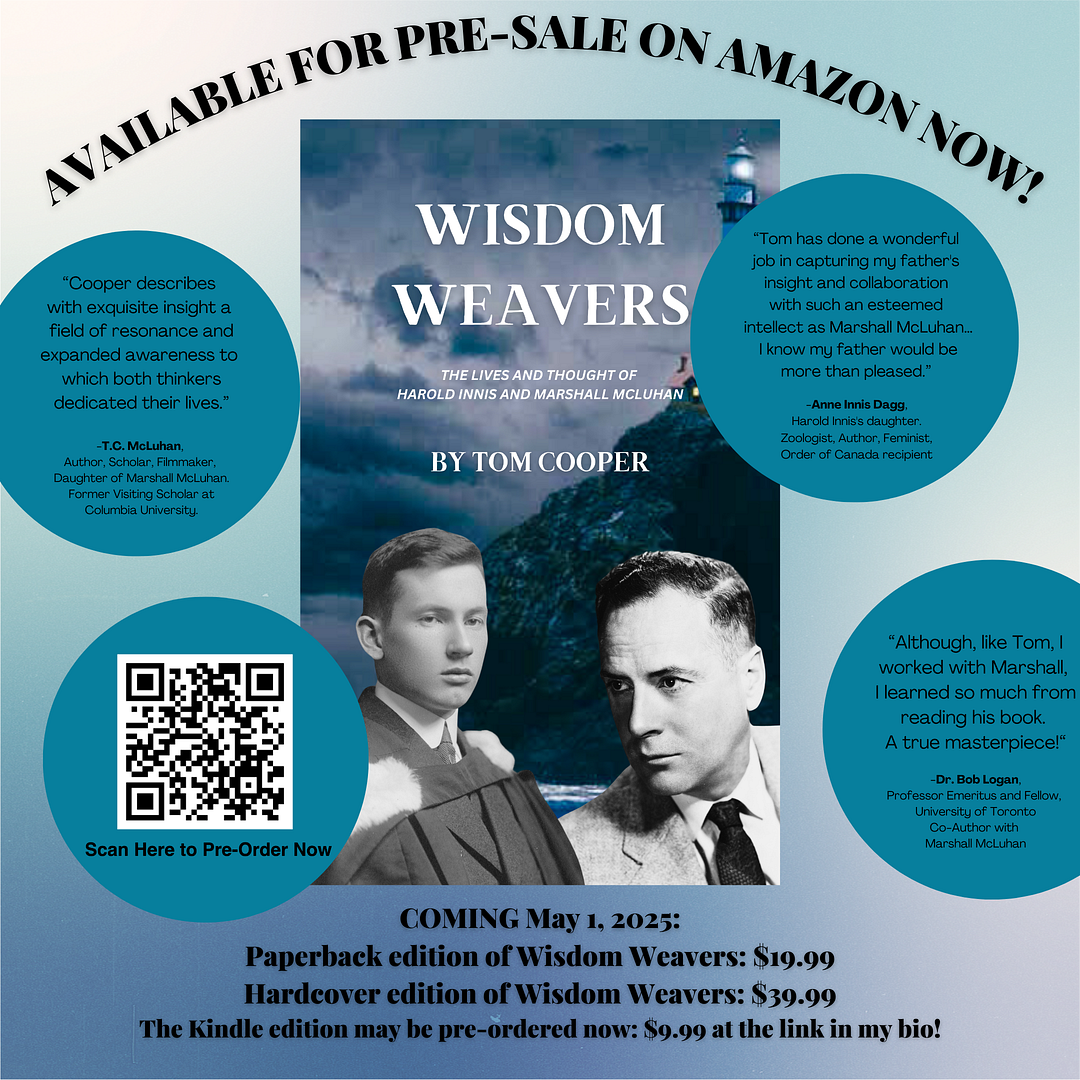
in Kindle, paperback, and hardcover


More books about McLuhan the media at Connected Editions

Thursday, November 28, 2024

Podcast Review of Dune: Prophecy 1.1-1.2: The Hart of the Matter


Welcome to Light On Light Through, Episode 399, in which I review Dune: Prophecy 1.1-1.2 on HBO Max.


Check out this episode!

Wednesday, November 27, 2024

Dune: Prophecy 1.2: The Hart of the Matter


Well, there will be spoilers in this review of Dune Prophecy 1.2, because there's nothing I have an interest in talking about that takes place in this remarkable episode that doesn't contain spoilers.

I said in my review last week of episode 1.1 that Desmond Hart, played by Travis Fimmel, was my favorite character, in part because Fimmel is a uniquely memorable actor, in part because the character he is playing was starting to do some remarkable things.  Not just the horrible thing of killing the boy by making him burn from the inside out -- which I would just as soon not have seen -- but the far more extraordinary thing of burning Kasha, a Bene Gesserit member at the same time, "halfway across the universe," as was remarkable upon in 1.2

That's a power that far exceeds what the Bene Gesserit can do, and in episode 1.2 we see Hart has another extraordinary power: he is able to defy Valya's order, delivered via Voice, to slit his own throat -- the same command via which Valya permanently silenced Dorotea in episode 1.1.  (Well, not quite permanently -- we see Dorotea talking to/at Sister Lila, when Lila is in that never never land that the poison she has ingested, which she is supposed to break into non-poisonous "molecules," is coursing through her body and brain.  But you know what I mean.)

Episode 1.2 also gives us at least a partial answer of how Hart got to have such power.  He says he was ingested via a sandworm and came out alive and in possession of his powers.  That of course leaves open the question of who is Hart that he survived such a power-bestowing ordeal.  But it's a good start.

Meanwhile, in other highlights of this episode, there was a legitimately good sex scene between Constantine Corrino (an illegitimate son of the Emperor) and Lady Shannon Richese (older sister of the slain boy -- much older, she's not a child).  This happens in contrast to a subsequent scene in which Kieran Atreides (who of course is bound to have an important role in this series) and Princess Ynez (a legitimate princess) elect not to have sex, which almost certainly means they eventually will.

So Dune: Prophecy is off to a very good start, indeed, and I'll see you back here with reviews of subsequent episodes in the weeks ahead.

Friday, November 22, 2024

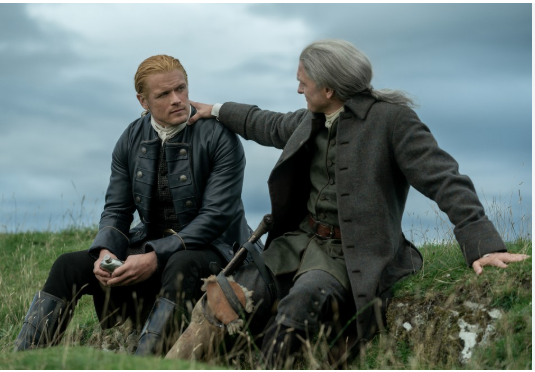
Outlander 7.9: Powerful Separations


Outlander 7.9 was finally up on Starz tonight.   It was an episode high on emotion, low on battling, and medium on time travel.

[Spoilers ahead ... ]

As readers of this blog will know, time travel and alternate history are my favorite kinds of stories, as a reader, a viewer, and an author.  Outlander has always had a powerful time travel component -- it's of course the very basis of the story -- but often kept in the background (I'll remind everyone that I've watched every episode but not read a page from the books).

Episode 7.9 actually had a little more time travel than usual.  Claire feels terrible that she can't do anything to help Ian's father (also named Ian) with his advanced tuberculosis.  There's an implied time travel in this difficult situation.  She doesn't say this (and apparently doesn't think this), but she could travel to the future and come back with some powerful antibiotic.  That's probably why she tells old Ian's wife (Jenny) that it's too late to do anything to help old Ian.  But I think there's a slight possibility that she could change her mind and take a trip to the future to get some antibiotic. As it is, she does make a decision to travel to America to help Jamie's son who has a wound she can do something about.  And it's great that young Ian is accompanying her, for reasons of the heart.

But the big time travel piece comes from Roger, who along with Buck go back in time to rescue Roger's son Jemmy from the kidnapper Rob.  Not that I like to see couples separated -- I'm a hopeless romantic and like to see couples together -- but I've always thought the best stories in Outlander happened when couples were apart in time, desperate to get reunited.  The Atlantic was a big ocean to transverse back then, so Claire going to America has some of that power that comes from separation, but I'm especially looking forward to seeing what Roger's journeys in the past bring him and therefore us.

It was also good to hear Claire tell the family about the dangers of going to France, given what she knows about the impending French Revolution and its Reign of Terror.

As for the non-time-travel, it was very good to see Jamie's family at close hand.  I'm glad Outlander is back on television. And I expect to be reviewing every episode of this second half of the the seventh season.

See also Outlander 7.1-2: The Return of the Split ... Outlander 7.3: Time Travel, The Old-Fashioned Way ... Outlander 7.7: A Good Argument for the Insanity of War ... Outlander 7.8: Benedict Arnold and Time Travel

And see also Outlander 6.1: Ether That Won't Put You to Sleep

And see also Outlander 5.1: Father of the Bride ... Outlander 5.2: Antibiotics and Time Travel ... Outlander 5.3: Misery ... Outlander 5.4: Accidental Information and the Future ... Outlander 5.5: Lessons in Penicillin and Locusts ... Outlander 5.6: Locusts, Jocasta, and Bonnet ... Outlander 5.7: The Paradoxical Spark ... Outlander 5.8: Breaking Out of the Silence ... Outlander 5.9: Buffalo, Snake, Tooth ... Outlander 5.10: Finally! ... Outlander 5.11: The Ballpoint Pen ... Outlander Season 5 Finale: The Cost of Stolen Time

And see also Outlander 4.1: The American Dream ... Outlander 4.2: Slavery ...Outlander 4.3: The Silver Filling ... Outlander 4.4: Bears and Worse and the Remedy ... Outlander 4.5: Chickens Coming Home to Roost ... Outlander 4.6: Jamie's Son ... Outlander 4.7: Brianna's Journey and Daddy ... Outlander 4.8: Ecstasy and Agony ... Outlander 4.9: Reunions ... Outlander 4.10: American Stone ... Outlander 4.11: Meets Pride and Prejudice ... Outlander 4.12: "Through Time and Space" ... Outlander Season 4 Finale:  Fair Trade

And see also Outlander Season 3 Debut: A Tale of Two Times and Places ...Outlander 3.2: Whole Lot of Loving, But ... Outlander 3.3: Free and Sad ... Outlander 3.4: Love Me Tender and Dylan ... Outlander 3.5: The 1960s and the Past ... Outlander 3.6: Reunion ... Outlander 3.7: The Other Wife ... Outlander 3.8: Pirates! ... Outlander 3.9: The Seas ...Outlander 3.10: Typhoid Story ... Outlander 3.11: Claire Crusoe ...Outlander 3.12: Geillis and Benjamin Button ... Outlander 3.13: Triple Ending

And see also Outlander 2.1: Split Hour ... Outlander 2.2: The King and the Forest ... Outlander 2.3: Mother and Dr. Dog ... Outlander 2.5: The Unappreciated Paradox ... Outlander 2.6: The Duel and the Offspring ...Outlander 2.7: Further into the Future ... Outlander 2.8: The Conversation ... Outlander 2.9: Flashbacks of the Future ... Outlander 2.10: One True Prediction and Counting ... Outlander 2.11: London Not Falling ... Outlander 2.12: Stubborn Fate and Scotland On and Off Screen ... Outlander Season 2 Finale: Decades

And see also Outlander 1.1-3: The Hope of Time Travel ... Outlander 1.6:  Outstanding ... Outlander 1.7: Tender Intertemporal Polygamy ...Outlander 1.8: The Other Side ... Outlander 1.9: Spanking Good ... Outlander 1.10: A Glimmer of Paradox ... Outlander 1.11: Vaccination and Time Travel ... Outlander 1.12: Black Jack's Progeny ...Outlander 1.13: Mother's Day ... Outlander 1.14: All That Jazz ... Outlander Season 1 Finale: Let's Change History


Tuesday, November 19, 2024

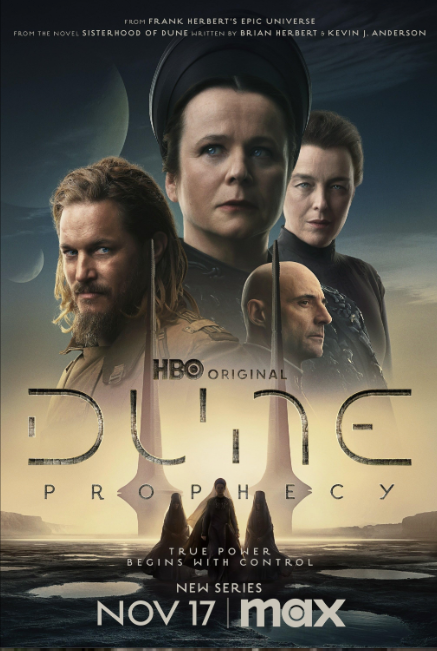
Dune: Prophecy 1.1: Compelling Prequel


I just watched the first episode of Dune: Prophecy on HBO Max.  Here's a non-spoiler review:

This prequel to the Dune series takes place 10,148 years (you can look up whether that's Earth years) before the birth of Paul Atreides, we're told near the beginning of this first episode.  Now the Dune series of novels is second only to the Foundation series of novels, I've thought ever since I started reading science fiction many years ago.  And the first episode of Dune: Prophecy has a lot in common with the first Dune novel.  Both have some scenes I'd rather not have read or seen.  And both start off way too slowly.   But Dune proceeded to be monumental in its story and impact, and Dune: Prophecy looks like it could be headed in that direction, too.

The essence of Dune: Prophecy is the establishment and growth into power of the Bene Gesserit, one of the most compelling components of the future Dune saga.  The characters in this powerful order that seeks to guide and control the universe by breeding the most appropriate humans for the job are well introduced in this first episode, but my favorite character is Desmond Hart, played by Travis Fimmel, whom I first noticed in his incandescent role of Ragnar Lothbrok in Vikings.  He has a way of speaking and acting that dominates every scene he's in, and leaves an indelible impression.

Someone on some social media site remarked that Dune: Prophecy was just Game of Thrones in outer space.  I did hear someone comment in Dune: Prophecy about "bending" someone's will, and, as I said, there was a scene or two I would rather not have seen, but the Dune story first came out in two serials published in Analog Magazine in 1964 and 1965, followed by the novel in 1965, so if Game of Thrones and Dune: Prophecy have any connection, it's that Thrones was influenced by the narrative qualities of Prophecy rather than vice versa.

And Dune: Prophecy has a freshness and some unexpected turns -- which I won't tell you about -- all its own.   I will tell you that Mark Strong as Emperor Javicco Corrino is memorable -- the Emperors have always been among my favorite Dune characters -- as are Emily Watson and Olivia Williams as the Harkonnen Sisters, who play such important roles.

So if you've been a devotee of the Dune saga, well, you can't go wrong with Prophecy. And if you haven't read or watched yourself into the Dune universe, well, you don't know what you're missing.

See also Dune, Part One: Half the Movie, Twice the Power of Most Other Complete Films ... Dune, Part Two: Not As Good as Part One


A Poem: "I Fell in Love with a Robot"

Read the rest of New Explorations, vol 2 no 4 over here.

Friday, November 15, 2024

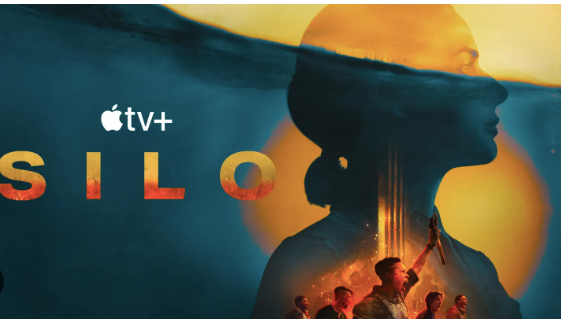
Silo 2.1: The Post- Apocalyptic Ladder


Well, Hugh Howey's Silo is back on Apple TV+ for its second season -- which will happen one episode at a time -- and it couldn't have come back at a more appropriate time.

[And there will be spoilers ahead ... ]

Juliette escaped/was thrown out of the silo at the end of the first season. She and we knew that the air wasn't really poisonous outside, but, hey, you can never be sure.  But she and we were right, and after we discover/confirm that it's not quite the world that has gone to hell, Juliette makes her way into and through another shelter or whatever it is, within easy walking distance from the silo with Sims and all those other characters we saw so much of last year.  One question that immediately arises: why are these two silos so close to one another?  What is it about this particular area?

But there ensue three parts to Juliette's journey now: 1. She uses a series of rusty ladders to get over the huge caverns in the shelter she enters (she's an engineer -- the title of this episode -- so she knows how to position a ladder across cavern and make her way across it with almost by not getting killed).  2. She hears a song faintly in the background, which gets louder as she walks on  -- it's "Moon River," you can't go wrong with that, though "You'll Never Walk Alone," especially Patti Labelle and the Blue Bells' version, with that impossibly high note she hits at the end, would have worked well, too.  3. And we learn that someone has been playing that song -- it's not some remnant of Spotify that's been programmed in the future -- and that someone ends this episode with a threat to kill Juliette if she opens the door.

I'll mention here (in case you haven't read my reviews of the first season, for which, see below) that I haven't read any of Hugh Howey's books, and once I started watching and enjoying the series, I didn't want to, because I wanted to enjoy all the twists and turns in the TV series.  So I don't know who any of the characters who are new to the second season are.  All we see of the man who plays the music and makes the threat are his eyes.  I thought the actor playing him might have been Steve Buscemi.  But it turns out the actor is another Steve -- Steve Zahn (a fine actor, I first noticed him in Treme).

Anyway, the return of Silo is off to a good start, with a nearby silo, and fine music and acting likely to take place there, and I'll be back here likely every week with a review of each episode.

See also Silo 1.1-1.2: A Unique Story, Inside and Out ... Silo 1.3: Like Chernobyl, Repaired ... 1.4: Truth, Not Quite ... 1.5: Revelations ... 1.6-1.7: The Book and the Water ... 1.8: What Really Happened ... 1.9: I knew It! But What Then? ... Silo 1.10: Three Truths


Sunday, November 10, 2024

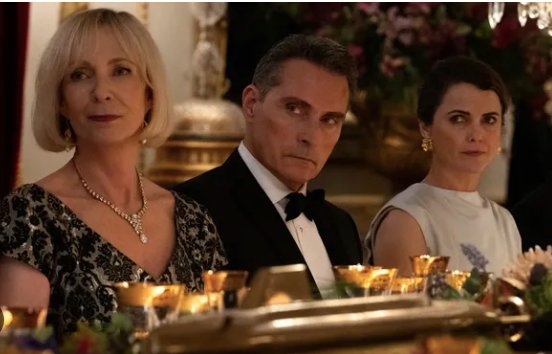
The Diplomat 2: West Wing Meets Bond, Part 2


I just finished watching the six episode second season of The Diplomat, which went up on Netflix on the last day of October.  Here's a review with no specific spoilers, and therefore no warning.

Let's begin at the end.  It's got the best surprise ending I've seen in at least the hundred seasons of any television show, on traditional network, cable, and streaming.  I don't know ... maybe make that five hundred.

Now, it's important to state the obvious, and keep in mind that this second was finished before the results of our election for President a few days.  So think of this second season as capturing the ambience and reality of the American President, VP, and staff maybe a year or six months ago, replete with a pretty old old American President, and a somewhat younger female VP.

I say American, even though the story takes place in Britain.  But American leaders appear in person and on video calls,  And of course the central characters are Kate Wyler, recently appointed US ambassador to the UK, and her husband Hal Wyler, former ambassador to Lebanon.  Unsurprisingly, both parts are played to perfection by Keri Russell and Rufus Sewell (who sounds, as always when he wants to, as American as I am).

Indeed, every bit of the acting was top-notch, especially Rory Kinnear as the British PM, and Allison Janney as the US VP.  But don't get me wrong.  I didn't love every last scene in this second season, such as when one character explaining something to another character says it's a case a correlation not causation, and the other smugly says no one really gets what that means.  In off-screen fact, that's actually a very easily comprehensible concept, with an obvious example: there may be sunspots when the stock market crashes (correlation) but that doesn't mean the sunspots caused the crash (causation).  (Here's a video from CNBC in which I explain the concept to an anti video-game crusader.)

Now banter like that, whether clumsy or astute, serves in this series to give it a cutesy, savvy flavor.  But the story is so bold and powerful, it doesn't need any help from the cutesy side.  Further, honestly, it couldn't have come along -- this second season -- at a better time for we Americans, and a lot of the world, as we try to make sense out of what just happened in our election.

See? No spoilers.  And do see this second season of The Diplomat.  After you've seen the first (and maybe read my review, see the link below).  You'll be in for a treat.

See also The Diplomat 1: West Wing Meets Bond

Friday, November 8, 2024

Disclaimer: Media vs. Reality


I just finished watching Disclaimer on Apple TV+, the seven-episode series adapted from Renée Knight's novel of the same name, which I haven't read.  The short series has so many twists and turns, that I'm really going to try to give you a review with no spoilers, and try hard to confine myself to the powerful and deep generalities that animate the narrative.

Well, I will say this about the first episode, which I suppose constitutes a spoiler of sorts.  I had almost no idea what was going on in that opening episode.  It wasn't until the end of the second episode that I began to get a glimmer of what was going on.  And by the third episode, I was coming to the conclusion that Disclaimer is one outstanding series, the likes of which I can't quite recall ever seeing on any television or laptop screen before.

It's erotic, reminiscent of the first R-rated movies I saw in theaters with my girlfriend now my wife many decades ago.  It's also an increasingly breathtaking mystery, with lives almost literally hanging in the balance.  But it's most of all a story about media, about the circumstances under which we may take them for reality, and the very deadly dangers of so doing. I'm not talking about fake news, though I suppose Disclaimer does have some connection to the rash of fake news that's been plaguing this world and our lives for years now.

But I was thinking more specifically of the photograph, which thanks to our mobile phones, has become as easy and ubiquitous as the blink of an eye.  As I often point out in my books and in my classes at Fordham University, the painting is an interpretation of reality, in contrast to the photograph, which is of reality.  But how much of it?  Certainly not all of reality, or even more than a split second of it.  If we want to capture a bigger time slice of reality, we need to move from photo to video.  But even a video has a beginning and an ending, and it doesn't capture what happened an instant before or after the video.

And then there's the written memoir.  Now words on a page or screen quite obviously are not reality, they are at most descriptions of reality.  But that knowledge doesn't stop us from taking memoirs seriously, as truthful accountings of what really happened.  But how can we tell the difference between a memoir that is utterly factual and a novel that is pure fiction?   Not as easily as you might think, especially if the work has not been published as yet, and in that process has been officially labelled as memoir or novel.  (I recommend Caroline Shannon Davenport's Terror at the Sound of a Whistle as an example of an excellent memoir that reads like a novel.)  And what of a book published as a novel but thought to be a truthful memoir by the publisher?

Well, I hope you see enough of where I'm going with this -- but not too much -- and if these issues and questions interest and even fascinate you as much as they do me, and you're in the mood for an R-rated series brought to life by outstanding acting and directing,with Cate Blanchett and Kevin Kline in unforgettable leading roles and Leila George as the erotic interest, and Indira Varma with a narrating voice, created by and directed to perfection by Alfonso Cuarón -- trust me, you can't go wrong with Disclaimer.

Wednesday, November 6, 2024

Some Thoughts on the Results of the US 2024 Election

 Some thoughts after the most consequential US election in my lifetime:

1. The pollsters got it wrong -- for the third time in as many US Presidential elections.  The vote tallies were not razor thin, or even just plain thin by any margin.  Donald Trump won the popular vote by more than 5 million votes, and the Electoral College by 292 to 224 at this moment.  He won the swing states of Georgia, North Carolina, Pennsylvania, Michigan, and Wisconsin, with Arizona and Nevada still too close to call.  He lost New York State, but Kamala Harris did much more poorly than Joe Biden in New York four years ago.  The polls predicted none of this.  Maybe it's time to stop paying so much attention to them -- or any attention at all.

2. Maybe all the Democrats who hounded Joe Biden out of the race after his unsettling performance in his debate in June with Trump should have thought twice about coming after Biden.  I said at the time that debate performance has nothing to do with Presidential decision-making and governing.  But everyone from George Clooney to Adam Schiff* were so sure that just about anyone other than Biden would do better than the man who was born in Scranton -- one of the reasons that Biden did so well in Pennsylvania in the 2020 election -- that they went on and on in the media as if it were their sacred duty to make sure Biden stepped down.  Kamala Harris would have made a great President.  But she would have been far more likely to beat Trump or any opponent four years from now, after she had served another term as VP in a second Biden administration.  Of course, no one can know now if Biden would have bested Trump in yesterday's election, but I and everyone who expressed concern about Biden being driven out of the election can't help but think that he might well have done better, much better, in the election just concluded, given his success against the same opponent in 2020.

*No doubt influenced by the same polls that later said the Harris/Trump run for the White House was way too close to call.

3. The US House of Representatives is still up for grabs.  If the Democrats don't retake control of the House, we can expect unobstructed Republican rule, with the courts as the only check on their power. And we've already seen more than once where the Supreme Court stands on that.

I may have some further thoughts as the day goes by.


Saturday, November 2, 2024

Paul Levinson interviews Andrew Hoskins about AI and the End of the Human Past


Welcome to Light On Light Through, Episode 398, in which I interview Andrew Hoskins about the new book he is writing, The Deadbot Society: AI and the End of the Human Past.

Relevant links:


Check out this episode!

Thursday, October 31, 2024

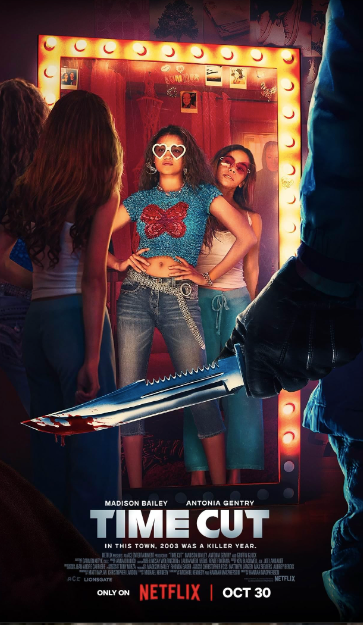
Time Cut: Meets the Sine Qua Non of Paradox and Surmounting It


So, Time Cut went up yesterday on Netflix.  It's a time travel movie, so I had to see it.  The story of a younger sister who goes back in time in 2024 to prevent the murder of her older sister in 2003 by a serial killer at first seemed a little trite, even more so with the high school shenanigans in which the story is situated.  But--

The story respected the paradoxes of time travel (a sine qua non for me in a time travel narrative) -- one of the savvier characters correctly says you might stop your sister's murder and in so doing cause World War III -- and the story becomes emotionally profound when--

[And here I'll warn you about some spoilers ahead ... ]

The younger sister, Lucy, from 2024 in 2003 knows that her parents had her only because her older sister Summer was killed.  When Lucy asks her parents who in 2003 don't know they will have another child if they're planning on having another child, they tell her no, and that sounds like a fait accompli. Lucy instantly realizes that if she prevents Summer's murder, that she, Lucy, will cease to exist.

I would have liked to have heard someone in the movie -- Quinn, the teenaged science nerd, and more -- voice the new conclusion that Lucy's realization engenders: that Lucy's very existence shows that somehow it might be possible that Summer survived, and Lucy was born, anyway.  Instead, we get the emotional turmoil that Lucy goes through, wanting to save her sister, and continue living herself.

But that's ok, it all makes sense at the end, and we find out who the masked serial killer is, which I guessed, but only pretty close to its revelation in the movie.  And we even get some clever dialogue, like when Lucy tells her as yet unknowing parents after dinner, "Thanks for having me". All of which is to say, Time Cuts is eminently worth seeing.


Wednesday, October 30, 2024

Don't Move: Keep Watching

Here's a short, mostly non-spoiler review of Don't Move, the movie just up on Netflix this week.

This is an original, high-anxiety movie that will keep you guessing until the very last minute. Which is an impressive accomplishment, given that we've seen something like the overall plot on the screen at least dozens of times before: a woman kidnapped by a handsome, highly intelligent, articulate, fiendish stranger.

Ok, that gives something away, but it happens close to the beginning, and is touted in the trailer and tagline for the movie.

It happens out in the country, not the big city, with rivers, rugged terrain, and leafy green trees as background.  A cabin in the woods, a gas station, and everyday cars play major roles.  Our victim receives help from unexpected and expected sources, but you'll be unlikely to guess what happens in the end.

The movie in its own way has Hitchcockian flavor, and a Nordic noir ambience, too, though it all takes in America.

But I've said enough.  Don't move once you start watching Don't Move.  You'll be rewarded.


Tuesday, October 15, 2024

Paul Levinson interviews Gerrit Van Woudenberg about his new movie Quantum Suicide


Welcome to Light On Light Through, Episode 397, in which I interview Gerrit Van Houtenberg about his new multiple universe feature film, Quantum Suicide, debuting on Amazon Prime Video on October 18.

Relevant links:


Check out this episode!

Sunday, October 6, 2024

Paul Levinson interviews Bob Hutchins: An Optimistic Discussion of AI


Welcome to Light On Light Through, Episode 396, in which I interview Bob Hutchins about AI.  My guess is you'll find this discussion much more optimistic about AI than what you'll usually hear.

Discussed or mentioned in this interview:


Check out this episode!

Thursday, October 3, 2024

Patrick Rands interviews Paul Levinson about It's Real Life on WZBC Radio


Welcome to Light On Light Through, Episode 395, in which Patrick Rands interviews me about It's Real Life: An Alternate History of The Beatles on his WZBC Radio program Abstract Terrain.

  • more about It's Real Life: An Alternate History of The Beatles here
  • say hello at the Meet and Greet at Big Red Books, 120 Main Street, Nyack, NY, Sunday, October 6, 12noon-2pm 
  • Anne Reburn's cover of Real Love
  • my interview with Anne Reburn
  • Yoko Ono's Cambridge 1969


Check out this episode!

Tuesday, October 1, 2024

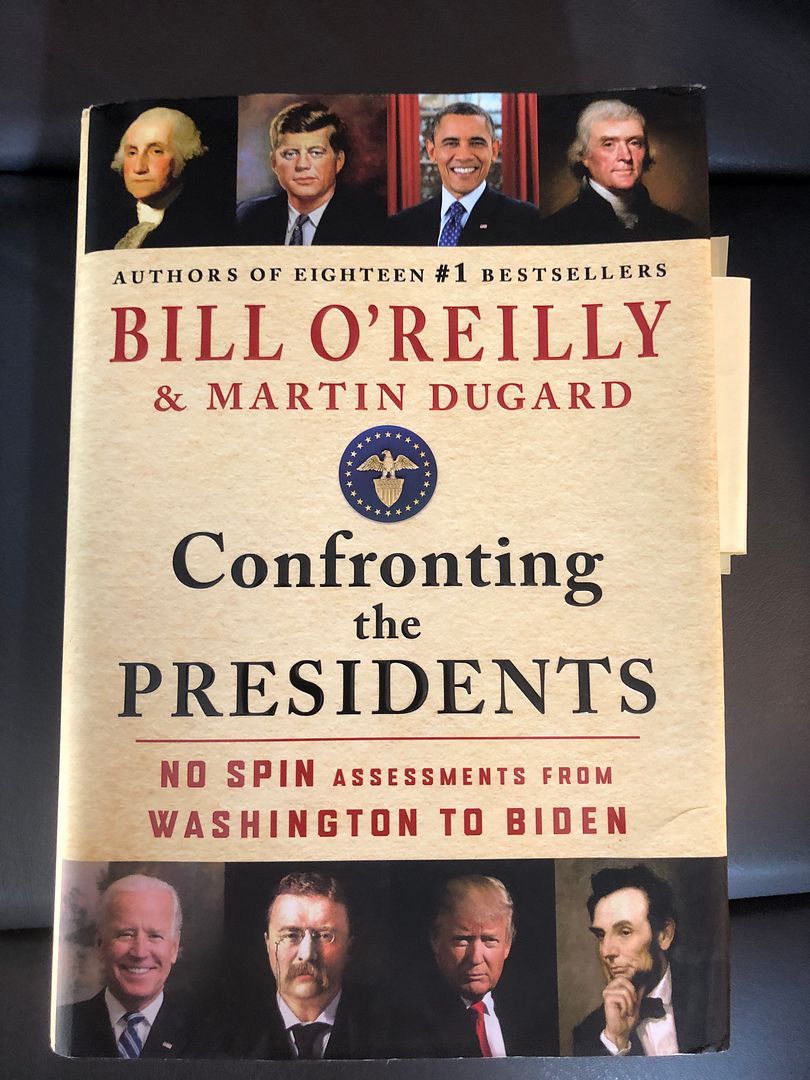
Confronting the Presidents: A Review of Bill O'Reilly and Martin Dugard's New Book


I started reading Bill O'Reilly and Martin Dugard's new 400+ page book on Friday.  I finished it last night -- Monday night.  That should give you an idea of how important and captivating Confronting the Presidents is. 

It is subtitled "No Spin Assessments from Washington to Biden".  But that obscures what the book actually is: assessments of US Presidents from Washington to Obama, co-written by O'Reilly and Dugard, followed by assessments of Trump and Biden written by O'Reilly, and assessments of Trump and Biden written by Dugard.  I'll explain near the end of this review why I think that distinction is crucial.

First, let me begin by saying I was on the O'Reilly's Fox show, The Factor, several times over 20 years ago (here's the video of my first appearance in January 2004), and four times on O'Reilly's No Spin News podcast several years ago.  We have strongly different political opinions, but I very much enjoyed our conversations.  O'Reilly has written numerous best-selling books, and O'Reilly and Dugard have a best-selling series (the "Killing" series about assassinations, attempted assassinations, killings of terrorists, etc), which I haven't read, but based on the writing in Confronting the Presidents, I expect that I eventually will, or at least read some of the books.

That writing is crisp, informative, and even exciting.   In part because most of it is in the present tense -- "At the start of Jefferson's second term, he is sixty-one years old.  He is no longer the young idealist...."  And in part because it has so many facts, big and little, that I didn't know and, after reading them in Confronting the Presidents, I think I should have known.  Like Theodore Roosevelt planning to run for a third term as president in 1919, before he died, and LBJ having a decades-long affair with Alice Glass, which Lady Bird knew about, and only ended when Alice left him because she was so furious about the Vietnam War.

We learn what each president ate for breakfast (right, I find that interesting), what kind of exercise they preferred, and how they died.  There's lots of humor in the book, but cradled in an underlying gravity and mortality.   And this is not because of what happened to Lincoln, Garfield, McKinley, and JFK, and almost happened to several others, but because as the authors make clear, the job of president, given the power to make one's dreams come true, is almost guaranteed not to be fulfilled, meaning your dreams will end up broken, their only chance being some future president may pick one up and carry it to victory in some more hospitable time.

Another salient point of history which I already knew as a media historian, and Confronting the Presidents makes abundantly clear, is that the intense polarization in our current world, (wrongly often blamed on social media, I would say), actually has been in the United States of America from the very beginning.  Editors of newspapers were prosecuted under the Alien and Sedition Act that John Adams signed into law, and O'Reilly and Dugard tell us that Alexander Hamilton wrote that Adams was "a mere old woman and unfit for president".

As a professor and lifelong student of communication and media studies, I was also glad to see that Confronting the Presidents notes that First Lady "Carrie" Harrison brought electricity to the White House but she and her husband Benjamin (1889-1893) were afraid of being electrocuted, radio began to have a big influence on politics in the 1920s, and of course TV took center stage in the 1960s.  (See my continually updated McLuhan in an Age of Social Media for how and when television gave way to the social media president.)

***

But this powerhouse book, brimming with fascinating, useful, and important information, concludes its confrontation of presidents with Barack Obama.   An "Afterword" briefly gives O'Reilly's and Dugard's assessments of Trump and Biden independently.  The reason for this change in format isn't given, but it must be because Trump's presidency may not be finished (he's currently running for a second term), and at the time the book was written, neither was Biden's (he had not yet withdrawn from the current election).

I'm making such a big deal about this because O'Reilly's assessments of Trump and Biden are the first in the book I strongly disagree with.  No mention is made of Trump's treatment of COVID, and the attack on the Capitol he instigated on January 6, 2021 is barely mentioned, as a political mistake, not the fundamental attack on our democracy that it was.  Even more incredibly, O'Reilly ranks Biden as the second worst president in American history (after James Buchanan).  

As I said at the beginning of this review, O'Reilly and I are on opposite sides of the political spectrum.  But I was nonetheless taken aback by what he said about Biden and didn't say about Trump because I found his joint assessments with Dugard about other progressive presidents like Obama and Clinton, and conservatives like Nixon, to be right on key.  

Obviously, Dugard was a moderating factor, and he had plenty to say in his own assessment of Trump about January 6, 2021 (because of this, he ranks Trump the worst president, one below Herbert Hoover).  Dugard also had some praise for Biden, and went so far as to say he hopes Biden wins in 2024 (the book was completed, again, before Biden withdrew from the race).

So what you'll get from Confronting the Presidents is a fair and balanced -- to use that Fox cliche -- assessment of every American President prior to Trump.  Then, for Trump and Biden, separate assessments from each author, which taken together accurately reflect the current polarization of this country.

I'm not sure what I would have suggested to the two authors prior to publication about how to conclude this book.  Maybe conclude with Obama with no Afterword.  Or maybe struggle to find some common ground as the authors did for every other president.  But I can say I recommend this book to anyone who'd like to have a handy, accessible guide to the people who have been at the top of our noble, imperfect experiment with democracy.


Monday, September 23, 2024

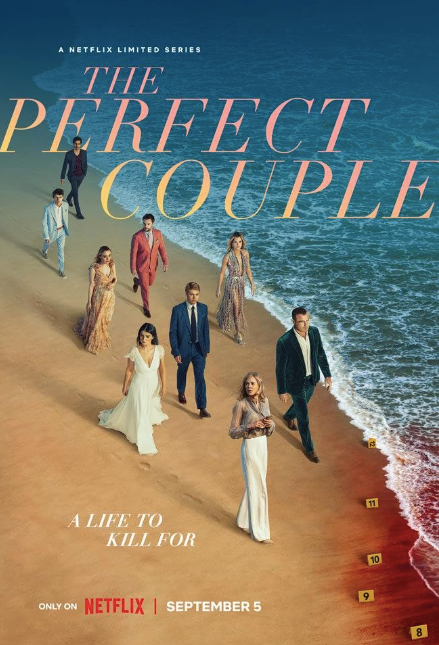
The Perfect Couple: The Perfect Series


So, the family and I spend a lot of time on Cape Cod, and have been loving it for decades.  The Perfect Couple takes place in nearby Nantucket, and the shots of the water and the sand and those wind-blown weathered wooden fences look so much like those on the Cape I felt like I was back there again, and it was still the summer.  Hey, for all I know, those scenes were shot on the Cape.  How could I not love this series?

And the lead actors, Nicole Kidman as Greer and Liev Schreiber as her husband Tag, top-notch any time, were especially outstanding in this scenic murder mystery adapted from Elin Hilderbrand's novel (which I haven't read), so well plotted, with so many nearly convincing suspects, that this novel could have been written by Agatha Christie.

The supporting actors, most of who I haven't seen on the screen before, were excellent as well.  Here are some of my favorite scenes and characters:

[And there may be spoilers ahead ...]

  • Eve Hewson as Amelia Sacks, half of the imperfect couple, was perfectly convincing in her combination of almost sultry and deeply vulnerable.
  • Schreiber as Tag, when he tells Merritt (pregnant with his baby) that having a baby is the most beautiful thing a man and woman can do, as prelude to his telling her he doesn't want her to have it, is a truly memorable scene of repulsive personal betrayal.  Schreiber as Tag is also noteworthy when he bursts in and deconstructs Greer's book launch.  (Greer being an author is something else I identified with -- here's a video of my most recent event. Note a bit of the tribulations at the end of the introduction.)
  • I also got a kick out of Donna Lynne Champlin's gruff, Rosie O'Donnell kind of police detective, and her interaction with Michael Beach (whom I have seen a lot of over the years) as her de facto partner in the murder investigation was a fine piece of police repartee.
  • Ishaan Khatter as Shooter Dival was the most tempting of the false leads (he wasn't the shooter and indeed the murder victim wasn't shot), and his relationship with Amelia gave rise to one of the best lines in the series, "the girl on the B train," which come to think of it would make a good title for any novel, short story, movie, or TV series (Irwin Shaw certainly would've liked it).
  • Back to Dan Carter, my favorite relationship in the series -- maybe the closest to the perfect couple -- was Carter's daughter Chloe (not Zoey!) and her shared feelings with Will, the youngest Winbury. After she's told by her father to stay away from Will -- Dan's understandably worried that the Winbury family is connected to the murder -- she leaves Will a note on a napkin, "you're cute". Hey, a little sweetness goes a long way in a story like this. (Will is also key to figuring out who the killer is, but I'm not going to drop any more spoilers.)
Anyway, I defy anyone who hasn't read the book to identify the killer before the ending, and I highly recommend this Netflix short series, especially if you've just returned from Cape Cod to the big city and its B train.


Tuesday, September 10, 2024

Harris vs. Trump Presidential Debate: Eating Dogs and Viktor Orban

I don't recall ever seeing a Presidential debate like this, Kamala Harris vs. Donald Trump: a cool, passionate, articulate champion of democratic values and principles vs. well, a lunatic and fascist admirer.

One of Trump's lies which struck me most -- lies are too weak a word for it -- was Trump's claim that immigrants are eating dogs.  One of the moderators, David Muir, quietly pointed out that the City Manager of one of the allegedly afflicted places said that dogs were not being eaten in his town.  Among the plethora of Trump's lies, this one strikes me as one of the most indicative of Trump's mental maladjustment.  It's far less serious, of course, than Trump's continuing charge that governors in Democratic states allow killing of newborn babies -- denounced as a lie by both Harris and the other moderator, Linsey Davis.  That's an egregious lie about a crucial issue.  But the claim about immigrants and dogs is somehow vivid evidence that the former President is not in his right mind.

As for his politics,what I found most significant and disturbing was Trump's citing the pride he takes in Viktor Orban's praise of him.  A fascist, neo-Nazi, who has systematically put down and tried to pull down the press and democratic structures in his country, Hungary.  I couldn't help thinking that if Hitler was alive, and said anything good about Trump. the former President would have cited him as an admiring ally too.

Kamala Harris aptly pointed out that the most important thing in Trump's book and psyche is flattery from others.  Everything she said in the debate was astute and on target.  In fact, I can't think of a single off-key thing she said.  Sure, that's because I agree with everything she said, but I still think her performance was objectively excellent.  That includes her facial reactions to Trump's lies and absurdities, which we've known since the 1960 JFK/Nixon debates are at least as important as what the candidates actually say.

As for the moderators, better than CNN's in the Biden-Trump debate in June, but that's faint praise. They did quietly point out a few of Trump's lies, but maybe I'm old fashioned thinking that they should have called out every single one of them.  Loudly and clearly.

Big good news arrived shortly after the debate in Taylor Swift's ringing endorsement of Harris for President.  I'm pulling for a landslide.


Paul Levinson interviews Dan Abella about The New York Science Fiction Film Festival


Welcome to Light On Light Through, Episode 394, in which I interview Dan Abella about The New York Science Fiction Film Festival, to take place Saturday, September 14, 2024 at the Stuart Cinema and Cafe, 79 West Street in Brooklyn, NY.

  • more details here
  • my review of Gerrit Van Woudenberg's Quantum Suicide

Among the science fiction filmmakers we discuss: Gerrit Van Woudenberg, Jay Kensinger, Frank Spotnitz, M. Night Shyamalan, Francis Ford Coppola

Among the science fiction authors we discuss: Philip K. Dick, Sam Delany, Robert Harris, Walter Mosley


Check out this episode!

Thursday, September 5, 2024

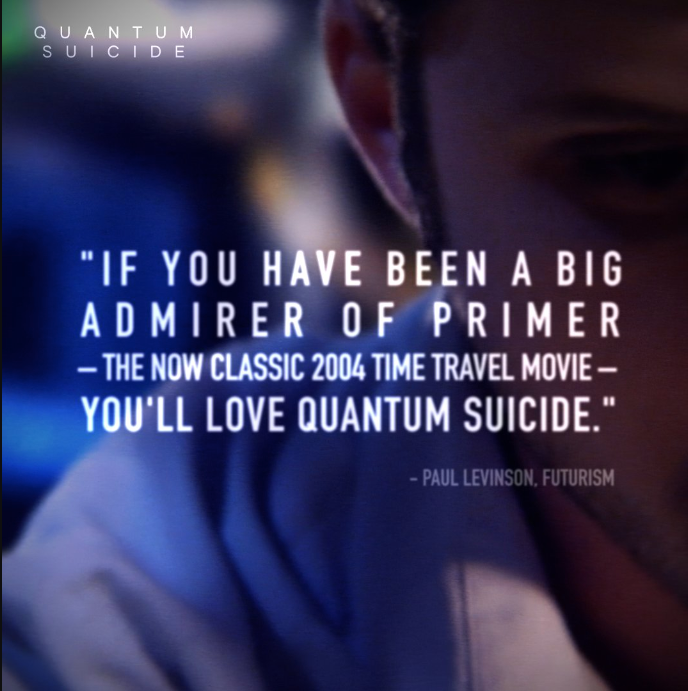
Poster for Quantum Suicide


                                 read the review here

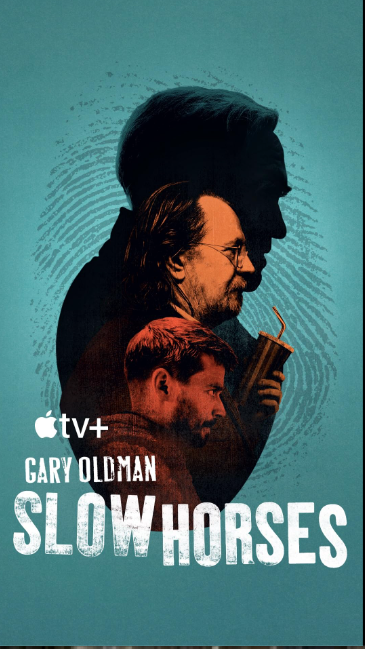
Slow Horses 4.1: River


Well, Slow Horses is back on Apple TV+ with the debut episode of its 4th season, and

[Spoilers ahead ... ]

In the riveting opening and subsequent scenes it sure looks like River was shot to death by his (probably) somewhat deranged grandfather, but I didn't really believe that, because it's too crazy a way to die, even for Slow Horses, and in the end we learn Lamb didn't buy it either, and in fact River's in France, on some mission likely connected to the terrorists Taverner and the MI5 crew are dealing with (ineptly, because this is after all just the beginning of a new season).

But there were clues before the big French reveal, most notably that the body said to be River's had its face shot off, which made it difficult to identify as River's, on the basis of just eyesight.  This probably tipped off Lamb from the beginning.  He's in good form, by the way, not only farting, but scratching his ass (not at the same time).  At least it was outside this time, not in a car with the doors closed.

The team, other than Ho, are more or less devastated, especially Louisa, who in one unfortunate scene not only rebuffed River's possible advance, but suggested he visit grandpa.  Standish is not devastated at all, because, as we learn near the end, she knows River has not been shot, and Grandpa David is taking a nap in her bed.   Have we ever actually seen her and Lamb in bed together and awake?  I can't recall, but I think not, and I hope that will happen sooner or later in some future episode or season.

Kudos again, by the way, for Mick Jagger's excellent theme song at the beginning, but I didn't hear it again at the end, as we have in prior seasons, and that's s shame, because I'm always eager to hear that song, even in the middle of an episode.

But off to great start, and I'll be back with weekly reviews.

See also Slow Horses 3.1-3.2: Beatles Level ... 3.3: The Meaningful Difference Between "The" and "A" in the UK ... 3.4: "Clear the Board" ... 3.5: Winners and Losers, Part 1 ... 3.6: Winners and Losers, Part 2

And see also Slow Horses 2.1-2.2: Do Horses Eat Ramen? ... 2.3: Faster Than You Think ... 2.4-2.5: Lamb Firing On All Cylinders ... Slow Horses 2.6: Heralds of Humiliation

And see also Slow Horses 1.1-2: Fast-Moving Spy Thriller ... Slow Horses 1.3: The Fine Art of Bumbling ... Slow Horses 1.4: Fine New Song by Mick Jagger ... Slow Horses 1.5: Did You Hear the One About the ... Slow Horses 1.6: The Scorecard


Monday, September 2, 2024

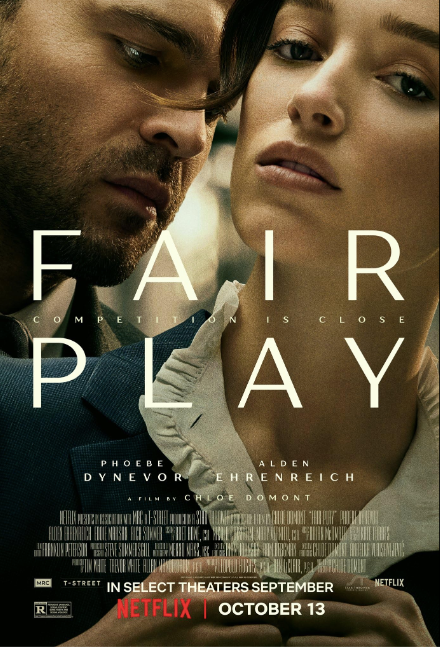
Fair Play: Fairly Good

I watched Fair Play -- a 2023 movie on Netflix last night -- because, well I've been a fan of Rich Sommer since he played Harry Crane on Mad Men (and he looked then like a young Isaac Asimov), [see

========= 


Isaac Asimov (1965) and Harry Crane aka Rich Sommer (1960)
=============]


and Eddie Marsan has been one of my favorites since he played Ray Donovan's older brother on Ray Donovan, the Showtime series that ended too soon.

Also, I'm always willing to give an erotic thriller a chance.

And the two -- Marsan and Sommer -- play a mean, soulless chief (Campbell) and assistant (Paul) of a hedge fund from hell, though for all I know, that's what all or at least most hedge fund offices are like.

But that's not really what Fair Play is about.  It's about a couple, Emily and Luke, who love sex and get engaged, right before Emily gets promoted to the job Luke was yearning for.  The promotion devastates their relationship to the point where Luke is unable to perform in bed, despite Emily's inducements.  I actually had a slightly difficult time believing this because, well, Phoebe Dynevor as Emily is an excellent, convincing actress.  But tensions between the two escalate. Luke continues to not have the good sense to find another job (another somewhat unbelievable lack of development, since Luke, well played by Alden Ehrenreich, otherwise seems pretty smart), and in the end, verbal attacks and lack of sex escalate into ... well, I don't want to give too much of the ending away.

All in all, I think Fair Play is worth seeing.  But a little more subtlety would have helped the story.  It's ok for Emily's mother to be a caricature, but I would've liked to have seen a little more depth in the other characters, beginning with Campbell and Paul.


InfiniteRegress.tv